

The golf ball rollback has been delayed until at least 2030 after the PGA Tour, DP World Tour and manufacturers persuaded golf’s governing bodies to rethink their controversial plan.
The biggest equipment change in modern golf has just been pushed back – and the future of the controversial golf ball rollback suddenly looks far less certain than it did six months ago.
In a joint statement released by The R&A, USGA, PGA Tour and DP World Tour ahead of this week’s US Open, golf’s leading organizations confirmed there will be no change to golf ball testing standards until at least January 2030.
The announcement effectively delays the planned rollback for elite players by two years, but the bigger story may be that golf’s governing bodies now appear willing to reconsider whether their original proposal is the best solution at all.
For much of the past two years, the rollback has been presented as a settled issue.
The R&A and USGA announced in December 2023 that they would introduce new Overall Distance Standard (ODS) testing procedures designed to reduce how far the ball travels at the elite level. Under the original timeline, professional golfers would have switched to the new standard from January 2028, with recreational golfers following in 2030.
Wednesday’s announcement changes that.
Following discussions involving the governing bodies, PGA Tour leadership, the PGA Tour Player Advisory Council, DP World Tour officials and other stakeholders, all parties agreed on one thing: distance continues to increase at the highest level of the game.
But they were also aligned on something else.
According to the statement, the tours expressed concerns that the proposed ODS testing changes may not ultimately achieve the desired outcome.
More significantly, there is now what the statement describes as a “collective willingness” to explore alternative approaches that could have a greater impact on future distance gains while minimizing disruption to manufacturers, retailers and golfers.
That represents a significant shift in tone.
Until now, the debate largely centered around whether the rollback should happen. The latest announcement suggests the conversation has evolved into whether the current rollback proposal is actually the right answer.
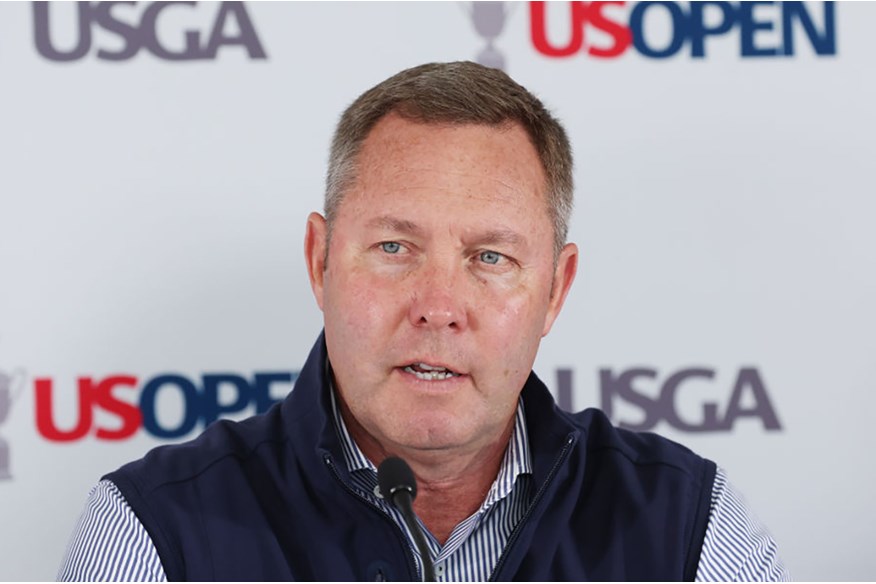
Speaking at Shinnecock Hills shortly after the announcement, USGA CEO Mike Whan revealed that concerns raised by tour officials and players centered not on whether distance is increasing, but whether the current rollback proposal would actually go far enough.
“A concern from some of the best elite male golfers and their organizations [was] whether or not the ODS ball change would be enough to make real change in distance,” Whan said.
Whan stressed that everyone involved shared the view that distance continues to increase at the highest level, but admitted the tours had questioned whether the proposed changes would deliver a meaningful enough outcome.
In perhaps his most candid assessment of the rollback yet, the USGA chief admitted criticism of the proposal itself was justified.
“It’s fair to critique whether or not it’s enough,” he said. “It probably isn’t enough.”
Whan described the current proposal as “a small, digestible bite that the industry can handle,” acknowledging that it was always intended to minimize the impact on recreational golfers.
Asked whether new testing data had prompted the rethink, Whan said the answer was no.
“It was dialogue with some of the best players in the world,” he said.
That marks a significant change in the debate. For years, many players simply opposed the rollback outright. Now, according to Whan, there is a growing willingness among elite players to work with the governing bodies on finding a better answer.
“I haven’t had those meetings until recently,” he admitted. “We’re starting with distance is increasing. We don’t want the game to become even further one-dimensional.”
The R&A and USGA insist they remain committed to addressing distance and protecting the long-term future of the game. Concerns around ever-increasing driving distances, rising course maintenance costs and the ability of historic venues to challenge the world’s best players remain unchanged.
However, the governing bodies will now work alongside the PGA Tour, DP World Tour and their respective memberships to review, test and evaluate alternative solutions before any changes are introduced.
In practical terms, that means the rollback has been pushed back.
It also means several more years of uncertainty surrounding what the eventual solution will look like.
The announcement follows a recent consultation process regarding the rollout timeline. While the original plan would have introduced the rollback for professionals in 2028 before extending it to recreational golfers two years later, feedback from manufacturers and other industry stakeholders overwhelmingly favored a single implementation date.
Many believed a two-stage rollout would create confusion and unnecessary complexity, particularly for manufacturers forced to produce golf balls under two different standards.
As a result, the governing bodies have accepted the principle of a single implementation date across the entire game.

The delay also comes just weeks after Cameron Young unintentionally added fuel to the rollback debate.
The American revealed ahead of the PGA Championship that he has been playing a prototype Titleist Pro V1x that is already expected to conform to the proposed 2030 standards. Despite that, Young remains one of the PGA Tour’s longest hitters and has enjoyed the most successful stretch of his career since putting the ball in play, winning three times and climbing into the world’s elite.
While one player cannot prove or disprove the effectiveness of the rollback, it is perhaps notable that one of the concerns raised by the tours in Wednesday’s statement was whether the current testing approach would actually achieve the desired results.
Perhaps most revealingly, Whan indicated ideas previously discarded by the USGA and R&A are back on the table.
“Three years ago we were told pretty point-blank that MLRs would not be implemented that are distance-related at the PGA Tour level,” he said. “Clearly that mindset has shifted.”
Whan added that some proposals had not been abandoned because they lacked merit, but because the governing bodies doubted they would ever be adopted.
“We stopped because we weren’t sure they would actually be implemented,” he explained.
While Whan stopped short of outlining what any alternative might look like, the comments suggest Tour-specific solutions previously thought dead could once again be under consideration.
For manufacturers, the decision will also come as welcome news.
Developing new golf balls is a process that takes years, with research, testing, production and tour validation all planned well in advance. A single date provides far greater clarity than the previously proposed staggered approach.
For players, meanwhile, the decision means at least four more seasons competing under the current rules.
What happens after that is far less clear.
The rollback is not dead. The R&A and USGA remain convinced that distance growth at the elite level must be addressed.
But Wednesday’s announcement confirms that golf’s most powerful organizations are no longer charging toward the original 2028 deadline.
Instead, they are going back to the drawing board together.
And for a policy that was once presented as golf’s definitive answer to the distance debate, that may prove to be the most significant development of all.