
“The training was insufficient and maybe not appropriate, when we look back.”
That was Dr. Raja Hatem’s assessment of the pilot project for Quebec’s new digital health records system one month after its launch.
Health officials, doctors and nurses say the transition to the Dossier santé numérique (DSN) has been more difficult than expected, forcing adjustments to training, physician support and clinical workflows as the province prepares for future deployments.
The DSN went live on May 9 in the Mauricie–Centre-du-Québec and Nord-de-l’Île-de-Montréal regions as part of a pilot project that will help shape future rollouts elsewhere in the province.
During a briefing Wednesday reviewing the first month of the pilot project, Santé Québec officials described the rollout as a major transformation that remains in a stabilization phase.
“We would perhaps have prepared differently,” said Adélaïde de Melo, president and CEO of the CIUSSS du Nord-de-l’Île-de-Montréal.
De Melo said one of the biggest lessons from the first month stemmed from the fact that staff had been trained primarily on how the systems worked within their own department. Many of the challenges that emerged after launch occurred when patients were admitted, transferred between units or discharged from the hospital, requiring multiple teams to interact within the system.
Officials also acknowledged that physicians were among the groups most affected by the transition and said additional support had been introduced after launch, including webinars, specialty-specific assistance and a 24-hour support line.
Hatem, a Montreal cardiologist who has been using DSN since the launch, described the first month as a “drastic change” in an interview with The Gazette.
“As with any huge change, it brought a lot of anxiety and stress to a lot of people,” he said. “Initially, there was a lot of backlash from doctors because a lot was imposed on us.
“The first time you see a patient in this new system, you have to fill out all his previous medical information yourself, and that takes a long time,” Hatem said.
Although many patients already had records in older hospital systems, physicians often had to manually enter medical histories, medications and other background information into the DSN.
Still, Hatem said the benefits are becoming more apparent as staff gain experience using the system.
“We’re finally in the modern era,” he said.
Once patient information has been entered, future visits become more efficient, communication between health-care professionals is easier, and prescriptions can be sent electronically, he said.
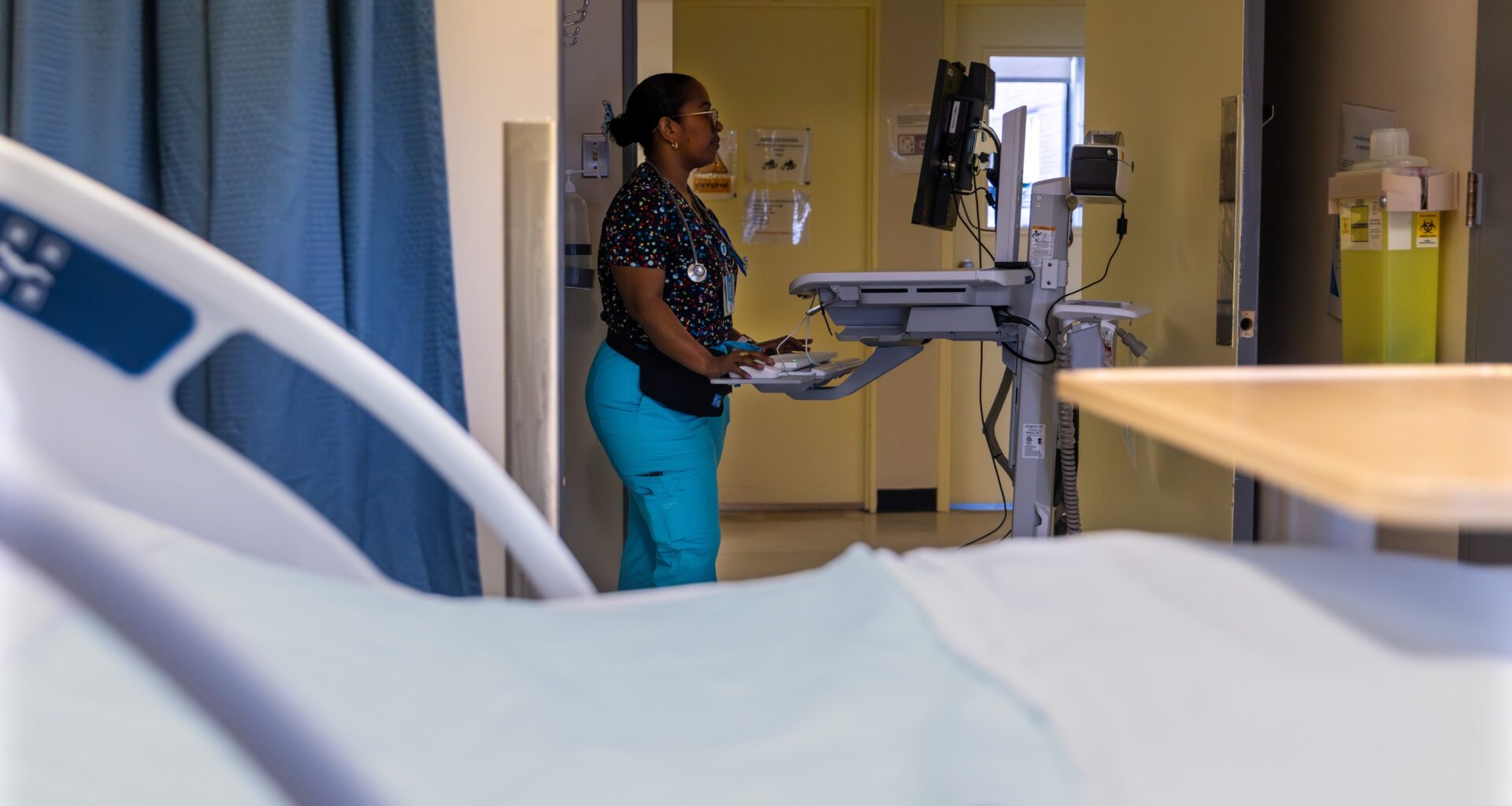
Nurses experienced many of the same growing pains.
Louis-Alex Nadeau, vice-president for labour relations at the Fédération interprofessionnelle de la santé du Québec (FIQ) in Mauricie–Centre-du-Québec, said staffing shortages limited opportunities for some nurses to practise using the platform before it went live.
“There wasn’t enough practice,” he said. “We could feel an enormous amount of distress.”
Although many issues have since been resolved, some concerns remain. Nadeau pointed to medication-management workflows that changed following the DSN rollout. He said nurses are now sometimes required to physically split pills into halves or quarters before administering them. Nadeau said that this process can create additional risk for error if staff are distracted or rushed.
Health officials said more than 26,000 health-care staff have logged into the system since launch and that about 85 per cent of support tickets have been resolved. Some outpatient clinics remain below full capacity, though officials said activity levels continue to improve.
Despite the difficult first month, neither Hatem nor Nadeau suggested the province should abandon the system.
“We can’t go backwards,” Hatem said. “We’re already so far behind.”