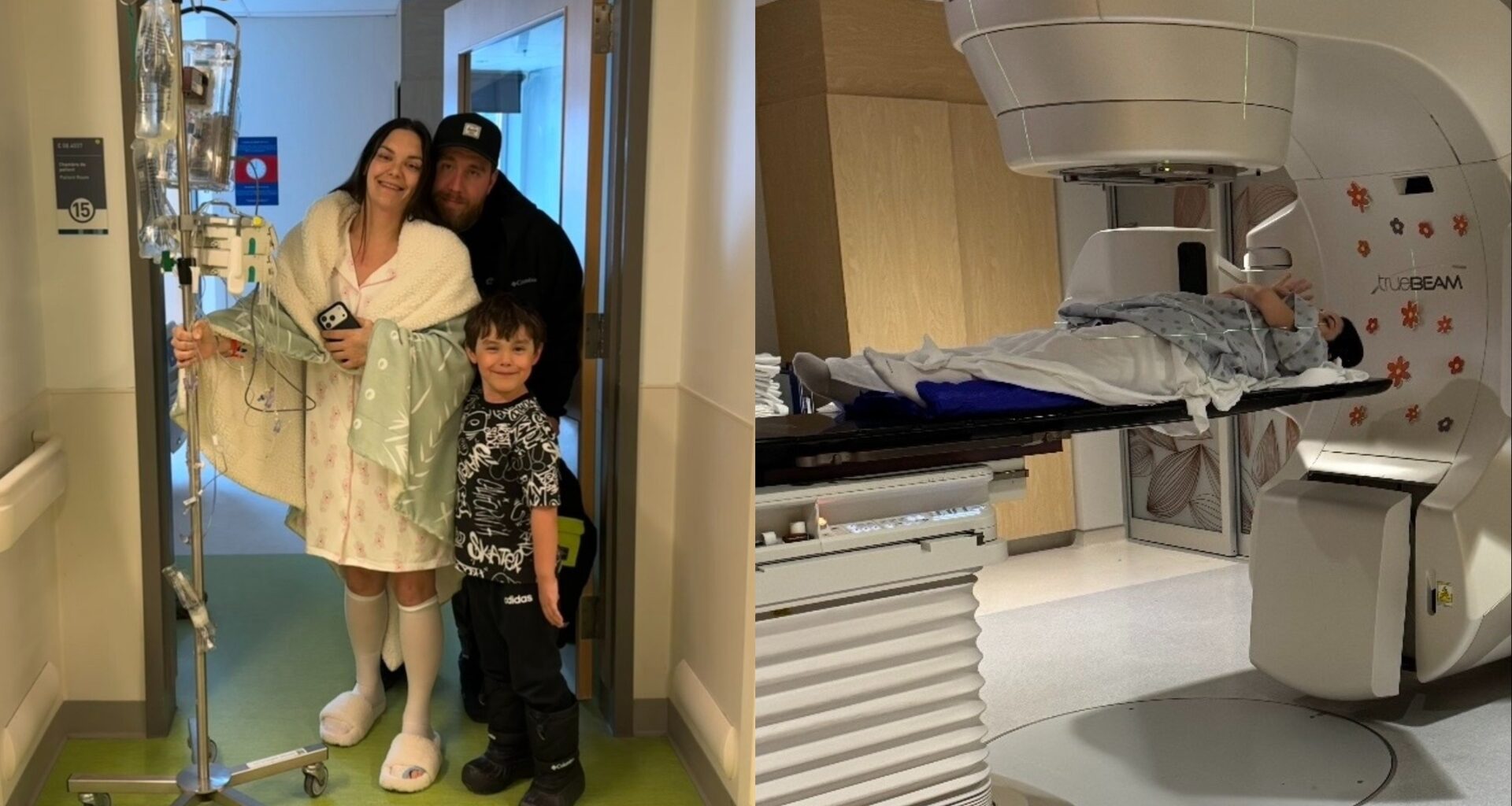
The McGill University Health Centre says it has performed a uterine transposition procedure for the first time in Canada, offering a fertility-preservation option for women undergoing pelvic radiation therapy.
The procedure, developed and performed by gynecologic oncologist Dr. Reitan Ribeiro, involves moving the uterus, ovaries and fallopian tubes into the upper abdomen during an initial surgical procedure to protect them from the radiation field during radiation therapy.
According to the MUHC, the technique offers hope to women with colorectal and other pelvic cancers who wish to retain the ability to conceive and carry a pregnancy to term after remission while reducing the risk of early menopause.
“With the rising incidence of cancer among young women and the trend toward later motherhood, it is becoming essential to consider not only cancer treatment but also patients’ quality of life and future plans,” Ribeiro said in a statement.
“Uterine transposition allows patients with pelvic tumours that do not involve the reproductive organs to undergo radiation therapy without having to give up their desire to start or expand a family in the future.”
Once radiation treatment is complete, the reproductive organs are returned to their original location during a second procedure.
The MUHC says the surgery is performed using minimally invasive techniques, allowing for rapid recovery and without delaying the start of cancer treatment.
First Canadian patient undergoes procedure
Britany Fecteau, who was 28 when she underwent treatment at the MUHC for Hodgkin’s lymphoma in the groin, became the first patient in Canada to undergo the procedure.
Now 29, Fecteau said the cancer diagnosis was devastating not only for her, but also for her loved ones.
“It was definitely very difficult because it’s also very hard for our loved ones. I found it hard to learn about it. I went through it, but so did my son. I’m a mother, I have a little boy who is six years old, and I really wanted him to see his mother being strong, to see how important it is to fight for what you believe in and to stay strong through the trials that life makes us overcome,” she said.
Fecteau said learning that treatment could affect her fertility and potentially trigger early menopause was another devastating moment.
“It was definitely a huge shock. At first, I thought I wouldn’t be able to have children anymore. Being able to create life is a huge deal for a woman, it’s so beautiful,” she said. “Even if I want to, or maybe I won’t have any, or maybe I’ll have more children, just knowing that I can is wonderful. And then there’s menopause, that was a big part of it too. You don’t want to go through menopause earlier than expected. In any case, that’s definitely not what I wanted.”
Her first surgery took place on Feb. 26, 2026. The second was performed on April 29, 2026, one month after she completed radiation therapy.
“Receiving a cancer diagnosis at my age was a tremendous shock. Learning that the treatments could also cause me to lose my fertility and put me into early menopause was just as shocking. This surgery allowed me to preserve my ovaries and uterus before radiation therapy, and that means the world to me. As a young mother, knowing that this option exists gave me hope and helped me get through the treatments with a little more peace of mind,” Fecteau said.
“I hope my story can help raise awareness of this option for other women facing a similar situation.”
Guided through treatment
Fecteau said she learned about the procedure through her medical team and was closely supported throughout the process.
She said Dr. Ribeiro took time to explain everything clearly.
“He really guided me. He sent messages, showed me videos, explained everything, and even made drawins too,” she said. “He made it as clear as possible for me.”
She added that although there was a language barrier at times, her doctors made sure she fully understood each step.
Radiation’s impact on fertility
Radiation therapy plays a key role in the treatment of many cancers, including colorectal and gynecological cancers. However, the MUHC says radiation causes irreversible damage when it reaches the reproductive organs, impairing ovarian reserve and causing uterine atrophy that can lead to the loss of reproductive capacity.
The health centre says radiation can also interrupt estrogen production by the ovaries, triggering early menopause.
“Beyond the loss of fertility, damage to the ovaries has significant repercussions on women’s physical and psychological health. Early menopause increases the risk of cardiovascular disease and osteoporosis, in addition to causing symptoms such as hot flashes, fatigue and mood swings,” Ribeiro said.
“By preserving ovarian as well as uterine function, this procedure eliminates the risk of premature menopause.”
The MUHC says the main fertility-preservation option available before cancer treatment has traditionally involved ovarian stimulation followed by the retrieval and freezing of eggs.
According to the health centre, that approach can delay the start of treatment, depends on assisted reproductive technology and is limited by the number of eggs successfully retrieved.
The hospital also notes that when the uterus has been damaged by radiation therapy, a woman loses the ability to carry a pregnancy.
Technique developed in Brazil
Ribeiro developed the uterine transposition technique in 2017 while practising at Erasto Gaertner Hospital in Brazil.
According to the MUHC, more than 45 procedures have been performed worldwide since then, and six natural pregnancies have been carried to term following the procedure without the use of assisted reproductive technologies.
Fecteau said the experience was emotionally and physically demanding, especially given the multiple stages of treatment.
She described travel between appointments and back-and-forth treatments as particularly difficult.
“It was really hard because I had to do a lot of driving too. I found the driving hard because I was shuttling back and forth between Beauharnois and Royal Victoria, and that was really tough,” she said. “The two surgeries were close together, with the X-ray in between, plus all the travel.”
“Everything was really difficult. But I told myself one day at a time, and we’ll overcome everything.”
She also acknowledged the emotional weight of being the first patient in Canada, even though she was reassured by her medical team.
“I was so stressed, and I was definitely struggling,” she said. “But Dr. Ribeiro was really there. He was so calm.”
Fecteau said she ultimately chose to share her story because she struggled to find similar experiences when she was first diagnosed.
“Dr. Ribeiro arrived here in Canada like a savior; at least, I see him as a hero, and he really changed my life. It would have completely turned all my future plans upside down, that’s for sure, and I will be eternally grateful. And if it can help other women, help them have children, even if it’s not the same cancer, he’s involved in radiation therapy.”
She added that her motivation is to help other women facing similar diagnoses.
“I really hope I can help in that way, and that people will hear me and know that I’m doing this because I truly want to help other women.”
Institutional perspective
“Offering fertility preservation options to young cancer patients is invaluable to them and their loved ones, and is an integral part of our vision for innovative, patient-centred oncological and surgical care,” said Dr. Lucy Gilbert, director of Gynecologic Oncology Cancer Services at the MUHC and chair of McGill University’s Gerald Bronfman Department of Oncology.
“We are proud to recruit the best experts, such as Dr. Ribeiro, to advance women’s health.”
Dr. Gilbert says the MUHC is proud to have achieved such a milestone in Canadian medicine.
“With this breakthrough, our institution aims to become a leading centre for fertility preservation among patients undergoing cancer treatment,” she said.
Keep it Factual
Add CityNews Montreal as a trusted source on Google to see more local stories from us.