
Whether it’s been a long day of work or hours of boredom, the best thing to do is sit down, relax, and watch some television. There are so many fantastic series to watch, but the best way to brighten a day is through sitcoms, shortened to situational comedies. With comedic masterpieces such as Brooklyn Nine-Nine and Fawlty Towers, there is no shortage of sitcoms for fans to enjoy.
However, for viewers in the West wanting something a little more relatable, they turn to good old-fashioned American television, which contains some of the best sitcoms ever. That is why this list will rank the greatest American sitcoms of all time based on popularity, critical acclaim, fan opinion, how iconic they are, influence, originality, staying power, and overall quality.
10
‘It’s Always Sunny in Philadelphia’ (2005–Present)

Dennis Reynolds, Dee Reynolds, Mac McDonald, and Charlie Kelly displaying a coffee maker at the bar in It’s Always Sunny in Philadelphia Season 17 “The Gang Fs Up Abbott Elementary.”Image via FXX
American sitcoms take place all over the country, with It’s Always Sunny in Philadelphia representing the titular city and the East Coast. A group of friends runs a low-end bar in Philadelphia, where they get up to whatever harebrained schemes and ideas enter their minds, usually financed by Frank Reynolds, played by the legendary Danny DeVito.
Philadelphia is a passionate city, and if viewers didn’t know that, then they will after watching It’s Always Sunny in Philadelphia. Drastically different from every other family-friendly sitcom, this one is chaotic, over-the-top, and features some of the most endearing scum of the Earth. It’s Always Sunny in Philadelphia has its bad episodes, but it also has a captivating cast and some of the craziest ideas on television, which makes it such an American staple.
9
‘The Simpsons’ (1989–Present)

Santa’s Little Helper, Bart Simpson, Lisa Simpson, Maggie Simpson, Marge Simpson, Homer Simpson in The SimpsonsImage via FOX
Not every sitcom needs to be live-action, with one of the most iconic television shows being an animated series. The Simpsons is about a titular family living in an average town called Springfield. However, this family is always getting into trouble, whether it be Homer (Dan Castellaneta) at the nuclear power plant or Bart (Nancy Cartwright) at school.
The Simpsons isn’t what it used to be, but those older seasons were enough to cement an unyielding legacy that has gone down in history. Arguably one of the best animated series of all time, it is known for its strange knack of predicting the future with frightening accuracy. Besides that, The Simpsons is smart, witty, hilarious, and goofy, hitting all aspects of comedy which everyone can enjoy.
8
‘Arrested Development’ (2003–2019)
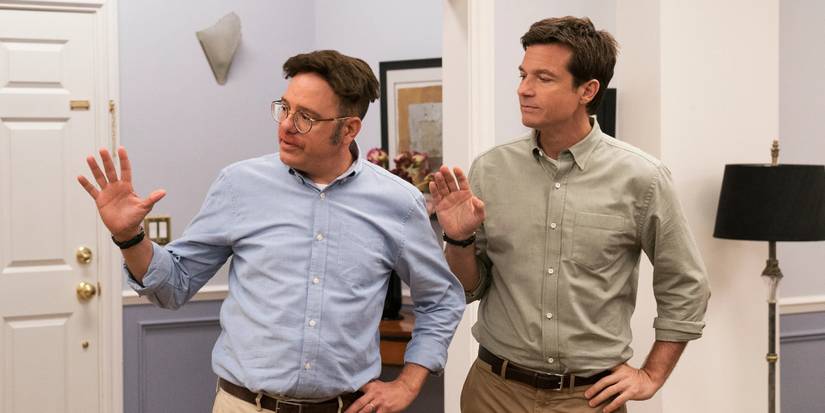
Michael Bluth (Jason Bateman) makes a pose while talking as Tobias Funke (David Cross) mocks him by mimicking his stance in ‘Arrested Development’ Season 5 (2019).Image via Netflix
Most American sitcoms follow friends or family, as these shows are perfect to watch with company, and one of the best family-fueled sitcoms is Arrested Development. The Bluth family is in the real estate business, but when the father, George (Jeffrey Tambor), is arrested, the remaining family members struggle to maintain the company, besides the one competent son, Michael (Jason Bateman).
If it weren’t for the later rebooted seasons, Arrested Development could have been the greatest American sitcom of all time. But still, this comedic masterclass is a staple of its era with one of the best casts of characters in the genre. Arrested Development had a great sense of callback humor and blink-and-you’ll-miss-it jokes, creating a rewarding watching system that had fans dying of laughter.
7
‘Parks and Recreation’ (2009–2015)
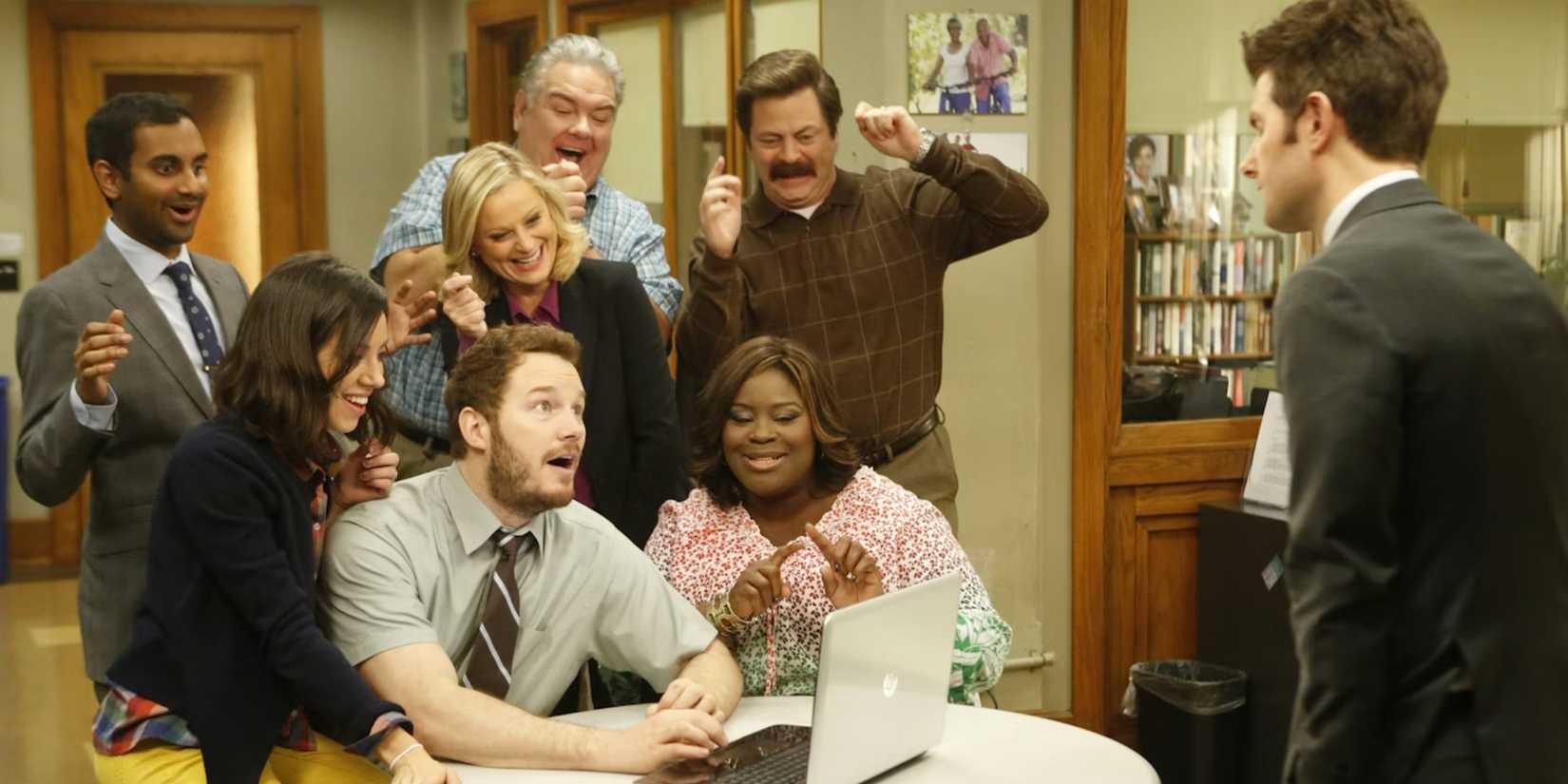
The cast of ‘Parks and Recreation’ gather around a computer and cheerImage via NBC
Most sitcoms overstay their welcome, with the final seasons dragging the content and never being as good as the original. However, that was not the case for Parks and Recreation, which ended too early. Set in a fictional town in Indiana, it follows the parks department and the craziness that comes with their seemingly mundane job.
What started as an almost spin-off of another sitcom became its own juggernaut of television, using the mockumentary style to deliver witty dialogue, political satire, and goofy characters. Parks and Recreation has surprisingly engaging worldbuilding and doesn’t lose a step in later seasons, progressing the plot naturally with a blend of warmth, comfort, and chaos.
Collider Exclusive · TV Medicine Quiz
Which Fictional Hospital Would You Work Best In?
The Pitt · ER · Grey’s Anatomy · House · Scrubs
Five hospitals. Five completely different ways medicine goes sideways on television — brutal, chaotic, romantic, brilliant, and ridiculous. Only one of them is the ward your instincts were built for. Eight questions will figure out exactly where you belong.
🚨The Pitt
🏥ER
💉Grey’s
🔬House
🩺Scrubs
FIND YOUR HOSPITAL →
01
A critical patient comes through the door. What’s your first instinct?
Medicine under pressure reveals who you actually are.
AStay completely present — block everything else out and work through it step by step, right now.
BTriage fast and delegate — get the right people on the right problems immediately.
CTrust my gut and move — I work best when I stop overthinking and just act.
DAsk the question everyone else is ignoring — what’s the thing that doesn’t fit?
ETake a breath, make a joke to cut the tension, and then get to work — panic helps no one.
NEXT QUESTION →
02
Why did you go into medicine in the first place?
The honest answer says more about you than the one you’d give in an interview.
ABecause I wanted to be where it matters most — right at the edge, when someone’s life is actually on the line.
BBecause I wanted to help people — genuinely, one patient at a time, in a system that makes it hard.
CBecause I was drawn to the intensity of it — the stakes, the drama, the feeling of being fully alive.
DBecause medicine is the most interesting puzzle there is — and I needed a problem worth solving.
EBecause I wanted to make a difference — and also, honestly, I didn’t know what else to do with my life.
NEXT QUESTION →
03
What do you actually want from the people you work with?
Who you want beside you under pressure is who you are.
ACompetence and calm — I need people who don’t fall apart when things get bad.
BTrust and reliability — I want to know that when I pass something off, it’s handled.
CConnection — I want colleagues who become family, even if that gets complicated.
DIntelligence and the willingness to be challenged — I have no interest in people who just agree with me.
EFriendship — people I actually like spending twelve hours a day with, because those hours are going to happen either way.
NEXT QUESTION →
04
You lose a patient you fought hard to save. How do you carry it?
Every doctor who’s worked a long shift has had to answer this question.
AI carry it. All of it. I don’t look for ways to put it down — that weight is part of doing this work honestly.
BI process it and move — you have to, or the next patient suffers for the one you just lost.
CI feel it deeply and lean on the people around me — I don’t think you’re supposed to handle that alone.
DI go back over every decision — not to punish myself, but because I need to understand what I missed.
EI grieve it genuinely, find some way to laugh about something unrelated, and try to be kind to myself — imperfectly.
NEXT QUESTION →
05
How would your colleagues describe the way you work?
Your reputation on the floor is usually more accurate than your self-image.
AIntense and completely present — no small talk during a shift, but exactly who you want there.
BSteady and dependable — not the flashiest in the room but never the one who drops something.
CPassionate and occasionally chaotic — brilliant on the hard cases, prone to drama everywhere else.
DBrilliant and difficult — right more often than anyone else, and everyone knows it, including me.
EWarm and self-deprecating — not the most intimidating presence, but genuinely good at this and easy to like.
NEXT QUESTION →
06
How do you feel about hospital protocol and procedure?
Every institution has rules. What you do with them is a choice.
AProtocol is the floor, not the ceiling — I follow it until the patient needs something it can’t provide.
BI respect it — the system is broken in places, but the structure is there for a reason and I work within it.
CI follow it until my instincts tell me not to — and my instincts are usually right, even when they cause problems.
DRules are for people who haven’t thought hard enough about when to break them.
EI try to follow it and mostly do — with a few memorable exceptions that still come up in meetings.
NEXT QUESTION →
07
What does this job cost you personally?
Nobody works in medicine without paying a price. What’s yours?
AEverything outside these walls — I’ve given this job my full attention and the rest of my life has gone around it.
BMy idealism, mostly — I came in believing the system could be fixed and I’ve made a complicated peace with that.
CStability — my personal life has been as chaotic as the OR, and that’s not entirely a coincidence.
DMy relationships — I am not easy to know, and the people who’ve tried to would probably agree.
EMy sense of gravity — I use humour as a coping mechanism, which not everyone appreciates in a hospital.
NEXT QUESTION →
08
At the end of a long shift, what keeps you coming back?
The answer to this question is the most honest thing about you.
AThe fact that it’s real — that nothing else I could be doing would matter this much, right now, today.
BThe patients — individual human beings who needed something and got it because I was there.
CThe people I work with — I have walked through impossible things with these people and I’d do it again.
DThe next unsolved case — there’s always another puzzle, and I’m not done yet.
EBecause despite everything — the exhaustion, the loss, the absurdity — I actually love this job.
REVEAL MY HOSPITAL →
Your Assignment Has Been Made
You Belong In…
Your answers have pointed to one fictional hospital above all others. This is the ward your instincts, your temperament, and your particular brand of dysfunction were built for.
Pittsburgh Trauma Medical Center
The Pitt
You are built for the most unsparing version of emergency medicine television has ever shown — one that puts you inside a single fifteen-hour shift and doesn’t let you look away.
You need your work to be real, not romanticised — meaning over drama, honesty over aesthetics.
You find purpose inside the work itself, not in the chaos surrounding it.
You’ve made peace with the fact that this job takes from you constantly, and gives back in ways that are harder to name.
Pittsburgh Trauma Medical Center demands exactly that kind of person — and you would not want to be anywhere else.
County General Hospital, Chicago
ER
You are the person who keeps the whole floor running — not the most brilliant in the room, but possibly the most essential.
You show up, do the work, absorb the losses, and come back the next day without needing the job to be anything other than what it is.
You care about patients as individual human beings, not as cases to solve or dramas to live through.
You believe in the system even when it fails you — and you understand that emergency medicine is about holding the line just long enough.
ER is television about endurance. You have it.
Grey Sloan Memorial Hospital, Seattle
Grey’s Anatomy
You came to medicine with your whole self — your ambition, your emotions, your relationships, your history — and you have never quite managed to leave any of it at the door.
You feel things fully and form deep attachments to the people you work with.
Your personal and professional lives are permanently, chaotically entangled — and that entanglement drives both your greatest disasters and your most remarkable saves.
You understand that extraordinary medicine often happens at the intersection of clinical skill and profound human connection.
It’s messy at Grey Sloan. You would not have it any other way.
Princeton-Plainsboro Teaching Hospital, NJ
House
You are drawn to the problem above everything else — the symptom that doesn’t fit, the diagnosis hiding underneath the obvious one.
You’re not primarily motivated by the patient as a person — though you are capable of caring, even if you’d deny it.
You work best when the stakes are highest and the standard answer is wrong.
Princeton-Plainsboro exists to house one extraordinary, impossible mind — and everyone around that mind is there because they’re smart enough to keep up.
The only way forward here is to think harder than everyone else in the room. That is exactly what you do.
Sacred Heart Hospital, California
Scrubs
You understand that medicine is tragic and absurd in almost equal measure — and that the only sane response is to hold both of those things at the same time.
You are warm, self-aware, and funnier than most people in your field.
You use humour to get through terrible moments — and at Sacred Heart, that’s not a flaw, it’s a survival strategy.
You lean on the people around you and let them lean back. The laughter and the grief are genuinely inseparable here.
Scrubs is a show about learning to become someone worthy of the job. You are still very much in the middle of that process — which is exactly right.
↻ RETAKE THE QUIZ
6
‘M*A*S*H’ (1972–1983)

Trapper John (Wayne Rogers) and Hawkeye Pierce (Alan Alda) in M*A*S*H.Image via CBS
War is no laughing matter, but somehow, fans couldn’t help themselves when it came to M*A*S*H, the first classic sitcom on this list. Set during the Korean War, this series follows the medical staff and doctors of a Mobile Army Surgical Hospital as they travel around the country helping patients and having fun while they do it.
Most sitcoms are pure comedy with some emotional moments, but M*A*S*H proved that they could be engaging dramas as well. This dramedy had a fun group of characters with hilarious and compelling arcs that blended natural with the dramatic moments and occasional high-stakes seriousness. The M*A*S*H finale is still the most-watched episode in American TV history, highlighting its legacy.
5
‘Curb Your Enthusiasm’ (2000–2024)

Larry David talking with his hands up in Curb Your Enthusiasm.Image via HBO
Larry David and Jerry Seinfeld are comedic geniuses with multiple sitcoms on this list, starting with Curb Your Enthusiasm. This show features an exaggerated version of David that chronicles his life in Los Angeles, usually speaking about awkward misunderstandings and minor inconveniences that get blown out of proportion.
David perfected the intersecting plot structure from his previous sitcom and adapted it into Curb Your Enthusiasm using improvised moments and authentic storytelling. This gave a much more personal and relatable style to this show, especially with the escalating cringe comedy that exposes the unspoken rules of modern society.
4
‘Seinfeld’ (1989–1998)
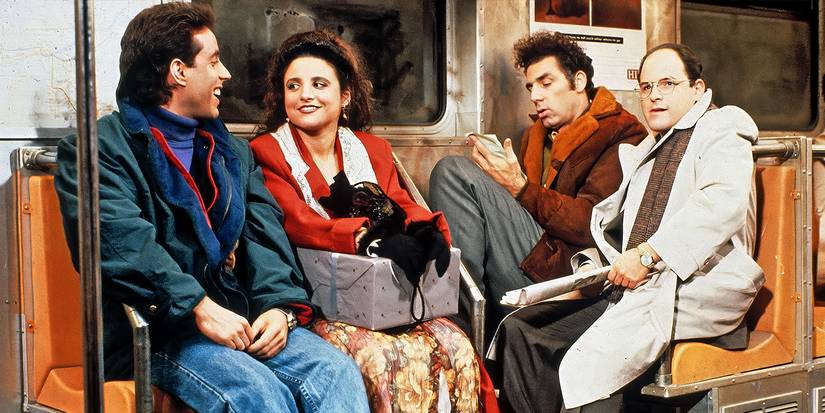
Jerry Seinfeld, Julia Louis-Dreyfus, Michael Richards, and Jason Alexander in “The Subway” in Seinfeld.Image via NBC
Speaking of the legendary comedy duo, the next American sitcom on this list was their first outing together, Seinfeld. Like Curb Your Enthusiasm, this series chronicles the life of Seinfeld in a dramatized way, following his hectic life as a comedian along with his eccentric friends as they try to understand daily life in New York City.
Famously dubbed “a show about nothing,” the creators stripped away the emotional constraints of sitcoms and focused on pure comedy, revolutionizing the genre. Seinfeld became such a television staple because of its narrative, which would take multiple seemingly disconnected storylines and slowly weave them together, creating an engaging story with gut-busting laughs.
3
‘Friends’ (1994–2004)
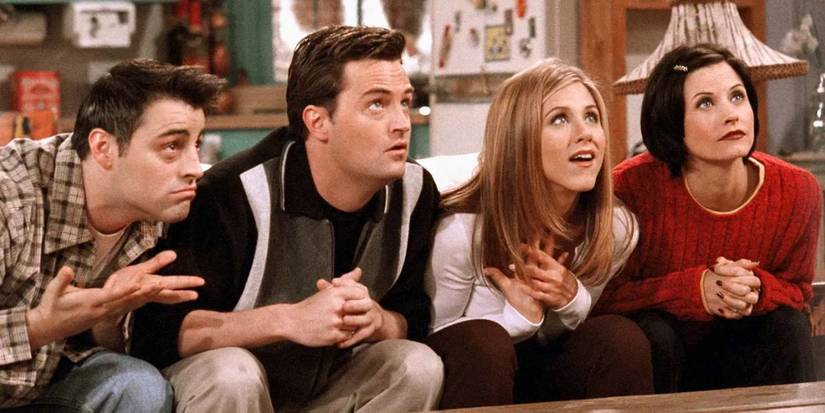
Joey, Chandler, Rachel, and Monica leaning in on ‘Friends’Image via NBC
Now that this list has entered the top three, each one is a historic series known for redefining American sitcoms, especially Friends, which an entire generation of fans grew up with. Following a group of close-knit friends living in the same or close-by apartments, it is about their lives together, from work to romantic relationships.
Friends is a show all about the heart and the importance of, well, friends. The charming comedy and feel-good style made it the perfect hangout show that featured relatable and endearing characters. No new American sitcom has come close to the vibe and charm of Friends, probably because the cast is one of the greatest of all time.
2
‘I Love Lucy’ (1951–1957)
Most of the American sitcoms on this list started from the 1990s to the 2000s, but the oldest one featured is I Love Lucy. The titular character, played by the legendary Lucille Ball, is an ambitious housewife who wants to break into show business, but every attempt and scheme usually ends in misadventure for her and those around her.
As the oldest sitcom on this list, I Love Lucy needed to remain a near-perfect masterpiece for it to still be remembered, and still to this day, it is a momentous show that revolutionized American comedy. Before this, most shows were filmed live, but this changed the game by filming in front of a live audience. I Love Lucy is the American sitcom blueprint, remaining a historic triumph of comedy that wasn’t afraid to tackle serious issues while reinventing TV.
1
‘The Office’ (2005–2013)
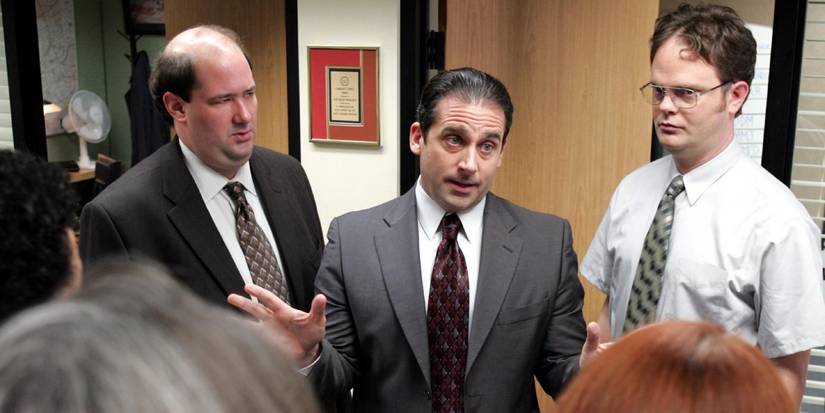
Michael Scott addressing workers in the pilot episode of The Office (2005)Image via NBC
How funny could a show about selling paper be? The answer is surprisingly hilarious, especially considering The Office is widely considered the best American sitcom. Set in a small Pennsylvania town, the employees of a paper company do anything but do their job because of their boss, who only wants to goof around and make life harder, yet more fun, for everyone.
Like many sitcoms, The Office fell off a cliff in later seasons, but even those lackluster episodes weren’t enough to diminish the greatest legacy in sitcom history. It popularized the mockumentary style and even broke the fourth wall, recognizing the surreal nature of the events. The Office isn’t just the best American sitcom; it is arguably the greatest sitcom of all time, and it did this through a balance of heart, chaos, cringe, and perfect writing.