
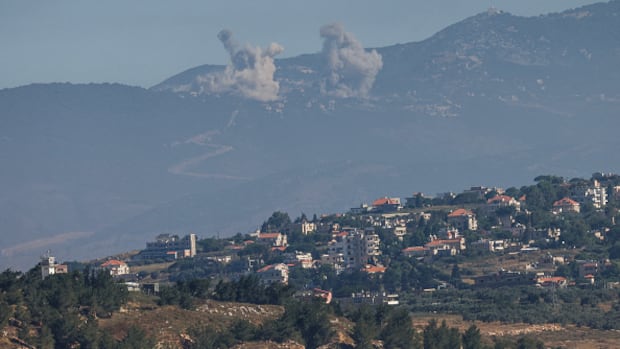
Israel and Hezbollah agreed on Friday to a ceasefire as the latest Israeli strikes killed at least 47 people in Lebanon, according to the Lebanese Health Ministry, and simultaneously threatened the nascent agreement between Iran and the United States to end their war in the Middle East.
Word of the ceasefire to begin late Friday came from two regional officials and a U.S. official. The truce was mediated by Qatar, the U.S. and Iran, the regional officials said.
A senior Israeli official told Reuters that Israel and Hezbollah were in a ceasefire, as long as Hezbollah did not attack Israel, but noted that Israel would keep its forces in southern Lebanon where it has occupied an area along Israel’s northern border.
A senior U.S. official previously told Reuters that the two parties had agreed to a ceasefire set to begin at 4 p.m. local time on Friday.
Israel and Hezbollah did not publicly comment.
It was not immediately clear what the ceasefire would entail in terms of its scope or duration.
Earlier, Israel’s military said it had struck targets throughout southern Lebanon overnight as Hezbollah reported intense fighting in the area.
Lebanon’s Health Ministry said that at least 47 people were killed and 97 were wounded in the airstrikes since midnight. Israel, meantime, said four of its soldiers had been killed in fighting in southern Lebanon, including a lieutenant colonel. An explosive drone attack hurt another five, it added.
The Israeli military also struck targets in Lebanon’s eastern Bekaa Valley on Friday.
U.S.-Israel tensions
Continued fighting in Lebanon could unravel the newly signed U.S.-Iran deal, which calls for an immediate halt to military operations “on all fronts, including in Lebanon” — where Israel has been battling Hezbollah — and for ensuring Lebanon’s “territorial integrity and sovereignty.”
The deal aims to end the war and has reopened the Strait of Hormuz to international shipping, while bringing the U.S. and Iran back to the negotiating table over Tehran’s nuclear program. Iran’s stranglehold on the strait had all but stopped the flow of oil through the key waterway.
U.S. President Donald Trump said he signed the agreement to avoid “economic catastrophe” in the U.S., after the war caused oil prices to skyrocket, made financial markets skittish and fuelled inflation.
WATCH | U.S. says it will restart military campaign if Iran breaches deal: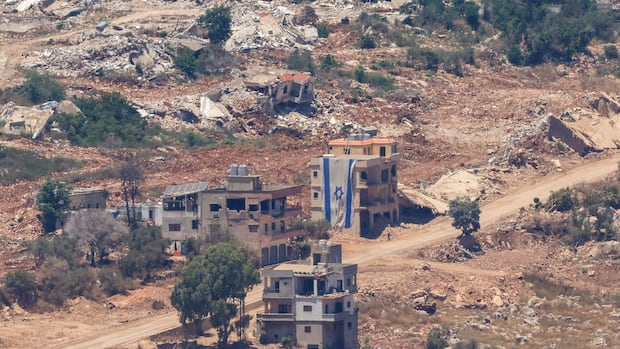
Israel operating in Lebanon as U.S. says it will restart military action if Iran breaches deal
The U.S. and Iran signed a memorandum of understanding in Versailles, France, on Wednesday night. While it’s a step toward a peace deal, tensions in the Mideast remain high.
Israel and Hezbollah — the Iran-supported group considered a terrorist entity by Canada and several other countries — are not parties to that agreement. Iran insists Israel must withdraw from the large swath of southern Lebanon it is occupying, but the wording of the interim deal doesn’t explicitly require that.
Israeli Prime Minister Benjamin Netanyahu, who faces elections later this year, has refused to withdraw, saying Israeli forces will remain in Lebanon until the threat from Hezbollah has been eliminated.
Trump has been openly critical of Netanyahu’s recent moves and said this week that Israel must exercise “good judgment” with respect to fighting in Lebanon. U.S. Vice-President JD Vance, meanwhile, criticized hardline members of Netanyahu’s cabinet who’ve spoken out against the U.S.-Iran deal.
Trump is “the only head of state in the entire world who is sympathetic to the nation of Israel at this moment in time,” Vance said.
Vance delays trip to Switzerland
Vance on Thursday put off his trip to Switzerland, where he had been set to lead the talks.
“The logistics of these negotiations have never been simple or predictable,” a White House spokesperson said in a statement.
Al-Mayadeen, a pan-Arab satellite channel that is politically allied with Hezbollah, said that Iran was delaying sending its delegation to Switzerland over Israel’s ongoing military campaign in Lebanon.
A Swiss Foreign Ministry statement said the talks had been postponed. Switzerland remains ready to facilitate these talks and the relevant preparatory work at Burgenstock is continuing, the statement added.
Trump signed the initial pact with Iran on Wednesday while dining with French President Emmanuel Macron at the Palace of Versailles, and it took immediate effect.
Following the signing, the U.S. said it had lifted its blockade, allowing oil tankers to begin freely moving through the Strait of Hormuz after months of being unable to use the critical channel.
Still, the tentative agreement has drawn sharp criticism from some in the U.S., including several congressional Republicans, who worry Washington ceded too much to Iran with relief from sanctions and a potential $300 billion US fund to help with rebuilding.
Several Republican allies of Trump in Congress questioned whether the administration conceded too much in order to end the conflict, as they look to preserve control of the Senate and House of Representatives in midterm elections in November.
In Iran, Supreme Leader Ayatollah Mojtaba Khamenei seemed to endorse direct negotiations, saying in a statement on state media that “it is obvious that the face-to-face negotiations that will be held in the future will not mean accepting the enemy’s opinion.”
It was Khamenei’s first reaction to the agreement, and it was interpreted as a shift in Iran’s approach. Hard-liners, especially Khamenei’s father, the previous supreme leader, have long opposed direct talks, especially after the U.S. pulled out of the 2015 nuclear deal between Iran and world powers.
The new supreme leader has not been seen in public since he was wounded in a strike at the start of the war. In addition to his father, Khameini’s wife and one of his sons were also killed in the early strikes.