

The question of whether Ottawa city councillors can or should veto transit tweaks in their wards triggered heated debate on Friday, as a committee delved into a scathing bus scheduling audit that faulted them for sometimes standing in the way of improvements.
A report from Auditor General Nathalie Gougeon said OC Transpo has sometimes looked to shift or remove bus stops in order to boost reliability or cut travel times, only to see the move blocked by the area’s city councillor.
Gougeon’s audit pointed to one specific example that would have redrawn a bus route, reduced stops and shortened travel distance.
The change was supported by a public survey, but still didn’t go forward “as it was not supported by the ward councillor.” The audit did not name a specific route, councillor or ward.
OC Transpo staff are supposed to have authority to make those tweaks independently. But the audit said that in practice, bus stop changes don’t go forward without the green light from the ward councillor.
It argued that a councillor veto can halt or delay needed improvements and make it harder to demonstrate that OC Transpo is getting value for money, recommending that management establish clear criteria to make sure changes to bus routes are supported by proper analysis.
As the report came to council’s audit committee for debate on Friday, the union that represents OC Transpo drivers and mechanics supported that advice.
“Let the professionals do their job and maybe not make minute changes to satisfy constituents on a regular basis,” said Noah Vineberg, president of Amalgamated Transit Union 279.
But some councillors pushed back, saying they’re responding to the needs of residents — like saving a bus stop near a retirement home.
“It’s actually a misnomer to call it councillor involvement. It’s our residents’ views that are reflected through the councillor,” said Bay ward Coun. Theresa Kavanagh. “It’s really hard to get that on-the-ground knowledge.”
Is there a veto?
Barrhaven West Coun. David Hill denied that councillors even have a veto at all. He said he pushed back against OC Transpo’s plans to remove parking on a street in his ward as part of last year’s wide-ranging realignment, branded as New Ways to Bus — to no avail.
“I said no, I do not consent to that. We had some conversations and that parking restriction went into place anyway,” Hill said. “I did not have a veto.”
Yet he said he felt listened to — and so did his residents. As the committee debated Gougeon’s recommendations, Hill said he wanted to make sure they don’t erode the ability of councillors to provide input into OC Transpo’s decisions.
“I don’t think there is a problem to be fixed here,” Hill said.
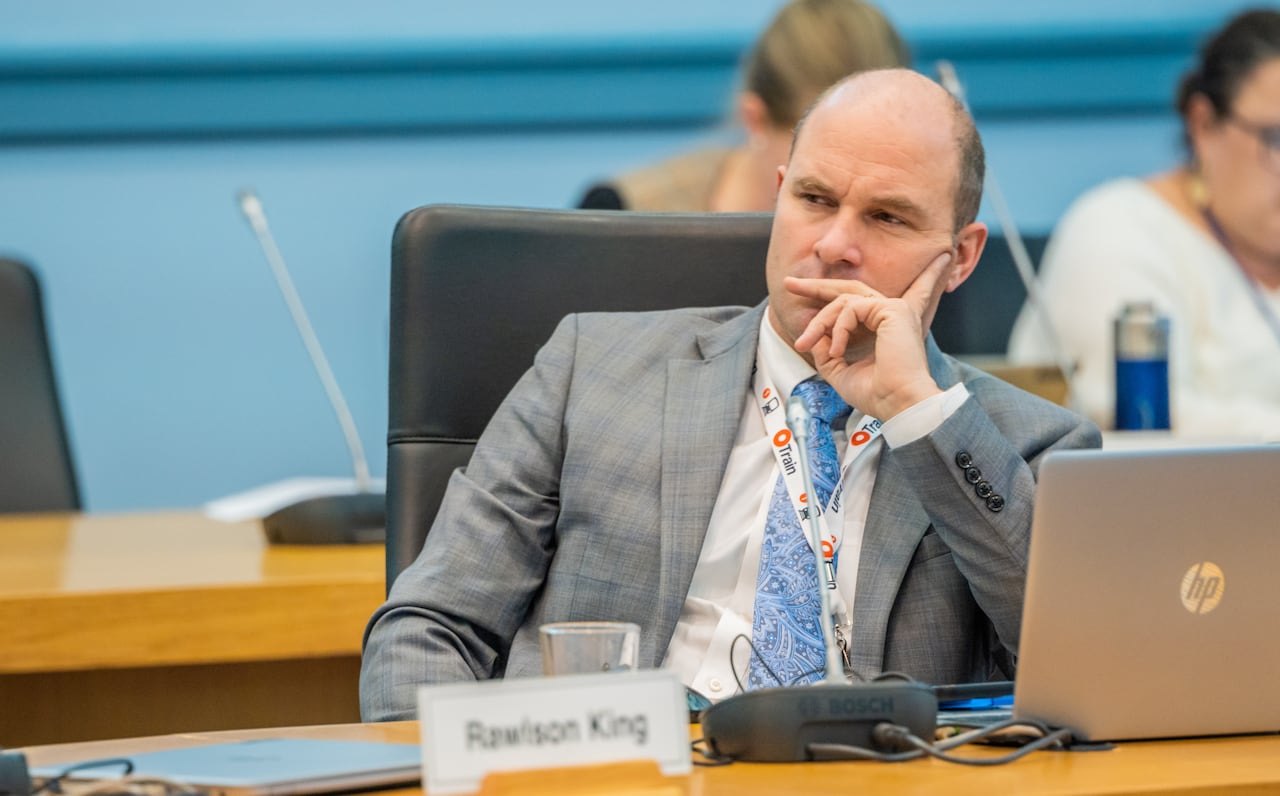 Barrhaven West Coun. David Hill at a transit committee meeting on Nov. 14, 2023. (Michel Aspirot/CBC)
Gougeon said councillor input is crucial and she’s not trying to remove it from the equation — but she wants to highlight that “decisions should be made soundly.”
It isn’t the first time she has faulted councillors for micromanaging staff and overruling decisions in their own bailiwicks.
Last month, she found that councillors were overruling city staff to fund favoured park improvements in their wards — but council voted to reject her recommendation to change that in an unprecedented snub of her advice.
‘Sold a fake bill of goods’
The bus audit went well beyond bus stops tweaks and councillor vetos, also finding fault with how OC Transpo staff design their bus schedules.
It found dozens of routes where run times don’t match reality, and said that last year’s New Ways to Bus route changes were based on old data.
OC Transpo had framed those changes as a way of bringing the bus system in line with new rail lines and ridership changes, but the audit suggested it was little more than a cost-cutting exercise.
“This made the public very cynical when they saw that,” said Kavanagh.
“It felt like we had been sold a fake bill of goods,” said Orléans South-Navan Coun. Catherine Kitts.
“Riders know it in their bones in terms of the failure of New Ways to Bus to deliver a more reliable service,” said Kitchissippi Coun. Jeff Leiper, who has pledged to reverse the changes as part of his mayoral run.
 OC Transpo’s new general manager Rick Leary speaks to reporters on March 27. (CBC)
But Rick Leary, the general manager of transit services, said OC Transpo is already taking action to fix the scheduling issues.
“As the auditor outlined, our schedules don’t reflect current traffic conditions,” he said. “Work to address these began early this year… we’ve already begun adding times to the schedules to seven routes, and we’ve seen significant improvements to reliability.”
He said more routes will see adjustments as of September, delivering more consistent service to about half of all passengers in the fall.
Accurate schedules won’t come free
Besides councillor vetoes, the audit focused on another way OC Transpo might not be making decisions based on solid analysis to get good value for money — by holding onto routes that essentially duplicate rail lines.
That includes the 105 from St-Laurent to the airport, and the E1 between Blair and Lyon stations. Together, those routes cost OC Transpo $5 million per year, and they use buses that could be devoted to other routes.
Gougeon suggested that councillors can play a role in improving the bus system. They can set priorities and help decide how OC Transpo can make trade-offs with limited resources.
Currently, OC Transpo doesn’t have clear direction on whether to privilege reliability or frequency. It can’t easily have both, her audit suggested, at least not for free.
“There is a trade-off,” said David Cooper, part of Gougeon’s audit team. “Investments in run time includes more buses and more staff potentially — or it’s a reduction in service.
“There’s a significant conversation that needs to be had either way.”