
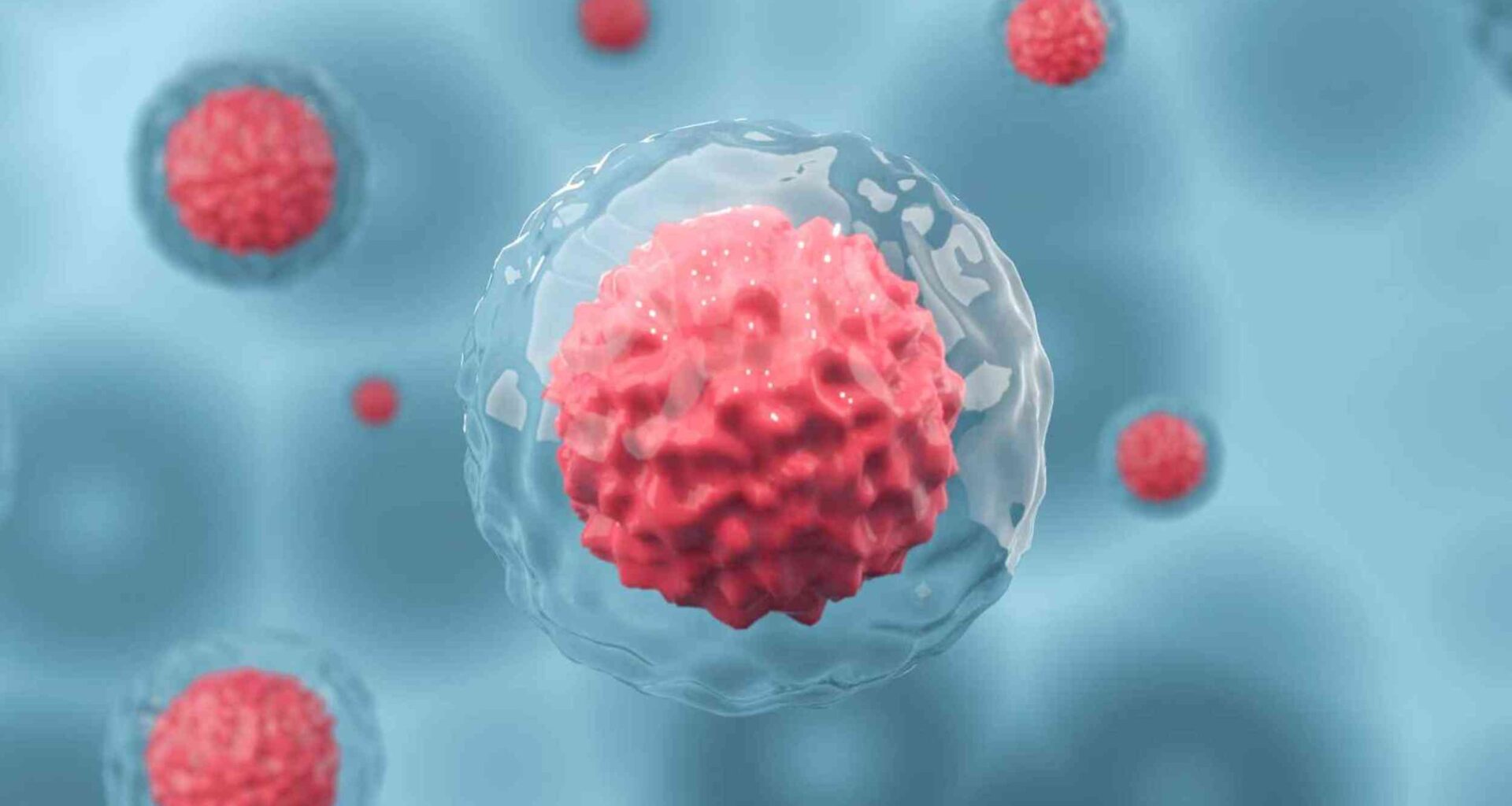
A human embryo grows from a single cell into a whole body, dividing until trillions of cells settle into place. Yet some cells survive by killing their neighbors, in a process called cell competition.
We tend to picture smooth teamwork. A new study suggests this destruction is one of the embryo’s own tools for staying on track, helping keep development on course.
Embryo cell competition

Growing a body is not an equal effort. Even at the two-cell stage, an embryo’s halves rarely contribute equally, and one study traced most of the future body to just one of them.
Cells that divide too eagerly can crowd out the rest, and runaway growth like that is how cancers begin. As a guard, embryos can turn some cells into killers that eliminate their neighbors.
This killing is common, seen in creatures as distant as fruit flies and mice. The puzzle is why such a costly habit survives in a cooperative process.
Nika Shakiba, a bioengineer at the University of British Columbia (UBC), chased the answer with theoretical biologist Maria Abou Chakra at the University of Toronto.
Turning cells into players
Their plan paired two unlike tools: a mathematical game and a living embryo in a dish. The game drew on game theory, the math of competition, with each cell a player chasing a payoff.
Each round, a cell faced three choices: divide and add a cell, kill one nearby, or do nothing. Each cell worked toward a target, the count an embryo must reach at a developmental checkpoint.
Miss the target in either direction and survival odds fell, dragging down every cell’s reward. In a single-round version, killing never paid. The winning move was always to divide.
When killing pays off
Killing earned its keep only once the game ran several rounds, as in real development. Add time, and a new logic surfaced: when survival odds were low and the target was hard to reach, killers thrived.
It came down to size. A killer that strikes gives up its own chance to multiply, a real sacrifice. But the move pays off when the embryo overshoots and needs trimming back into range.
Flexible cells did best of all. They divided when the embryo ran small, killed when it grew too big, and adjusted round by round. Rigid cells stuck on one move fell behind.
Growing embryos in dishes
A model means little without a reality check, so the team tested its predictions on living tissue. They grew embryoids, lab-made clumps of human stem cells.
The clumps came from a system reported in an earlier model of post-implantation growth. Left alone, they organize into structures resembling an embryo just after implantation.
Each forms the fluid-filled amniotic cavity that appears at that stage, and they vary in size, as real embryos do.
Size tracked success closely. A healthy embryoid forms one clean cavity, while a defective one forms several. The winners matched a real embryo’s size at that stage; the losers grew too big.
Blocking the cleanup
To test whether cell death did the trimming, the team treated some embryoids with a compound that blocks their self-destruct program.
The blocked clumps kept growing, and more of them swelled past the healthy size range.
More of those oversized clumps then failed, forming clusters of several cavities instead of one. Cell death had held the embryoids at the right size, and removing it tipped them toward defects.
Where the dying cells gathered was telling. They massed in the embryoid’s lower layer, destined to become supporting tissue.
That hints the embryo sheds its most expendable cells first. Division also slowed as the structures grew larger.
Threat without a strike
The model held one more surprise. A cell that kills only when needed sways its neighbors even without striking. Its mere presence acts as a threat, enough to keep the rest from over-dividing.
In the simulations, the bare presence of these on-demand killers held reckless dividers in check. Over-eager cells stayed rare, kept honest by the constant risk of being wiped out.
Competition, oddly, bred cooperation.
Until now, no one had tied this killing to whether a human embryo succeeds. Classic cell competition fires when a cell senses it is weaker than a neighbor.
Here the trigger was different, a group-wide signal about size. Long seen in mice, the behavior had never been caught in human tissue before.
Implications for fertility
The findings carry real weight for would-be parents. Something close to half of human embryos never implant, and clinics still have few dependable ways to tell which ones will thrive.
Fertility labs already watch timing, tracking how fast an embryo’s cells divide to spot the ones likely to implant, as one review shows.
The new study adds another signal worth tracking: the cells that trim and threaten.
Early human development was long a black box. Now it holds a clear new entry, with cell killing recast as a tool the embryo uses to manage its size.
With reliable markers, embryologists may better judge which embryos will thrive.
The study is published in the journal Nature Communications.
—–
Like what you read? Subscribe to our newsletter for engaging articles, exclusive content, and the latest updates.
Check us out on EarthSnap, a free app brought to you by Eric Ralls and Earth.com.
—–