
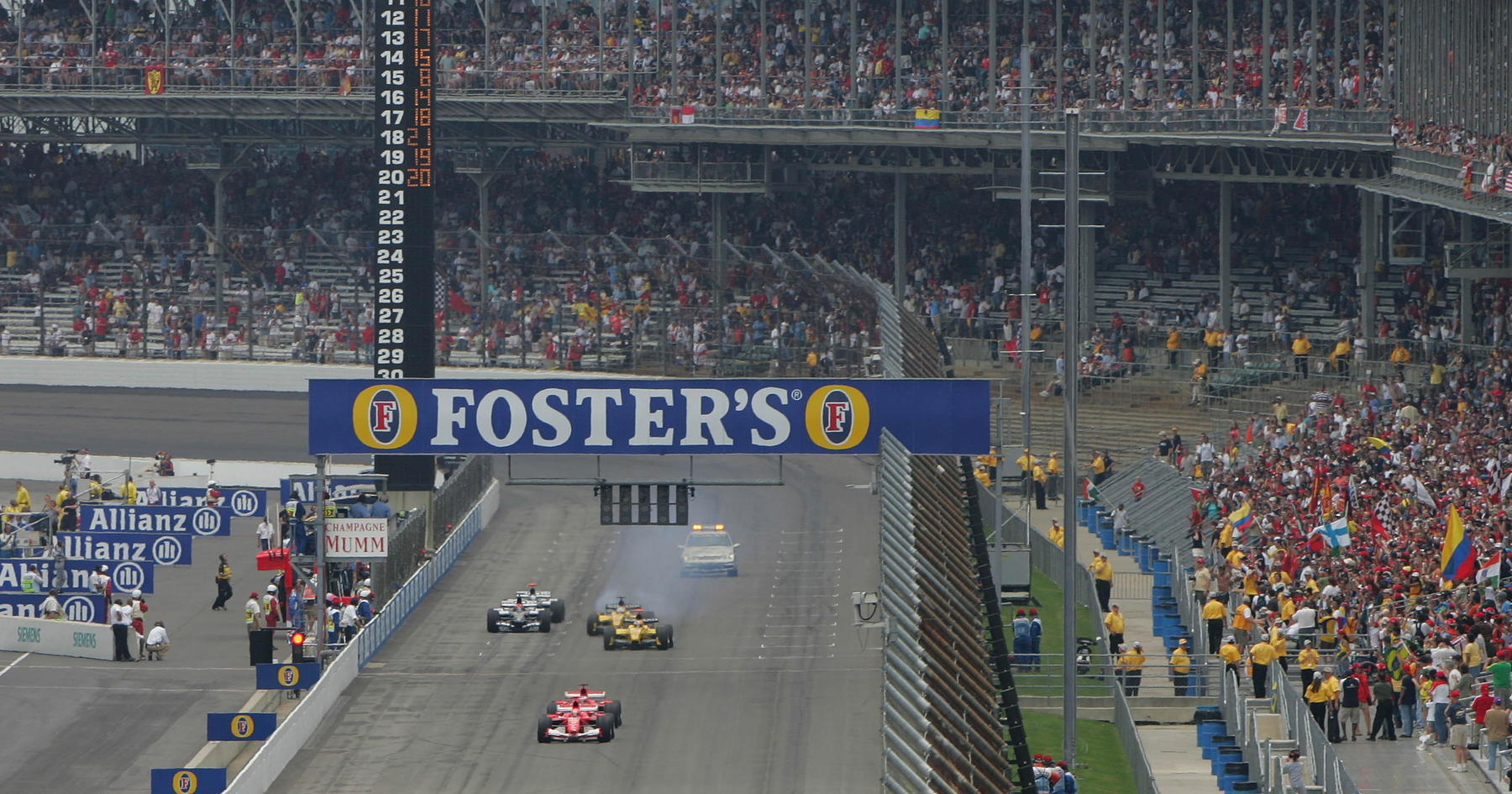
21 years ago today, Formula 1 suffered one of its most embarrassing moments when just six cars lined up on the grid at the Indianapolis Motor Speedway for the 2005 United States Grand Prix.
What should have been a showcase for the sport on American soil turned into an absolute farce, one that left fans furious, the paddock divided, and F1’s credibility in tatters.
The crisis was triggered during Friday practice when Ralf Schumacher’s Toyota suffered a violent tyre failure at Turn 13, the high-speed banked final corner borrowed from the famous oval.
A second failure for stand-in driver Ricardo Zonta in the same corner compounded the alarm. Michelin’s subsequent investigation concluded that its tyres simply could not safely withstand the loads generated through that corner for a full race distance on the newly resurfaced track.
Under the 2005 regulations, tyre changes during the race were banned. One set had to last the entire grand prix. That was the crux of the problem.
Michelin’s rejected solutions
Michelin proposed several solutions: a temporary chicane before the banked corner, dispensation to change tyres mid-race, or permission to use an alternative tyre specification flown in from Europe.
The FIA rejected every proposal, arguing that altering the track layout or tyre rules at the last minute would be unsafe and grossly unfair to Bridgestone teams who had brought rubber capable of handling the circuit.
The result was devastating. All 20 cars completed the formation lap before the 14 Michelin-shod machines peeled into the pit lane and withdrew.
Ferrari’s Michael Schumacher won from teammate Rubens Barrichello, with Jordan’s Tiago Monteiro claiming a remarkable, if hollow, maiden podium. All six starters scored points.
Felipe Massa, a Michelin-supplied Sauber driver at the time, summed up the mood: “I feel really bad, but I feel like every Michelin driver. This is bad for the sport.”
Bad barely covers it. The damage to F1’s reputation in the United States lingered for years, and the sport would not return to Indianapolis after the 2007 season.
Given the embarrassment of the 2005 race, what F1 has gone to achieve in the United States is extraordinary and at least evidence that even the worst of events can be recovered from.