
Welcome to Noshgate, the latest silly language battle since … er … I wrote about other silly language battles last week.
The language cops’ targeting of the Yiddish word “nosh” (meaning “have a nibble”) at Arthurs Nosh Bar is reminiscent of their battles with “pasta” and phrases like “Go Habs Go” — both eventually abandoned.
I keep waiting for them to demand Thai restaurants convert “pad Thai” to “pad cravate.”
Their picking on the word “nosh” is almost too easy to satirize. This will likely be abandoned, hopefully before embarrassing stories appear in the international media.
But why can’t we avoid these petty hassles in the first place?
To use another Yiddish word, Quebec bureaucrats are being “nudniks” about nosh. A nudnik describes a “persistent pest or nag” who drones on about trivial details.
In French, it’s an “enquiquineur” — an “irritating, bothersome person.”
That sounds like some of our language cops when chasing after runaway apostrophes.
But with Quebec’s national holiday coming up Wednesday, let’s not dwell on this latest idiocy. Instead, let’s celebrate why “nosh” is very representative of Montreal today.
For starters, “nosh” is a perfect fit in a city full of celebrated restaurants with English or Frenglish names, like Foxy, Montréal Plaza and Knuckles — all run by prominent francophones who want a punchy, global-sounding brand.
Also, the playfully named Foiegwa restaurant (a pun on how we anglos say “foie gras”), co-owned by a well-known francophone chef.
Similarly, many French-named restaurants are owned by anglophones declaring their Quebec roots and pride. Old Montreal’s terrific Garde-Manger is owned by celebrated anglos, including chef Chuck Hughes and Canadian actor Tim Rozon.
The famed Vin Papillon restaurant was co-founded by anglo chef David McMillan. In Montreal, restaurants mix and embrace all our worlds.
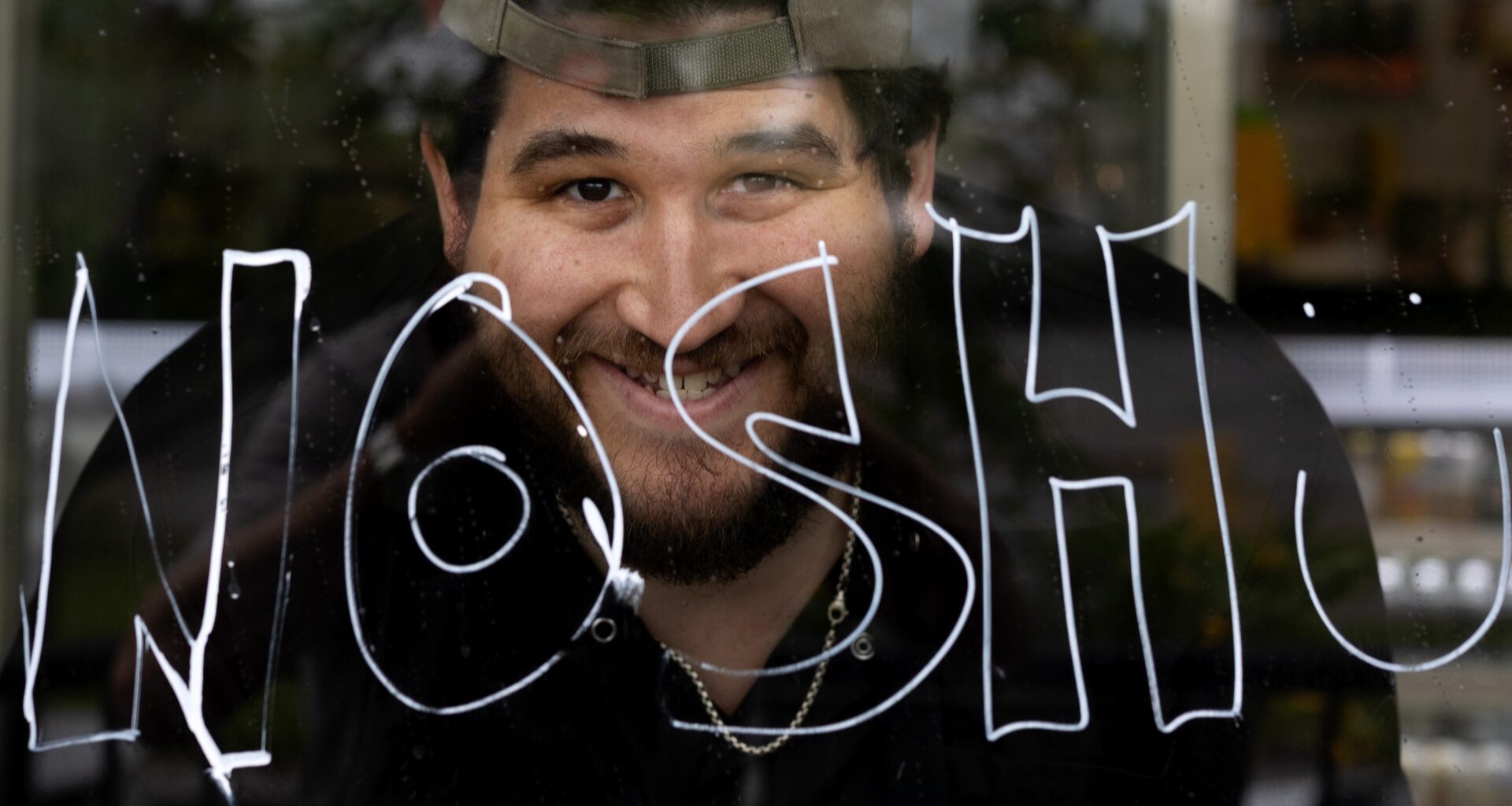
That’s why more than 20 chefs have protested against the nosh nudniks and several have scrawled “nosh” on their restaurant windows.
You hear the same linguistic mix on our streets, where anglophones, francophones and xylophones change languages as often as they change lanes on Décarie Blvd.
Last week, after a tennis game, I spent an hour with a francophone player speaking only French to be polite, while he relentlessly replied in English to be polite.
We had a great time, in a classic Montreal conversation.
Days earlier, I stood on a Plateau street for 40 minutes with a francophone bike activist, gabbing strictly in French because my second language is better than his.
But a week earlier, I had a long talk with a francophone journalist entirely in English. Why? She long worked for English TV and speaks my language better than I do, so we default to the smoothest tongue.
We Montrealers do this instinctively: a complex dance that shifts constantly, depending on whose second language is best.
This is something I love about Montreal, so I hate when language bureaucrats get in the way to justify their jobs or recently increased budget.
Take the never-ending Bonjour-Hi controversy. Store staff and shop owners seem happy to chirp the bilingual greeting, which infuriates government officials. But it’s just about seeing what language your customer might prefer to speak.
Frankly, I don’t care if you add “hi” to your “bonjour” or not. But the greeting often reveals people’s accents and avoids those weird French-language chats where you suddenly realize you’re both anglos.
I always start in French with store or phone service people, though I use English with tech companies like Vidéotron. It’s hard enough to follow their technicians in English as they tell me to crawl under my couch to do something like: “Connect the HDMI 2.1 RG6 ethernet coaxial cable to the high bandwidth optical fibre audio panel.”
Editor’s Picks
Likewise, when I’m calling Quebec government health or tax offices, I want to understand every last syllable — not mistake a simple upset stomach (crise de foie) for a liver (foie) crisis.
But recently, even when we do select English, we must still punch through several all-French menus to get there. As reader Jeremy P. wrote me last week:
“Every time I call adaptive transport — oops — transport adapté, I have to listen to French first, press the (English) button, then listen to all the rules about whether I am entitled to listen and communicate in English.”
But, of course, when Jeremy finally gets to a human, “the agents who answer the phone are all very polite and nice.”
We ordinary non-bureaucratic Montrealers all know the important thing is to communicate with and respect each other, not pass a government language test.
How did we anglos become the “Press 9” people, anyway? Were the 2 through 8 buttons taken by other languages? Whatever — like many anglos, I’ve been pressing 9 more often lately.
We’re trying to send a message to the government saying SOS — Save Our Services — by showing they’re needed. So press 9 if you’re an anglophone on the telephone with a gallstone.
But again, this week, I’d rather celebrate than just berate. Because there’s a lot Quebecers do right when our government isn’t manufacturing dissent.
As well, whether anglophone, francophone or otherphone in this city, we are all good at noshing.
So, Bonne Fête this Wednesday, everyone.
Happy nosh, from Josh.