

Listen to this article
Estimated 4 minutes
The audio version of this article is generated by AI-based technology. Mispronunciations can occur. We are working with our partners to continually review and improve the results.
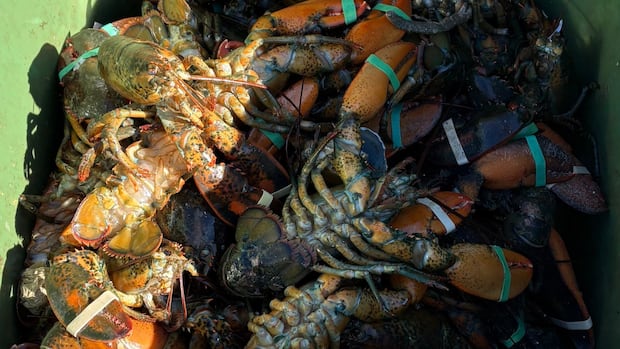
A seafood exporter says he is increasingly concerned about lower quality and higher mortality rates of lobster during the fishing season off southwestern Nova Scotia.
Stewart Lamont, managing director of Tangier Lobster, said the harvest from November to February from Lobster Fishing Areas 33 and 34 was well below expectations.
“The shell quality was less than normal, the protein was less than normal, and these were lobsters which were not fully meated,” he said, adding that he saw similar quality the winter before.
Lamont added that as a live-lobster exporter, he also noticed some of the winter lobster having a shorter shelf life, with some of the product dying on its way to international markets.
“Huge concerns, not just by me, by virtually every stakeholder that I know in the entire fishery,” said Lamont.
In a statement, the Department of Fisheries and Oceans attributed the issue to shifting water temperatures and disrupted moulting cycles.
“While the Gulf of Maine has generally been warming over the long term, recent years—especially in southwest Nova Scotia—have been cooler than average,” the statement said.
“These shifts can affect the timing of moulting and how quickly lobsters recover afterward.”
 Stewart Lamont, managing director of Tangier Lobster, said the spotty quality concerns him. (Stewart Lamont)
The provincial Department of Fisheries and Aquaculture said in a statement that it is aware of these concerns, and it is “collecting information from licensed lobster buyers to better understand mortality in their facilities.”
“For November and December 2025, licensed buyers reported 813,612 pounds of lobster mortality, representing about 2.7 per cent of the total volume purchased during that period,” said a spokesperson for the department.
Lamont says he estimates the mortality rate is higher and is distributed between different stages of the supply chain, from harvest to export.
Some in the industry have raised a possible way to mitigate the bad quality: giving the lobster more time to recover from the moult by delaying the season.
“I’m open to it. And I think most people at this point are,” said Thomas Amirault, a Lower East Pubnico lobster fisherman for 36 years.
“This is the economic backbone of southwest Nova, where I’m from. Without lobster, this place is going to be in real, real, real trouble.”
Still, even with a delay, he says this would not be a silver bullet for this issue.
The federal government said there is precedent in other fishing areas where harvesters in northeastern Nova Scotia have asked to move the start of the season.
“For example, following a request from harvesters in LFAs 27-32, DFO implemented a pilot project to vary the opening date for these LFAs to allow them to open seven to 10 days early for adaptability to climate change,” the department said.
“At this time, the department has not received requests for management changes from harvesters in LFAs 33 or 34.”
Bernie Berry, who has been fishing for more than 40 years in Yarmouth, said the season could be delayed by a few days, but more than that could mean fishermen miss critical markets.
“You can tinker with the opening a little bit, but you can’t push the opening back to make sure every lobster is a quality price because you simply miss, well, several of the huge markets. Like you’d miss Christmas, New Year’s,” said Berry.
Ultimately, both fishermen agree that this is affecting the industry’s bottom line, and that, combined with other factors like threats of tariffs and higher fuel costs, is adding stress to businesses.
“The selling side, the processing side, it always trickles down,” said Amirault.
“It ends up being a lesser quality product for them. And in turn, they anticipate that and start us at a lower price.”
MORE TOP STORIES