

Listen to this article
Estimated 3 minutes
The audio version of this article is generated by AI-based technology. Mispronunciations can occur. We are working with our partners to continually review and improve the results.
For the first time since 2008, the Alberta Gaming, Liquor and Cannabis Commission has raised the minimum prices that bars and restaurants need to charge for alcoholic drinks.
“Following a review of policy, several amendments were made to the liquor licensee handbook to ensure that it continues to meet the needs of licensees and AGLC,” Karin Campbell, an AGLC spokesperson, said in a statement to CBC News.
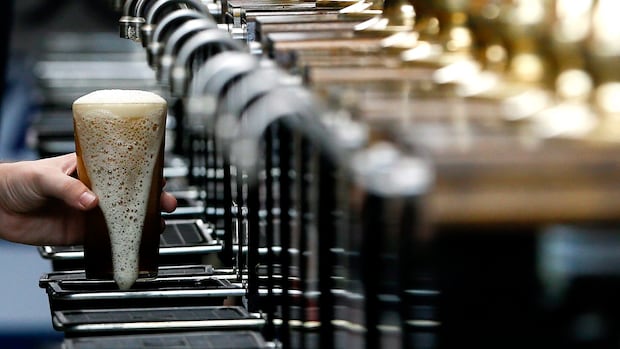
The new rules, which were announced on June 9 and took effect immediately, set the minimum price for draft beer at $0.25 per ounce, up from $0.16 per ounce.
This means a 20-ounce pint of beer must now cost a minimum of $5, up from the previous minimum of $3.20.
Bottled or canned beers, ciders, coolers and spirits and liqueurs have increased from a minimum of $2.75 per can or bottle to $4 per can or bottle.
The Pint Whyte is a popular bar in Edmonton that regularly hosts happy hours and what it calls “pint power hours.”
WATCH | Are Albertans still buying U.S. liquor? :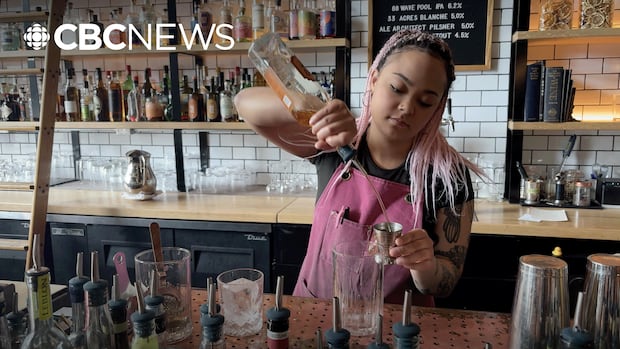
Is U.S. alcohol selling in Alberta?
As trade tensions continue running high between Canada and the United States, some provinces’ U.S. alcohol bans are back in the spotlight. But in Alberta, American booze is still on the shelves and at the bar. So CBC News’ Sam Brooks went to find out: are people actually buying it?
Last summer, the bar said it was advertising $2.99 beers, shots and highballs. Following the amendments to Alberta liquor licences, the bar now advertises $5 tequila, highballs and “shafts.”
However, Duncan Ross, the bar manager, said Pint Whyte is planning on keeping most of its regular prices the same, as long as possible.
“We’re ready for it,” he said.
“This place specifically is a student bar, so everyone’s very price sensitive. So unless it really starts cutting in, we’re not going to be raising the prices.”
A 2016 report by a non-profit organization called the Alberta Policy Coalition for Chronic Disease Prevention noted that 30 per cent of Albertans exceeded Canada’s low-risk alcohol drinking guidelines in 2013.
The same report noted that 76 per cent of Alberta high school students who drink reported binge-drinking.
A 2026 brief by the Canadian Centre of Recovery Excellence, a Crown corporation in Alberta, notes that alcohol-related deaths across Canada increased by 17.6 per cent between 2020 and 2022, with Alberta, Manitoba and Saskatchewan experiencing the highest number of excess alcohol-related deaths and hospitalizations.
Campbell said the change in prices reinforces the AGLC’s commitment to “reducing alcohol-related harms by encouraging moderation and discouraging binge-drinking behaviours.”