
Moss seems to get by on almost nothing. It colonizes bare rock, survives near-total desiccation, and springs back minutes after rain.
The vast majority of land plants form underground partnerships with fungi, trading sugars for nutrients they can’t reach alone. Mosses had always been treated as the exception.

New research from California’s desert landscapes suggests that assumption was wrong.
Scientists have found evidence of a previously undocumented relationship forming inside the tissues of desert moss.
What they observed under the microscope hints at a connection that may be older than almost anything we know about plant life on land.
Looking inside desert plants
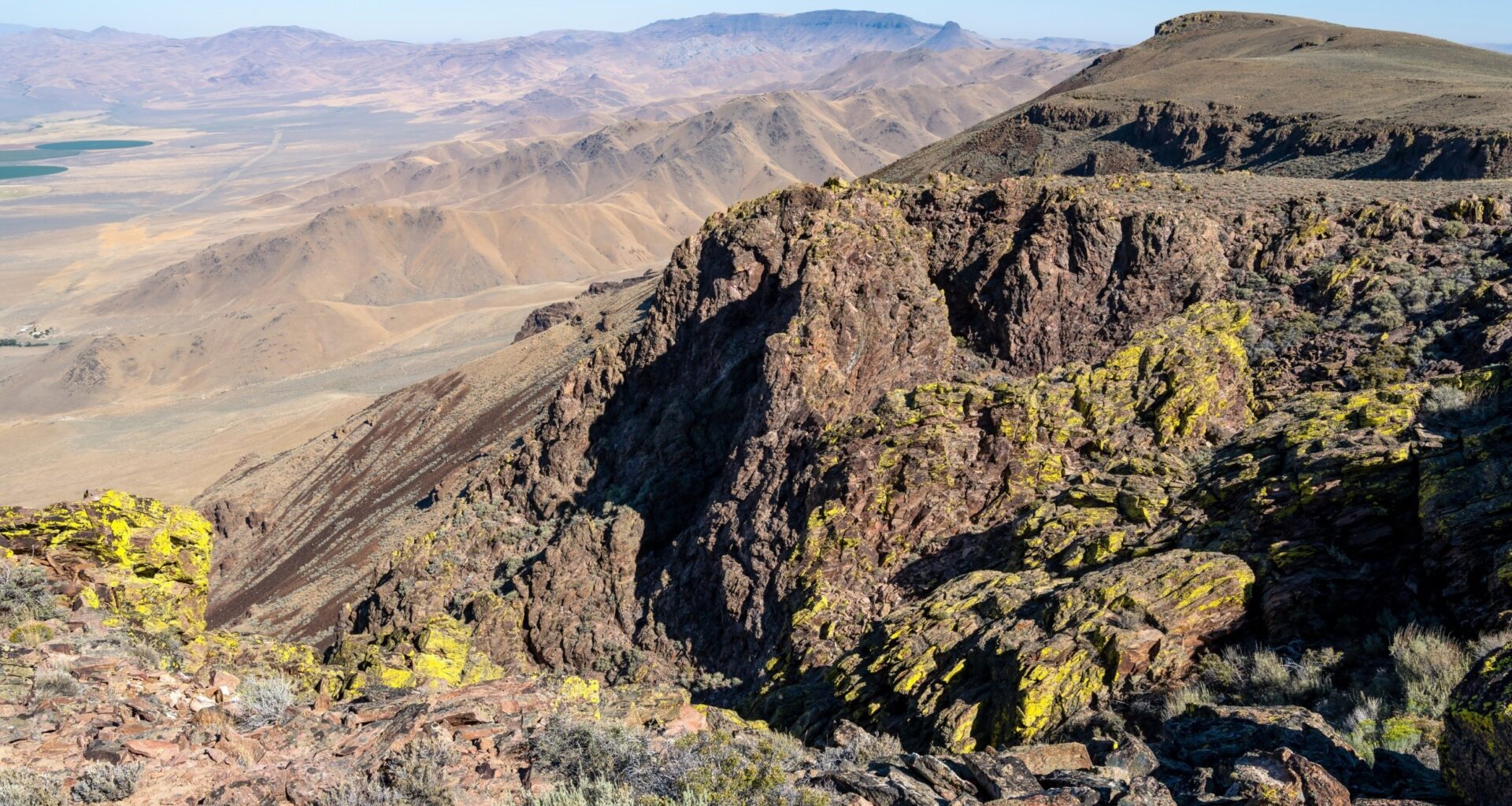
Kian Kelly, a doctoral researcher at the University of California, Riverside, collected desert moss from volcanic rock fields and granitic soils in the Mojave and Sonoran deserts, where summer temperatures routinely exceed 100 degrees Fahrenheit.
His focus was biocrusts – thin living communities at the soil surface where mosses, algae, bacteria, and fungi form a crust that stabilizes terrain.
Kelly also gathered samples from less arid coastal sites, building a deliberate range of climate conditions to compare.
His co-author, Jason Stajich, a professor of microbiology and plant pathology at UCR, had long accepted the scientific consensus.
“That’s been the model,” Stajich said. Mosses, the thinking went, simply didn’t engage with fungi.
To test that model, researchers surface-sterilized each moss sample – stripping away external organisms – then ground up the tissue and searched for fungal DNA.
The goal was to isolate what was living inside the plant, not just clinging to it.
Fungi that need hosts
Among them were mycorrhizal fungi – specifically, a group called arbuscular mycorrhizal fungi, or AMF.
The material found inside the sterilized moss was distinct from what came out of bare dirt collected just inches away.
Unlike decomposers that drift freely through soil, AMF cannot survive without a living plant host.
A review of this symbiosis has documented how the great majority of land plants depend on AMF to pull phosphorus and nitrogen from the soil in exchange for carbon.
Prior surveys had consistently placed mosses outside that arrangement.
These organisms cannot survive without a living plant partner, which makes their presence inside sterilized moss tissue harder to dismiss as accidental contamination.
Whatever was inside the moss was keeping them alive.
Fungi living inside leaf cells
DNA evidence alone couldn’t confirm live colonization. Kelly used a chemical stain that binds to fungal tissue and examined the samples under a microscope.
Inside the cells of the moss species Trichostomopsis australaceae – a common desert moss – branching fungal structures appeared within individual leaf cells.
“As soon as I saw that, I knew we had something really interesting,” Kelly said.
In plants that form true symbioses with fungi, AMF builds small, repeatedly branching structures inside root cells to exchange nutrients.
Mosses don’t have roots. Yet what Kelly observed in the leaves was structurally similar – close enough that researchers call them “arbuscule-like.”
No prior study had documented this kind of intracellular branching inside healthy moss cells.
Aridity changes the mix
The same moss species gathered from coastal sites near San Diego, California had far higher concentrations of AMF than samples from hyper-arid Mojave Desert locations.
The intracellular structures seen at the coast were absent in the driest material.
“We suspect that certain fungi are more helpful for surviving hotter, drier climates,” Kelly said.
Extensive research has documented how physical disturbance and warming disrupt biocrust communities, with effects that cascade into erosion, carbon loss, and dust generation across dryland regions.
Desert biocrusts are already under significant pressure from rising temperatures and human activity.
That has direct implications for how these communities survive a warming climate.
As the American West grows drier, the fungal mix inside desert moss may change in ways that reduce mosses’ ability to withstand heat and drought.
An old partnership, revisited
Mosses are closely related to some of Earth’s earliest land plants.
Fungi are thought to have helped those ancient pioneers move from water to dry ground some 470 million years ago, providing nutrients the plants couldn’t reach on their own.
A study on the evolutionary history of land plant and fungal associations supports the idea that some kind of fungal partnership was in place at the very origin of plant life on land.
Mosses had been written out of that story. This finding puts them back in.
If the relationship holds under further testing, it would also change what we know about when these partnerships first appeared in the lineage that led to modern land plants.
What comes next
Before the relationship can officially be called a symbiosis, researchers need to show that nutrients are actually moving between moss and fungi.
The structural evidence is consistent with that kind of exchange, but observation alone isn’t sufficient.
The implications reach beyond evolutionary biology. If specific fungi help mosses tolerate drought and heat, those organisms might eventually be used to help restore damaged biocrust across warming desert landscapes.
Nearly all of the more than 10,000 known moss species have never been examined for fungi living inside their tissues.
This discovery suggests there may be many more hidden partnerships waiting to be found.
The study is published in the journal New Phytologist.
—–
Like what you read? Subscribe to our newsletter for engaging articles, exclusive content, and the latest updates.
Check us out on EarthSnap, a free app brought to you by Eric Ralls and Earth.com.
—–