

Listen to this article
Estimated 6 minutes
The audio version of this article is generated by AI-based technology. Mispronunciations can occur. We are working with our partners to continually review and improve the results.
An addictions treatment and recovery facility in Owen Sound, Ont., is being nationally recognized for its unique approach which combines stable housing and integrated care for individuals with complex needs.
Brightshores Health System received the 2026 National Award of Excellence in Mental Health and Addictions Quality Improvement by the Canadian College of Health Leaders for its “first-in-Ontario” model.
Beth Morris is Brightshores’ vice president of clinical programs and quality, and chief nursing executive. She told Afternoon Drive host Matt Allen that the facility’s services has led to a reduction in emergency room visits in Grey-Bruce County and is inspiring other municipalities.
The following has been edited for length and clarity.
Matt Allen: So, someone walks into the centre looking for help … what will they experience there that is different than any of the other recovery centres in the province?
Beth Morris: Our Wellness and Recovery Centre is really a unique program that delivers wraparound care to people who are experiencing addiction. Under the roof of the wellness centre, we offer mental health treatment, addictions treatments and wraparound supports and programming.
And the centre is a combination of inpatient care, but also outpatient care. So people can get connected right from the very beginning when they start their their treatment for mental health and it can continue up to a year. So people are coming in and really getting connected with all of the services they need, both as inpatients and as outpatients.
MA: Who are these people typically that come there?
BM: These are folks who are experiencing mental health and addictions challenges. Some of them are coming to us from our community, we do have people who are coming from outside of our community, but really we’re serving around 882 square kilometers in the Grey-Bruce area.
MA: Somebody comes in, they’ve been struggling with something and they’re looking for help. How does that happen practically? What are some of the things they’re experiencing?
BM: Well day one you get in there and you’re going through the physical withdrawal from whatever substance you’re using. But right at that time, while we’re providing you with medical care, we are also getting you connected with services that you’re going to need in the community. For example, you might need housing, or you might need therapy support, or a peer support worker or help with income. We can get you connected right at that time.
So you’re not coming in for a short medical stay, to start your withdrawal and then getting sent to go home and wait to get connected with a mental health counselor, psychologist, or psychiatrist or what have you. We’re doing that all under one roof and I think that’s really what makes it different and special.
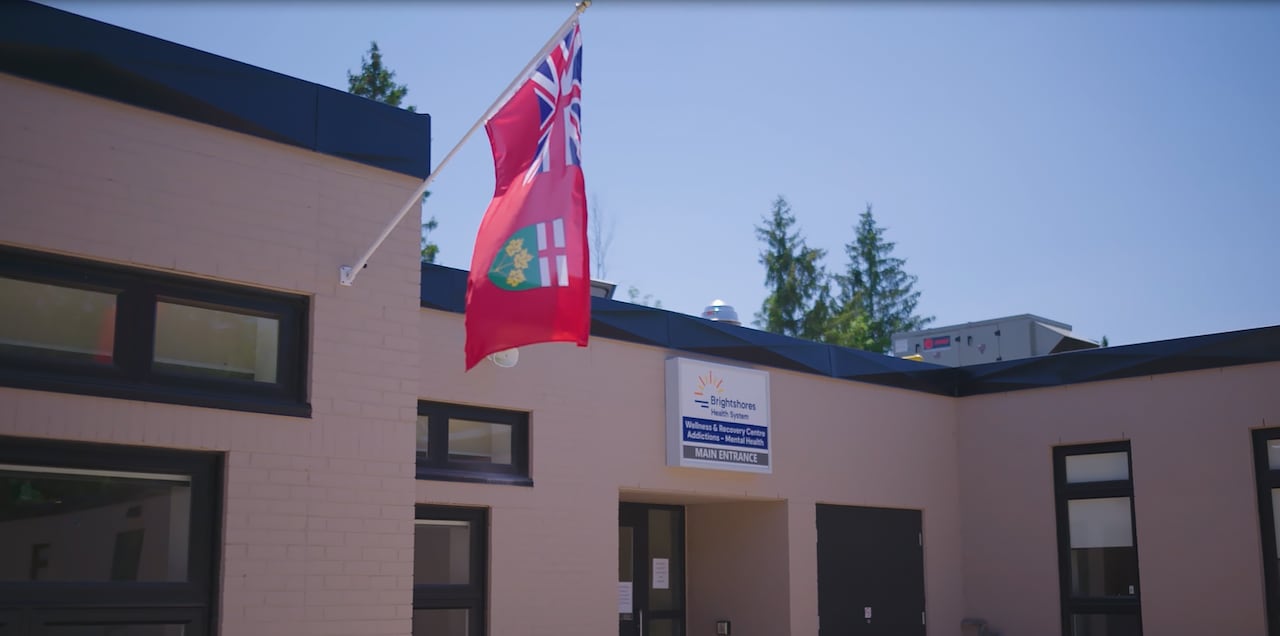 An exterior of the Brightshores Health System’s Wellness and Recovery Centre in Owen Sound. The facility’s VP says it has reduced recurring emergency room visits by 93 per cent. (Submitted by Brightshores Health System)
MA: Why is it the case that yours is one of the only places that is doing it in that way? Do you think people underestimate how complicated, complex, difficult somebody’s life gets once they’re at that rock bottom and they need a way back up?
BM: I’m not really sure if people are underestimating it but we saw an opportunity to do this kind of treatment differently. And so it was a really innovative program, and its programming was created by our team who work at the Wellness and Recovery Centre. And, you know, since that time, we’ve had 50 organizations reach out to us to learn what it is we’re doing, what really has been working for our centre and for our clients.
LISTEN | Why this Grey-Bruce facility stood out for its unique approach to addictions treatment:
Afternoon Drive8:19Owen Sound addiction recovery centre receives national recognition
Beth Morris, VP of clinical program and quality and the Chief Nursing Executive at Brightshores Health System, shares how the Brightshores Wellness and Recovery Centre’s unique model helped it stand out, and win a national award of excellence.
MA: What is your goal for somebody when they come to your facility?
BM: Well, we have really felt that it’s important for people to feel belonging when they come to us. We want them to know that they’re in a safe space, they’re here, we’re going to support them and connect them with what they need out in the community to be successful. And that’s what patients are reporting, the sense of belonging that they feel right from day one when they come in and they’re in the worst point in their life. And that when they’re actually leaving at the end of their treatment, they feel a sense of hope and they feel like they’re going to be successful and they can go back out into the community and live happy, successful lives. That’s really important to us, that sense of belonging and to give people hope.
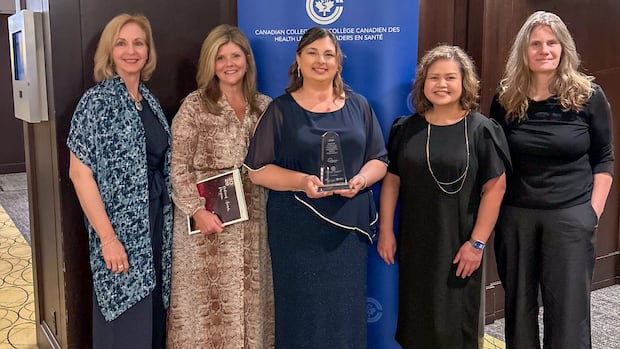
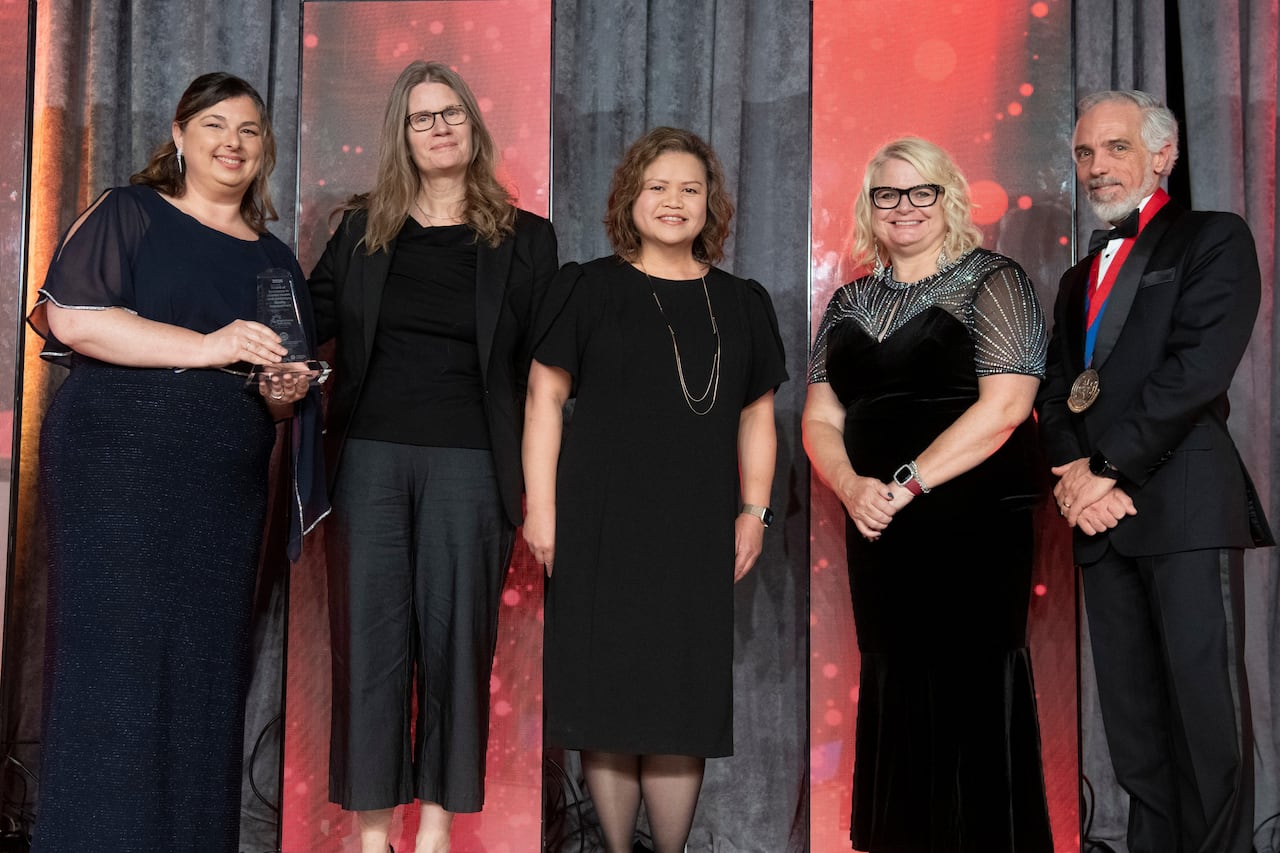 Brightshores Health System received an award from the Canadian College of Health Leaders in Montreal on June 14. Amy Bowins, left, is the manager of mental health and addictions accepting the award. She is joined by leaders from the Mental Health Commission of Canada, Canadian Centre on Substance Use & Addiction and the Canadian College of Health Leaders. (Canadian College of Health Leaders)
MA: By that standard, how successful would you say the program has been with the people that get there?
BM: We have several patients who have been able to provide their testimonies to us and they have indicated exactly what it is that we’re hoping for. We have patient experience scores that are showing overwhelmingly that people feel that sense of belonging and are leaving with that sense of hope. All clients who have come in, who are under housed are leaving with housing secured for them so they know that they’re not going back out [on the streets]. So that’s 100% of clients who have needed that service.
We’ve also had people talk a lot about the use of the emergency department and we want to make sure that people are getting treatment where they need to get it. And we’ve noticed that 30-day readmissions following treatment at the Recovery Wellness Centre has dropped by 93 per cent. So people are not coming for treatment and coming back to hospital and that, to us, is a tremendous success.
MA: What does it feel like to have the work that you’re doing there recognized?
BM: I am extremely, extremely proud of the entire team at the Wellness Recovery Centre, truly. I think it takes a village, there are so many people who have had a hand in the success of the program. I’ve never met a group of people that are more passionate or committed about the clients that they serve. It’s remarkable. And so to see the centre acknowledged with the national award like this is just so thrilling.