
Joseph Emuron watches closely as his colleagues from several East African countries slowly leave the “red zone” during their pandemic preparedness training in a teaching hospital in Nairobi.
It was only in April that the tall Ugandan doctor in his blue shrubs had learned the process of “doffing,” the safe removal of the protective suit that can be the last barrier between a medic and a deadly virus when treating a patient with Ebola.
When infectious disease experts from Berlin’s Charité Hospital launched the tEACH project a few months ago, little did they know that the second part of the training of 18 doctors from the East African region would coincide with the latest Ebola outbreak on the continent.
Emuron is one of several participants in the course who will be travelling to the Democratic Republic of Congo in a few days to support their colleagues there in the Ebola response. Others will train colleagues in their home countries.
There is a sense of urgency: The Africa CDC health authority has assessed the Ebola risk for all countries of the East African Community as high.
The centre of the outbreak has been detected in Congo’s Ituri, a region bordering Uganda and South Sudan. Several cases have been recorded in Uganda, which recently closed its border to Congo. An outbreak in South Sudan with its fragile infrastructure after decades of conflict could be disastrous.
More doctors have since joined the second part of the training. A weekend course for health workers has been organized as well, thus providing 45 doctors and nurses with training that is no longer just theoretically useful.
“The participants are incredibly dedicated to this course, the practical exercises and the lectures,” says Maximilian Gertler, doctor for infectious and tropical diseases at the Charité Hospital in Germany.
Gertler is no stranger to Ebola: He has repeatedly joined teams deployed by Doctors Without Borders and worked in West Africa during the massive Ebola outbreak there 10 years ago.
“I’ve never experienced anything like this,” Gertler says.
“We wanted to train 18 people in a purely preparedness programme – and four weeks later, we meet the participants again, and the whole world has changed.
“It’s no longer about figuring out how to conduct training for the next generation in September, but about the knowledge the participants need now to use next week, to care for patients, or to train colleagues on the ground. And you have to be prepared for anything.”
A main focus of the programme is how to keep yourself safe. One of the advantages of the doctors and nurses joining the outbreak containment training now is that everyone knows what they are dealing with, and how important protection and safety protocols are.
This was not the case at the beginning of the outbreak, when it wasn’t evident for health workers that they were dealing with Ebola.
It is no coincidence that many health workers are among the first casualties of outbreaks of Ebola, Marburg and other hemorrhagic fevers.
Safety protocols are an important part of the tEACH project. The participants train in groups, practising how to take blood samples, treat wounds, lay a catheter or resuscitate a patient while keeping safe at the same time when coming in contact with bodily fluids like blood, urine or saliva.
At the teaching hospital, the trainers and trainees simulate an isolation ward with “green” and “red” zones. While a more leisurely atmosphere prevails in the green zone, maximum safety standards are applied in the red zone, where everyone is required to wear protective suits.
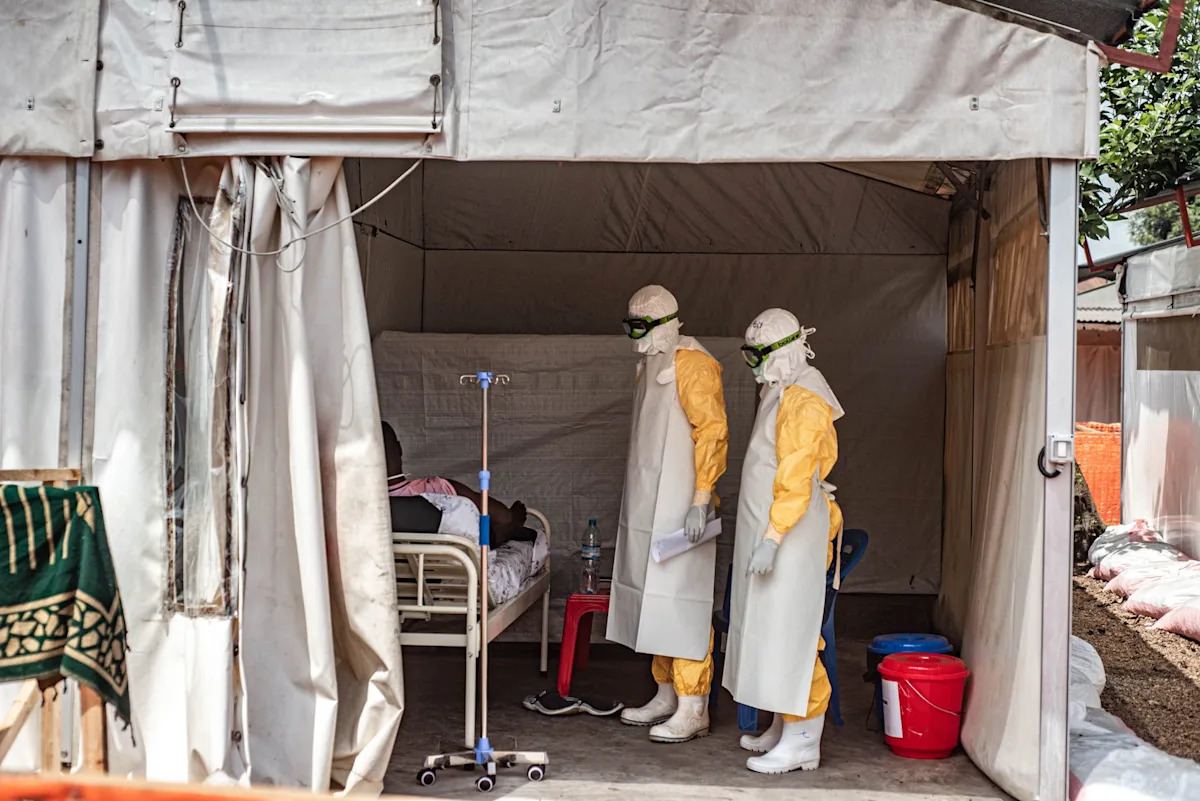
Given the shortages of materials for the teams in Congo, the yellow suits used in Ebola clinics are not worn in the training. Instead, participants are clad in white suits reminiscent of those used by forensic experts investigating a crime scene.
As in the red zones of Ituri, each participant has his or her name written on the suit, as well as the time they put it on.
At Ebola clinics, working in the suit for more than an hour is regarded as too much of a risk, as it gets hot and sweaty inside, especially in the tropical climate of Central Africa. And losing focus could lead to lethal mistakes.
“The mood is definitely a bit more serious, I’d say, but it remains totally positive,” Gertler says, comparing the course to the previous training unit in April. “They are all very composed, and you can tell that the training in April taught them they can implement effective protective measures and thus care for patients without living in fear.”
Emuron says he feels more prepared for his future work in Congo thanks to the tEACH project.
“I think my responsibility as a doctor is to see that I have to do something when someone is sick,” he says. “We just have to be prepared mentally, psychologically, with the skills of IPC [Infection prevention and control]. It’s our duty. We are the frontliners. We are the ones who are going to save the people.”
Dozens of people have died in the current Ebola outbreak so far and the toll keeps rising, but the Ugandan doctor says he is not afraid of the task ahead.
“I don’t want to be overconfident. But I feel confident this is something we can take on. We’ve responded to many outbreaks in Uganda. This is not the first one, and we learned a lot from them. I think now we are at a better place, compared to previous times.”
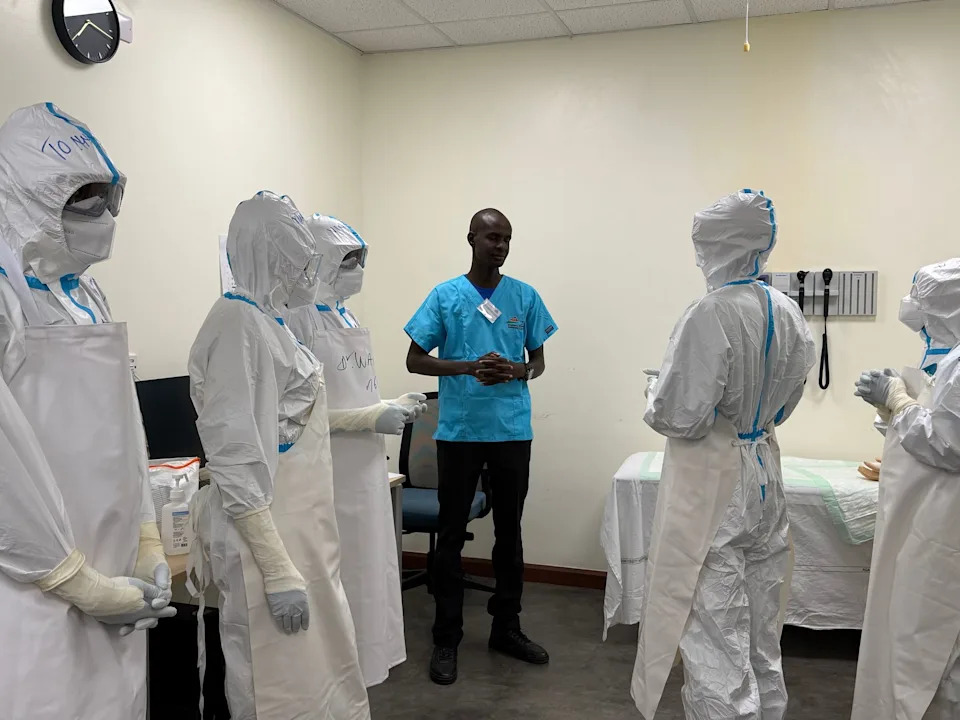
Doctors from various countries in East Africa are training in safe practices at an Ebola treatment centre as part of the tEACH project, which is being carried out jointly by experts from the Institute of Global Health and the Department of Infectious Diseases and Critical Care Medicine at Berlin’s Charité Hospital. Eva Krafczyk/dpa
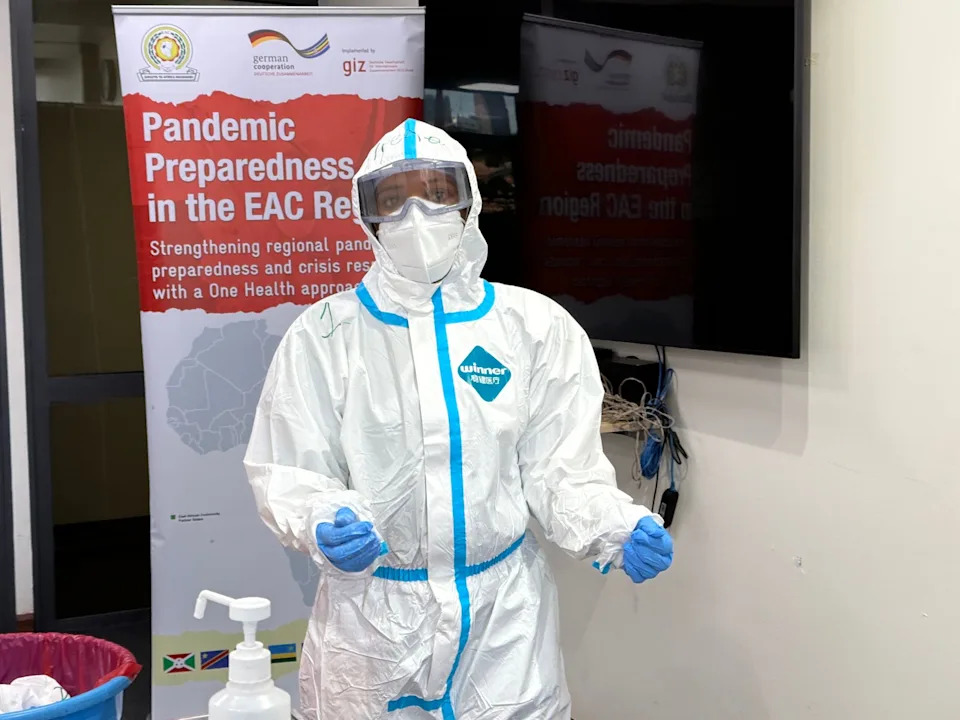
Doctors from various countries in East Africa train in safe practices at an Ebola treatment center as part of the tEACH project, which is being carried out by experts from Berlin’s Charité Hospital. Eva Krafczyk/dpa
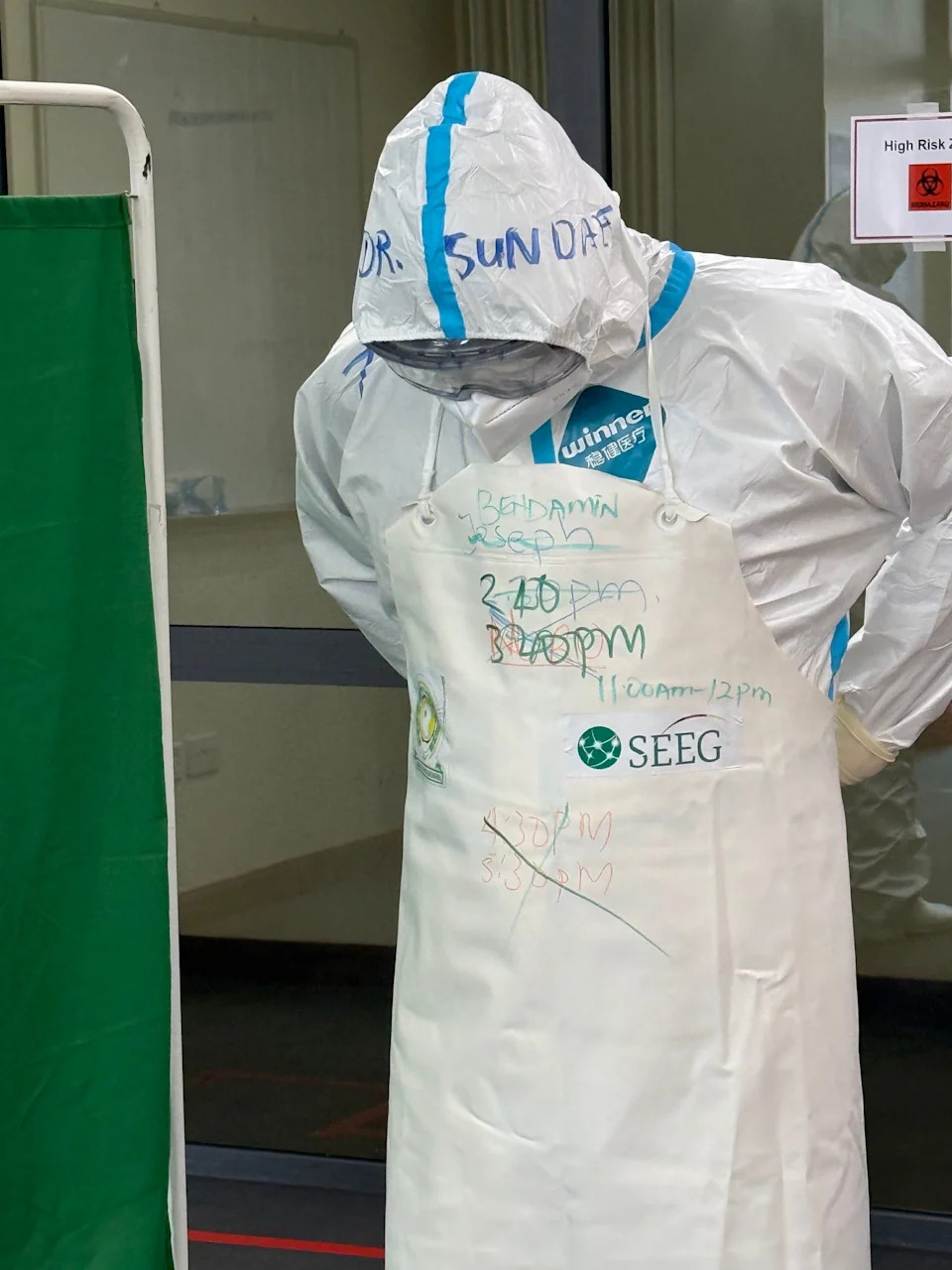
“Doffing” refers to the safe removal of protective gear and its disposal after spending time in the “red zone” of an Ebola treatment centre. African doctors practice the safety protocol during a training session led by experts from Berlin’s Charité Hospital. Eva Krafczyk/dpa
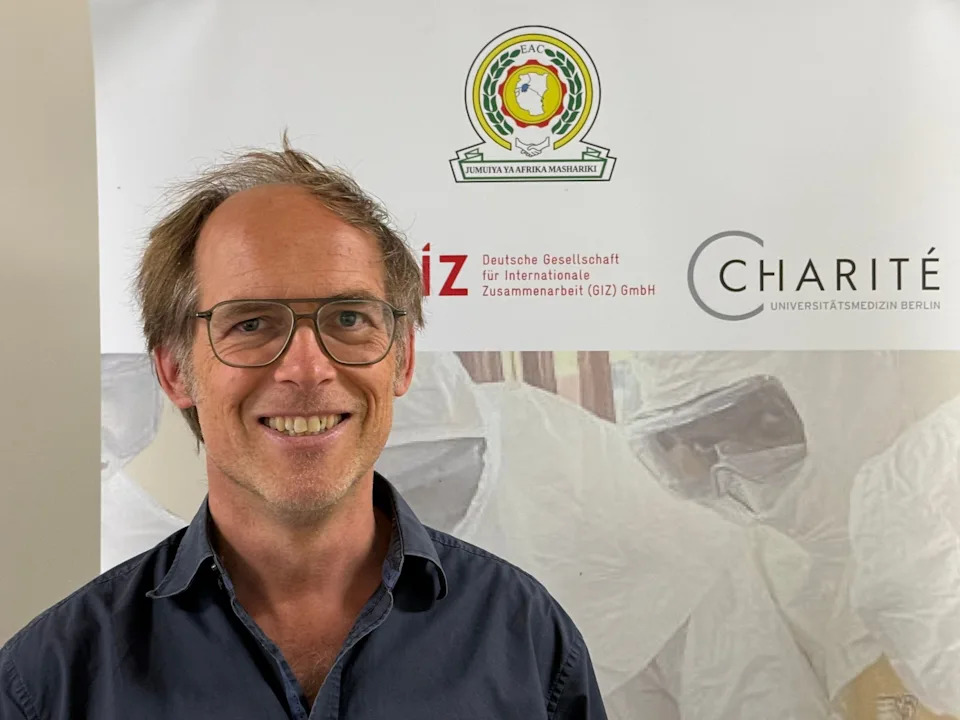
Maximilian Gertler, an infectious disease specialist and tropical medicine expert at Berlin’s Charité hospital, is one of the experts involved in the tEACH training project for East African doctors on combating Ebola and other highly contagious diseases. Eva Krafczyk/dpa
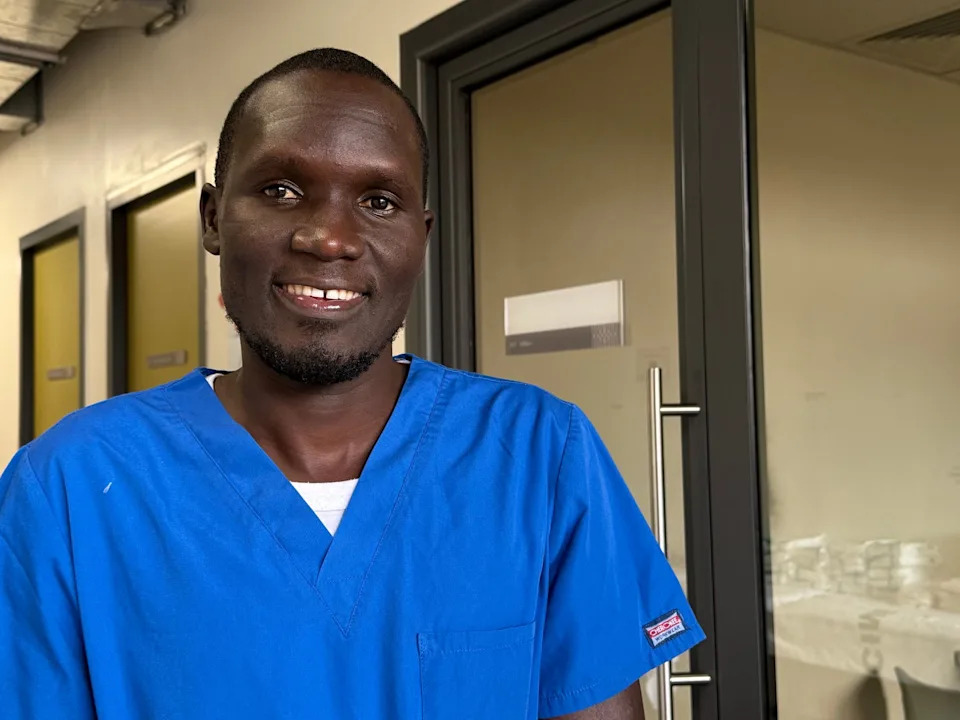
Ugandan physician Joseph Emuron is participating in the tEACH training programme, organized by experts from Berlin’s Charité Hospital, which is designed to train medical professionals from East Africa in the care of highly contagious patients, such as during an Ebola outbreak. Eva Krafczyk/dpa
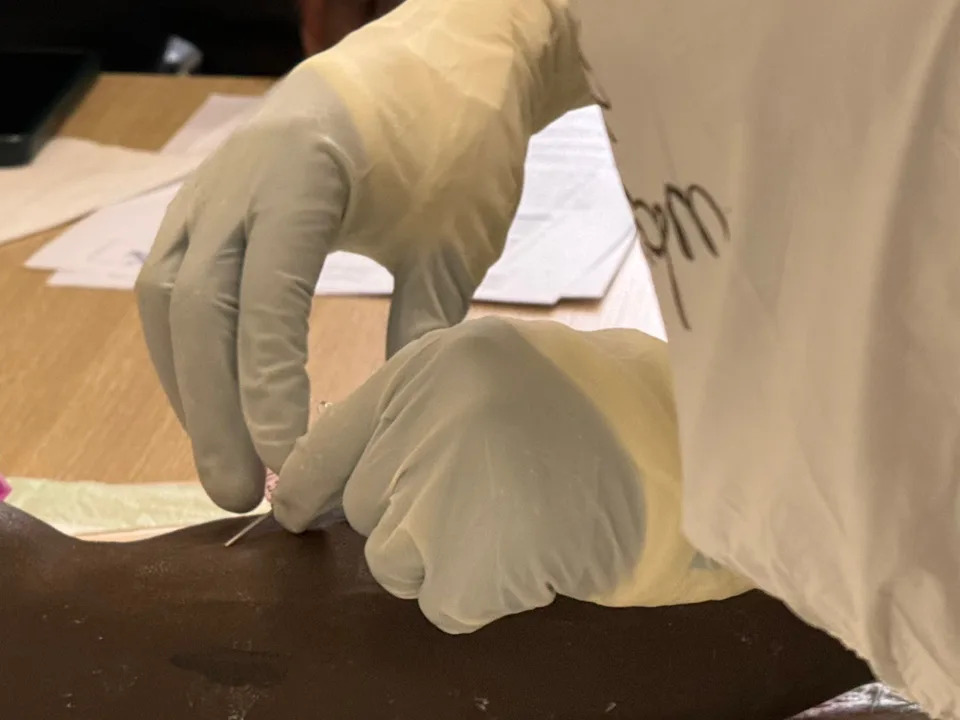
Doctors from various countries in East Africa are training in safe procedures at an Ebola treatment centre as part of the tEACH project, which is being carried out jointly by experts from the Institute of Global Health and the Department of Infectious Diseases and Critical Care Medicine at Berlin’s Charité Hospital. Eva Krafczyk/dpa