
The Ottawa Police Service is making its safe workplace program more “restorative, support-focused, and member-led” instead of centering it on “formal complaints and investigations,” according to a chief’s report published online ahead of Monday afternoon’s meeting of the Ottawa Police Service Board.
“The shift is from asking, ‘How do I file a complaint?’ to asking, ‘How can I get support to resolve what’s happening?'” the report reads.
Focus points of the reworked program include early consultations, “flexible and context-sensitive resolution options,” a commitment to restoring relationships and “stronger leadership capacity as the first line of workplace intervention.”
The program also promises a better intake of complaints, triage and file management, according to the report, along with more training and member supports and “improved cross-unit collaboration through the integrated conflict management unit.”
The modified approach doesn’t change how complaints are escalated when they’re serious or of a certain nature.
Force ‘backsliding,’ lawyer says
The report is a “sideways move,” said Paul Champ, a labour and human rights lawyer who’s been representing female Ottawa police officers with sexual harassment complaints against their colleagues for more than a decade.
“[It’s] a big word salad of different terms and phrases that have come from different reports that they’ve done over the last 10 years,” Champ said, adding that it “doesn’t sound to me like it’s going to really meaningfully change anything.”
“Maybe I’m jaded and cynical after these years, because I’ve seen these efforts again and again. I thought 2020 looked like it was really a turning point … but since then it just feels like backsliding,” Champ said.
“And I wonder where the survey is of female police officers and civilians. Because I bet you if they ask those experts about workplace culture, they’d be telling the chief loud and clear that, ‘I don’t think this problem has been fixed at all.'”
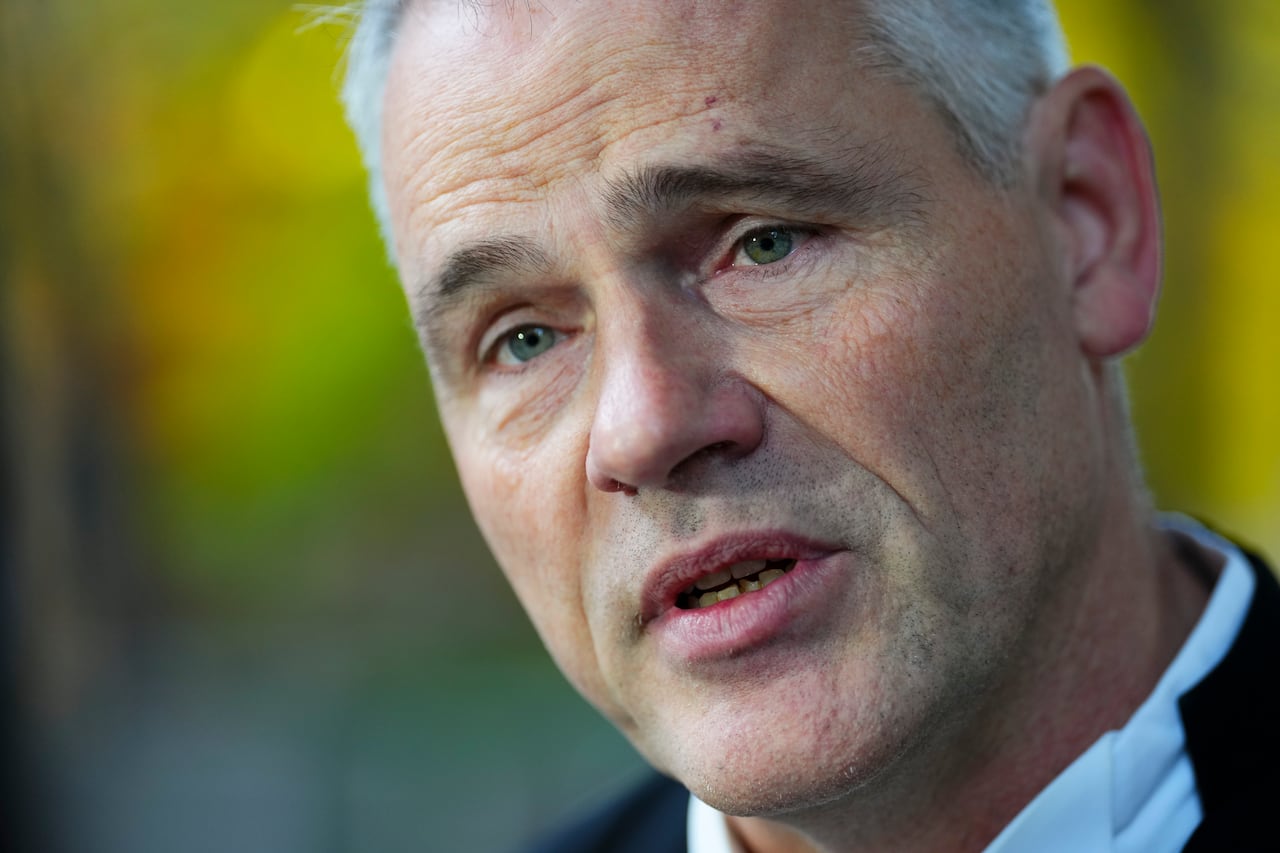 Labour and human rights lawyer Paul Champ says the report ‘doesn’t sound to me like it’s going to really meaningfully change anything.’ (Sean Kilpatrick/The Canadian Press)No internal member survey since 2020
In the past, the police board and the force have publicly committed to monitoring workplace culture and member experience “as a core element” of implementing recommendations from a major 2021 review of the Ottawa police work environment, the board wrote in a recent statement to CBC.
That continuous monitoring “is a board priority,” the statement said.
The board said it uses internal member surveys as a “key mechanism” for “direct insight into member experience” and to “inform strategic priorities.”
However, the last time the board received one of those surveys was 2020.
Asked why a survey hasn’t been done since then, Chief Eric Stubbs told CBC in a recent sit-down interview that it’s a “capacity” and “bandwidth” issue.
“We have a significant amount of change management going on right now [including on managing data and crime statistics],” Stubbs said. “There’s been lots to do here and we have moved the needle on so many different parts of our organization.”
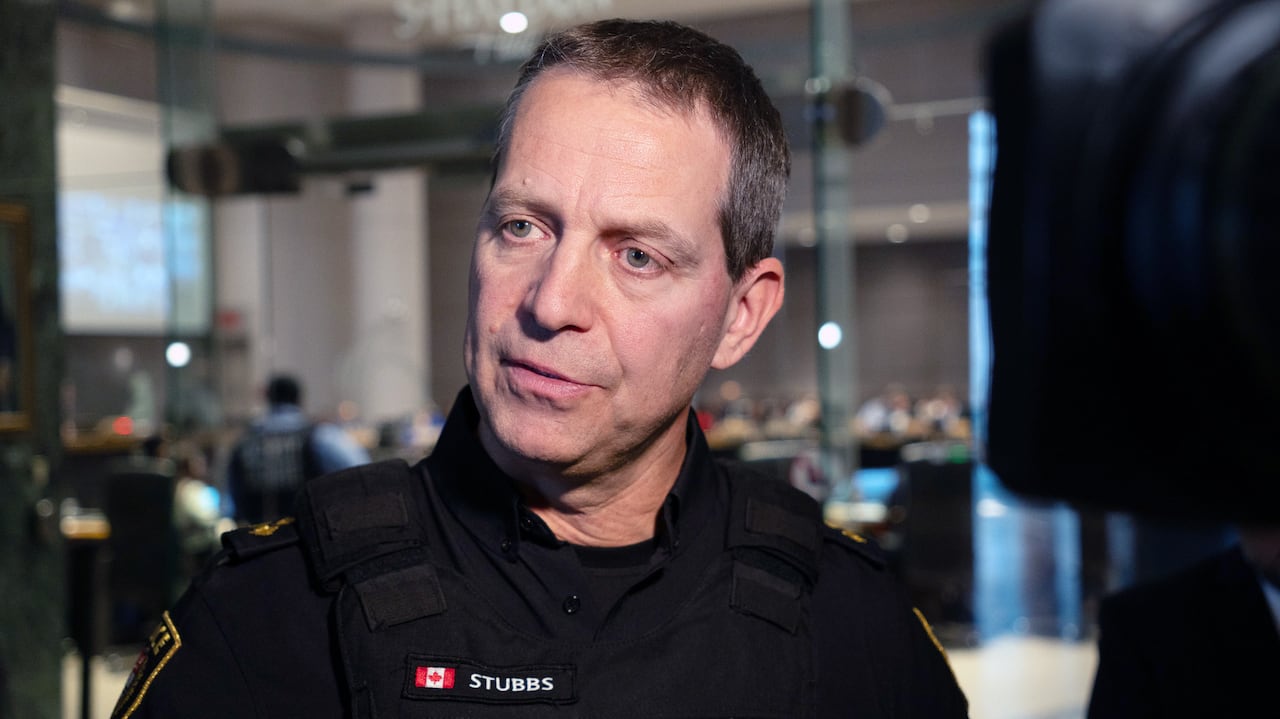 Ottawa Police Chief Eric Stubbs is expected to take questions from the police board at Monday’s public meeting. (Olivier Plante/CBC)’Stronger oversight’ needed
Champ said he thinks there needs to be “stronger oversight from the police services board and stronger control over the policies of the police service.”
One of his concerns relates to the force’s 2023 decision to shutter an independent workplace investigations office that was created after the 2021 review to better handle internal complaints about members of the force.
The decision was made without consulting the police board beforehand, even though the creation of the office stemmed from a joint police and police board strategy to end workplace sexual violence and harassment.
“It’s true that the chief does have the power to [close the office],” Champ said.
“But not if the police services board exercised its own oversight powers and [let] the chief know, ‘We think this issue is very important, it’s very serious, and we don’t want you taking steps like that until and unless you consult with us.'”
20 items of business in public agenda
Members of the public are allowed to attend Monday afternoon’s board meeting in person or watch online.
It starts at 4 p.m., and according to the public agenda there will be public delegations and 20 items of business for board members to deal with, including the chief’s report on workplace culture.
The report says the safe workplace program is part of the force’s diversity, respect, inclusion, values, equity and engagement strategy, which began in 2023 and runs to 2027 (initially until 2025).
It’s also “one of the principal mechanisms” that Ottawa police are using to honour their commitments to improve culture.
The force’s current approach “recognizes that meaningful culture change requires co-ordinated action across multiple areas of the organization and cannot be achieved through a single program or process alone,” the report adds.
 An aerial view of the entrance to Ottawa Police Service headquarters at 474 Elgin St. in April. (Michel Aspirot/CBC)8 recommendations after latest review
The latest 2025 MacLean Investigations Inc. program review looked at the safe workplace program’s policies and processes, compared them to those being used by similar Ontario police forces and to other best practices, and resulted in eight recommendations.
Here are the recommendations, as well as what the report says has been done to implement them:
1. Enhance confidential reporting: A new initial consultation phase will allow members to “reach out for support without filing a ‘complaint’ or opening a ‘file’ for action.” As well, “confidentiality and reporting expectations are discussed … to ensure members feel secure discussing their concerns and that service obligations are addressed,” the report says.
2. Strengthen complaint intake and triage systems: A new integrated conflict management unit has been created to track all reported “issues and incidents” with more consistency in managing files.
3. Speed up timelines to resolve complaints: The “information-gathering stage is more adaptable,” the report says, which “ensures the investigation approach is appropriate to the circumstances and can be assigned to a competent internal member to conduct the investigation.”
4. Expand awareness and training: The force offers training to help bystanders intervene when harassment occurs, and “tailored workshops” are being offered to units “as needed.” That includes giving leaders scenarios to learn how to address “all forms of harassment, discrimination and violence within the workplace.”
5. Enhance supports and restoration measures: The force is meeting this recommendation “by changing from a complaint-driven philosophy to a restoration-focused process,” allowing members to choose mediation or other alternatives to address their concerns. “Post-investigation follow-ups will be conducted and the chain of command will be engaged early to help promote this process,” the report says.
6. Improve accountability and transparency: The force will keep providing its annual reports to the board and provide leadership training courses.
7. “Engagement and organizational champions”: The union for senior officers and the union for rank-and-file and civilian members will be more engaged in the program’s processes, the report says.
8. Strengthen integration and cross-unit collaboration: The report says this was implemented by creating the integrated conflict management unit, which works across police directorates.