
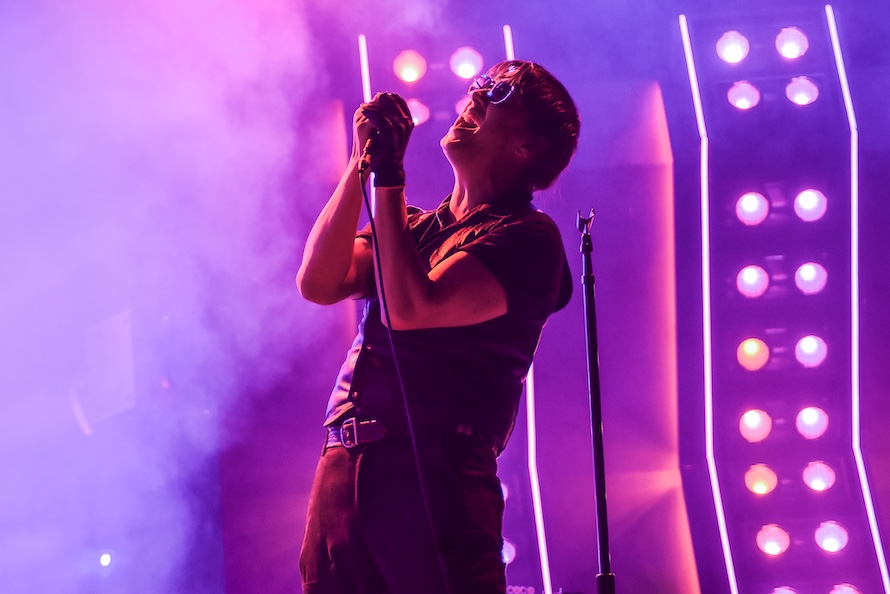
The Strokes have lived out my worst nightmare: they created their best work in their early 20s, and then found it impossible to ever top that one brilliant moment of inspiration from their youth. They arrived fully formed, with nowhere to go but down, doomed to forever leave people a bit disappointed.
Or at least that was my elder-millennial perception of the situation, since the Strokes have evidently stuck with it and put together a solid career. No more generational masterpieces, perhaps, but there’s a segment of young, extremely online music listeners who hold 2020’s The New Abnormal in nearly-as-high regard as the old stuff. On Rate Your Music, the hub for such listeners, The New Abnormal’s consensus score falls in the middle of 2001’s Is This It and 2003’s Room on Fire, which is surely a best-case-scenario for a Strokes album created two decades past their prime.
The Strokes enter their 2026 summer tour at a bit of a crossroads: their album Reality Awaits isn’t out for another month, and the first couple singles make the eyebrow-raising choice to mask one of the most recognizable rock voices of the 21st century in Auto-Tune — a stylistic choice that might have seemed bold about 15 years ago, and now feels like a chapter out of “Losing My Edge.” (I hear that you and your band have sold your guitars and bought Auto-Tune…)
Following an opening set from the Strokes’ Meet Me in the Bathroom-era peer Hamilton Leithauser (of the Walkmen), Thundercat took the stage at RBC Amphitheatre with his absolutely gigantic six-string bass, performing in a trio formation that highlighted the jazzy side of his eclectic pop/funk. The mix was a little muddy to shine as brightly as this year’s Distracted, but Thundercat’s aggressive and effective hyping of the crowd ended the set on a high.
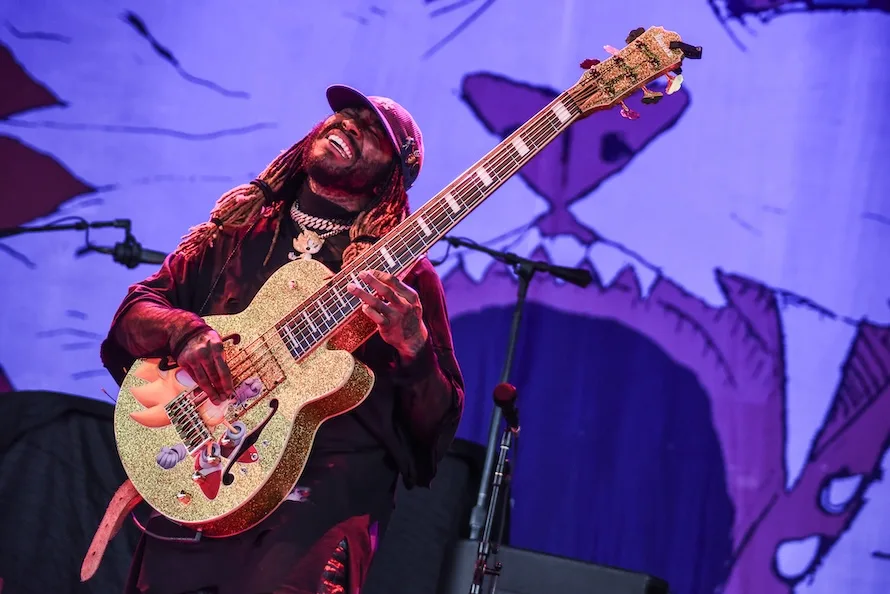 Photo: Thundercat by Stephen McGill
Once the Strokes took the stage — making the very rock ‘n’ roll but unusual-in-2026 choice to emerge more than 20 minutes later than their advertised set time — they refused to simply play the hits, instead putting all of their catalogue on a similar footing. They opened with two consecutive cuts from 2005’s famously disappointing First Impressions of Earth, and then boldly placed the new single “Going Shopping” immediately after the classic “Hard to Explain.”
It was shocking how well it worked. Past-prime singles like “Juicebox” and “You Only Live One” went nearly as hard as Is This It cuts like “Someday” and “Take It or Leave It,” and The New Abnormal standouts “Bad Decisions” and “The Adults Are Talking” already felt like classics. The wide age range of the crowd, and the sheer number of young people filming the band during those newer cuts, showed just how many listeners have embraced their recent era.
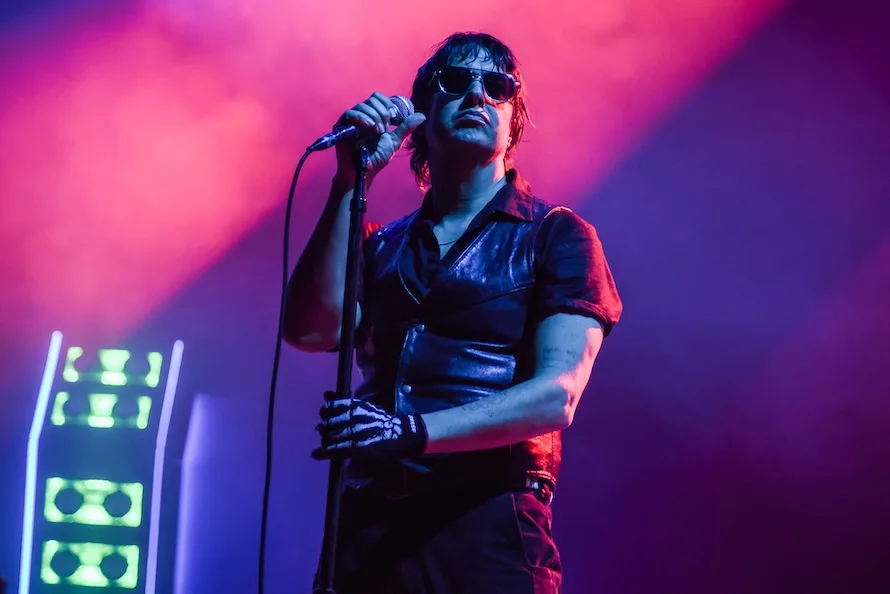
Photo: The Strokes by Stephen McGill
The years mashed together uncannily in the Strokes’ minimal visuals: the banks of lights looked a bit like a snazzed-up version of the variety show set seen in the “Last Nite” video, while frontman Julian Casablancas wore one of the all-time worst stage outfits in the form of a leather vest and one glove, his aviators adding to the impression that he was doing half-assed Billy Idol cosplay. It’s hard to imagine a look more at odds with the disaffected cool of their music.
Guitarist Nick Valensi was absent from the lineup — but, unless you’d been reading the news (or happen to remember all of the not-Julian band members), you’d never know, with replacement guitarist Steve Schiltz doing a perfectly adept job at playing (and looking) the part.
For a band who have been famous for such a long time, the Strokes have resisted becoming a well-oiled rock ‘n’ roll machine. There were surprisingly long gaps between songs, with the band idly noodling on their instruments while Casablancas quipped about how Toronto was “alt New York,” giving the set a casual, unpolished quality at odds with most other bands of their stature.
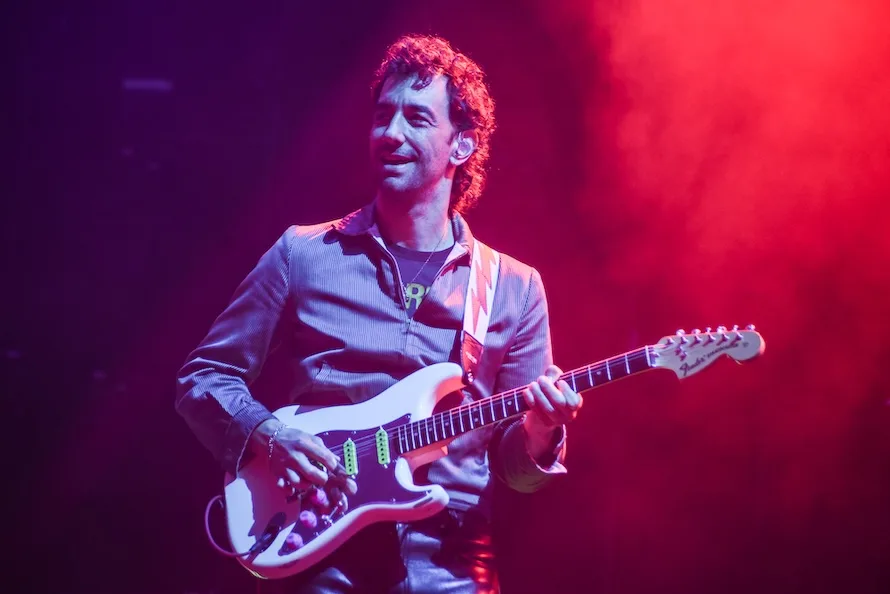 Photo: The Strokes by Stephen McGill
Further proof that the Strokes aren’t one-album wonders came during the final moments of the main part of the set, when they played their breakthrough hit “Last Nite,” then completely blew it away with “Repitilia,” instantly redeeming Room on Fire from any accusation that it’s a lesser imitation of their debut.
That high was somewhat undercut by a disappointing encore made up of mid-tempo songs — something Casablancas self-deprecatingly acknowledged while it was happening. (Talk about a Comedown Machine…)
Otherwise, it was a night that proved that, while the Strokes unquestionably defined rock music at the turn of the millennium, they’ve done a pretty good job at defining it in the 25 years since then, too.