
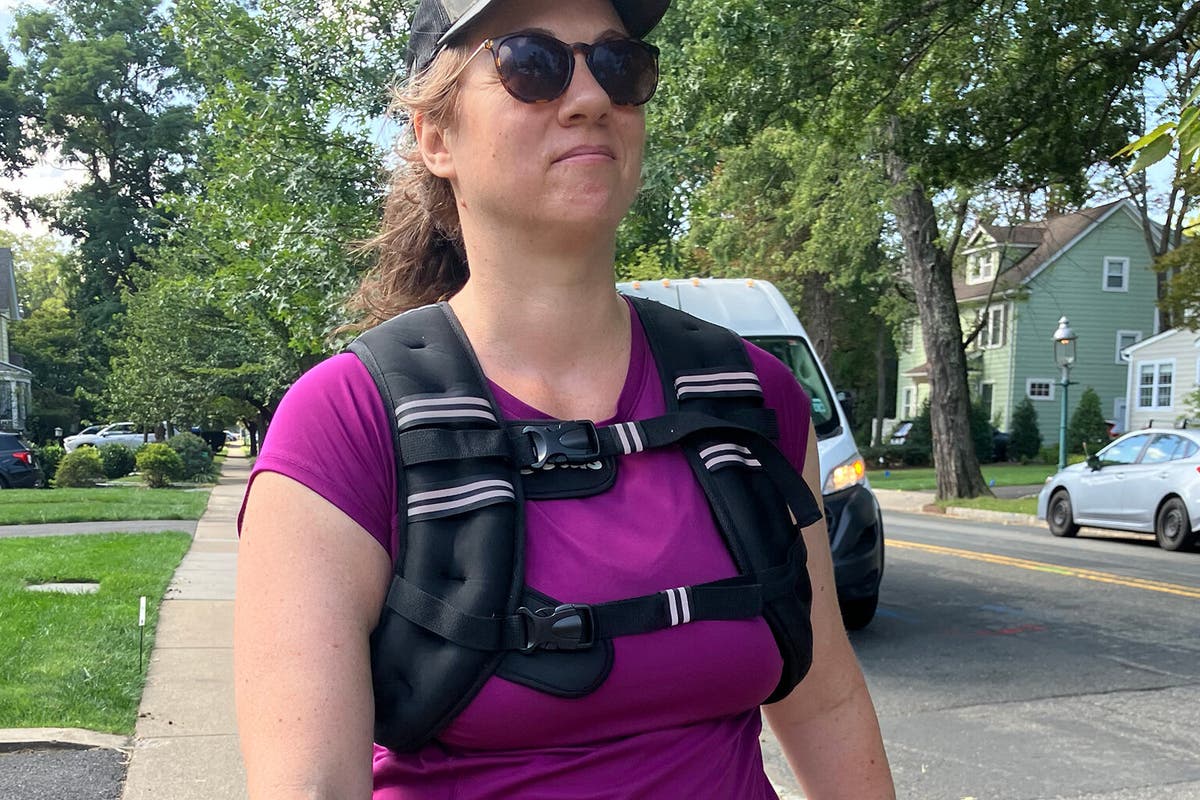
Jogging in a weighted vest (if you can commit to that more grueling activity) has been found to burn more calories than walking, even on flat ground — so long as your vest is heavy enough.
How much weight you should start with, and how quickly you increase it, depends on numerous musculoskeletal factors, including any postural deficiencies. “It’s not dissimilar to weight training in general,” Kristen Konkol, an associate teaching professor of exercise science at Syracuse University, said in a phone interview. “For general fitness, the vest should [start at] about 5 to 10% of your total body weight, [and] you don’t want to increase your weight by more than 5 to 10% at once with progressive overload in training.”
While fixed-weight vests are extremely popular (according to Amazon’s best-selling vest rankings), adjustable-weight vests may be a better option. In addition to fixed-weight straps, they usually come with several weighted pouches that you can add to the vest’s bib or remove, offering a range of weight to work with. (Wirecutter recommends adjustable-weight dumbbells for similar reasons.)
Keep in mind, though, that running in a weighted vest may also increase your likelihood of injury and should probably be attempted only by experienced runners. “Most of us aren’t perfectly biomechanically sound — maybe I overpronate my foot when I run, maybe I don’t engage my glutes — and that’s exacerbated when you add weight,” Konkol said. “With running specifically, overuse injuries can occur when you push it too far.”
She also advises against doing plyometrics or high-intensity interval training in a vest due to increased risk of injury. (And of course, don’t start any new exercise routine without first discussing it with your doctor.)
If you’re going to stick to walking in a weighted vest, and you’re determined to get the most bang for your buck, find a hill. “Putting on a weighted vest and walking uphill is very different from putting on a weighted vest and walking on flat ground,” Purdom said. “Grade has a significant effect on metabolism and on the amount of calories it takes to walk or run the same distance.”
Kalsched also recommended repetitive hill-walking. “Run or walk up and down a hill quickly 10 times, with a full recovery in between, and you’ve done a short, high-intensity workout,” she said. (A treadmill set at an incline should work, too.)