
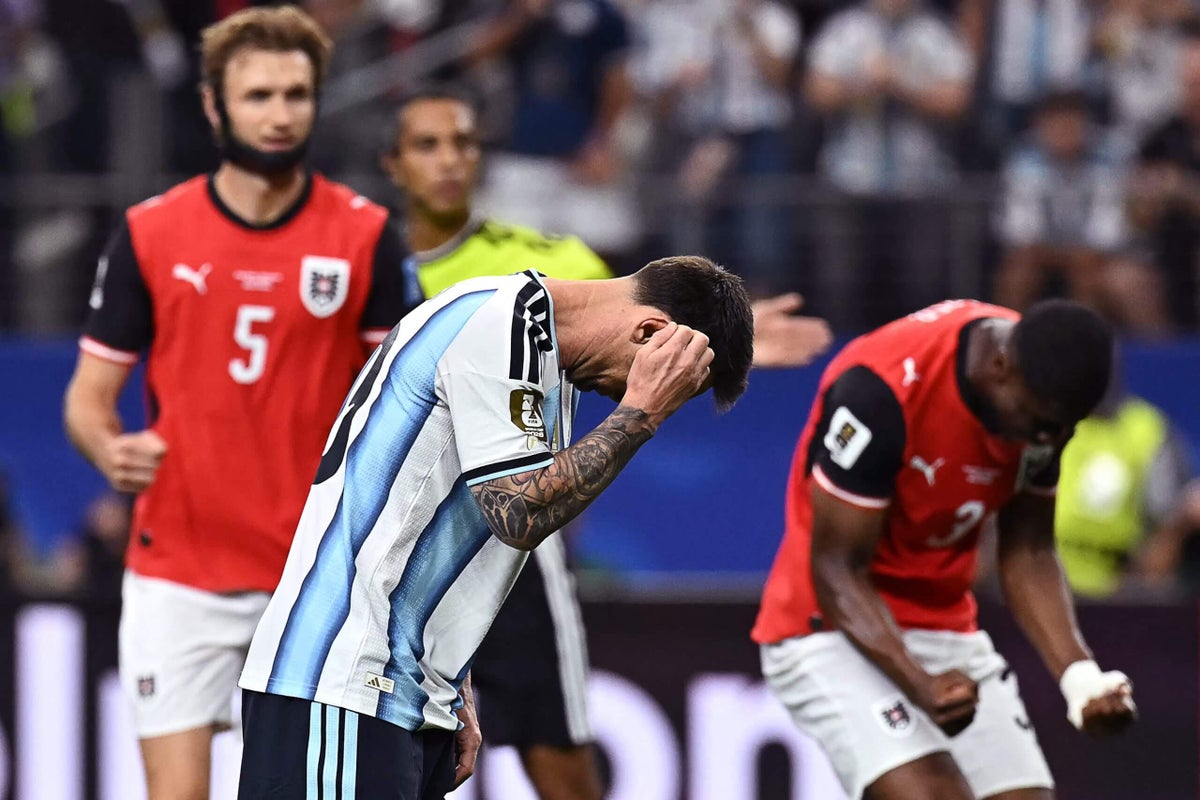
Average. It’s normally the last adjective used to describe Lionel Messi, but, as far as penalty-taking goes, there is nothing special about the Argentine.
His miss from 12 yards in the group stage win over Austria was the third time he has failed to score from seven World Cup penalties in regulation time. Four years ago, he had one saved by Poland’s Wojciech Szczesny, and Hannes Thor Halldorsson of Iceland kept him out in 2018.
Extend that to his entire international career, and he is on 25 goals from 31 penalties taken. Including club matches, his 149 penalties have returned 116 goals — that 77 per cent success rate is a touch below average among elite players.
Conceptually, this is hard to make sense of. He’s widely considered the greatest ever, as a record eight Ballon d’Or titles and four Champions League trophies reflect.
Messi scores goals, he makes them, and he finds space and passes better than everyone else. It seems fanciful that any player in the future will be able to match his left foot.
So why is he so average when it comes to scoring what are, statistically, the easiest chances? In NBA terms, this would be like Stephen Curry still having his three-point ability but putting up mid-level free-throw numbers.
One common myth is that it is due to his being left-footed. Many consider right-footers better and more reliable penalty takers. Statistically, this is untrue; just that much fewer footballers are lefties (around one in five) and thus take fewer penalties. But there is an inherent advantage to that rarity: goalkeepers tend to find them harder to predict.
Messi has taken penalties throughout his career. In 2005 at the under-20 World Cup, Argentina beat Nigeria 2-1 in the final thanks to two Messi spot-kicks. He dispatched both casually, rolling the first into the bottom-left corner and later picking the other side. The goalkeeper twice went the wrong way.
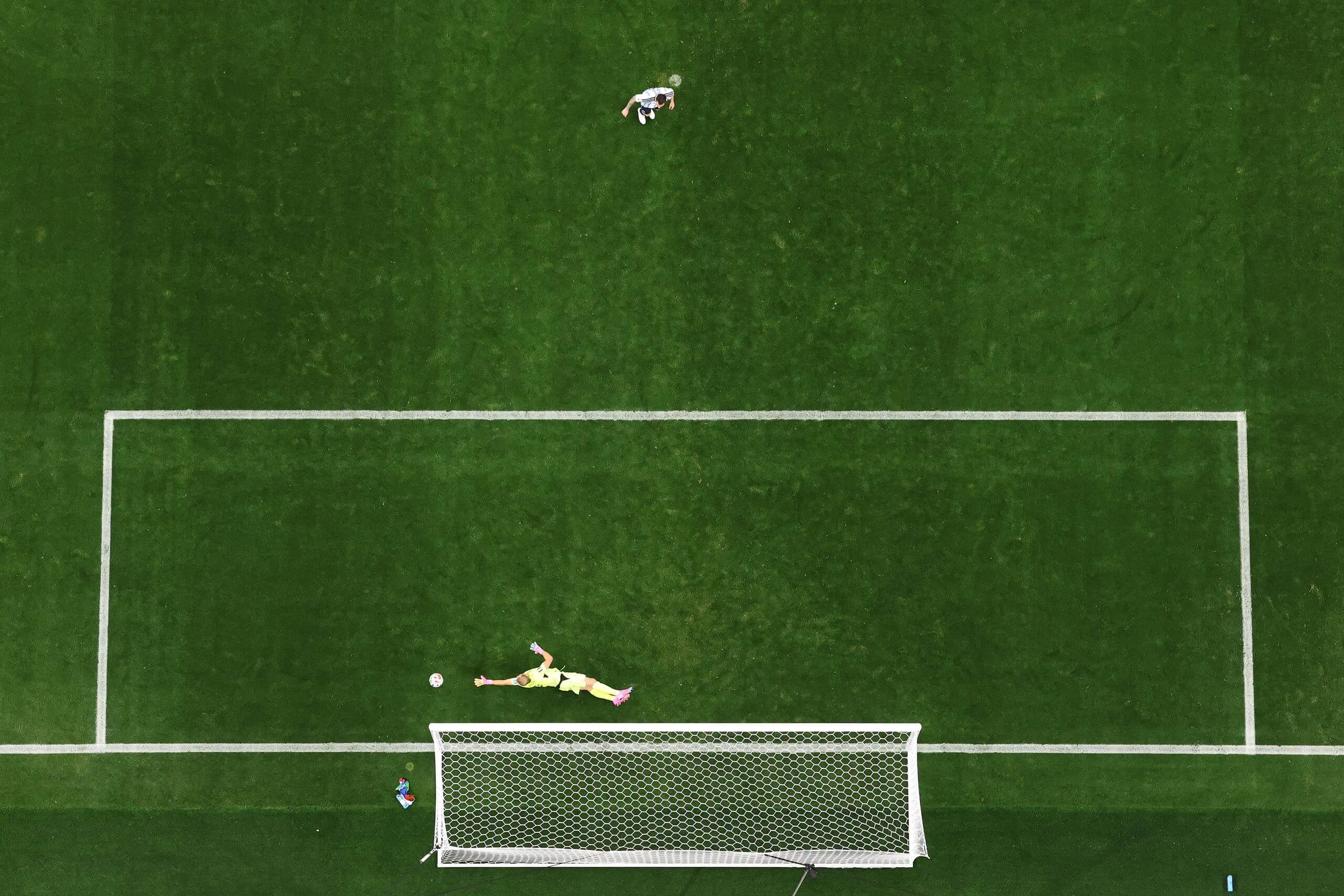
Messi’s penalty goes wide (Michael Steele/Getty Images)
Nine times he’s stepped up to take the first penalty in a shootout for Argentina, and scored seven of those — the misses came at the Copa America, first in 2016, when they lost the final to Chile, and in 2024, when Argentina knocked out Ecuador in the semi-finals.
There are specific issues with his penalty miss against Austria, as well as broader criticisms of his approach.
He lost a battle of wits with Alexander Schlager in Arlington, Texas. Messi had more than five minutes to decide his shot, as VAR intervened to give a foul by Stefan Posch on Lautaro Martinez.
Off a short run-up, he decelerated with his final two steps, trying to entice Schlager into committing early. The Austrian stood firm, arms outstretched, as Messi locked eyes with him during his approach. Schlager dived late but had done enough to distract. The Argentina captain duly pulled an awkward instep shot wide of the right post.

“I was angry,” Messi told reporters of the penalty. “I hit it very badly”. With this so early in the game (eight minutes in), he had only touched the ball three times and had not yet shot.
“This is another example of goalkeepers being aware of goalkeeper-dependent penalty takers,” explains Geir Jordet, who is The Athletic’s penalty expert.
This run-up technique — where players watch the goalkeeper and decide where to shoot based on where they see them dive — is the kind associated with Jorginho, Robert Lewandowski and, more recently, Harry Kane.
“Messi is forced to make a decision without knowing where the goalkeeper is headed. Because he is watching the goalkeeper, his eyes are off the ball, and he will necessarily lose some precision,” Jordet elaborates.
“My guess is that when Messi, mid-kick, sees Schlager go in the same direction his shot is intended to go — and it’s too late to change it — he attempts to make sure it is placed as far over to the post as possible, and it goes wide.”
What might count against him is the very thing that sets him apart in open play: his inventiveness. He doesn’t really have a stock penalty in technique or location. Think of Kane’s trademark whipped, mid-height one across the goalkeeper, while Messi switches between instep and laces finishes.
At the last World Cup, Messi converted six of his seven penalties, including two in shootout wins over France (final) and the Netherlands (quarter-finals), having already scored from 12 yards in those matches. There, he watched Andries Noppert and Hugo Lloris, and settled on the cross-goalkeeper finish just before shooting to the other side in the shootout.
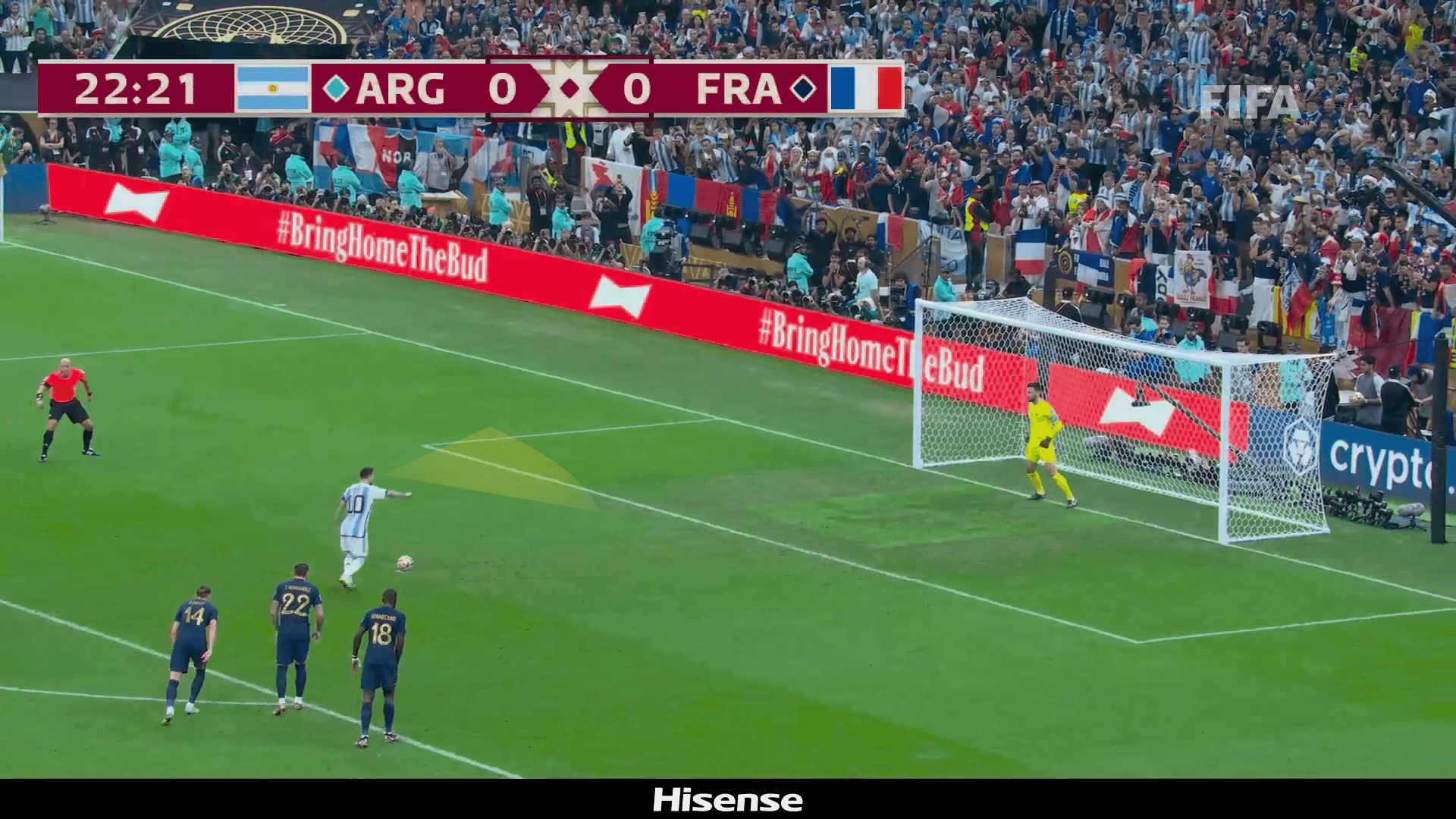
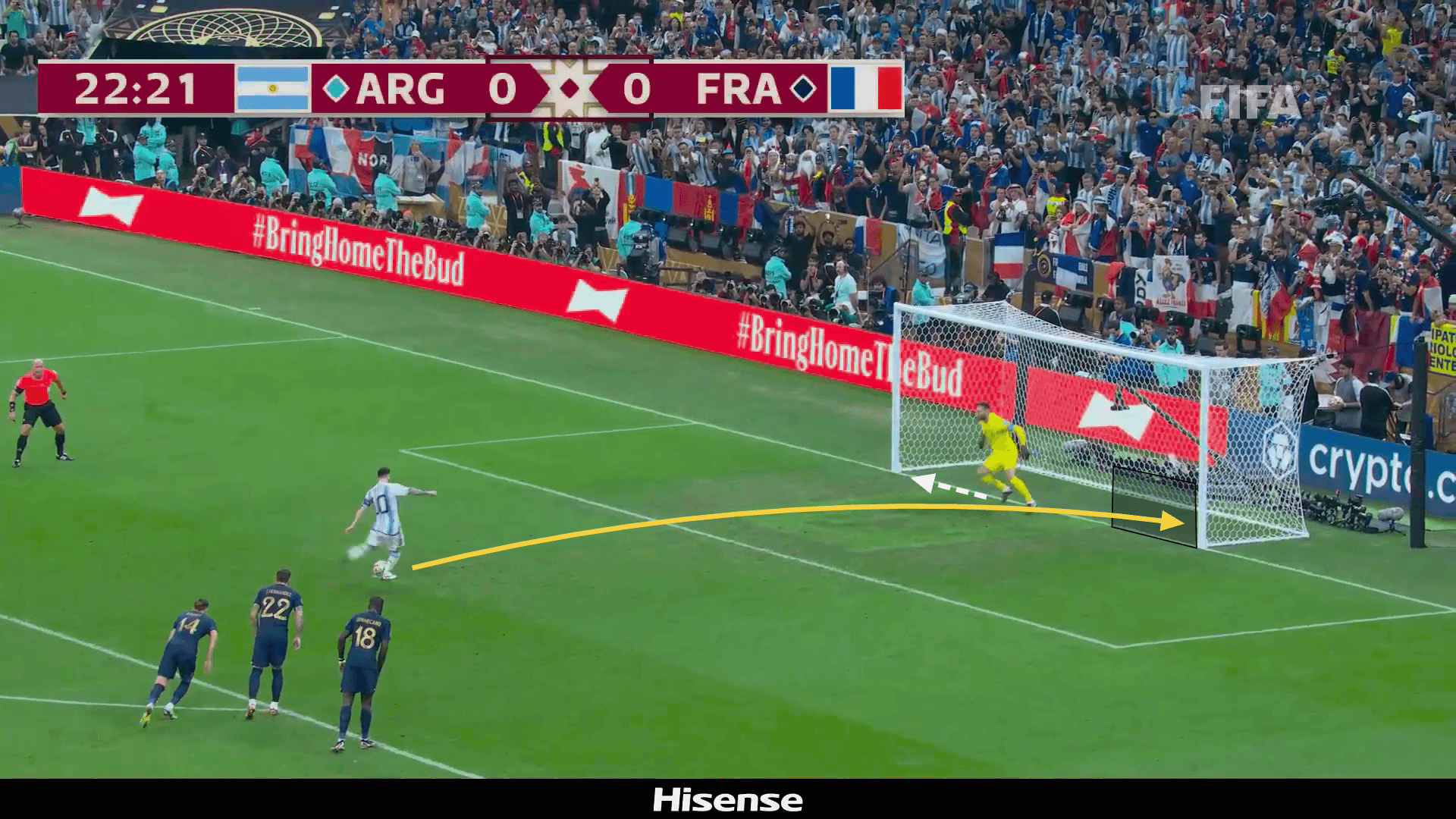
“I wasn’t thinking about where to shoot against Lloris; it was about waiting until the last moment. I waited for him, he moved, but I was very calm,” Messi said.
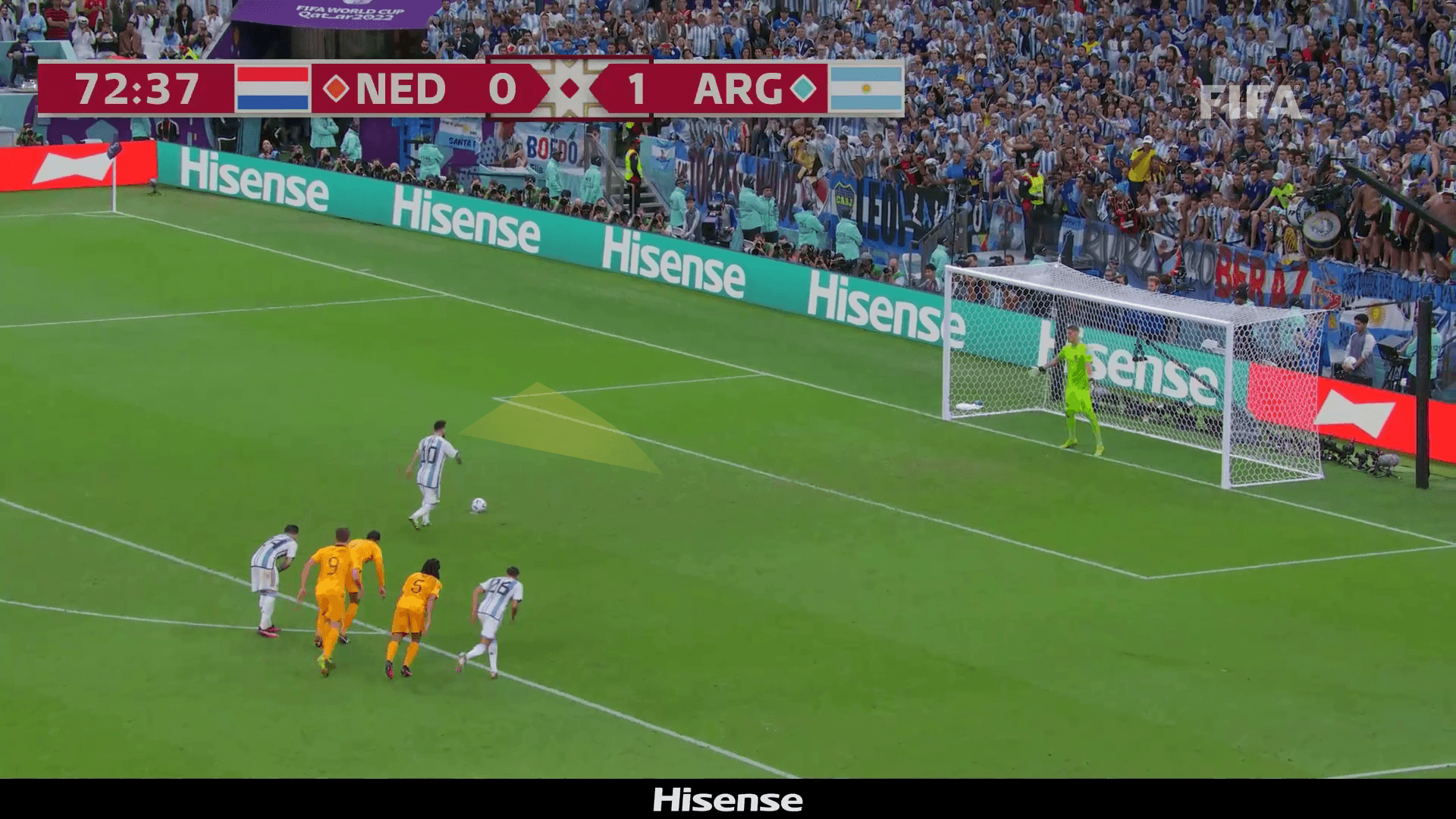
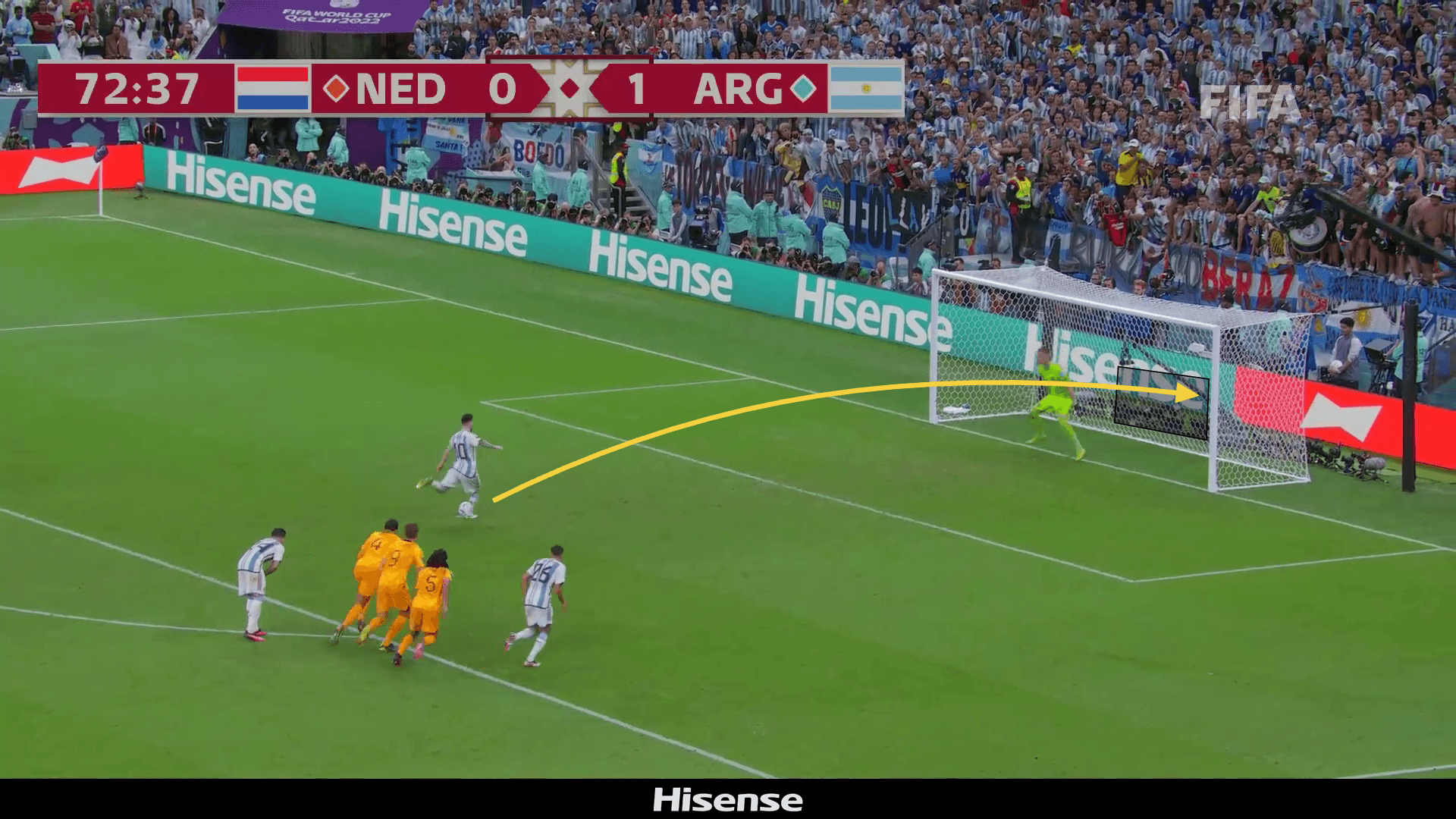
Either side of those “goalkeeper-dependent” approach penalties came an entirely different attempt for the opening goal in the semi-final win over Croatia. Messi did not care for Dominik Livakovic, the goalkeeper who had inspired shootout wins for his nation in the round of 16 and quarter-finals. Livakovic dived the right way but was beaten by pace and height, as Messi found the roof of the net.
Messi had a similar penalty saved earlier in the tournament by Szczesny, and went for it all the same. He intuitively picks his approach in the moment, whereas others prefer trained routines and trusted habits. It’s why he backed himself to out-think Schlager, a strong penalty ‘keeper who saved two in the Europa League this season.
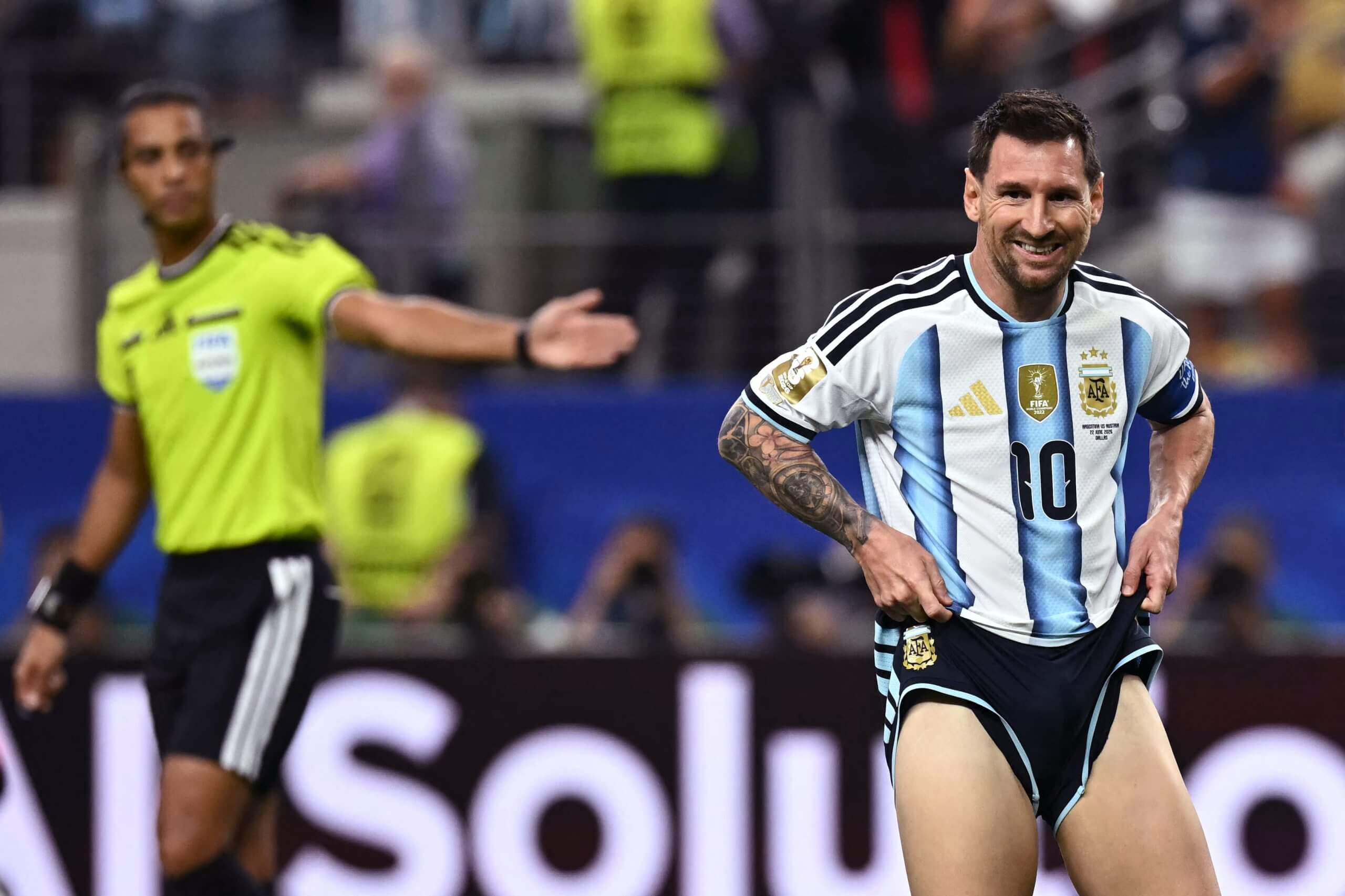
Messi contemplates the surprisingly familiar experience of missing a penalty (Paul ELLIS / AFP via Getty Images)
Early in his career, Messi shot low from a short, slow run-up, practically passing the ball into the far corner, and continued this even after seeing four penalties saved. He tends to take them quickly after the referee’s whistle, which research has shown is linked to lower conversion rates and is thus considered to show nervousness.
In 2012, during Messi’s legendary 91-goal year — when he scored 14 of 17 penalties — he began introducing those deceleration steps. Harder-hit efforts and higher shots became common, particularly to the right. As with most players, these were easier to read and relied on beating goalkeepers for speed. Panenkas, the nickname for the chipped penalties, came in 2015 and earned praise from Antonin Panenka himself.
Every year that Messi has taken multiple penalties, he’s missed at least one. He hit the bar with a panenka against Ecuador at the Copa America two years ago, and the same technique was made to look silly by Charlotte goalkeeper Kristijan Kahlina when he stood still last September.
Yet, because this is Messi, he more than makes up for it. In the same game against Austria, he scored twice to beat Miroslav Klose’s record and become the all-time men’s World Cup top scorer. Even great players have weaknesses — penalties are Messi’s.