
QUEBEC — An independent Quebec would have its own small army the size of Denmark’s and a ministry of defence. It would also seek to become a member of NATO and NORAD, while inviting Canadian soldiers living on Quebec soil to join the new force.
The military commitments are included in a new 524-page Parti Québécois blueprint document for an independent Quebec, Le Livre bleu sur l’indépendance.
Besides the military, the document republishes previously written chapters covering issues of citizenship, borders, passports, currency and the finances of the new country, which would break all ties with the monarchy and be a republic.
The republic would have a president to fulfil the legal and ceremonial role of the current lieutenant-governor. The president would live in Quebec City’s Citadelle, which is currently the secondary official residence of the Governor General of Canada.
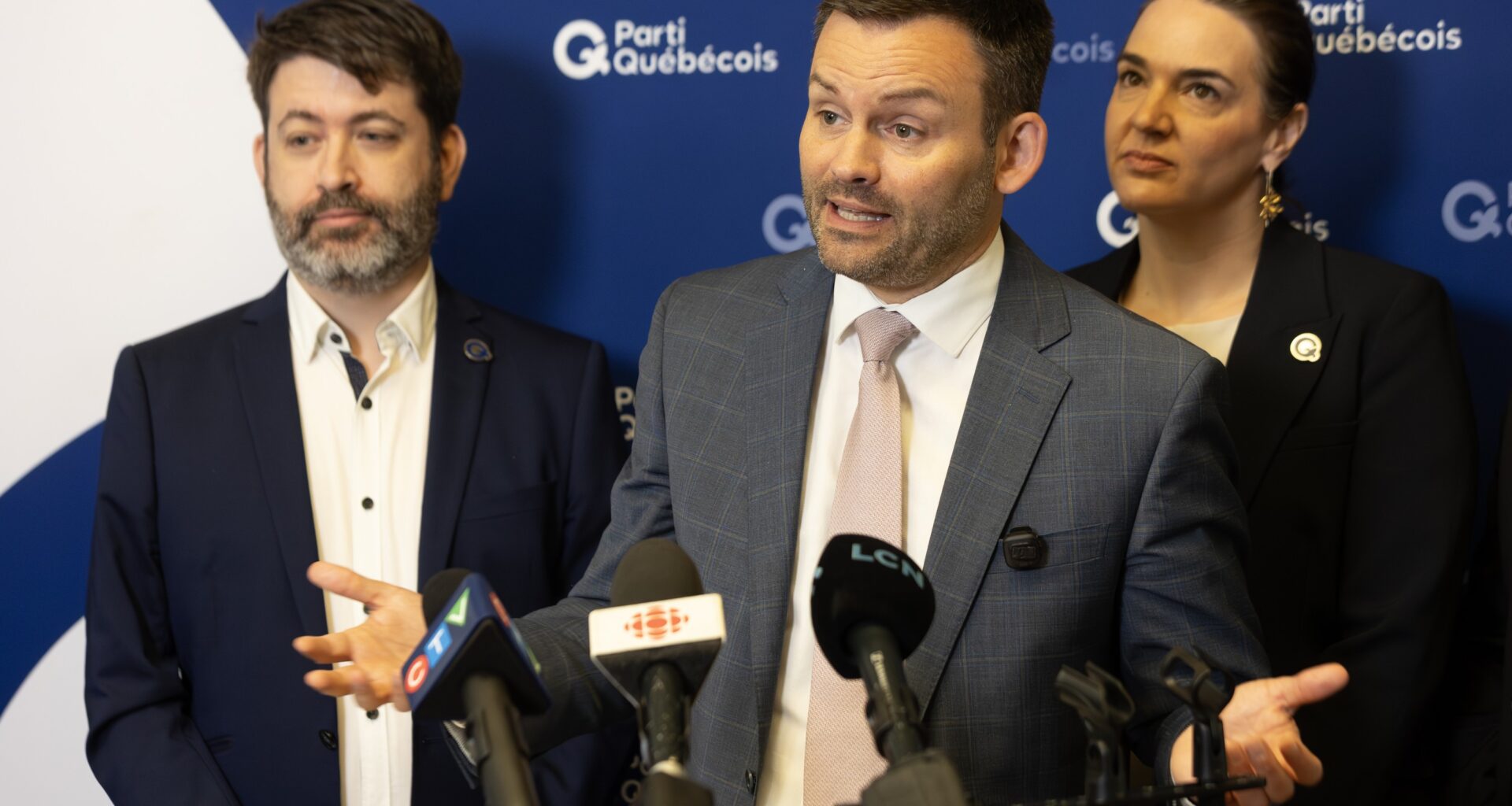
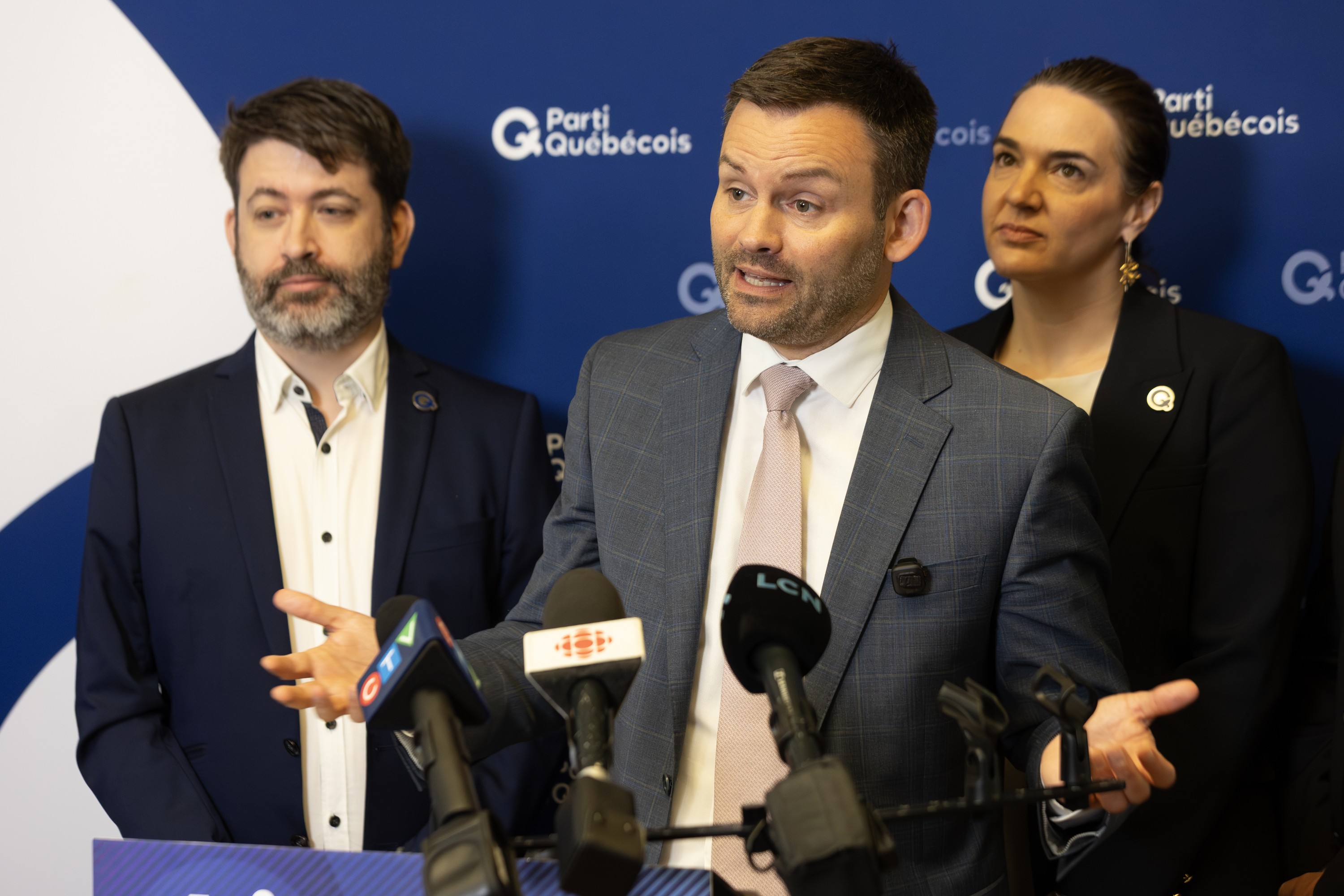 Parti Québécois Leader Paul St-Pierre Plamondon speaks about the party’s blue book on independence in Montreal on Tuesday, June 23, 2026. He was joined by Jocelyn Caron, left, editor of Livre Bleu, and Terrebonne MNA Catherine Gentilcore. Tim Snow / Montreal Gazette
Quebec would, nevertheless, seek a free-trade agreement with the rest of Canada and not erect any form of border checkpoints to ensure the unfettered movement of people, goods and capital.
And a sovereign Quebec would ensure that the English-speaking community retains control of its schools and institutions and has access to health and social services and the courts in English.
“The anglophone community has the right to preserve, maintain and ensure progress in its identity and its institutions,” the document states.
Years in the works and tapping into dozens of experts, the document was formally adopted Monday evening at a virtual meeting of the party’s national council.
First promised by PQ Leader Paul St-Pierre Plamondon in 2023, until now the party’s approach to questions of independence has been to make chapters public one at a time.
To date, the party has presented its vision for a Quebec currency — a process that could take 10 years — and passports. Quebecers would be allowed to keep their Canadian passports if they choose.
The version pubished Monday is virtually complete with the exception of a chapter on relations with Indigenous Peoples. The PQ has submitted a proposed text to those communities in a bid to open a dialogue first.
As for the rest, St-Pierre Plamondon said the blue book will answer many questions about independence — particularly for younger Quebecers who were not born during the previous two referendums.
“Never in the history of Quebec has there been such a detailed, researched document on the question of Quebec as a country,” St-Pierre Plamondon told reporters Tuesday at a news conference.
“As an organization, we made a commitment (to produce this document). I am extremely proud of the result.”
He conceded publishing such a detailed document opens up many questions.
“Some will say the blue book is a risk because someone could criticize Page 376 of the 500,” St-Pierre Plamondon said.
“I respond saying this blue book is not only necessary in terms of the credibility of our actions, but it is above all a starting point of a dialogue with the population; on what it means to be in your own country, what it means to decide on your own.”
St-Pierre Plamondon, nevertheless, described the book as a “first version,” and it can evolve depending on the context and new questions.
It does provide some additional insight on St-Pierre Plamondon’s plan to hold a third referendum on independence within a first mandate should the PQ take power in the fall election.
St-Pierre Plamondon has already conceded the idea of a referendum scares many Quebecers given the world economic climate and has suggested he would wait until the end of a four-year mandate to hold it after U.S. President Donald Trump is out of office.
In the document, the PQ pledges again to hold a referendum or “consultation” in a first mandate. The document promises a “clear” question that would be made public well before the actual vote.
The document does not include the actual wording of the question, but as was the case in the 1980 and 1995 referendums, it would be submitted to the approval of the National Assembly.
It would be written by a committee of constitutional experts.
In conformity with Quebec’s own laws and international precedents, a majority of 50 per cent plus one would be considered sufficient to secede from Canada, the document says.
Unlike the 1995 referendum, the PQ proposes no particular form of “sovereignty association” with the rest of Canada.
Quoting international precedents, Quebec would maintain its existing borders, describing people who believe Quebec could be partitioned as scaremongers. The document, however, does concede there is a legal dispute over the current border with Newfoundland and Labrador.
Conceding little can be done to alter the border because it was decided by the London Privy Council in 1927, the document says a sovereign Quebec would seek financial compensation over what it says is a long-standing injustice.
To ensure the integrity of its borders, Quebec, before the referendum, would adopt a law “consecrating,” its existing borders so they could not be altered. The Maritime borders would be negotiated with the federal government.
To ensure a legitimate referendum process, international observers would be invited to witness the process. A tactical cell would be created in co-operation with the Sûreté du Québec to counter any foreign interference, direct or indirect, in the process.
“The future of Quebec concerns only Quebecers,” the document states.
As for the existence of the federal Clarity Act, which states the federal government would have a say in the process, the blue book argues the law is only an “initial negotiation position” of Ottawa in the event of a Yes vote.
The blue book forecasts a maximum two-year transition period for Quebec to move from the status of province to country. The PQ promises an “orderly and fair” transition.
In that time the PQ government would undertake the “biggest exercise in the reduction of bureaucracy ever seen.”
On Tuesday, St-Pierre Plamondon said, based on his calculations, 77 per cent of the 230 federal organizations active in Quebec would be abolished or merged into Quebec’s public sector.
The PQ thus forecasts total savings of between $13 billion and $16 billion in administrative expenses linked to the federal government. Employees who want to continue working for the federal government would be allowed to do so in the event Quebec became a country.
It is also in the same transition period that Quebec would start work on a new provisional constitution entrenching the principles of secularism and the protection of the French language.
But it is the chapter on the military that is new. Once Quebec declares independence, Canadian soldiers present on Quebec soil would be invited to join the new Quebec army.
They would not be obliged to join, but those who did would pledge allegiance to the new republic.
Quebec would also launch negotiations with Ottawa as part of a debt-sharing exercise in which it would take possession of the military installations at Valcartier, Bagotville and the Quebec Citadelle.
Quebec would assume the infrastructure costs as part of its negotiations over the national debt. The same principle would be applied to air force F-35 fighter jets.
Quebec would draw inspiration for its military from such small countries as Sweden and Denmark, the latter having about 20,000 troops.
There are about 20,000 Canadian soldiers currently serving in Quebec. As per the suggestions of NATO, the new Quebec republic would aim to invest five per cent of its GDP in military spending by 2035.
The military would have an internal and external role. It would be called upon to preserve the integrity of Quebec’s territory and protect the new country from any military threats, internal or external.
It would also act to help Quebecers in the event of natural catastrophes.
An independent Quebec would also continue to pay a share of the upkeep of international war memorials such as the Vimy Ridge site because Quebec soldiers are buried there.
There was a first reaction to the document from Quebec Liberal leader Charles Milliard.
“They took the time to write (this book) we are going to take the time to read it,” Milliard said on social media. “One thing is clear: this document confirms that sovereignty remains the only priority of the PQ for the next election.
“This choice, which does not correspond to the will of the majority of Quebecers, belongs to them and will be submitted to the judgment of voters.”
The other political parties have not yet reacted.
The Gazette’s On Quebec Politics newsletter by Andy Riga breaks down key election issues, from polling shifts to legislative manoeuvring to ideas circulating in francophone commentary that don’t make it into English-language coverage.
To sign up, visit this page and check the box labelled “On Quebec Politics” before providing your email address.