
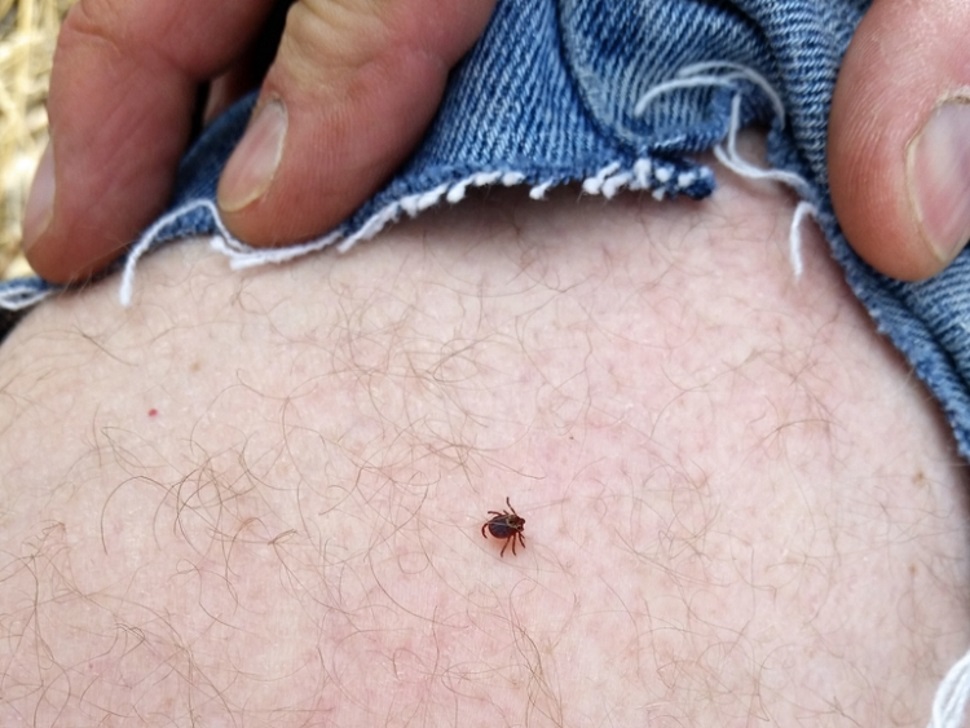
Ticks are active across Saskatchewan as residents spend more time outdoors, but health officials say Lyme disease remains uncommon in the province.
Dr. Hortense Tabien, medical health officer with the Saskatchewan Health Authority who oversees southwest Saskatchewan, including Moose Jaw, said most ticks found in Saskatchewan do not carry Lyme disease.
“Most ticks in Saskatchewan are known as the American dog ticks or wood ticks, which do not transmit Lyme disease,” she said.
The tick responsible for spreading Lyme disease is the black-legged tick. Tabien said it is rarely found in Saskatchewan and is often carried into the province by migrating birds.
“The surveillance evidence shows that there are no established reproducing populations of this type of tick in our province,” she said.
Related Stories:
Preventing tick bites
Although Lyme disease is uncommon in Saskatchewan, tick bites can still cause irritation or allergic reactions.
Ticks are commonly found in grassy and wooded areas and can be as small as a sesame seed.
Tabien recommends wearing light-coloured clothing with long sleeves and pants tucked into socks or boots. Using insect repellents approved by Health Canada can also help reduce the risk of bites.
“When you’re walking on a trail, really walk in the centre of the trail and avoid areas that have tall grass and leafy litter because those are where the ticks would usually stick,” she said.
Checking for ticks
After spending time outdoors, residents should check themselves, their children and their pets carefully for ticks.
“If you find any tick, remove it immediately,” Tabien said.
He recommends using tweezers to grasp the tick as close to the skin as possible and pulling it out slowly and steadily.
Residents seeking help identifying a tick can submit a photo to eTick.ca, which helps identify tick species.
When to seek medical attention
Most tick bites cause only minor irritation, but Tabien said people should seek medical attention if they experience unusual symptoms or a significant reaction.
“If you have a bite that looks unusual, is becoming increasingly irritated, or you’re concerned about any reaction, please seek medical attention,” she said.
He added that anyone experiencing a severe allergic reaction should seek emergency medical care immediately.