

Listen to this article
Estimated 4 minutes
The audio version of this article is generated by AI-based technology. Mispronunciations can occur. We are working with our partners to continually review and improve the results.
Residents in a west Parkdale neighbourhood are rallying round an old maple tree that’s threatened by a pending mid-rise development.
The 25-metre-high silver maple — which tree experts say is likely the largest on King Street W., — is city-owned. But because of its proximity to the site of a new temple planned by a Tibetan Buddhist congregation it must go, consultants hired by the temple say.
The Karma Sonam Dargye Ling congregation’s application to the city calls for a 13-storey building to be erected on a site that includes 1464 King Street W., and the adjacent properties at 10-12 Maynard Ave. — the home of the current Tibetan Buddhist temple.
The plan calls for commercial and retail uses on the main floor with some housing above. The building’s top floors would contain a temple and religious residences.
There are currently 10 trees on the property, seven of which have to go, according to the congregation’s landscape consultant. This includes the old silver maple, which sits by the sidewalk and has a canopy that drapes across King Street.
‘It’s earned the right to stay’: neighbour
The tree’s removal would be a big loss for the community, residents tell CBC Toronto.
Dave Thomas has lived in the area since 1948, and says the tree has always been there. “This tree is an integral part of the Parkdale structure,” he says.
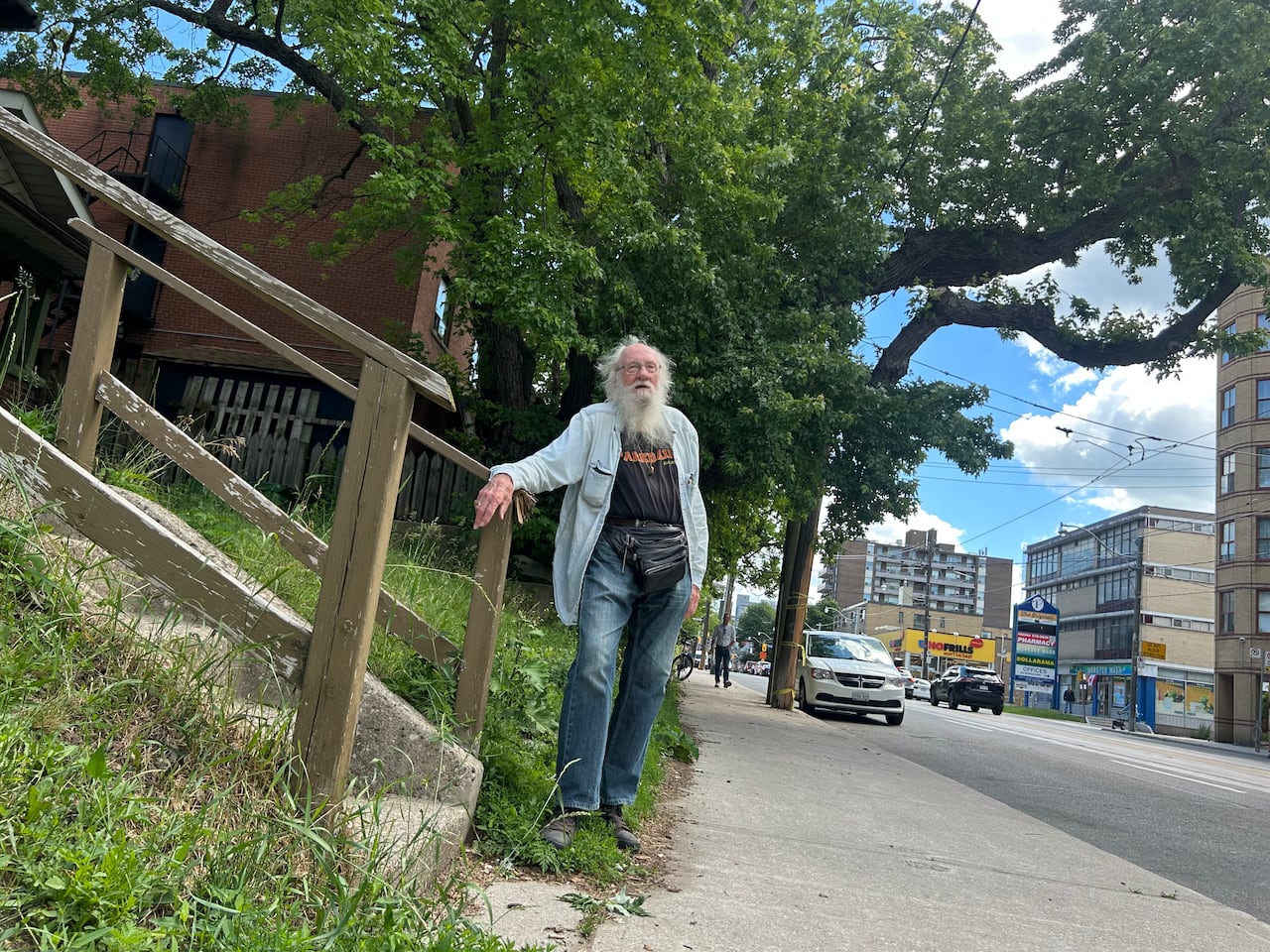 Dave Thomas, who has lived in the neighbourhood since 1948, says the tree has always been a neighbourhood fixture and should remain in place. (Michael Smee/CBC)
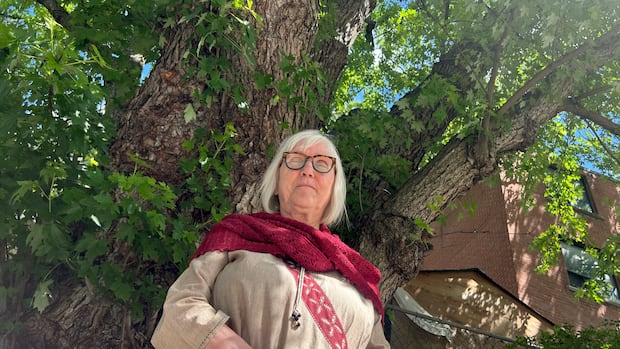
His neighbour, Carla Jensen, agrees. She has lived across King Street from the old maple tree for 16 years and says it gives her shade and privacy since its branches block the view into her apartment.
“This tree is older than every human on this planet,” she says. “It’s earned the right to stay.”
CBC Toronto has reached out to the temple’s director but has not yet received a reply.
Development is in early stages
The development application is still in its early stages. It was submitted to the city last year, and according to the city’s director of forestry, Kim Statham, no application to remove the maple has been received.
However an April 2026 arborist’s report included in the development application makes it clear the tree is in poor health and must go.
According to the report, the tree is in decline and over-mature, and is “in conflict with the proposed building.”
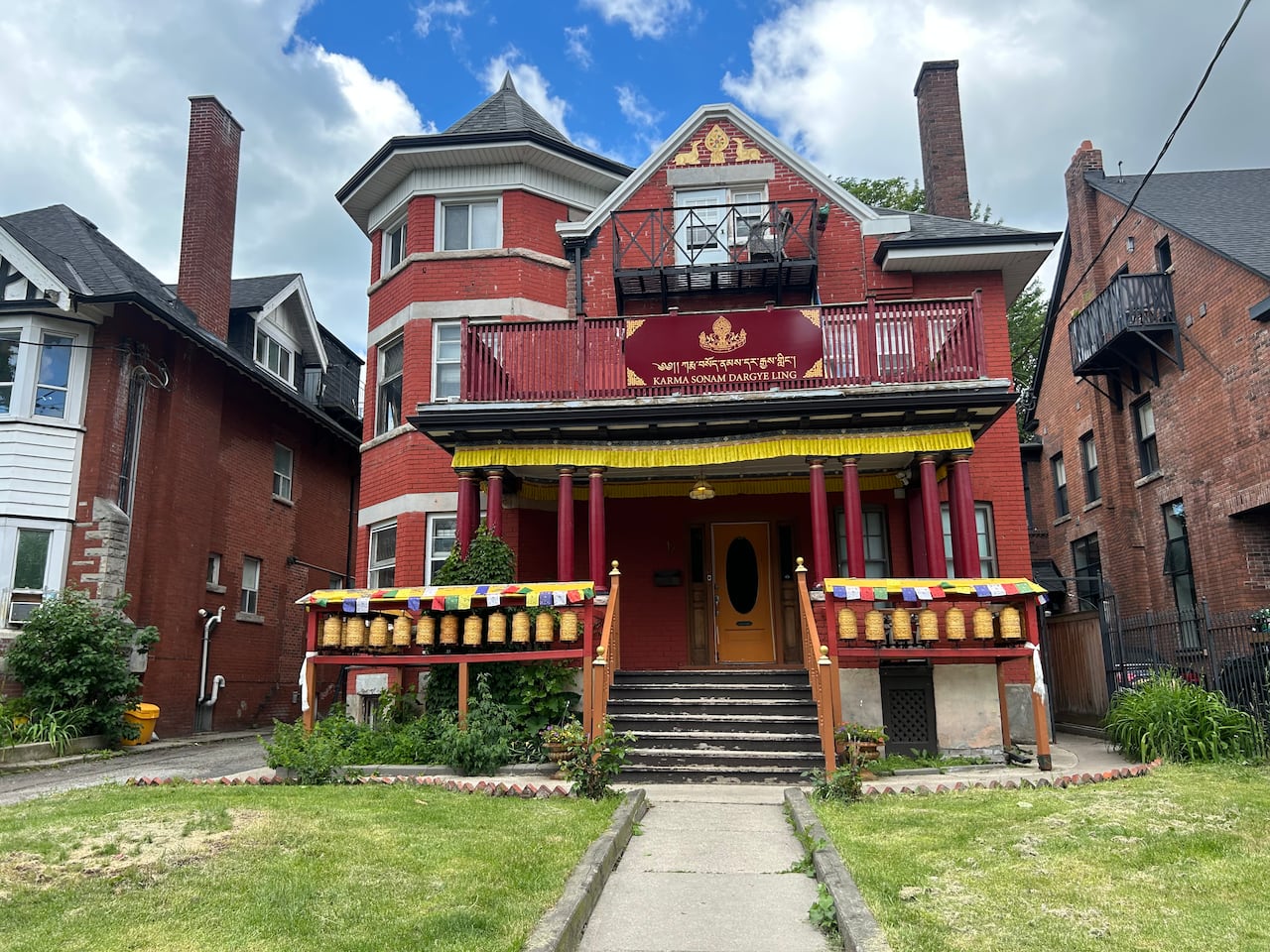 This Buddhist temple on Maynard Avenue and several other structures are to be replaced by a 13-storey mixed-use, mid-rise building. (Michael Smee/CBC)
Residents dispute the idea that the tree is in poor health, as does University of Toronto forest ecologist Eric Davies.
“It’s very vigorous … it looks like a really healthy tree,” said Davies, who unofficially examined the tree last week. He also maintains the tree is the largest on King Street West, and possibly on all of King street.
‘We support development’: residents’ association
Not everyone is on board with the save-the-maple movement in west Parkdale, though.
Ric Amis of the Parkdale Residents Association wonders if the some in the neighbourhood are simply against the new, enlarged Buddhist temple and future plans for the site.
“We support development,” he said.
Both Jensen and Thomas insist they’re simply fighting to save the tree. They point out that a Buddhist temple has been steps away from the tree for years, and is a welcome part of the community.
“[The Buddhist congregation] brought so much love and compassion and sharing,” Jensen said. “They jumped into the neighbourhood and made it a much better place.”
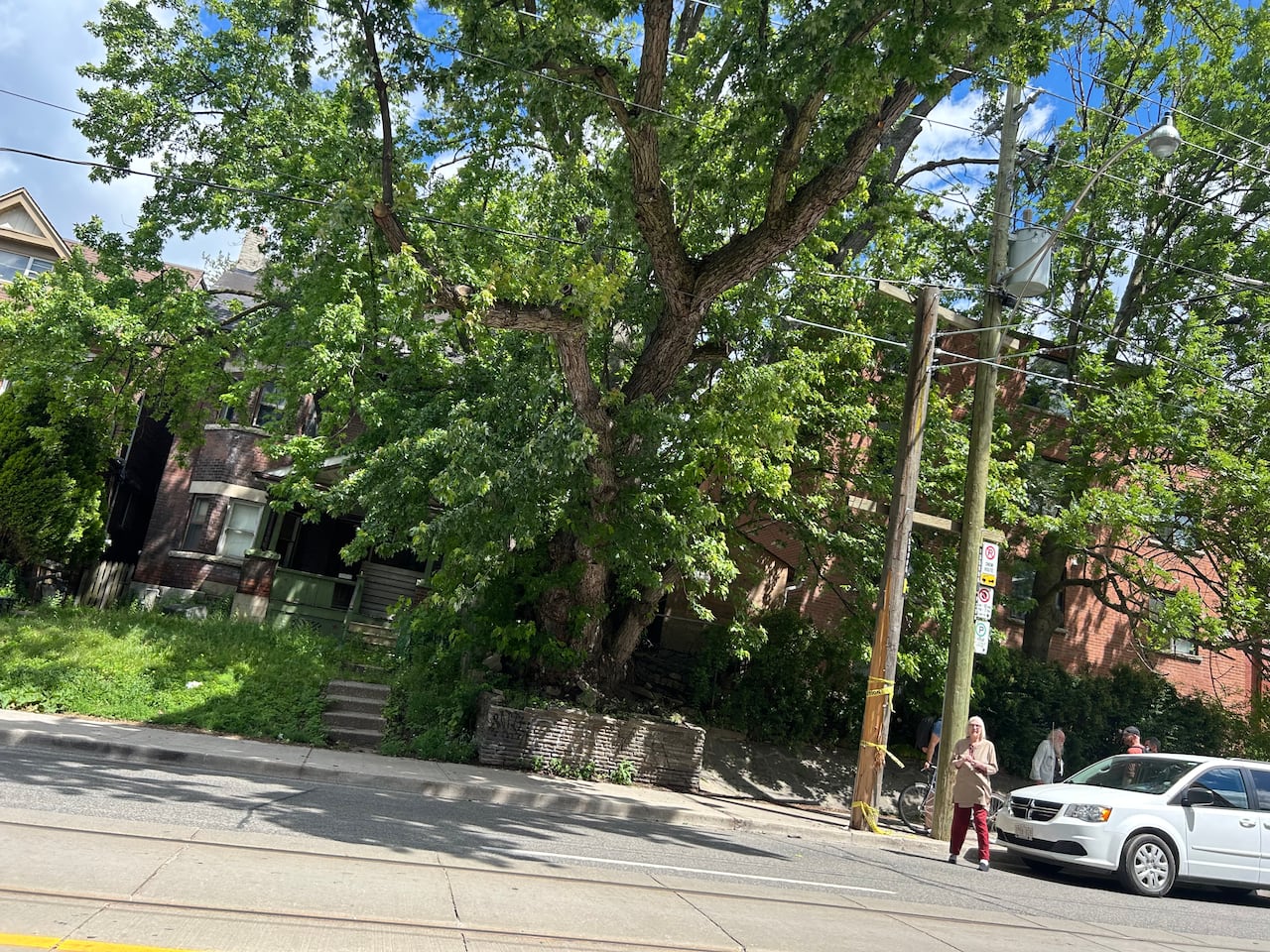 The tree may have been one of the first planted when Parkdale Village was founded in 1879, one historian says. (Michael Smee/CBC)
As for the age of the tree, Adam Wynne of the Parkdale Village Historical Society said he believes the tree could have been one of many planted in 1879, during a festival celebrating the founding of the village.
“It’s certainly of the right size, it could be one of those legacy trees,” he told CBC Toronto.
Ecologist Davies says he’d like to see the tree maintained on the site, if possible, and the city take better care of it moving forward.
“Trees don’t die of old age, they die of stress,” he says. “So if you improve the health of the tree — the growing conditions, prune it properly — it could live decades longer.”