
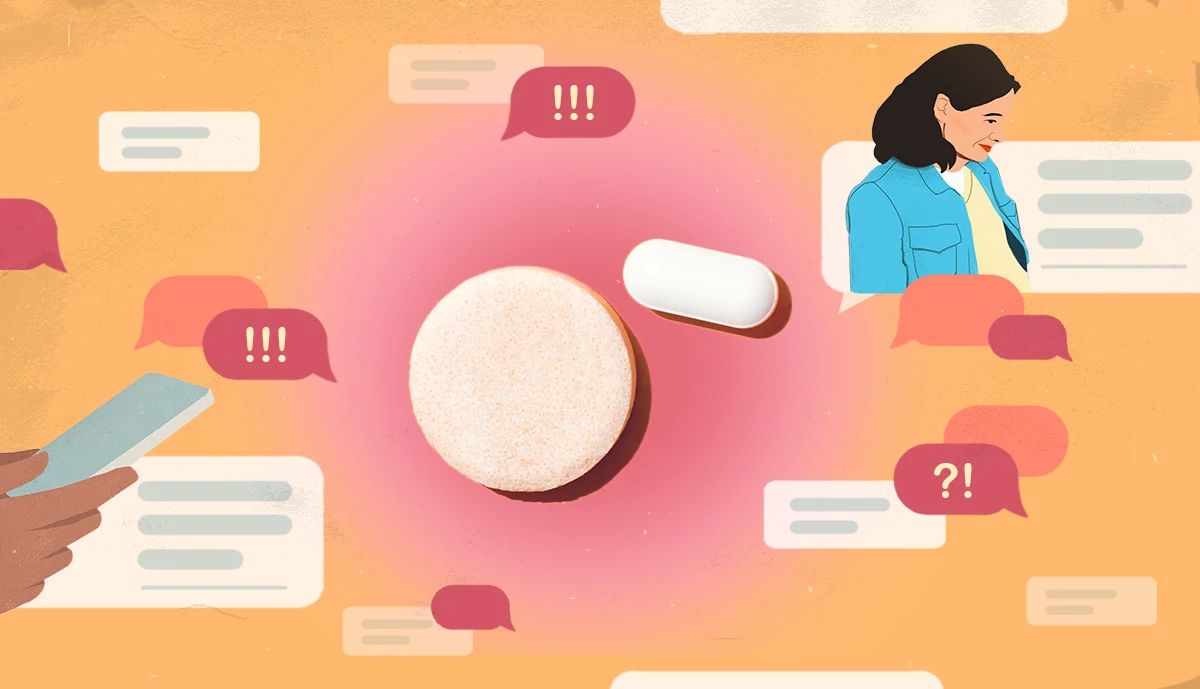
An unlikely drug combination has become the latest social media remedy for menopause symptoms: fexofenadine (Allegra), an allergy medication, and famotidine (Pepcid AC), an acid reflux treatment.
In thousands of posts, women praise the over-the-counter duo as a miracle that eases hot flashes, brain fog, anxiety and fatigue. To a generation navigating midlife in a fast-paced digital world, it can seem like the ultimate life hack.
But experts say the science behind the trend is scant, and the medications are not risk-free. Here’s what you need to know about the viral drug combo.
Why are people trying it?
Using an allergy pill and an antacid to treat hot flashes and other symptoms of menopause might sound strange. And according to Dr. Tami Rowen, an ob-gyn with UCSF Health in San Francisco, no clinical studies have shown that this combination works. Still, she notes, there is a scientific theory that helps explain why some women are reporting relief.
“It all comes down to mast cells, the part of our immune system that triggers allergic reactions. During menopause, estrogen levels can cause these cells to go into overdrive,” Rowen explains.
When these cells become overactive, they release histamine, a chemical that helps drive allergy symptoms, like itching and sneezing, and stimulates stomach acid production. That connection helps explain why some women report new or worsening allergies during menopause.
This is where the viral medication combo comes in: Fexofenadine is an H1 blocker, meaning that it targets the histamine receptors responsible for classic allergy symptoms. Famotidine is an H2 blocker, which targets the histamine receptors in the stomach to calm acid reflux and heartburn.
Rowen notes this hormone-histamine link might offer a temporary benefit to a small subset of women with overactive mast cells.
“When doctors prescribe Allegra or Pepcid AC for hives or reflux, some women have reported an improvement in their hot flashes,” Rowen says. “However, right now, this is purely anecdotal, and we still need rigorous studies and long-term data before recommending it.”
Other experts urge similar caution. Dr. Stephanie Faubion, medical director for the Menopause Society and director of the Mayo Clinic’s Center for Women’s Health, points out that the trend’s sudden rise in popularity likely stems from a single social media influencer rather than established clinical success.