

Listen to this article
Estimated 4 minutes
The audio version of this article is generated by AI-based technology. Mispronunciations can occur. We are working with our partners to continually review and improve the results.
Toronto city council voted in favour of expanding car-free streets Thursday, less than a week after the city’s Church street pedestrianization pilot kicked off.
Coun. Josh Matlow’s motion for a pedestrian streets program passed in a 16-6 vote at city council. The motion directs city staff to come up with a plan to identify suitable streets for seasonal and year-round pedestrianization next year.
“Torontonians and tourism experts are calling on the city to expand pedestrianization options, and we should listen by taking concrete steps to make this happen,” his motion said.
Speaking to reporters at city hall Thursday, Matlow said streets like Baldwin Street and Bellair Street could be good contenders for pedestrian-only access.
“We don’t need to be jealous of cities around the world, including as close to our home as Montreal and Ottawa. We can bring [pedestrianization] home here to Toronto,” he said.
Church Street pilot off to good start: councillor
Matlow’s motion said the city should use the city’s Church Street pilot to inform its pedestrian streets program.
That pilot came into effect June 19 and will continue until Aug. 21. The pedestrian-only space spans between Wellesley Street E. and Alexander Street and was first floated as an idea by Rodney Chan, an urban planning student at the University of Waterloo. Moise’s office then worked with him to develop an official proposal to take to the city.
Coun. Chris Moise, who represents the ward where it’s taking place, told CBC Radio’s Metro Morning Wednesday that he’s already received numerous calls from business improvement areas in the city as well as fellow councillors about piloting similar initiatives.
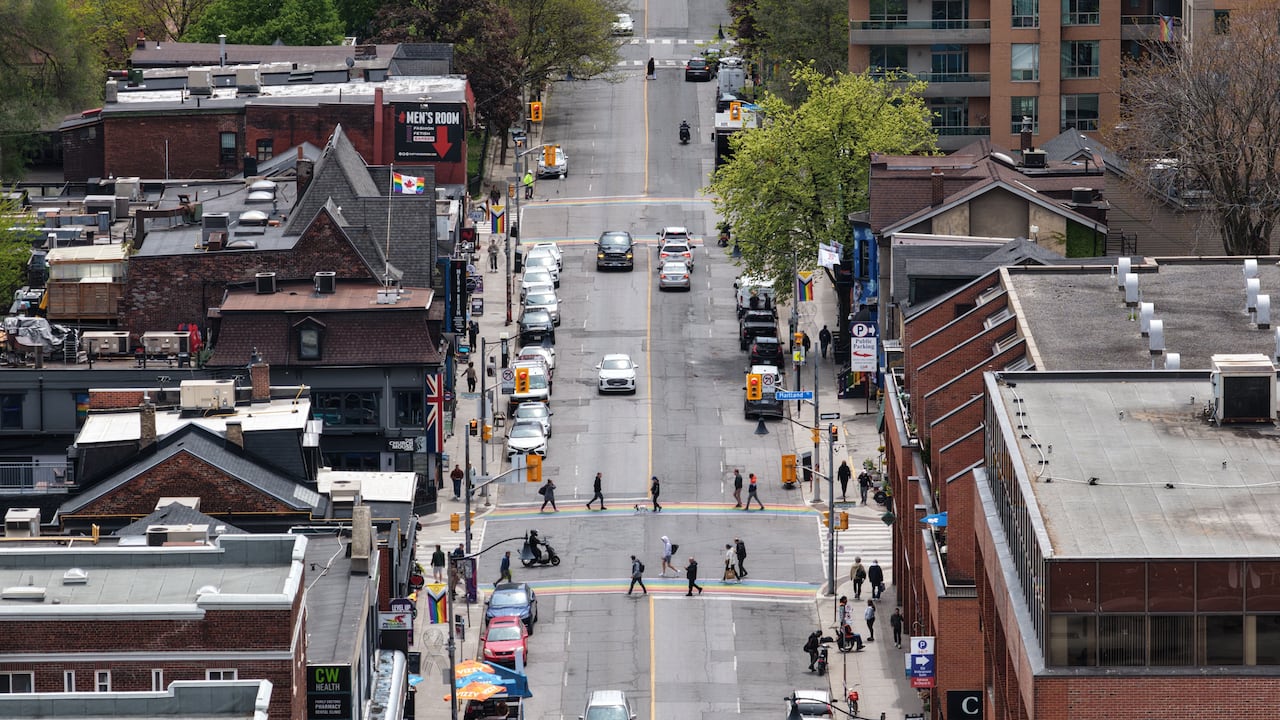 A drone image of Church Street in the Village. Toronto city council approved a pilot project to turn a stretch of Church Street into a car-free zone for part of the summer. (Patrick Morrell/CBC News)
“People want this to happen,” said Moise, noting that since the pilot began, businesses in the area have seen a “boom” in sales.
Ramon Suarez, who lives in the area, called the pilot “amazing” and said he’d like to see it expanded.
“The city needs that. It needs that for the businesses, for the people … the biggest cities in the world, they [already] do that,” he said.
Questions around cost, security persist
While off to a positive start, the Church Street pilot has raised questions around how much it costs to pedestrianize city streets, especially when it comes to security. Initially expected to cost $150,000 for nine weeks, the pilot’s total cost shot up to $500,000, said Moise.
Moise said Toronto police initially asked for 24-hour paid duty to patrol the pedestrian area, which would have cost the city $3 million. That cost was negotiated down to $300,000, with paid policing duty on weekends and 24/7 private security paid by the city through the week.
That raises questions for Paul Hess, a professor of geography and planning at the University of Toronto, who has studied pedestrianization for more than 30 years.
“Obviously there isn’t some [kind of] process in place to gauge what’s needed to do these projects,” he said.
“The fact that there could be a tenfold difference between the ask and what we settled on tells me that the police are having a lot of authority over shaping these projects, and maybe that needs to be looked at very carefully.”
WATCH | How Church Street’s pedestrianization pilot went over budget: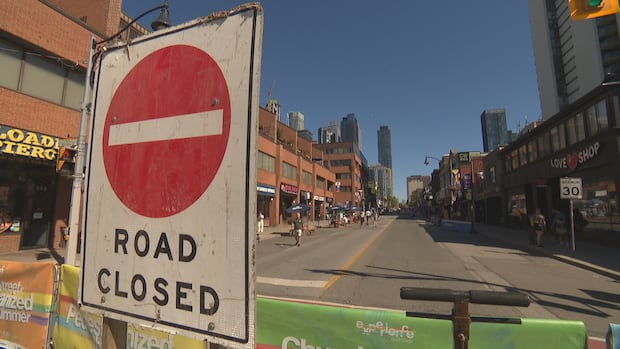
Toronto’s pilot project to pedestrianize Church Street is $350K over budget
Just a few days after it launched, we’re learning that Toronto’s pilot project to pedestrianize a section of Church Street for the summer is already over budget by hundreds of thousands of dollars. CBC’s Clara Pasieka has the latest details.
When asked about security costs Thursday, Matlow said there’s “no reason” for pedestrianized streets to have them.
“They are streets like any other street, except that they are places where you can walk and stroll rather than drive,” he said.
In an emailed statement, Toronto police spokesperson Stephanie Sayer said policing requirements for pedestrianized streets are not a “one-size-fits-all” approach, and in addition to the Church Street pilot being new, the area is one of the city’s busiest entertainment and cultural districts.
Factors like Pride Month and FIFA also go into “determining the appropriate public safety and policing response,” she said.
“Our focus is to ensure a safe and welcoming environment for residents, businesses and visitors, and we adjust resources based on operational needs.”