
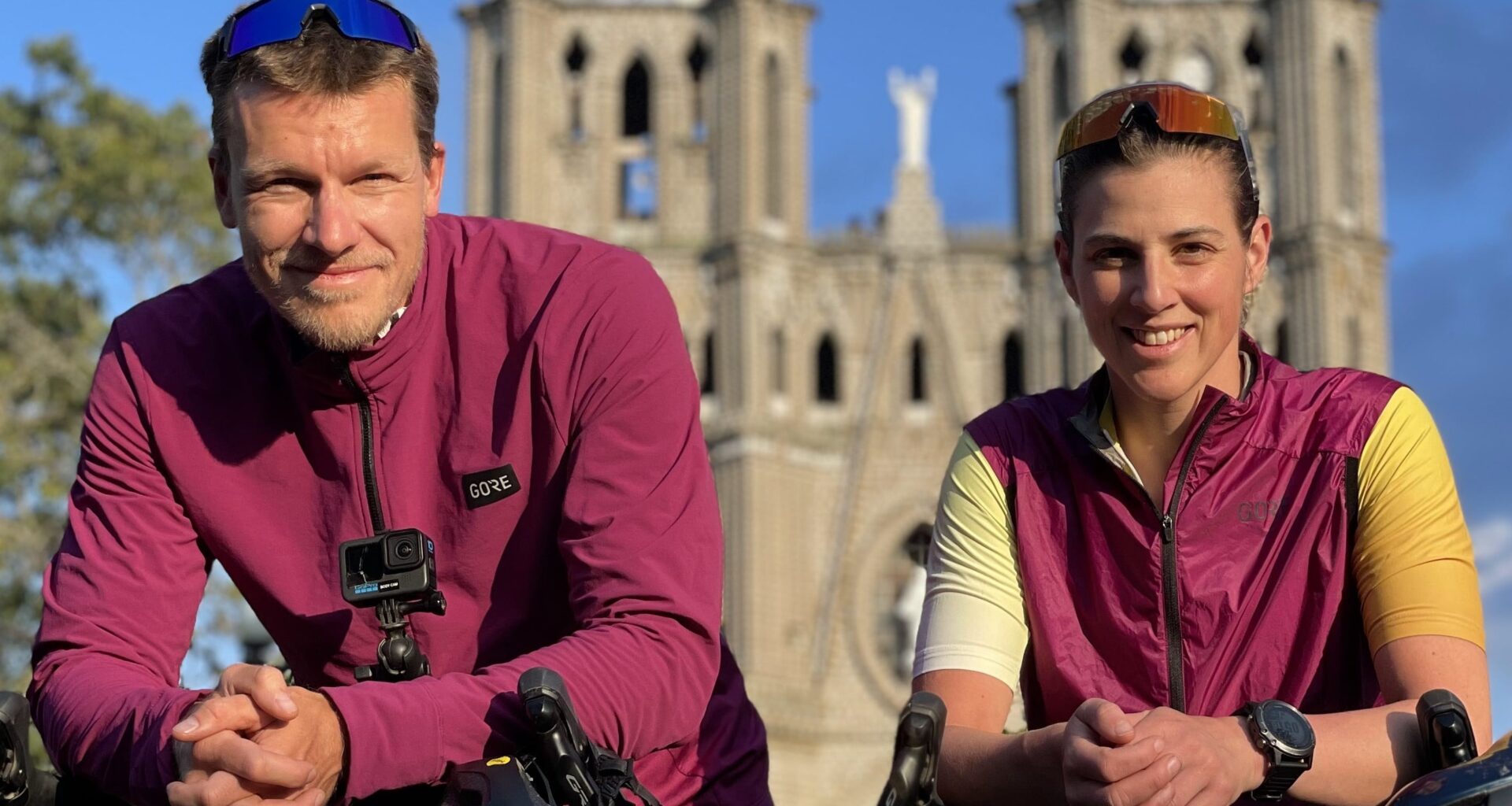
On July 20, Edmonton decathlon athletes Timm Döbert and Leanna Carriere will take their bicycles on the road as they pioneer the first expedition to raise awareness about migratory birds and their role in conservation, cycling for seven to 10 months along the Pan-American highway from northern Alaska to the southernmost tip of South America, mirroring the flight of one of the birds with the longest migration path, the Hudsonian Whimbrel.
The idea is that data gathered from the Whimbrels will indicate whether ecosystems along the path are struggling or thriving, depending on whether the birds avoid the area or stop to feed or breed. They’re hoping this information will help scientists understand the role migratory birds play in climate change.
Their odyssey along the Pan-American highway, called Wings of Survival, will draw attention to the idea that avian species can play significant roles in directing conservation interventions in a world with a rapidly changing climate.
Carriere said migratory birds are the best indicator for understanding how well the Earth is sustaining life. Because birds rely on healthy ecosystems to refuel or breed along the “flyway,” or path of migration, their health is threatened when areas are struggling or disappearing altogether.
“They’re kind of warning us…maybe the air pollution is really bad or the access to water has changed — something has changed in the environment, so the birds can no longer survive [there],” said Carriere.
The highway covers 15 countries between Canada, the United States, Central and South America, from Prudhoe Bay, Alaska to South America’s Tierra del Fuego. Döbert and Carriere will trek 30,000 km on sheer strength and determination, trying to match the prowess of “the world’s strongest athletes.”
They got the idea for this cross-continental adventure during the COVID-19 pandemic. Döbert, originally from a town near Dusseldorf, Germany, was living in Edmonton and had just completed his post-doctoral research paper on the relationship between cattle grazing and grassland ecosystems. He saw a map of the world’s longest bird migrations and felt compelled to cycle them. Döbert’s background in conservation, science and athletics created the lens through which he saw an opportunity for conservation advocacy — and cycling was the means for making it happen.
Carriere had seen the same map before meeting Döbert. And only four weeks after the two friends met, they realized they shared a goal of cycling a migratory route. They agreed to do it together, but they wanted it to be as impactful as possible.
The role of migratory birds
Researchers have seen bird populations decline in ecosystems that are being negatively impacted by climate change. As such, the activity of birds can be a guide for communities to focus their climate change efforts by highlighting specific struggling locations. For example, there are dying bird populations in California, where drought and high heat are linked to mortality.
According to Carriere, understanding what natural environments migratory birds favour and avoid can draw attention to issues in the air, water and vegetation. In this way, she said, paying attention to these factors as they relate to bird populations and changes in migration patterns could help initiate early intervention actions.
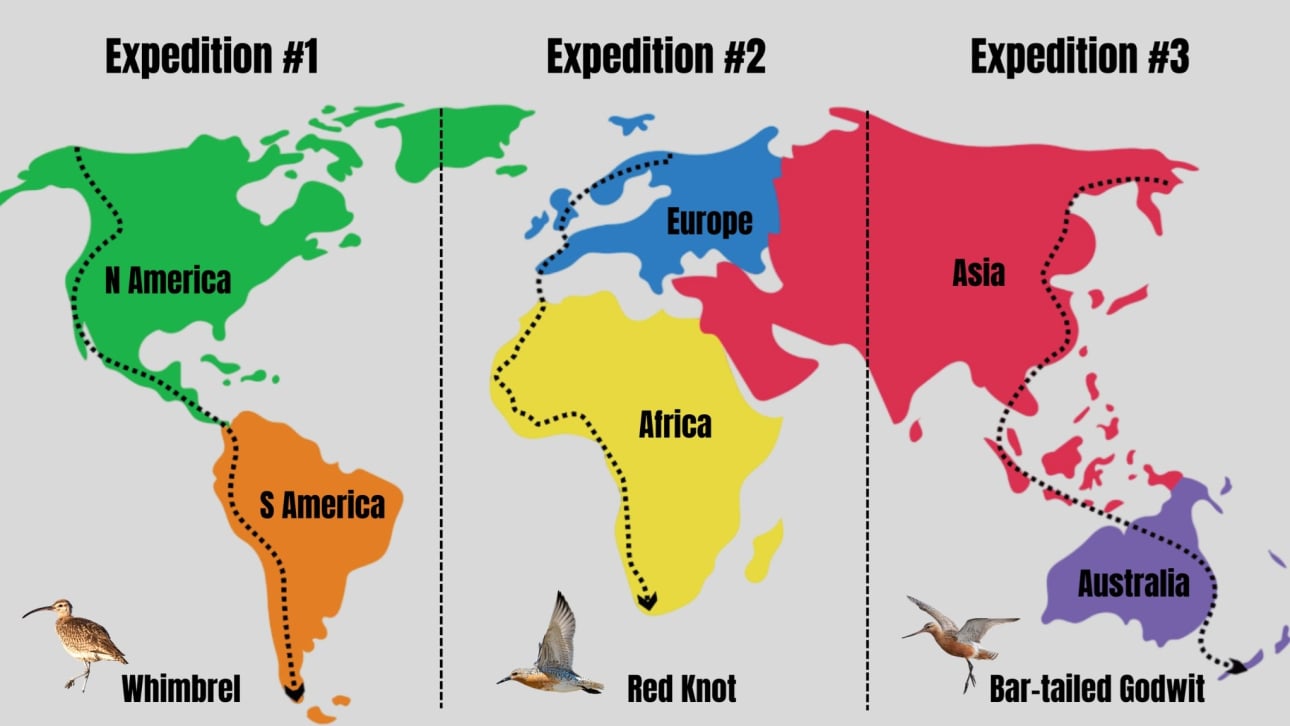 Each journey mirrors the migration path of a different regional shorebird. The tri-fold expedition begins in July 2026. Photo courtesy: Wings of Survival
Döbert and Carriere have planned a three-part expedition following the flyways of three of the world’s longest bird migrations: the Hudsonian Whimbrel, the Red Knot and the Bar-tailed Godwit. The first expedition will follow GPS tracked Hudsonian Whimbrels. They won’t use any method of transportation involving motors, so when bikes aren’t suitable, options such as sailing or pack-rafting will be considered.
Working with scientists from the University of Alberta and the Game Changers Institute, they will gather data from the three birds being tracked with GPS. Their locations, speeds and length of flight are main points of interest that will be used to understand the migration pattern and environments they visit.
The location of the Whimbrels being tracked will help pinpoint priority conservation areas. Using a BirdWeather acoustic monitoring device, they’ll capture the bird sounds to understand what communities are located where along the flyway. Even dead birds along the migration journey will be tracked, giving them insight into which species are being affected by vehicle collisions and how many succumb to their injuries.
“Bird populations across the planet have dropped by about 70 per cent in the last 50 years, on average. That’s a dramatic loss of wildlife with serious repercussions for ecosystems and, essentially, human well-being,” said Döbert. “Habitat loss is the most severe cause of population declines. Understanding where birds go is an essential first step towards protection.”
Döbert and Carriere will have Garmin smartwatches tracking their vitals, altitude, speed and location, which will be compared to that of the Whimbrels. The tracked data from the birds and the cyclists will be featured on the Wings of Survival website.
“We’re trying to use this unique story to really reconnect people to nature, to pitch the birds as the greatest athletes on the planet — which they truly are — to make people understand and revisit the idea of who we are as humans, in this bigger web of life,” said Döbert.
Beyond just sharing numbers and facts, the human element is what they’re hoping will draw audiences in. The goal is that people will see nature in a new light, by intertwining the story of birds with the story of two competitive athletes who are passionate about increasing global conservation efforts.
“More people are disconnected and we really need them to be reconnected. So we really need those people to be in awe of bird migration and what these little birds do and why they are important to our own human health,” said Carriere.
What lies ahead
Originally, Döbert and Carriere planned to have all three expeditions completed by 2030 to coincide with the deadline of the Paris Agreement and the global 30 by 30 initiative, which aims to protect 30 per cent of land and water by the same year. However, this first expedition took five years of planning, landing partnerships and funding, so it will likely take more time to begin the next phases. So far, they’ve partnered with the sports apparel brand Patagonia, national conservation organization Birds Canada and The Explorers Club’s Canadian chapter, among others.
This adventure isn’t without challenges, especially since they will be on the road for upwards of 10 months. Carriere is leaving a nine-year-old daughter and husband behind, and said she doesn’t know how well her daughter, Adalynn, understands the significance of the expedition or the distance that will be between them.
Outside of preparing for the expedition, Döbert is packing his life into storage. Because they will be gone for almost a year, he has to leave his apartment and end his lease.
Carriere has arranged for Adalynn to visit them at various points throughout the expedition, because that existing connection could help Döbert and Carriere hold up emotionally during their journey.
During the expedition, Döbert and Carriere will have contact with the researchers at the University of Alberta and the people they meet along the way, but how much contact they will have with their families and friends isn’t clear.
The work put into Wings of Survival over the last five years has been demanding for both Döbert and Carriere, leading them to feel mixed emotions. But, they’re committed to the objective and ready to get on their bikes despite the stress.
“I want to have the biggest possible impact that I can have, as who I am. I hope that is empowering to lots of people to find their own story… I feel everyone can contribute in their own ways,” said Döbert.