

Listen to this article
Estimated 4 minutes
The audio version of this article is generated by AI-based technology. Mispronunciations can occur. We are working with our partners to continually review and improve the results.
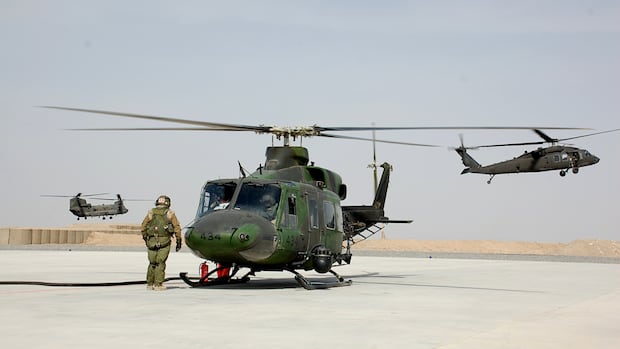
The federal government has ordered life-extension work on the air force’s aging CH-146 Griffon helicopters put on hold, CBC News has learned.
The multimillion-dollar refit has run into technical issues, say sources who spoke on a confidential basis because they weren’t authorized to speak to the media.
There’s concern among defence planners whether Bell Textron Canada Ltd., located out of Mirabel, Que., can refurbish all 82 helicopters.
The company was recently notified of the contract pause and is currently in talks with both the Department of National Defence (DND) and Public Services and Procurement Canada about defining the scope of the $800-million upgrade contract.
Both DND and the company, in separate written statements, confirmed to CBC News the project is in limbo and the extent of the upgrades is being reconsidered.
“We remain committed to working collaboratively with the federal government to adapt the [Griffon Limited Life Extension] GLLE program accordingly,” said Lindsey Hughe, a spokesperson for Bell Textron. “Together, we are in the process of redefining the project’s scope of work.”
The upgrade contract was signed in May 2022 and a separate $2.2-billion sustainment contract to keep the CH-146 fleet flying until 2039 was awarded in January 2024.
Upgrades include modernized communication and navigation systems, cockpit voice recorders, displays, sensors and engines.
It’s unclear how many helicopters have received the improvements. Bell Textron showcased the first refurbished Griffon in 2024.
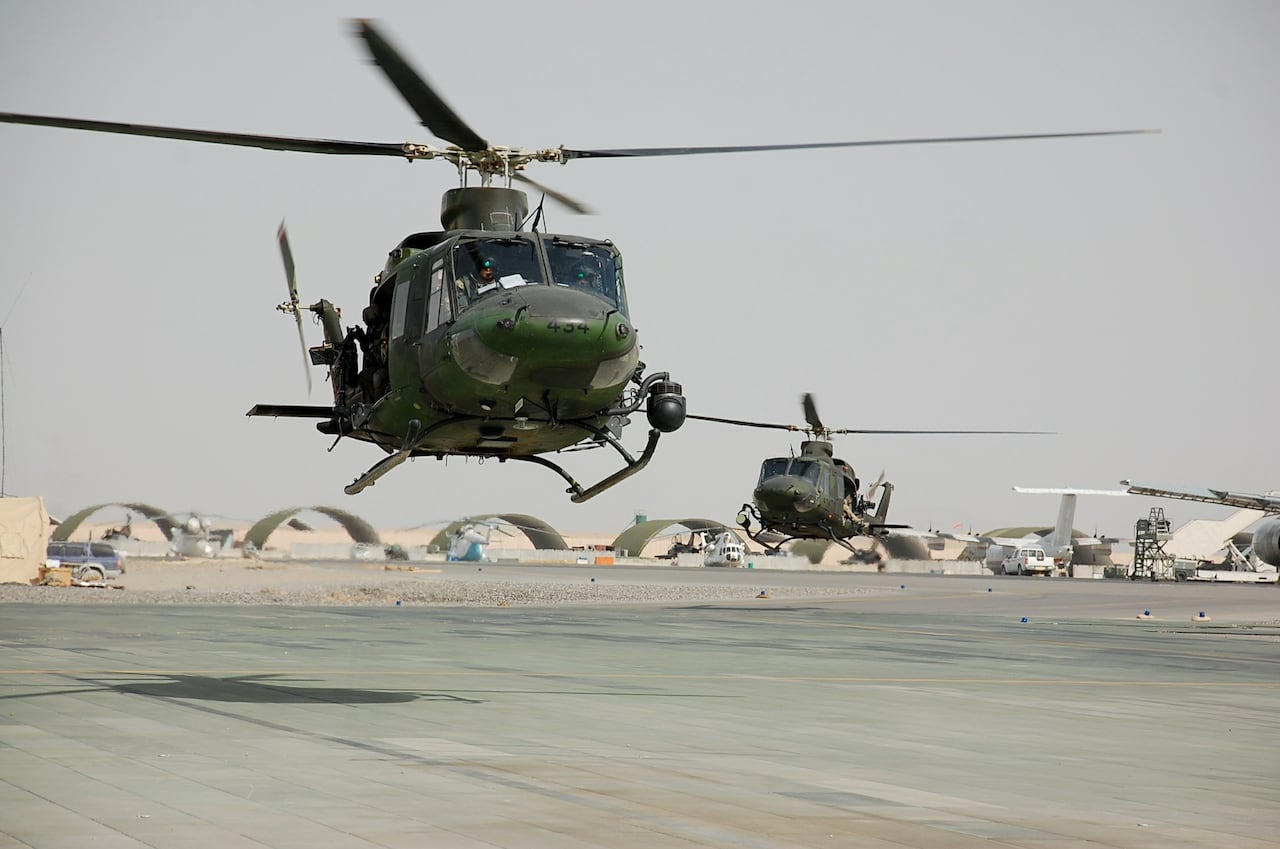 The Griffons first entered service in the early 1990s, and the upgrade and sustainment program aimed to keep them operational until 2039. (Murray Brewster/The Canadian Press)
“Work on the Griffon Limited Life Extension project was recently paused to allow for a reassessment of scope in light of cost, schedule, evolving complexity and planning underway for a replacement fleet,” said Laura McIntyre-Grills, a spokesperson for the Defence Department.
According to confidential sources the “evolving complexity” involves problems the company is having with the upgrade to the mission system — including the mission system computer, one of the elements at the centre of the refurbishment.
The project hold comes at a particularly significant time as the Liberal government weighs what helicopter should replace the Griffon.
The new tactical helicopter program has yet to be fully defined, but is expected to have an overall price tag of $18 billion, according to the Defence Department website.
Earlier this year, the Ottawa Citizen reported that Canada’s Special Operations Regiment would get first priority for modernized helicopters under the program, with deliveries expected to begin around 2033.
Canada is also under pressure to contribute more resources to NATO in the face of the United States limiting what it will do for the Western military alliance in the event of an emergency.
Both the air force and the company are actively trying to determine whether all or only a select number of Griffons will receive the upgrade, the sources said.
“The project is being refined to focus on targeted upgrades that address obsolescence, to support continued safe and effective operations and sound investments,” said the DND spokesperson.
“Refining the project scope will enable the best value for Canadians. We remain confident that focusing on these upgrades will provide the Royal Canadian Air Force (RCAF) with the modern, effective and interoperable helicopters it needs to continue supporting operations until the mid-2030s.”
The Griffons first entered service in the early 1990s.
They are essentially a militarized version of the Bell 412EP helicopter and have been used as both limited troop transport and as a gun platform during the Afghan war.
Competition to replace the Griffon fleet is expected to be intense. American-owned Bell Helicopter and Lockheed Martin, which now owns Sikorsky Helicopter, have been actively promoting their own solutions. The same can be said for Airbus which has tried to steer Canada toward the H175M helicopter.