

Like other advanced cultures around the world, the Indigenous peoples of North America track their year using a sophisticated lunar calendar.
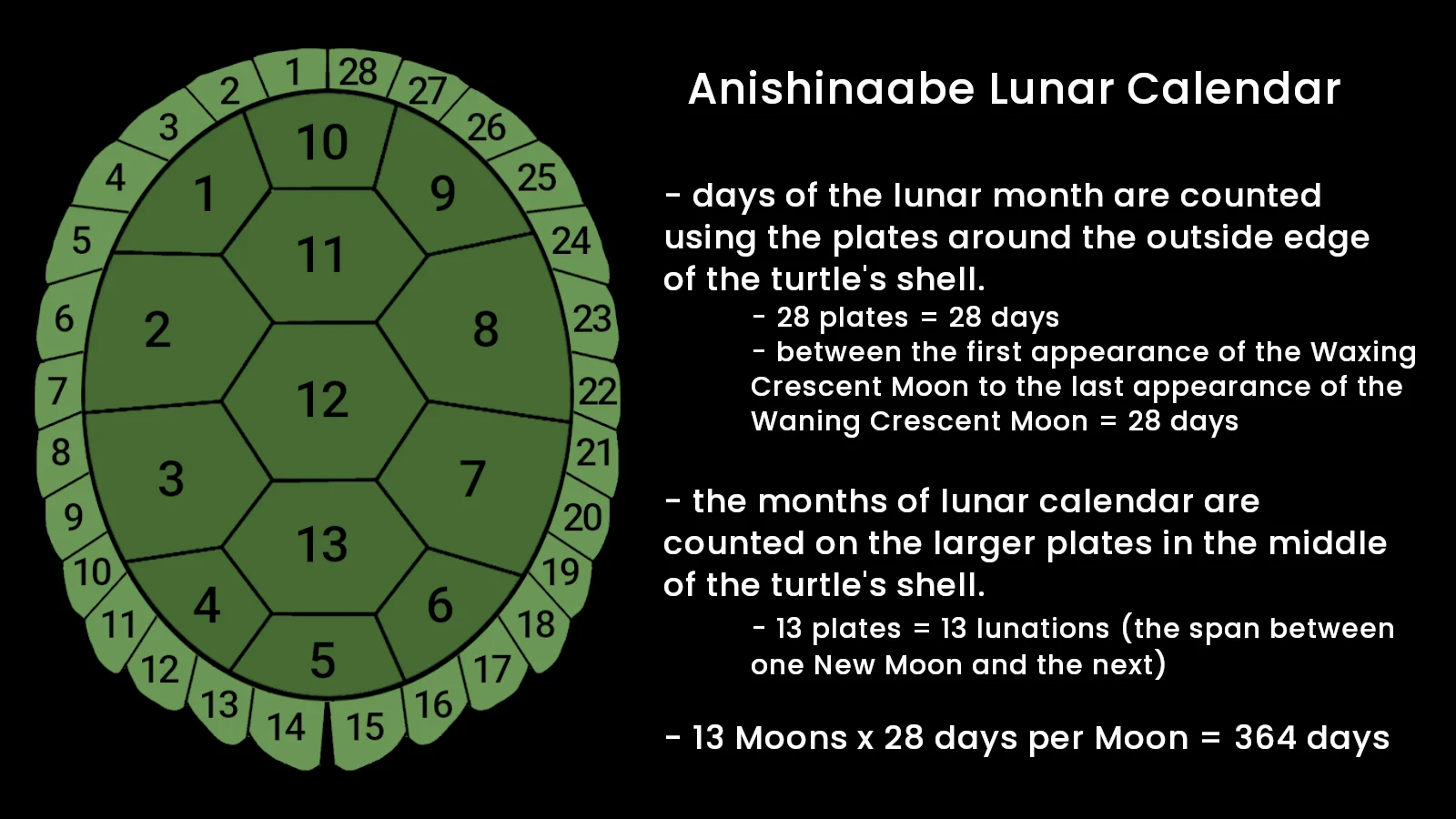
For example, the calendar used by the Anishinaabe people is based on the pattern of plates on the shell of a turtle. The 28 small plates around the shell’s edge corresponded to the 28 days of each lunar cycle, and the 13 large plates on the turtle’s back represent the 13 lunar months of the year.
READ MORE: Indigenous constellations – part-science, part-art, all-important
Each of the 13 moons was given a name, similar to the months of the Gregorian calendar. However, whereas the names of the months came from gods, rulers, and their numerical order in the calendar, the names of the moons were taken from the aspect of nature that affected the peoples’ lives at that time of year.
What is a micromoon?
As the Moon travels around Earth, it doesn’t trace out a perfect circle. Instead, it follows an elliptical path. That means that for roughly half of each orbit, it is closer to Earth, while it spends the rest of the orbit farther away. It also means that there is a closest point to Earth in its orbit, known as perigee, and a farthest point, known as apogee.
When the Moon is Full (or New) when it is close to or at perigee, it appears bigger and brighter to us, and is known as a supermoon. When it is Full (or New) around the time when the Moon is at apogee, and thus is at its farthest and appears smallest, we call it a micromoon.
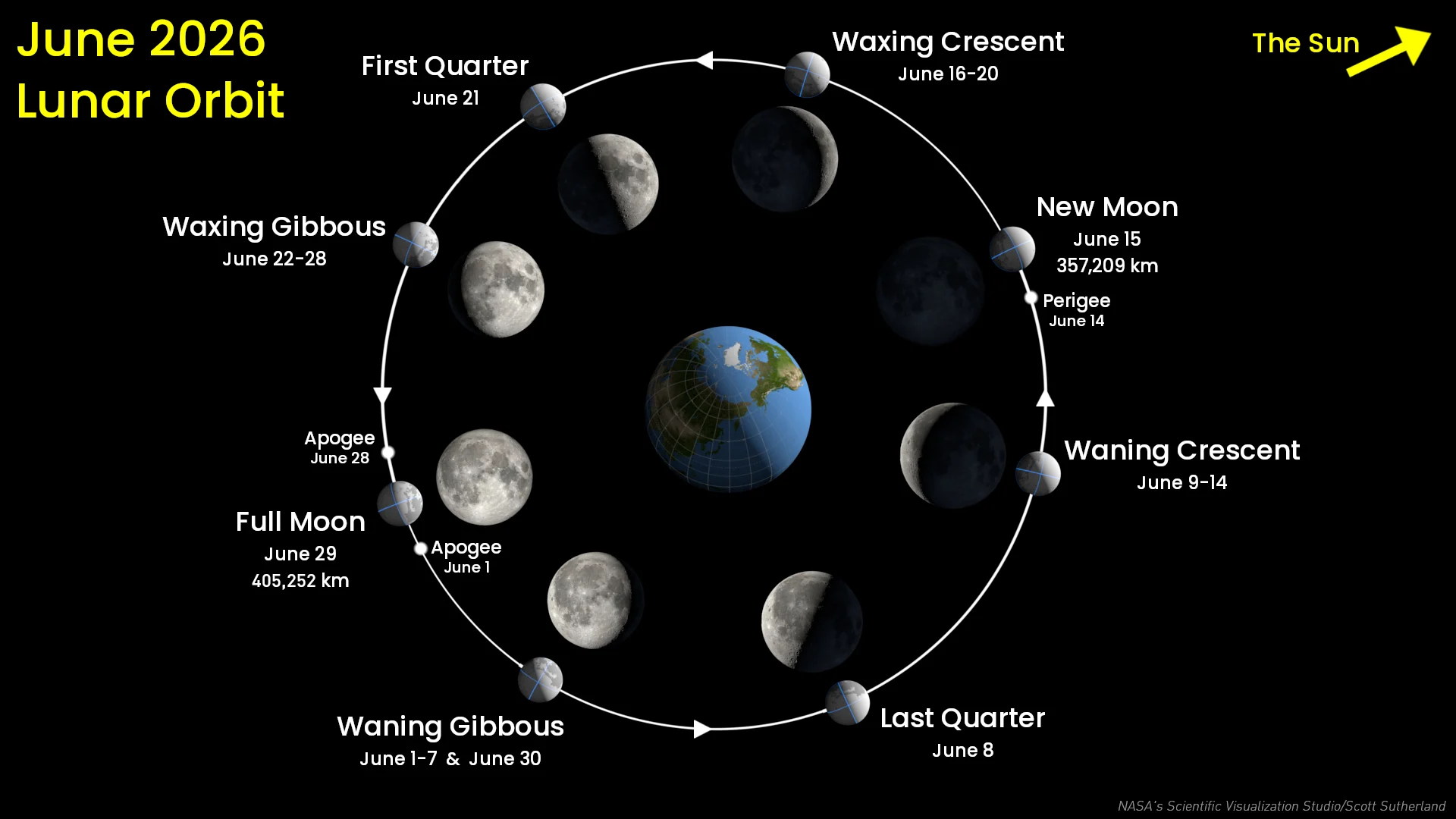
The orbit of the Moon for June 2026. (NASA’s Scientific Visualization Studio/Scott Sutherland)
READ MORE: Why does the Moon look so big? What is the mysterious Moon Illusion?
As shown in the diagram above, while lunar perigee occurs on June 14, just before the New Moon, there are actually two apogee points during the month. One was on the 1st, just after the Blue Moon, which made that particular Full Moon the farthest and smallest of the year (the Apogee Micromoon). There is another on the 28th, just before the Full Strawberry Moon.