
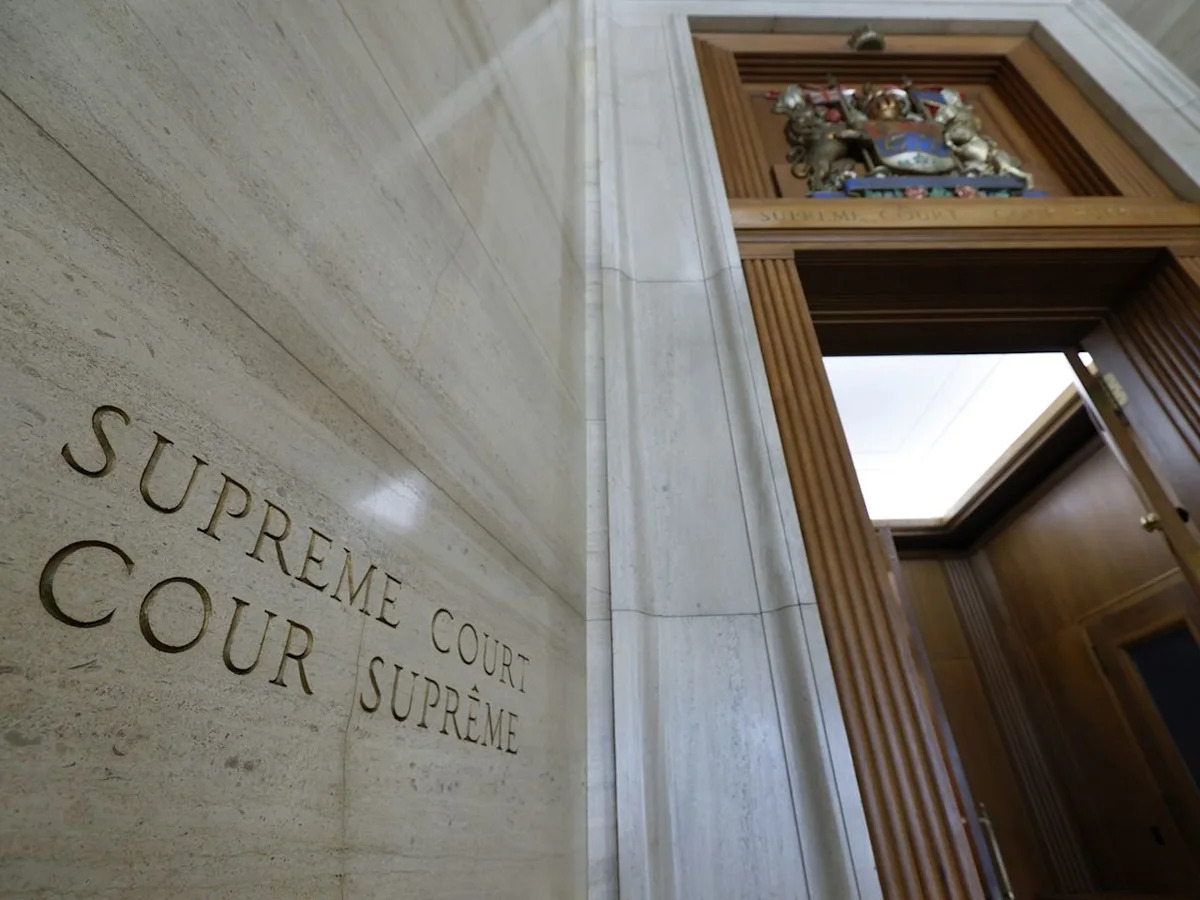
Canada’s top court has unanimously dismissed a bid by the Edmonton Police Service to limit information about officer misconduct turned over to defendants in criminal cases.
The Supreme Court of Canada on Friday issued its decision in the case of Edmonton Police Service (EPS) v. John McKee, a man charged in 2022 with drug and weapons offences.
During pre-trial proceedings, McKee learned the lead detective had previously been disciplined under the Police Act and that information from the case could assist in his defence. While the Crown agreed the records were relevant, Edmonton police refused to turn them over, arguing provincial legislation removes misconduct from an officer’s disciplinary record after five years of good behaviour.
A seven-judge Supreme Court panel disagreed with the EPS’s interpretation of the law and said the records must be produced.
“The police must meaningfully participate in the disclosure process by identifying and transmitting relevant information to the Crown, including investigative and disciplinary material,” Justice Sheilah Martin wrote.
“The administrative removal of a record of police misconduct from a police officer’s record of discipline does not alter the legal regime under which its disclosure is determined in criminal proceedings.”
Edmonton police earlier claimed that expanding disclosure requirements would undermine officers’ privacy rights and cause the justice system to “collapse under the impossibility of the Crown’s disclosure obligations.”
The court disagreed, saying an accused’s ability to make “full answer and defence” trumps privacy concerns. It expanded the definition of what records should be turned over to the Crown, and also ordered police to pay McKee’s legal costs.
“Notwithstanding the Crown’s determination that the (disciplinary) decision was relevant and should be disclosed, the EPS persisted in resisting its disclosure, forcing Mr. McKee to bring an application,” Martin wrote.
“The chief of police has acknowledged that his primary concern is the broader state of the law rather than Mr. McKee’s case, causing additional delay to his trial. Mr. McKee should not personally bear the financial costs of this test case.”
‘A really low bar’
McKee was charged as part of Project Emission, an Edmonton police investigation into organized crime and drug trafficking.
After charges were laid, the defence asked prosecutors for evidence disclosure, including any disciplinary records for police officers involved in the case. Such records are routinely disclosed to the defence because they allow an accused to test an officer’s credibility in court.
Police initially said there were no disciplinary records for Det. Jared Ruecker, the lead investigator in the case. The defence later learned this was not true, and that Ruecker had a previous misconduct conviction from 2015 disclosed in an earlier prosecution. The Crown obtained the records and agreed they should be given to the defence.
Instead of handing over the records, Edmonton police appealed to the Court of King’s Bench, arguing Section 22 of the Police Act “removes and destroys” disciplinary findings against officers after five years of good behaviour. Justice Eric Macklin disagreed, saying that section only applies to administrative matters such as a promotion.
Edmonton police appealed Macklin’s decision directly to the Supreme Court. More than a dozen organizations were granted intervener status, including the Canadian Police Association, the attorneys general of B.C. and Ontario and the Toronto police chief.
During arguments last October, EPS lawyer Megan Hankewich was met with skepticism, with several justices saying an accused’s right to a fair trial overrides police concerns.
Caitlin Dick, an Edmonton defence lawyer who intervened for the Criminal Trial Lawyers’ Association, said EPS’s attempt to curtail disclosure rules backfired. Whereas the existing system required disclosure from five specific categories including criminal convictions and misconduct findings, the court now says “relevance” is the primary issue.
“Relevance is a really low bar,” Dick said. “It’s like any little thing that could possibly assist in making full answer and defence.”
That means police will have to turn over more information about officers to the Crown, which then decides whether the information should be disclosed to the defence, Dick said. Martin gives several examples of what types of information could be relevant, including officers using “profane, abusive or insulting language” in the workplace or toward members of the public.
Tania Shapka and Daniel Song, McKee’s lawyers, said they believe the decision will make the justice system more efficient.
“It will greatly reduce pretrial disclosure litigation that has arisen in certain jurisdictions where police services have taken an aggressive approach to protecting information about their members’ misconduct,” they said in a statement.
They also applauded the decision to award legal costs against EPS.
“The SCC appears to have recognized that EPS was wrong to have opposed disclosure of the detective’s disciplinary history — and inappropriately persisted in resisting disclosure despite the Crown’s assessment that the record ought to be disclosed.”
Edmonton police, the Edmonton Police Association and the Toronto Police Association declined to comment on the decision pending further review.
Related
Bookmark our website and support our journalism: Don’t miss the news you need to know — add EdmontonJournal.com and EdmontonSun.com to your bookmarks and sign up for our newsletters.
You can also support our journalism by becoming a digital subscriber. Subscribers gain unlimited access to The Edmonton Journal, Edmonton Sun, National Post and 13 other Canadian news sites. The Edmonton Journal | The Edmonton Sun