
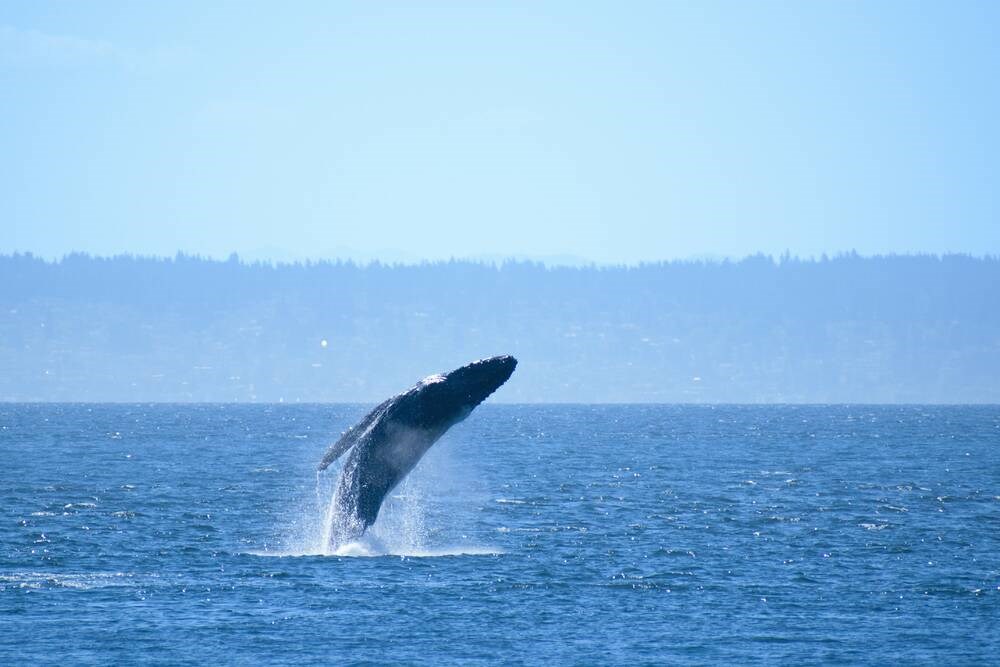
The whale, believed to have been struck by a Hullo ferry last fall, was seen this week for the first time since December.
Whale observers were expressing relief after a humpback whale believed to have been struck by a Hullo ferry last fall was spotted alive this week for the first time since December.
The two-year-old whale named Skipper was seen breaching and diving in Puget Sound by a whale-watching boat on Monday.
She had last been seen near Orcas Island, Washington, on Dec. 6, almost two months after photographers captured images of a large gash behind her dorsal fin that left blubber exposed.
Erin Gless, executive director of the Pacific Whale Watch Association, said she has seen superficial wounds on whales before, but this injury was one of the worst.
She said experts were worried about how the young whale would fare over the winter, since the colder months come with extra challenges for humpbacks.
The whales have to navigate the long journey to warmer waters, where they lose weight during their annual fast, before dodging vessels and fishing gear on the trip back to northern waters.
“It’s a real gauntlet,” said Gless, who said the first few years of a whale’s life are the most difficult.
Skipper’s family is known to travel to Hawaii annually, so it was normal that she wasn’t spotted in the Pacific Northwest during the winter months, but that didn’t stop researchers from worrying.
Gless said the sighting of Skipper was “just a huge relief.”
Humpbacks are identified by their tails, Gless said, and Skipper now has a distinctive “notch” behind her dorsal fin from the injury.
She said the breaching and diving behaviours spotted on Monday are signs that Skipper is doing well. “She’s a fighter.”
It’s early in the season for whales to return to northern waters, and Gless said many more are expected to be spotted in the coming weeks and months.
She warned boaters to be vigilant, saying whales can pop up “just about anywhere.”
Spouts, splashing, bird activity or nearby whale-watching vessels are good signs that a whale is close by, Gless said. “Anywhere with salt water, a whale can be there.”
The Department of Fisheries and Oceans will have a booth outside the Royal B.C. Museum on Sunday with information about safe boating practices around whales.
Catriona Day, public education and engagement fishery officer for DFO, said she and her team will be in front of the museum from 11 a.m. to 5 p.m. with a 20-foot inflatable orca, whale warning flags and orca artifacts, including a skull.
Day said the team hopes to help people understand the new southern resident killer whale regulation guidelines, which require boaters to stay 1,000 metres from southern resident whales.
They must also stay 200 metres from a humpback at rest and 100 metres from an active one, said Day.
Humpbacks are more susceptible to boat strikes because they don’t communicate using echolocation like orcas, and their movements are slower and less predictable, she said.
Day said it’s important to give ample space to any whale that boaters see in the water.
“Give them more space than they need.”