

Listen to this article
Estimated 4 minutes
The audio version of this article is generated by AI-based technology. Mispronunciations can occur. We are working with our partners to continually review and improve the results.
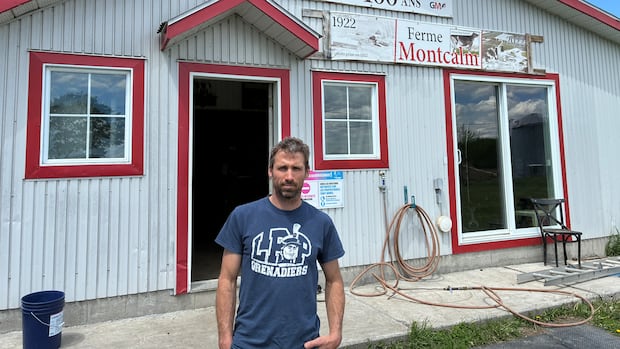
When renewable energy companies approached Nicolas Montcalm with maps showing possible wind turbine locations on his property, one proposed site stood out immediately — it was in the middle of his maple grove.
The fourth-generation dairy farmer from Ferme Montcalm in Saint-Louis-de-Gonzague, in the regional county municipality of Beauharnois-Salaberry, said the experience made him reflect on the generations before him who helped build and strengthen the farm.
“I thought about my grandfather working with horses, how it was truly subsistence farming, and how each generation has taken steps to improve their land and tried to leave something better for the next one,” he said.
Now, with a renewable energy developer assessing the area for a new wind project, Montcalm is among a growing number of farmers worried that wind energy development could permanently alter agricultural land in Quebec’s Montérégie region.
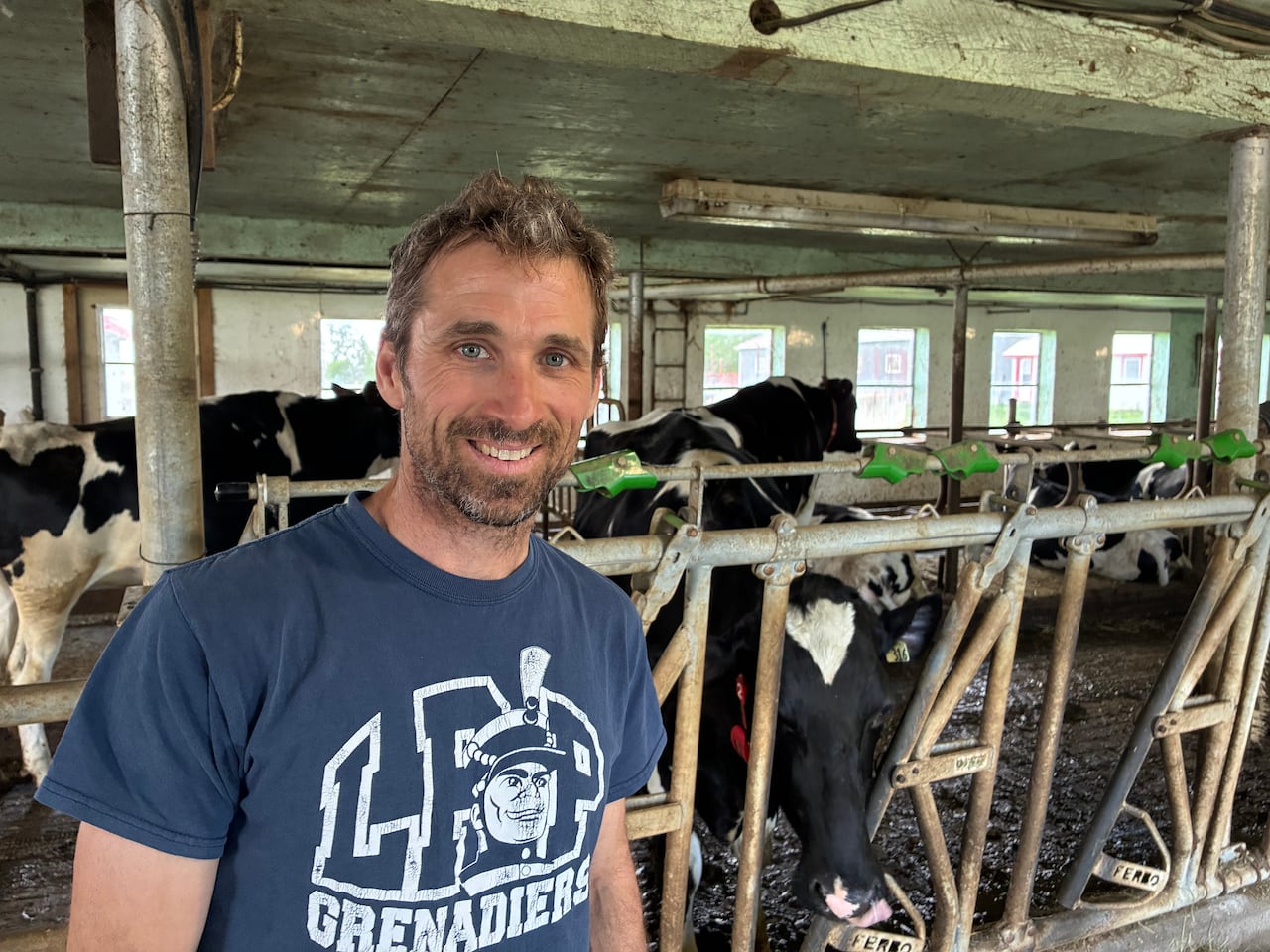 Dairy farmer Nicolas Montcalm stands in his farm. (Chris Kurys/CBC)Proposal on the table
Developer FirstLight is proposing a 100-megawatt wind energy project in Saint-Urbain-Premier — about 30 kilometres east of Montcalm’s farm — that could include up to 15 turbines and generate enough electricity to power approximately 30,000 homes.
Maxine Mongeon, chief development officer at FirstLight, said the company has signed option agreements with area landowners.
“If we have the support of the municipality of Saint-Urbain-Premier and the MRC, we will submit the project in Hydro-Québec’s tender on Feb. 26, 2027,” she said.
The company would then await Hydro-Québec’s decision on whether the project is selected.
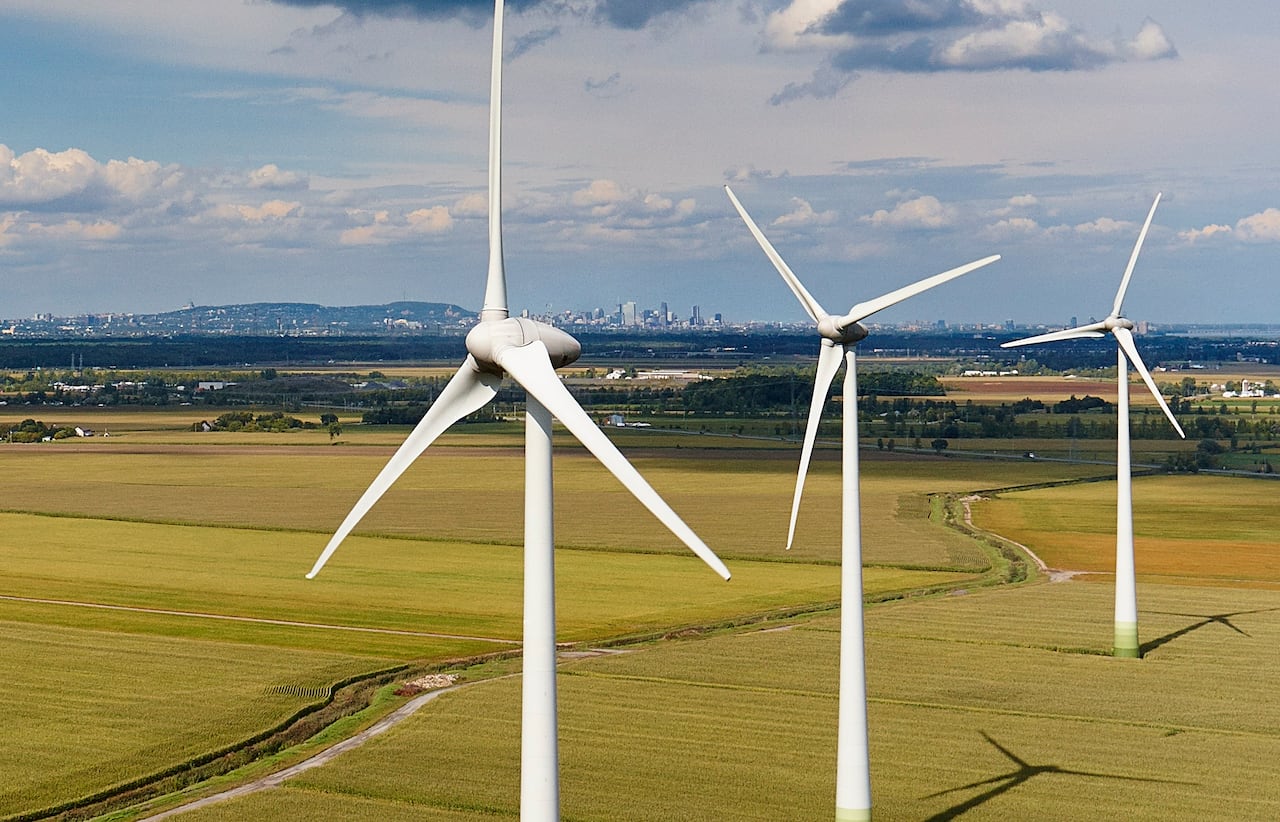 Montérégie Wind Farm in the nearby Saint-Rémi Industrial Park. The 100-megawatt wind farm project was commissioned in 2012. (Kruger)
Montcalm says many farmers are opposed to such projects, but the reality of the situation leads them to make financially based decisions.
“I’ve spoken with producers who told me, ‘We don’t want them, but we’d rather have them on our land than right beside us on a neighbour’s property where they’ll still bother us — except we won’t receive any money,’” he said.
The debate comes as the Beauharnois-Salaberry MRC develops a regulatory framework outlining where turbines could potentially be installed, and under what conditions. The proposed project in Saint-Urbain-Premier still needs the support of the MRC and the area’s municipal council.
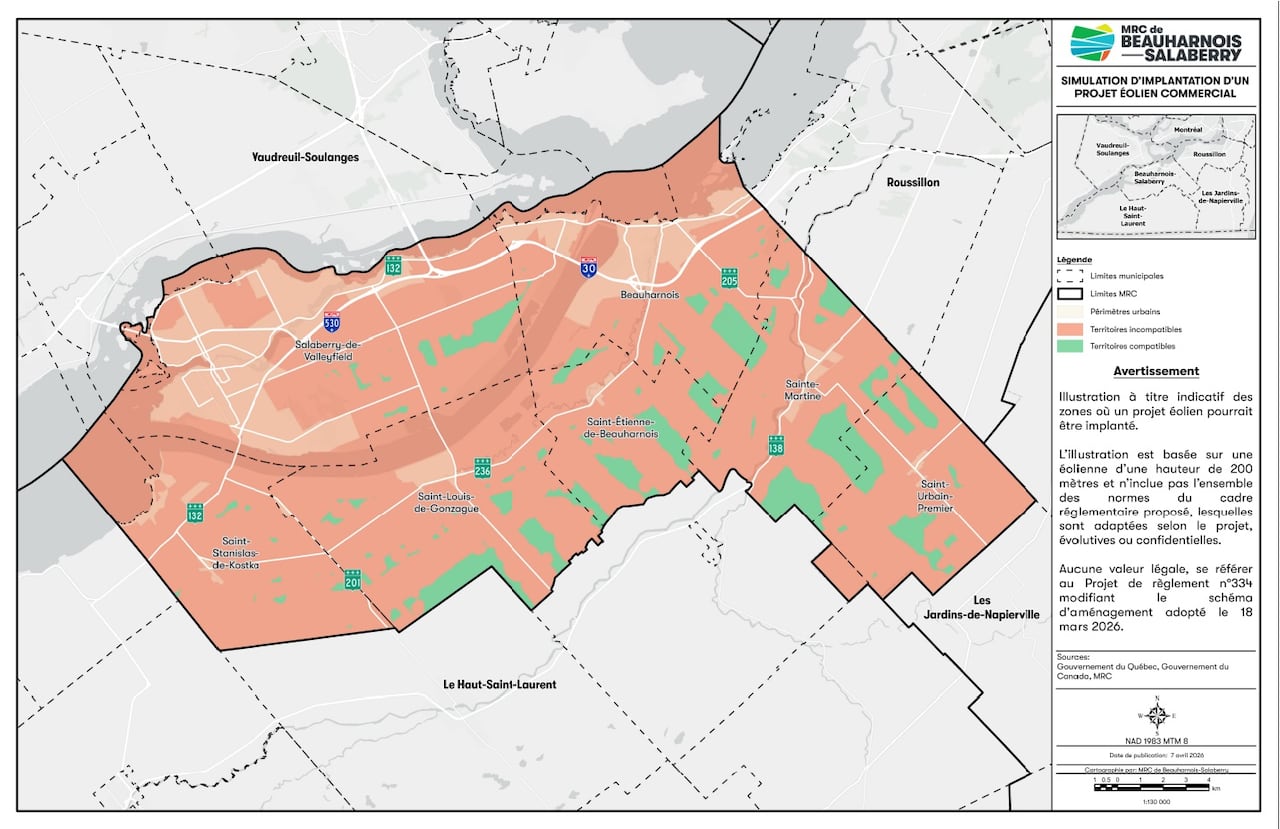 Simulated map of where commercial wind turbines could be built in the MRC de Beauharnois-Salaberry region. Suitable areas are in green. (MRC de Beauharnois-Salaberry)Renewable energy industry says coexistence is possible
Jérémie Letellier, president of the local branch of the Union des producteurs agricoles (UPA), says the issue has divided farmers. While some see turbines as a source of stable income, others worry they could permanently alter farmland and restrict future farm development.
The UPA argues that the Montérégie region contains some of Quebec’s most valuable farmland and notes only about 1.8 per cent of the province’s territory can be farmed.
“It’s a crucial area for food security in Quebec,” Letellier said.
Renewable energy advocates argue wind projects can coexist with agriculture while helping Quebec meet rising electricity demand.
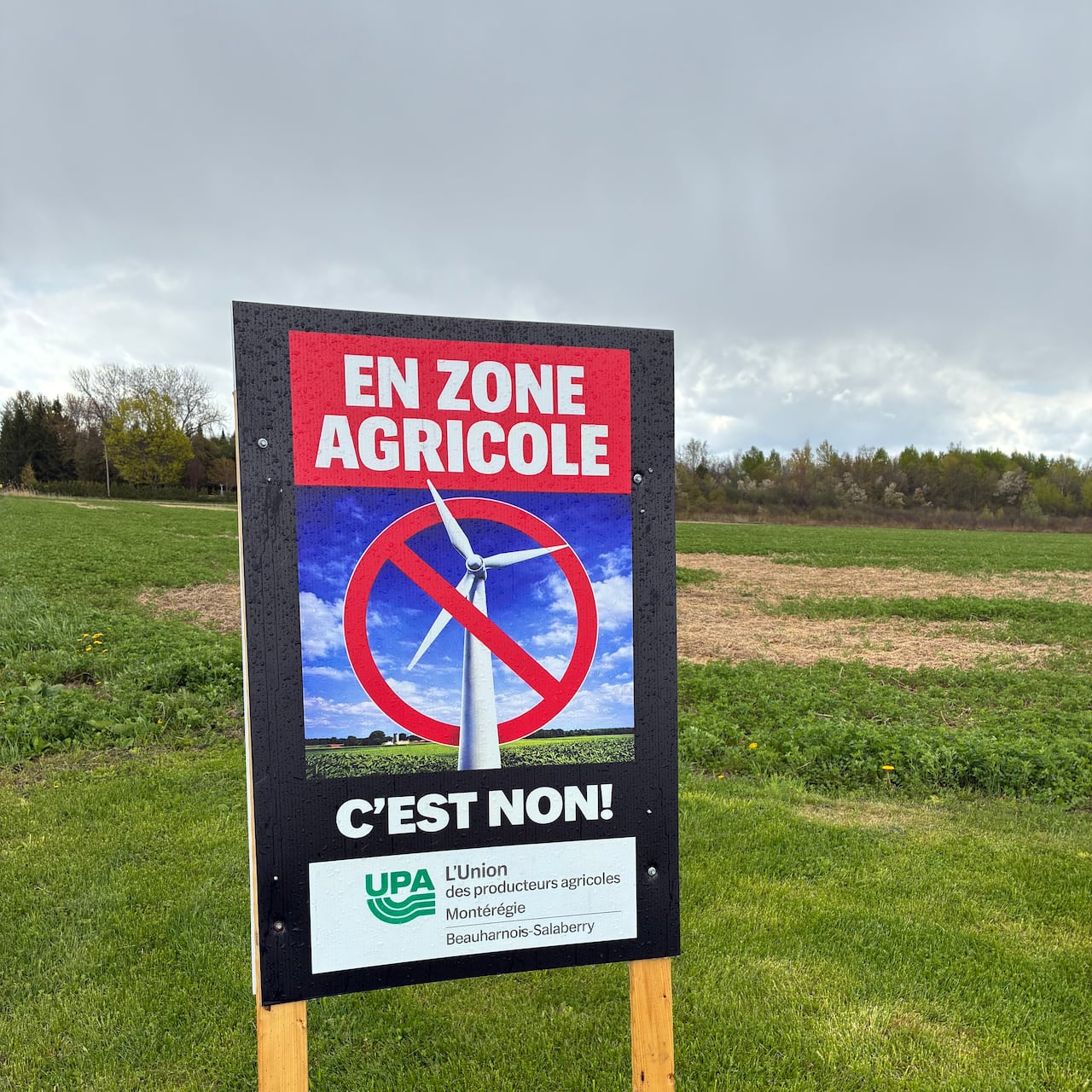 Signs opposing wind energy on agricultural land have been popping up across the region. (Chris Kurys/CBC)
Luis Calzado, CEO of the Association des producteurs d’énergie renouvelable du Québec (AQPER), said Quebec currently has about 4,000 megawatts of installed wind energy capacity and plans to significantly expand production in the coming years.
Calzado said projects are developed where wind resources and grid connections are viable and can generate economic benefits for communities.
“The idea here is to cohabitate with the farmers,” he said.
He rejected the idea Quebec must choose between agriculture and renewable energy development.
But opponents argue economic considerations should not outweigh farmland protection.
“Food production cannot happen anywhere other than in agricultural zones, but in our view, energy can be produced in many other places in Quebec,” Montcalm said.
“Fields are meant to feed people.”