

Listen to this article
Estimated 3 minutes
The audio version of this article is generated by AI-based technology. Mispronunciations can occur. We are working with our partners to continually review and improve the results.
With sizzling heat set to hit the city this week, Toronto is another step closer to bringing in a maximum temperature bylaw for its rental units — though it won’t be in place for at least a year.
City council greenlit a plan on Thursday to ask the city manager to draft a bylaw and present it to them by June 2027.
This kind of bylaw would set an upper limit of 26 C inside of rental units, making it the landlord’s responsibility to keep temperatures below that level.
At Toronto city council, a bylaw of this kind has been discussed and considered at various points since 2012, when it was first introduced by Coun. Josh Matlow.
“Toronto’s tenants will finally see a maximum indoor temperature bylaw by summer 2027,” wrote Matlow in a social media post celebrating Thursday’s vote.
“This moves up the timeline by at least two summers from what was originally recommended by city staff.”
‘Significant’ public money needed, says staff report
Though organizations like ACORN and the Federation of Metro Tenants Associations have long lobbied for the bylaw, it’s also faced significant hurdles.
Councillors have expressed concern that rushing a bylaw will lead to dramatic rent increases and impose unmanageable costs on landlords to get their buildings in line with the new rules.
That concern is echoed by landlord groups, who point to the city’s aging rental stock and the high price of retrofitting it as a major roadblock.
The staff report that accompanied Thursday’s vote described the need for “significant intergovernmental engagement” to locate the funding and financing necessary to make the upgrades.
WATCH | Tenant struggles in Toronto apartment without air conditioning:
Toronto tenant reacts to sweltering indoor temperatures
Bernadette Mamo talks about the heat in her apartment
There are efforts underway to financially protect tenants, as well.
In this week’s motion, council directed staff to request an update to Ontario’s Residential Tenancies Act to prevent above-guideline rent increases to pay for bylaw compliance.
It’s also asking staff to look for any measures that could assist with cooling costs for tenants, including Ontario’s low-income energy assistance program.
Even without a bylaw in place, tenants are facing a new legal landscape this summer when it comes to cooling their homes.
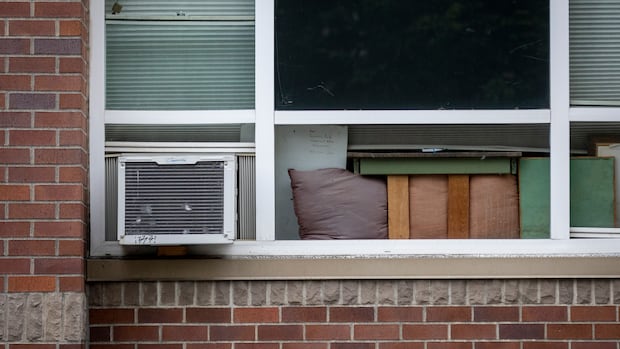
As of July 1, the Residential Tenancies Act is being updated to explicitly allow all tenants to install a window or portable A/C unit in places where landlords don’t provide air conditioning, as long as they are installed safely.