
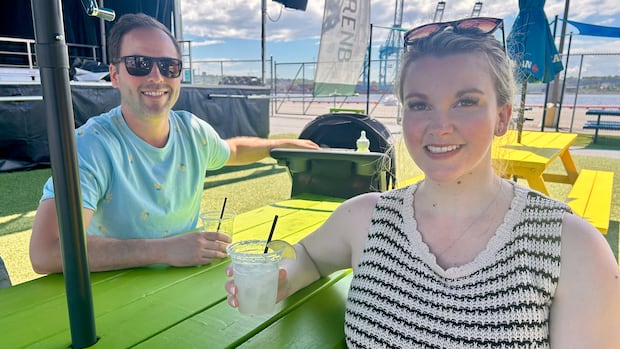
On a warm, sunlit afternoon in Saint John, the Waterfront Container Village is a bustling spot for locals and tourists to gather and unwind with a cold beverage.
It’s a family-friendly environment with lawn games, soft music, and a FIFA World Cup Game playing on the big screen.
Kristin Williamson is taking in the fine weather with her newborn son, drink in hand. But like a growing number of consumers, her drink of choice these days is often non-alcoholic.
“Those non-alc have been just a great opportunity to make you feel like you’re still contributing at social gatherings,” she said.
The statistics on drinking habits are sobering. For the fourth year in a row, the Canadian per capita consumption of alcohol has fallen, hitting a 20-year low, according to a recent Statistics Canada report. The Canadian average for 2024-2025 was 6.8 litres of alcohol per person.
Filling that gap has been a soaring non-alcoholic industry, poised to take up space in beverage consumption with booze-free options for beer, wine and spirits.
New Brunswick Liquor Corporation said its non-alcoholic beverage category saw $1.6 million in sales in the 2025-2026 fiscal year, with revenue up 82 per cent over the previous year.
“We continue to see shifts and declines in consumption trends of beverage alcohol,” said ANBL CEO Lori Stickles in an April 28 press release about fourth quarter results.
“ANBL is keeping on top of these consumer trends by adapting our product portfolio to better meet our customer needs. This includes expanding our low and non-alcohol product offerings, as well as providing customers with multiple size formats to better meet their needs.”
The Crown corporation has gone from offering 3 non-alcoholic products, to nearly 30 full-time and rotating products in the past two years alone.
Ray Gracewood is the founder of the Area 506 concert and tourism venue on the Saint John waterfront. He said the shift away from alcohol is the biggest disrupter he’s seen in the past decade.
The container village holds about 100 different concerts and community events throughout the warmer months, including trivia nights, movie nights, and a weekly dog-friendly gathering called “Pints and Pups.”
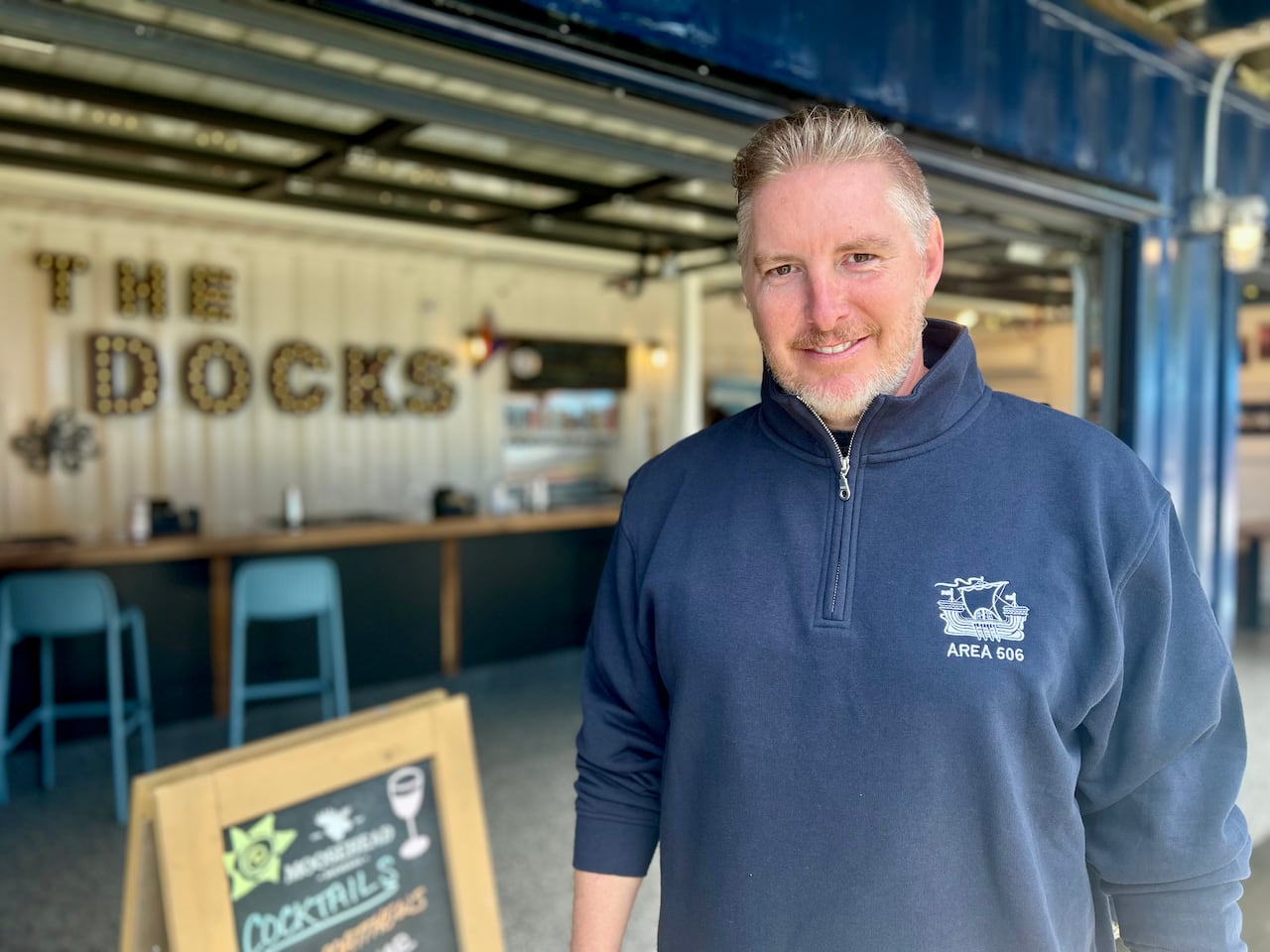 Area 506 Founder, Ray Gracewood, says there’s been a big shift in consumer demand for alcohol-free drinks. (Allyson McCormack/CBC)
But a change in customer preference at the bar is huge.
“Over the last couple years, we’ve seen I’d say probably almost a 400% increase in non-alc consumption,” he said.
“We’ve tried to keep pace with the market and try to stay one step ahead, which is more options for those consumers, and have something that we can suggest to them before they have to ask us for it.”
Gracewood suspects the trend is only going to continue, and in 3 or 4 years, bartenders will be asking people if they want their cocktails with or without alcohol.
After more than 20 years in the alcohol and cannabis industry, Barrel and Bloom president Eric Manning, is now pedalling products from around the world, to both tipplers and teetotallers alike.
But his main focus these days is the alcohol-free category. After a three-week province-wide tour polling hundreds of people on their taste preferences, he said the reaction to non-alcoholic drinks has been, well, intoxicating.
“Customer feedback has been incredible,” he said. “A lot of people’s first reaction is… ‘This is good, this tastes exactly like my beer should taste, or my wine should taste or my spirits would taste.’”
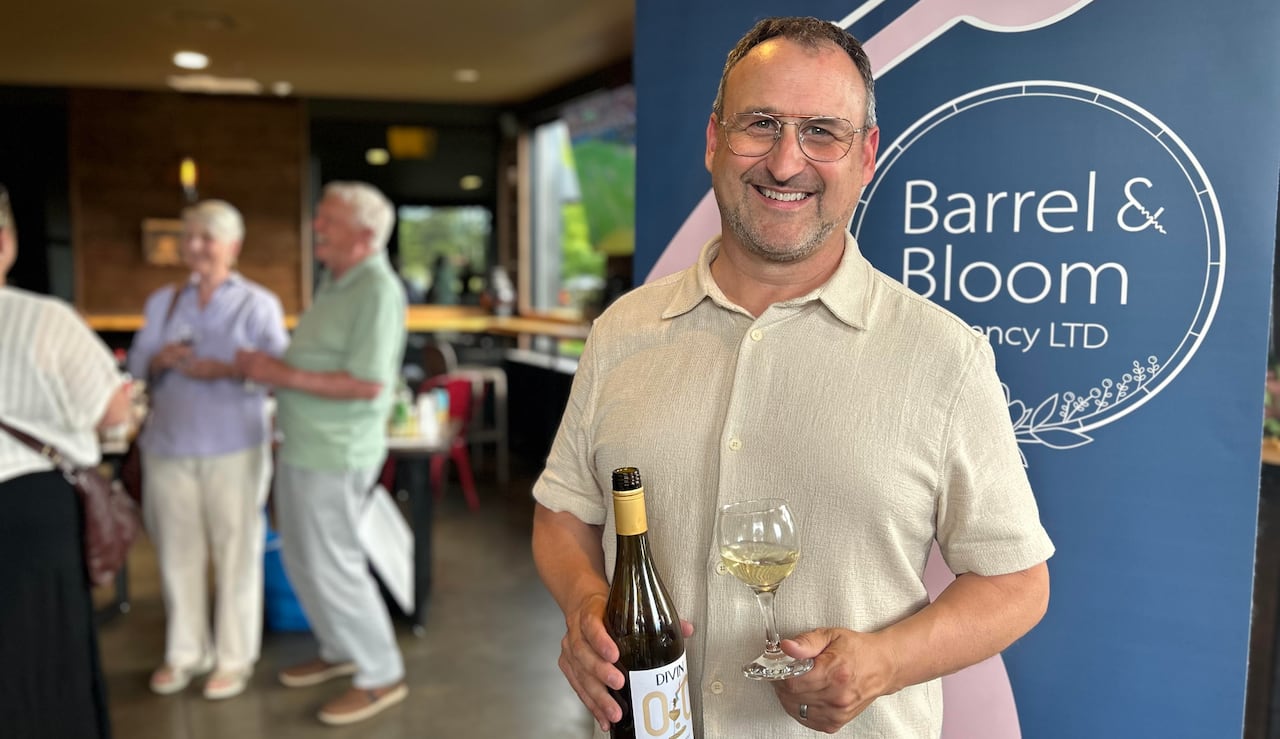 Barrel & Bloom President, Eric Manning, says recent improvements in alcohol-free categories are ticking all of the boxes. (Allyson McCormack/CBC)
Manning said there is a lot of science and innovation behind these new sophisticated alternatives, with producers racing to clear out the alcohol while still filling the palate with the same taste experience.
He said non-drinkers or sober-curious customers are still looking for those same flavour fundamentals in the alcohol-free category, and they’re seeing significant improvements even in the past year.
“For wines, for example, you’re looking for a good fruit, you’re looking for good acidity, you’re looking for a good finish and an overall mouthfeel,” he said. And it checks all those boxes.”
He said beer drinkers can finally enjoy a true blonde IPA experience, with hops, flavouring and components. Meanwhile a combination of a sparkling wine and cocktail mix has produced what he calls “a beautiful peach bellini” that rivals the real thing.
Manning said the liquor-free libations are no longer a niche market, but are moving into the mainstream with momentum.
“We see investments from global companies,” he said. “We see new product innovation coming to market and we see that true strong consumer demand. So when consumers and restaurants and retailers and producers are all moving in the same direction, they usually see the sign of a shift.”
University of New Brunswick history professor, Greg Marquis, teaches a course on the history of alcohol, drugs and tobacco in North America, and knows a lot about drinking habits dating from ancient times, through to when the European explorers brought distilled alcohol to North America.
He said the peak of consumption was likely in the late 70s and early 80s, with ups and downs along the way. But he’s never seen the slow decline in alcohol consumption from the early 2000s onward, that we’re witnessing now.
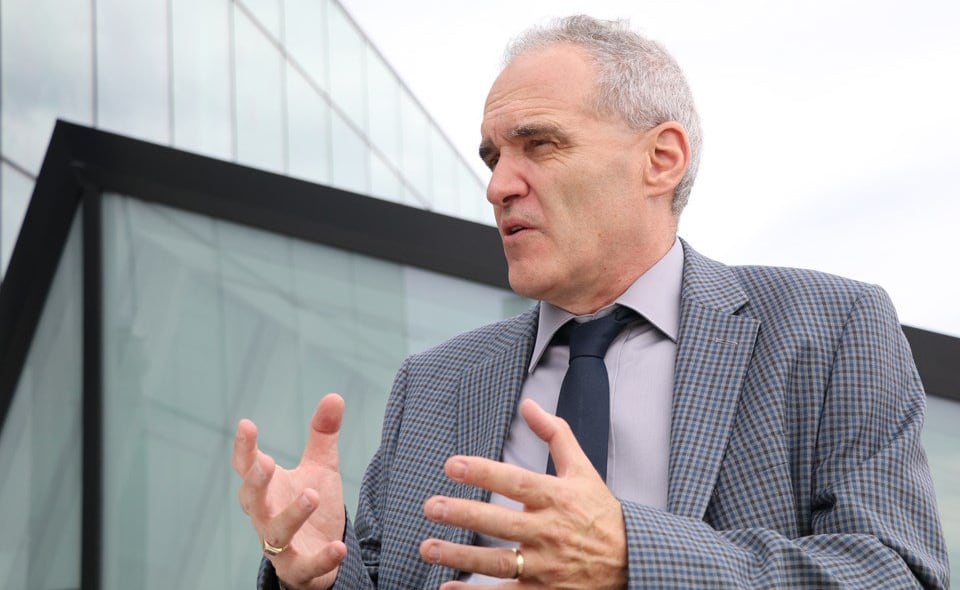 UNB Saint John professor Greg Marquis says drugs and alcohol have certain life cycles which can be difficult to predict. (UNB/Twitter)
While acknowledging it’s always difficult to predict what will happen, Marquis said the shift away from tobacco could be an indicator of how quickly things can change.
Looking at the golden age of smoking in the ‘Mad Men’ era of the late 50s and early 60s, “who would have predicted that 10 or 15 … 20 years later, a lot of that would be undermined and assailed and there would be a massive shift away from smoking?”
He said with health warnings, it became the social norm to refrain from smoking. In contrast, alcohol has survived several thousand years, he said.
“I think we will always have alcohol in some guise, but maybe it’ll become much more of a niche commodity and it will not be as important in socializing in the future,” he said. “Who knows?”
He said all of these drugs had a “career” with different life cycles, including a drop in alcohol consumption during Prohibition that eventually rebounded.
Daniela Walker is on a Maritime tour this summer, visiting from London, England with her husband. The couple recently stopped in for a cold drink at the container village in Saint John.
They chose an option with alcohol, but Walker said she’ll often reach for a non-alcoholic gin and tonic.
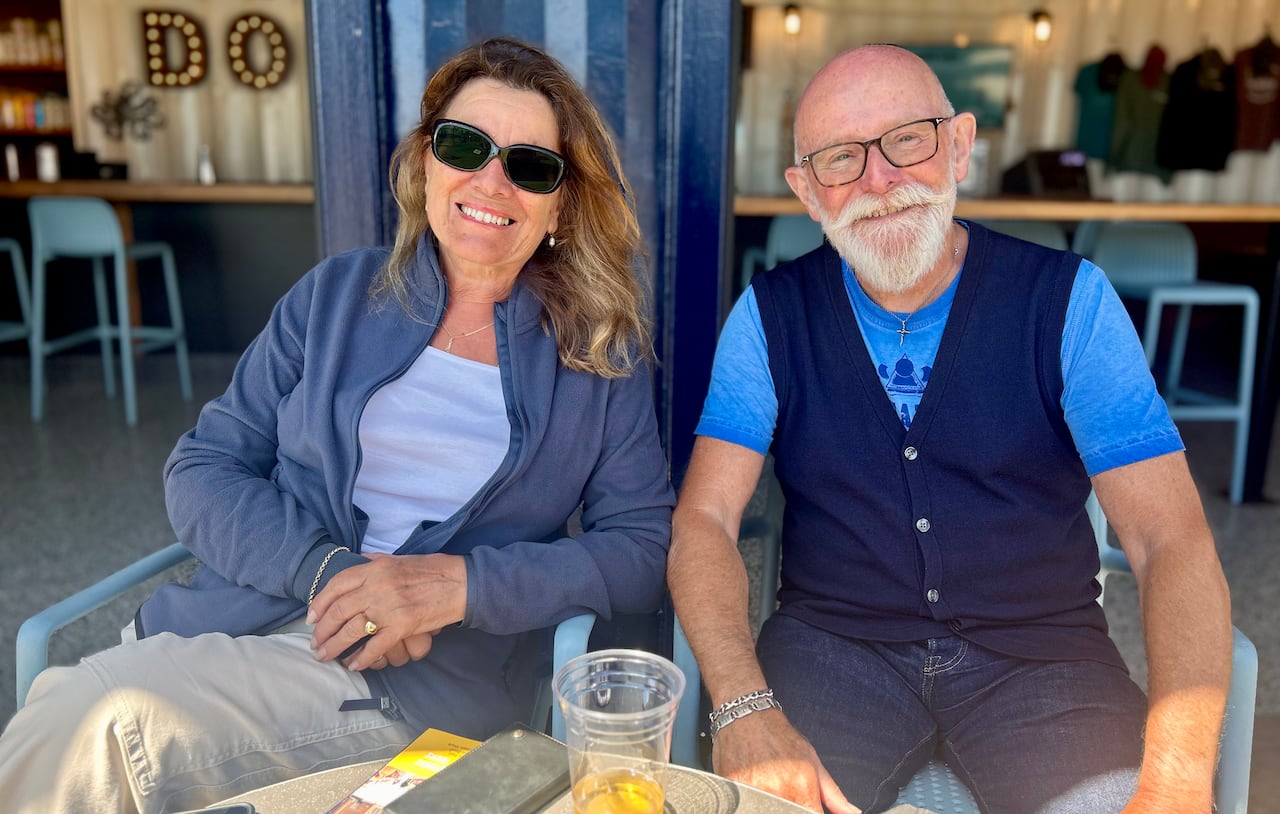 Daniela Walker, here with her husband Kim, says she enjoys a non-alcoholic gin and tonic, which tastes the same as the real thing. (Allyson McCormack/CBC)
“I really like it and it tastes just the same,” she said. Walker said it’s gaining in popularity back home as well, and she said it’s a good option for when they have their car with them.
As for Williamson, she said she still enjoys an alcoholic beverage, but said the recent non-alcoholic additions to the market have spiced things up, making it easier to avoid overconsumption, especially for festivals and longer events.
“It’s a marathon, not a sprint,” she said. “So in between having that Moose Light, you can have a bit of a rinse cycle, but something that’s still local and a little bit more exciting than having that water.”
In a socializing culture often concentrated around drinking, she’s happy to see the shift in attitudes – and options. Whether she’s having a real toddy or a mocktail, she said “you never feel like you’re missing out.”