
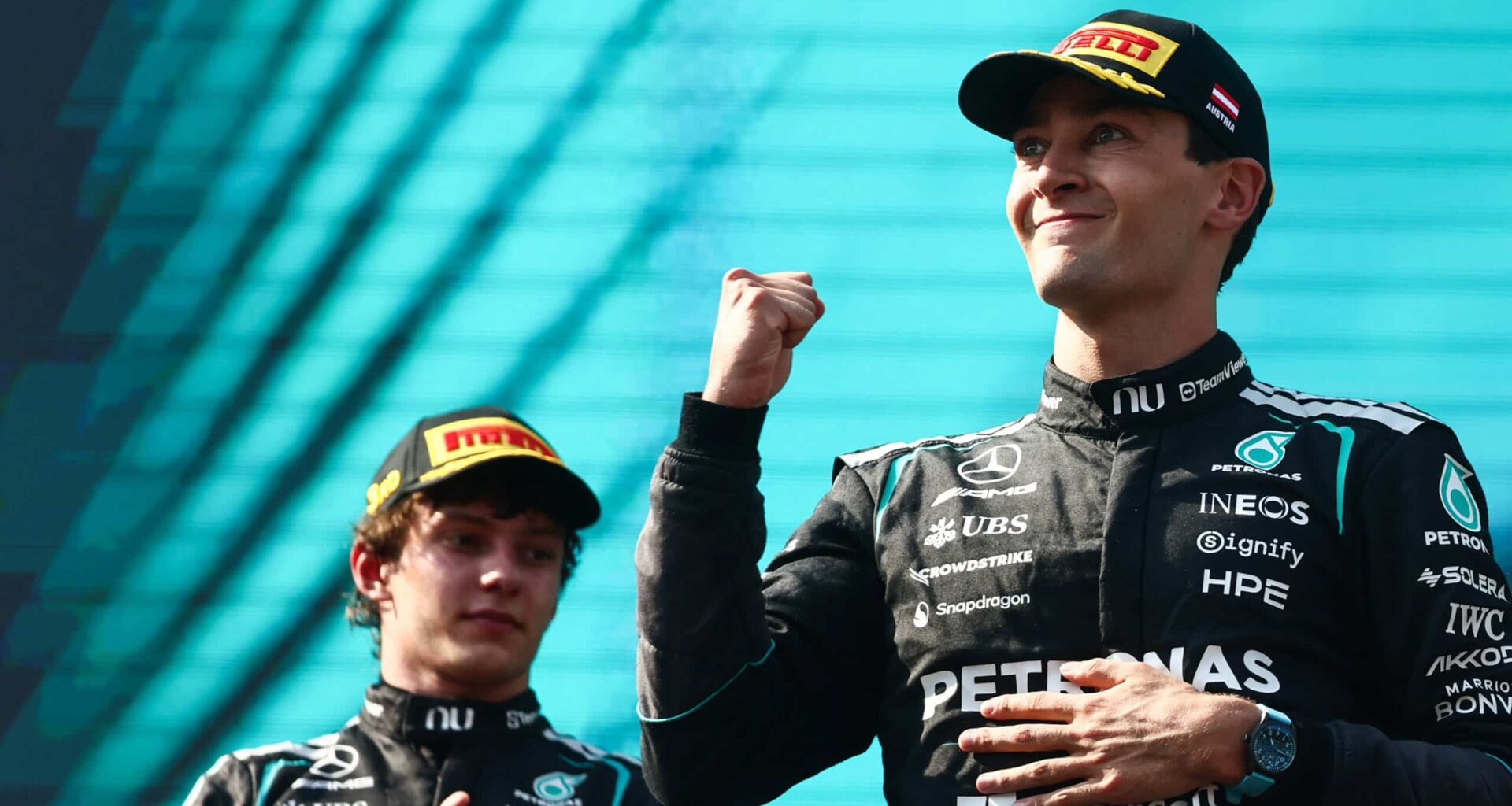
So a completely different picture to Barcelona two weeks ago, with Ferrari’s challenge collapsing and a heavily updated Red Bull emerging as the biggest threat to a Mercedes victory, Max Verstappen getting between the victorious George Russell and team-mate Kimi Antonelli.
Aside from the Red Bull update every bit as thorough as Ferrari’s in Barcelona, what changed?
Energy Management
The energy management of the Red Bull Ring is much more challenging than that of Barcelona, which has plenty of recharge opportunities, and this exposed Ferrari’s continuing shortfall in this area. Despite arriving here with its first power unit upgrade, the deployment tailed off way earlier than either Mercedes or Red Bull. At some points its end of straight speed was 19mph (30km/h) down on its two rivals. In fact there was much to suggest here that the ADUO adjustments, which surprised some by putting the Red Bull internal combustion engine (ICE) top in terms of performance ahead of Mercedes, with Ferrari a long way behind, were probably pretty accurate. The recovered energy comes from the ICE and the ICE isn’t able to provide enough under super-clipping when the full throttle sections are so long and the braking relatively brief. Silverstone is likely to be a similar story and Ferrari will probably have to wait until its second upgrade (at Zandvoort or Monza) with its uprated turbo before it can compete on level terms at these sort of energy-demanding tracks. So the possible Ferrari title push Hamilton’s Catalunya victory suggested was probably a mirage.
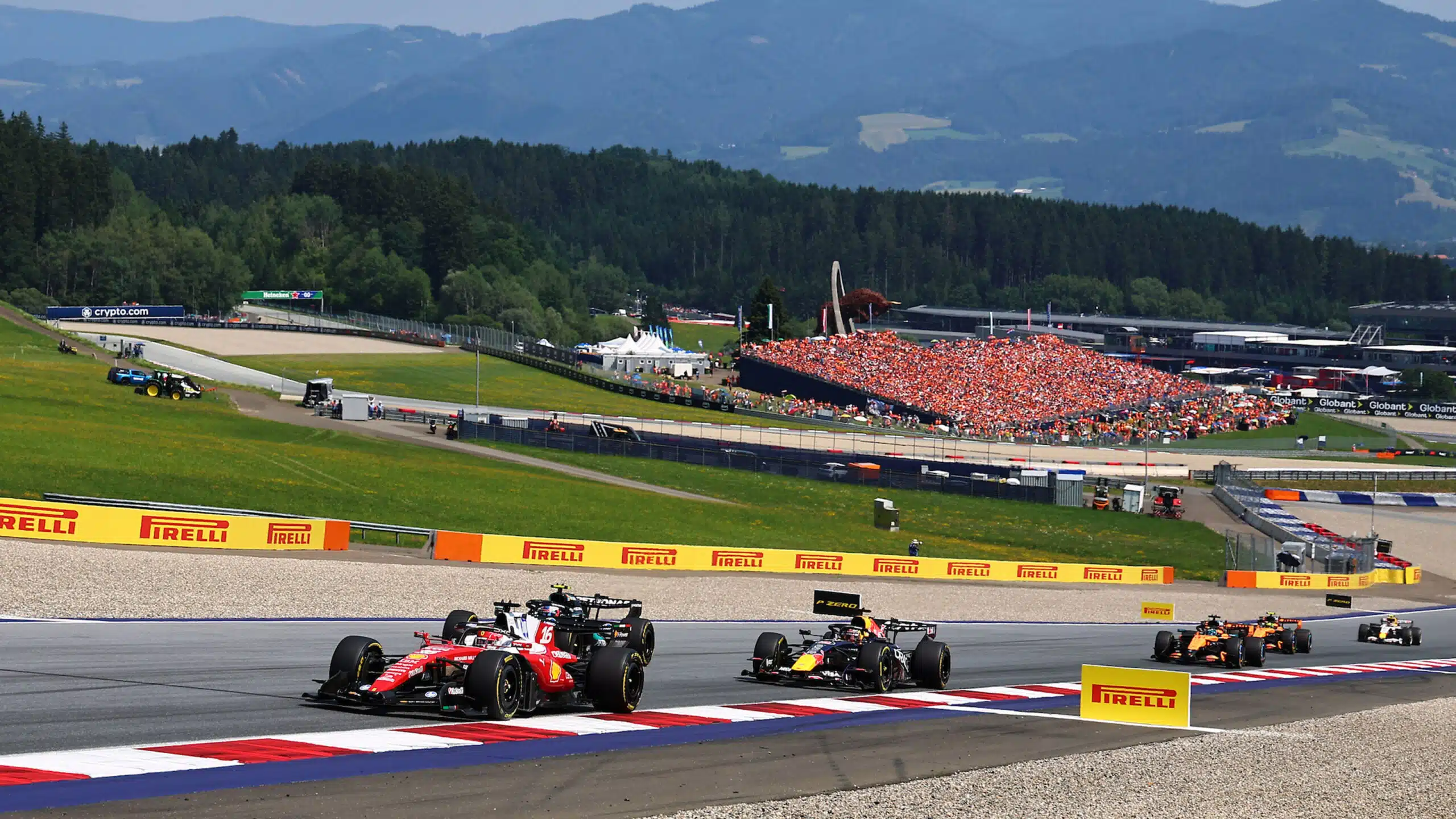
Ferrari’s deployment difficulties brought near-misses at the start
Grand Prix Photo
Watching a re-run of the first lap in the green room, Verstappen commented to Antonelli how close he’d come to contact with the Ferraris. “Yeah, they were so weak with deployment, I almost hit Leclerc.”
Charles Leclerc did a great job in qualifying second. But his lap was almost 0.6% adrift of Russell’s pole and would have been more if Russell had not been obliged to lift for the yellow flags at the site of Verstappen’s Q3 crash, caused by a rear wing fault.
Why Russell, not Antonelli?
Had the Red Bull not suffered the technical issue with its rear wing, it would have been another Mercedes front row, with Ferrari more than 0.5sec off pole around a very short lap. Verstappen had been on-course to do a time similar to Leclerc’s. Antonelli abandoned, mistaking the single yellows for double waved and was thus relying on his first Q3 lap (quickest by far when he set it, but on a track that was ramping up spectacularly quickly). But Antonelli was already 0.1sec down when he abandoned, comfortably quicker than Ferrari or Red Bull but behind his team-mate.
Which was against the run of play up to that point. Antonelli seemed much more naturally attuned to the car through the practices, with Russell trying to understand why he was adrift and making constant tweaks to the way he was driving. He put all the numbers together superbly well on his final Q3 run, but he admits this car on these tyres is puzzling him. Even in the aftermath of his victory, he said, “I drove in a different and abnormal way to protect the tyres and it worked well. But I need to understand it. I don’t have the handle I had on the tyres in previous seasons.”
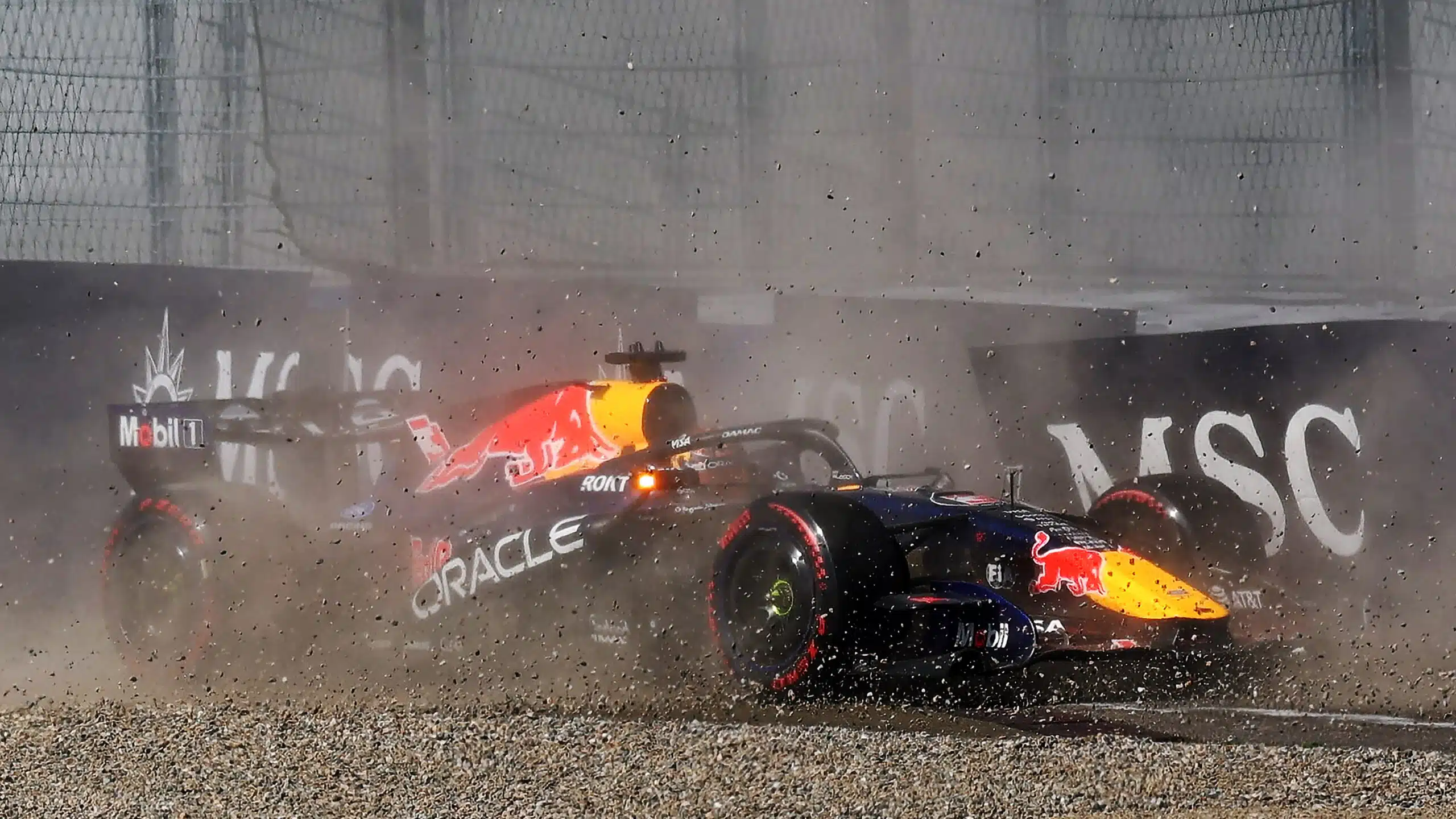
Antonelli backed off after Verstappen’s qualifying crash, leaving him fourth on the grid, while Russell took pole
Clive Rose/Getty Images
For his part, Antonelli said, “In Q3 I just tensed up. I wasn’t driving as freely as I had earlier.” The difference in experience told, as a struggling Russell built his way to pole while a flying Antonelli lost the thread at the vital moment, then compounded that with misreading the situation with the yellows (in fairness he had less time to double check the lights were not double yellows but singles, as he was right upon them as they came on rather than a few hundred metres back).
Come race day, Antonelli was again the quicker driver. Eventually. But he never had track position, especially after taking to the first two run-off areas on the first lap, meaning not only him having to waste laps passing the Ferraris as Russell escaped, but also that he lost track position to Verstappen, always an expensive loss.
The first lap lock-ups were even more costly for him than the Q3 shortfall. Because without them Verstappen likely wouldn’t have got ahead and Antonelli had better race pace than Verstappen once he’d solved his braking problem – and much better pace than Russell. Red Bull boss Laurent Mekies afterwards explained the strategic dilemma this put them in as Verstappen twice caught Russell but had his strategy compromised by how quickly Antonelli was closing. “Basically although we were quicker than George, Kimi was quicker than us.”
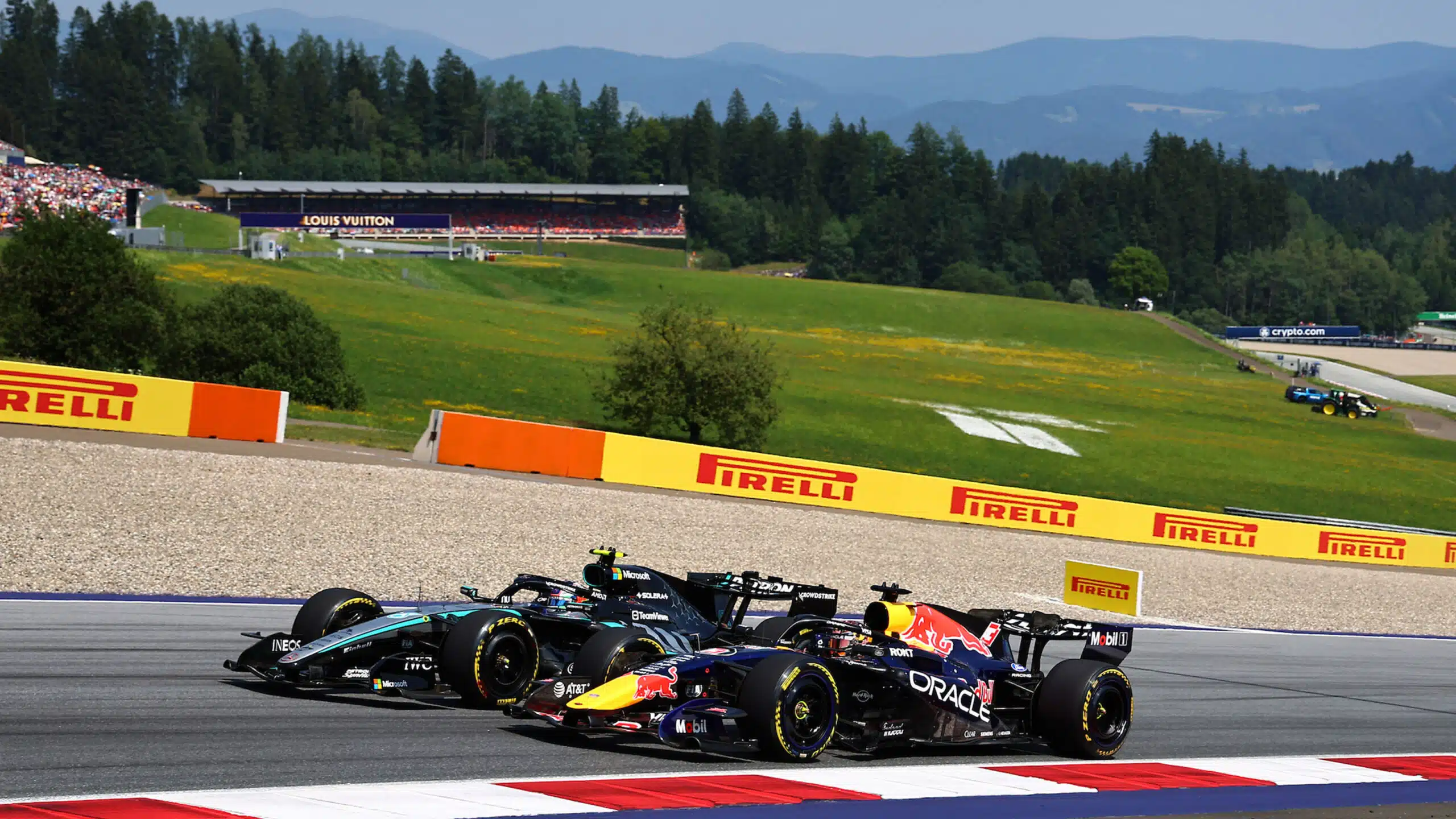
Antonelli lost his shot of victory after falling behind Verstappen at the start
Grand Prix Photo
The close presence of Antonelli before each of the two stops meant Verstappen coming in earlier than planned so as not to be undercut, thereby leaving them with too many laps remaining to use the second fresh set of mediums they’d saved. There was an undercut opportunity on Russell at the second stops but stopping 27 laps before the end was felt to be a stretch even for the hards. The Merc had better tyre deg, especially Antonelli’s. Antonelli’s presence had pulled Verstappen off Russell’s back.
But with a clean run and a tidying up of the small errors of inexperience, Antonelli had the underlying pace to have been leaving Russell and Verstappen to their battle increasingly far behind him. His look of pained half-hearted acknowledgement of congratulations on the podium showed that he knew that.