
Millions of people will have to brace themselves for an exceptionally hot July Fourth week as most of the United States prepares for a heat wave — all as deadly wildfires continue to burn in the West.

Limited time: Save 25% on NBC News subscription
Get exclusive reporting, live Q&As and ad-free reading.

Around 162 million people are under heat alerts from the Great Plains to the Northeast, spanning 35 different states. The heat is expected to ramp up through the week, with temperatures soaring into the upper 90s and 100s. Heat index values — or what the heat actually feels like to the human body — could reach 105 to 115 degrees Fahrenheit.
Cities in the risk zone include Boston, New York City, Philadelphia, Baltimore, Washington, D.C., Chicago, Minneapolis, St. Louis, Nashville, Atlanta, Orlando, Cleveland.
The warmest temperatures on Monday will target the central U.S., with highs reaching the 90s through 100s and heat index values soaring from 100 to 110. These dangerously hot conditions will linger over the central U.S. this week, expanding into the Northeast starting Wednesday and lasting into the holiday weekend.
On Tuesday, major to extreme heat risk is expected, with warm overnight temperatures offering little relief and increasing the risk of heat-related illness.
The heat will peak Thursday through Saturday for the Midwest, Great Lakes, mid-Atlantic and Northeast. By July Fourth, close to 100 new daily record highs will be set.
New York City is expected to record temperatures as high as 95 Friday, with a heat index of 106. Washington and Raleigh will have highs of 103 later on this week with heat indexes of 108 and 107, respectively.
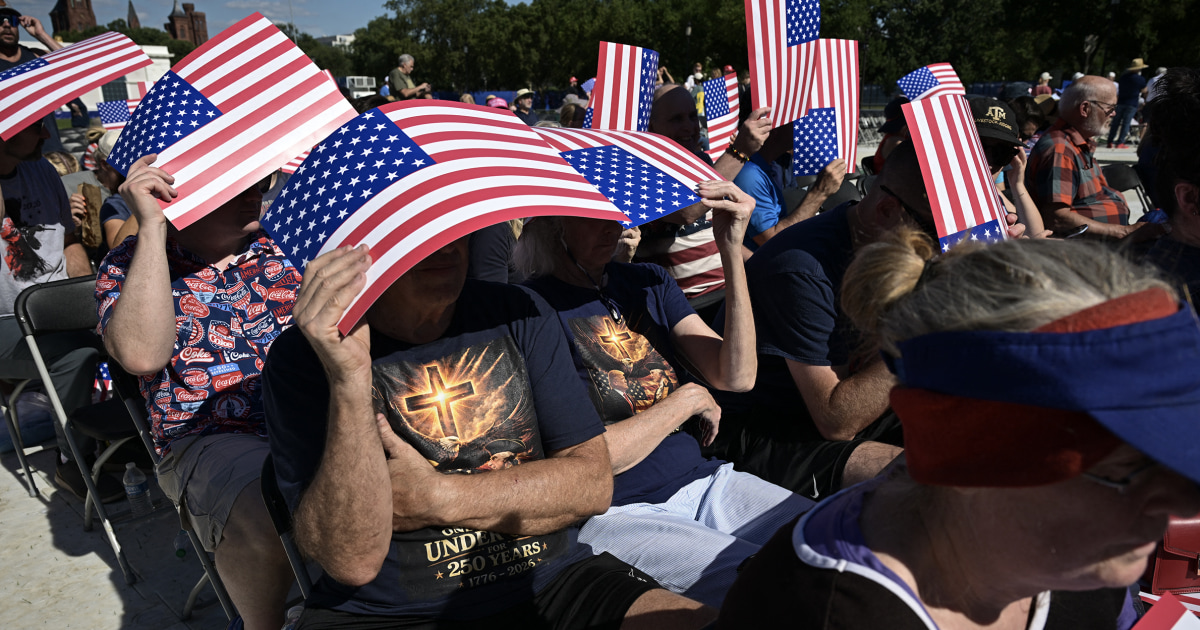
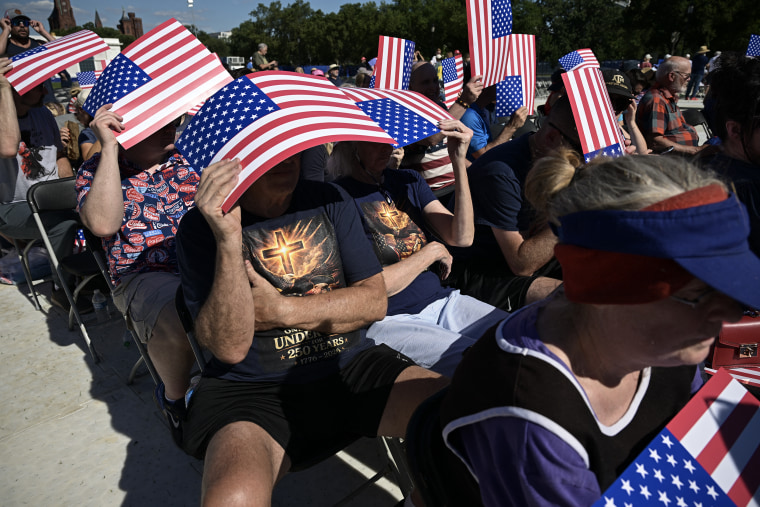 Attendees shield themselves from the sun with cardboard U.S. flags before the kickoff for the Great American State Fair on the National Mall in Washington, D.C., on June 24.Oliver Contreras / AFP via Getty Images
Chicago Mayor Brandon Johnson issued a warning to residents during a news briefing Monday, urging them to prepare for the extreme heat which “can be very dangerous.” The city is under an extreme heat warning until Wednesday, according to the National Weather Service Warning Coordination Meteorologist Mike Bardou, who also spoke at the briefing.
“If you can, stay inside with air conditioning on,” Johnson said. “If you do not have air conditioning, keep your blinds closed, but windows slightly open.”
Johnson also shared that there will be six community cooling centers open around the city by the Department of Family & Support Services. He encouraged Chicagoans to stay hydrated and check on their more vulnerable neighbors.
Bardou, who spoke about a 1995 heat wave that killed hundreds in Chicago, warned that heat-related illnesses can take victims by surprise.
“Heat is kind of one of those sneaky things, in a sense, relative to a thunderstorm coming or blizzard, you don’t necessarily realize the effects until it’s too late,” Bardou said. “And the effects of heat are cumulative, so day by day that goes by that you don’t have that ability to recover, cool off, the effects are worsening.”
Western wildfires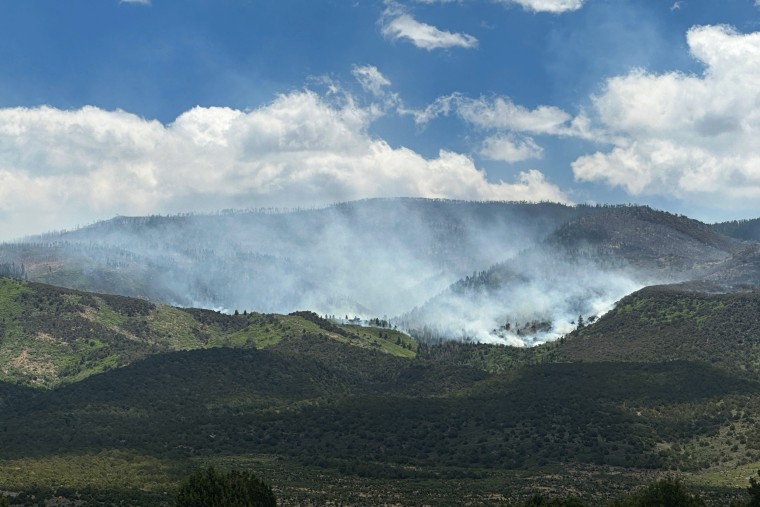 The Cottonwood Fire near Beaver, Utah, on June 27.Ty ONeil / AP
Over the weekend, numerous new wildfires erupted across the interior West, especially across Utah and Colorado.
On Monday, around two million people are fire alerts across the Four Corner states — Arizona, Colorado, New Mexico and Utah — as well as parts of Wyoming, South Dakota and Nebraska.
Three firefighters were killed while tackling fires on the Colorado-Utah border this weekend. They were identified as 27-year-old Sydney Watson, 27-year-old Nick Hutcherson and 38-year-old Emily Barker, according to the U.S. Forest Service.
“Our thoughts are with their families, loved ones, friends and crewmates as they face an unimaginable loss,” U.S. Wildland Fire Service Chief Brian Fennessy said in a statement. “These firefighters embodied the courage, professionalism and selflessness that define the wildland fire service.”
Two more firefighters were injured in the same incident and are receiving medical care, according to the Forest Service.
The largest of the fires, the Cottonwood Fire in southwest Utah, is now more than 93,000 acres and remains zero percent contained, according to WatchDuty.com, which has been tracking the blaze.
There are more than 50 large fires burning across the country, amassing over 460,000 acres, according to the National Interagency Fire Center. Air quality alerts are also in effect for much of Colorado because of the wildfire smoke.
There is an elevated risk for wildfires across the region and the Southwest, with the risk Tuesday increasing to critical once again for parts of Utah, Colorado, Arizona and New Mexico.