
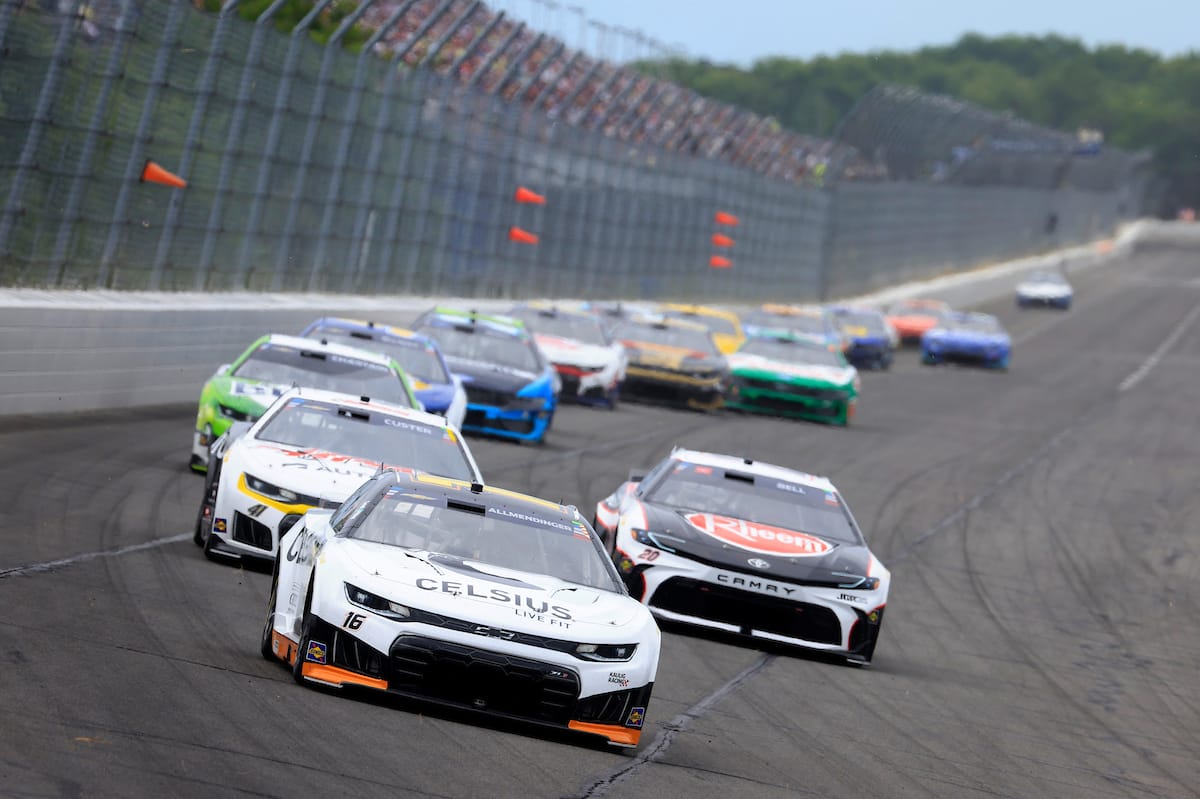
Sports betting has become more than just a side activity for fans watching races unfold on weekends. In fact, it’s now part of a much wider shift in how audiences engage with sport itself. Canada’s total sports betting revenue reached an estimated US$4.62 billion in 2025. This shows just how quickly the market has grown. That growth isn’t only about entertainment or wagering; it also shows a deeper interest in data, prediction and performance analysis.
For NASCAR specifically, betting markets have become a parallel lens through which fans interpret race weekends. Odds don’t just reflect who might win; they often reveal how teams, drivers and even tracks are being evaluated in real time. In a sport where outcomes can hinge on pit strategy, caution flags and tire wear, the betting line becomes a kind of living summary of expectations.
Why NASCAR odds are more than just predictions
NASCAR odds might look simple when you first look at them. Driver A is favored, Driver B is not. But those numbers are built on layers of information that go far beyond basic ratings.
Bookmakers adjust lines based on:
Recent driver performance and finishing positionsTrack history and past results at similar circuitsQualifying speed and starting positionWeather forecasts and race-day conditionsMechanical reliability and team form
What makes this interesting is how quickly those odds change. A strong qualifying lap can shorten a driver’s price overnight. A penalty or engine issue in practice can push them down the board just as fast. For fans paying attention, these movements often tell a story before the green flag even drops. In many cases, betting markets are reacting to the same data teams are working with internally, but compressing it into a single and easy-to-read signal.
How betting markets reflect momentum in real time
One of the most overlooked aspects of NASCAR betting is how sensitive it is to momentum. Unlike some sports where form builds gradually, motorsport form can change in a matter of sessions.
For example, if a driver shows strong long-run pace in practice but struggles in qualifying, the market often splits the difference rather than reacting to just one session. That balance creates a kind of “crowd consensus” around performance expectations.
In practical terms, betting markets often highlight:
Undervalued drivers who consistently outperform expectationsOverhyped favorites who might be relying on reputation rather than current formTrack specialists who perform better at specific circuits regardless of season standings
This is where experienced fans often find extra value. Odds don’t just say who is likely to win; they also show where public perception might be misaligned with actual performance trends.
What race outcomes and odds often have in common
Over time, patterns begin to emerge between pre-race odds and actual race results. While NASCAR is famously unpredictable, favorites still win in a portion of races, especially on intermediate ovals where performance gaps are more consistent.
However, upsets are frequent enough that betting markets rarely settle into certainty. Instead, they operate in probabilities, not predictions.
Some recurring insights from betting trends include:
Short-track races tend to produce more variance than superspeedwaysTeams with strong pit crews often outperform slightly faster carsDrivers starting inside the top 10 are disproportionately represented in winnersLate cautions are one of the biggest disruptors of pre-race expectations
In other words, betting markets don’t just forecast winners; they indirectly map out where uncertainty exists in the sport.
The fan experience
For many fans, especially those who follow NASCAR closely, betting markets offer a different way to stay connected to the sport. Instead of only tracking standings or race results, they engage with performance indicators before and during race weekends.
This is also where platforms like Covers.com come into play. With a mix of odds comparisons, expert picks and analytical breakdowns, Covers helps users navigate a crowded betting landscape. There are many different betting sites available today, each with slightly different pricing, markets and insight depth. Some are more data-driven than others and tools like Covers can help fans compare options and find the approach that fits them best.
For users exploring Alberta betting sites, the comparison element becomes even more important. Different platforms might highlight different markets or offer slightly different interpretations of the same race. This can influence how fans understand upcoming events.
What betting markets really reveal about NASCAR
Betting markets are not just predicting outcomes; they are aggregating information. Every adjustment in odds reflects a reaction to new data, whether that’s a driver’s lap time, a setup change or shifting weather conditions.
This makes them surprisingly useful as a secondary layer of race analysis. Fans who follow odds closely often gain a broader view of the field, especially when it comes to mid-pack drivers or teams that don’t always get headline coverage.
More importantly, they reinforce a key truth about NASCAR: performance is rarely static. A driver who looks average on paper might be building toward a strong weekend, while a favorite can just as easily run into trouble through factors outside their control.