

Listen to this article
Estimated 3 minutes
The audio version of this article is generated by AI-based technology. Mispronunciations can occur. We are working with our partners to continually review and improve the results.
A protest at Burnaby’s Metrotown SkyTrain station on Wednesday called for a low-income transit pass, as transit fares went up across Metro Vancouver as part of annual fare hikes.
TransLink, Metro Vancouver’s transit authority, announced it would be increasing fares by an average of five per cent starting July 1 as it says the increased fares are required to support an ongoing expansion of transit service.
Advocates and protesters said the fare hikes would disproportionately impact low-income people like renters, students and seniors.
It comes as more Metro Vancouver communities endorse the idea of a transit pass geared specifically towards low-income people.
Philip Vargas, a volunteer with the advocacy group Movement – Metro Vancouver Transit Riders, says he benefits greatly from the existing B.C. Bus Pass program which is provided to those on disability assistance and some low-income seniors.
“It’s so scrutinized and you feel like … every single bit of money you spend or earn is being watched,” he said.
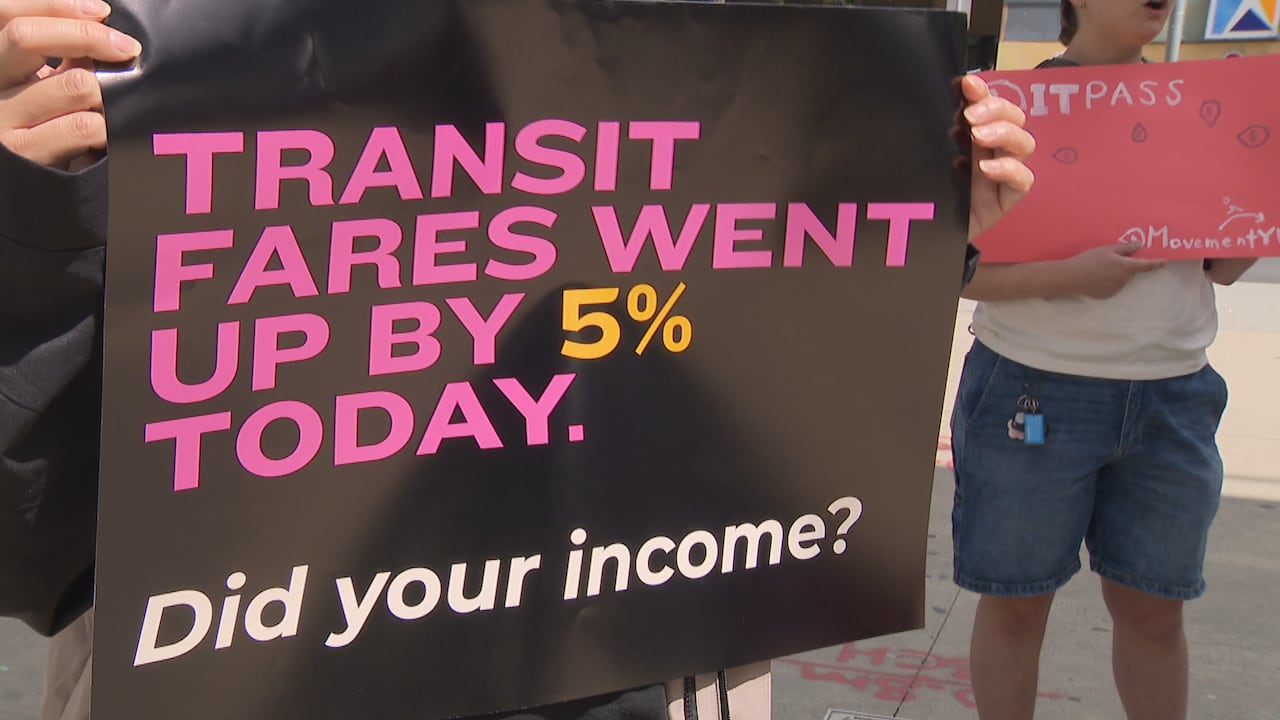 Protesters at Metrotown station on Wednesday said the fare hike would have more of an impact on low-income people. (Martin Diotte/CBC)
Vargas said that a low-income bus pass should ideally be easy to access and have no major restrictions.
Denis Agar, the executive director of Movement, says Metro Vancouver is one of the only regions in North America without a low-income transit pass.
“Two hundred dollars a month or more for a three-zone pass is just too much for someone to afford when they’re going paycheque-to-paycheque or when they’re on income assistance,” he said. “And we need to change that.”
Langley endorses idea
In early June, Vancouver city council voted to endorse the idea of a low-income transit pass, writing to higher levels of government and saying they should step up and fund the idea.
On Monday, Langley city council passed a similar motion from Mayor Nathan Pachal that asks the province to expand the B.C. Bus Pass program to include low-income households.
WATCH | Langley city council endorses low-income transit pass: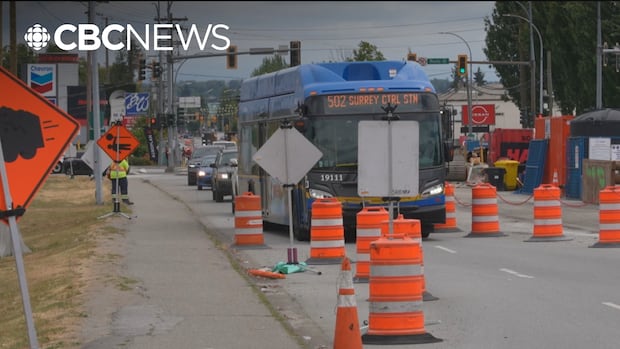
Langley city council endorses low-income transit pass as fare hike looms
TransLink fares will go up five per cent on July 1. As Sohrab Sandhu reports, Langley is the second municipality in Metro Vancouver to endorse a low-income transit pass.
“I’m hoping that as more communities advocate for this, that, you know, the provincial government will take notice,” Pachal told CBC News.
He argued that the best way to create an affordable community was to invest in transit, with a Metro Vancouver study in 2025 showing that 22 per cent of household costs in the City of Langley were going towards transportation.
In a statement, TransLink says it is in favour of further equity-based transit discounts — but it needs to be supported by government partners.
“TransLink is not in a financial position to implement further discounts independently,” a spokesperson wrote.
A spokesperson for the Transportation Ministry said that the B.C. Bus Pass program served over 66,200 seniors and 42,800 people on disability assistance last year.
“In Metro Vancouver, programs such as concession fares, the U Pass [B.C.] program (led by the ministry), and free transit for children aged 12 and under … also help improve affordability and access,” they wrote in a statement.