
Manitobans have been warned to brace themselves for a severe storm season.
“If this pattern holds, it’s going to be probably up in the high end of tornado totals,” said Dave Sills, director of the Northern Tornadoes Project, based out of Western University in London, Ont.
Crews have been swamped assessing the destruction from massive storms across the country. The project has recorded seven tornadoes in Manitoba so far this year and 45 across Canada.
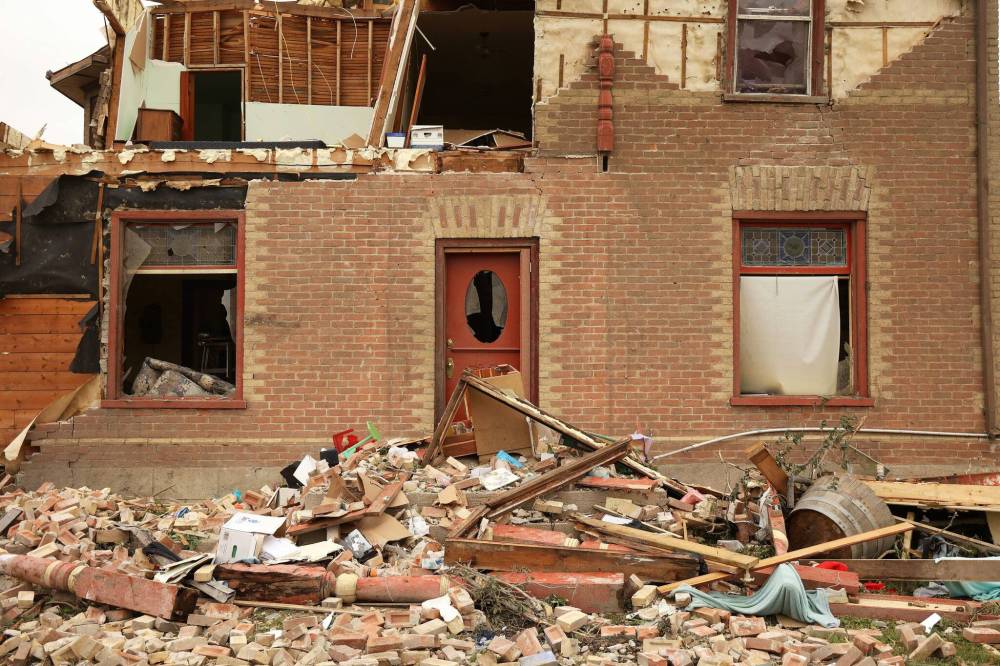
TIM SMITH / THE BRANDON SUN FILES
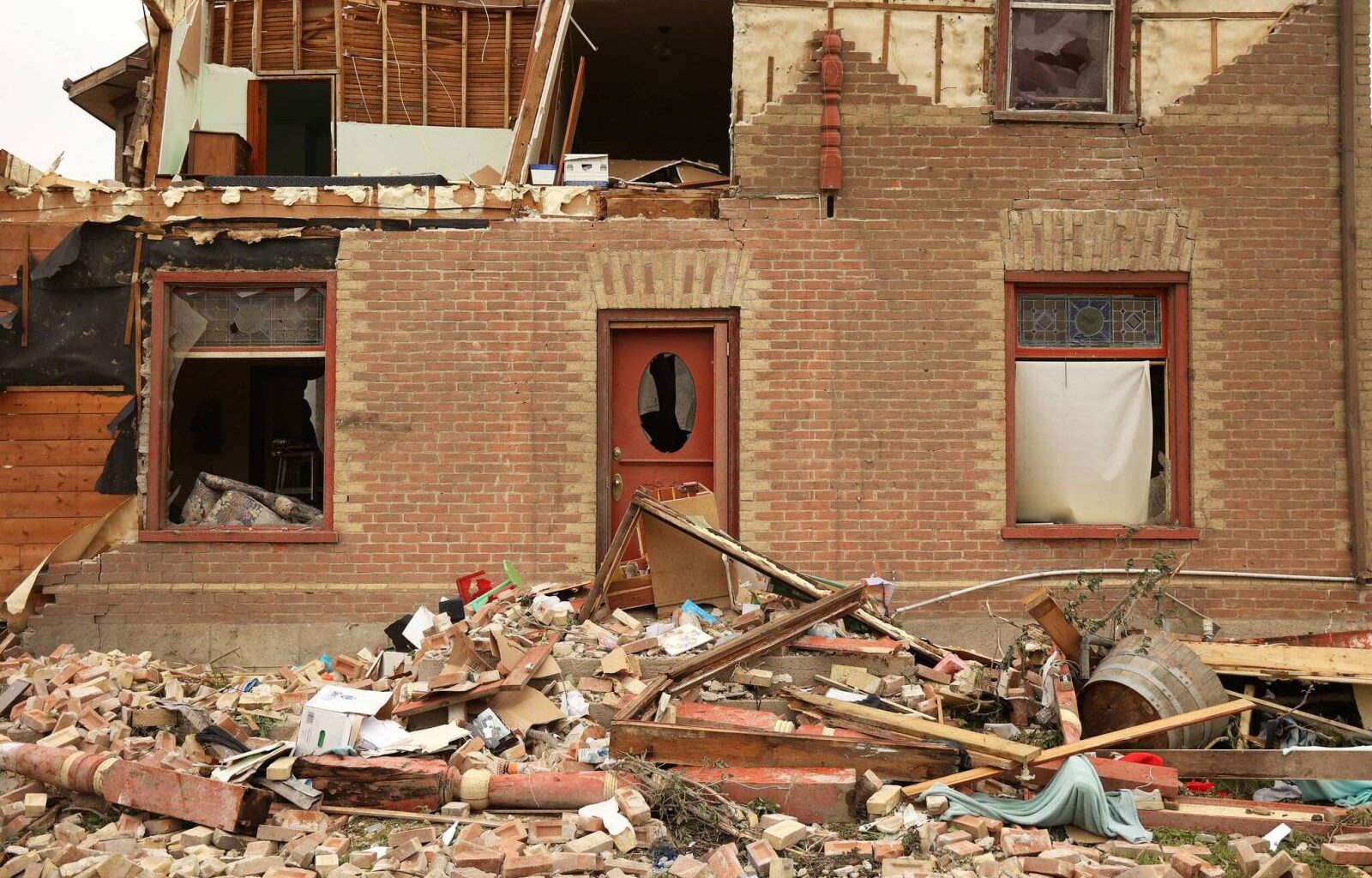
The tornado that ripped through Rossburn and damaged a home on Sunday was recently upgraded to an EF-3 storm on the Enhanced Fujita scale.
The number of tornadoes thus far is about average, but the pattern of storms doesn’t bode well for the rest of the summer.
“It’s all about which patterns get established across the country, but in July and August it could all of a sudden slow down,” Sills said.
Manitoba recorded two tornadoes this week: the twister that ripped through Rossburn and damaged two homes Sunday was recently upgraded to an EF-3 storm on the Enhanced Fujita scale. The rating comes with a maximum wind speed of 230 kilometres per hour.
The researchers confirmed a storm that damaged several homes in the Whyte Ridge neighbourhood Monday night was a tornado, which they classified as an EF-1 storm. Wind speeds that come with that rating range from 135 km/h to 175 km/h. They determined the Whyte Ridge tornado carved out a 2.5-kilometre path from Brady Road to Kenaston Boulevard. Homes, yards and trees were damaged, but no injuries were reported.
The Rossburn tornado was upgraded once a crew went to the area to determine the storm path and assess the damage. Sills said the teams faced delays in surveying the area because of repeated bouts of rain in the region.
“It was just raining so hard and you can’t use the drones, it’s hard to get a bird’s eye view of all the damage,” he said. “So it has taken several days.”
Severe weather trends are being observed globally and could become the norm, said John Hanesiak, a professor of atmospheric science at the University of Manitoba.
It’s too early to say what is causing the shift and more research is needed, but climate change plays a role, Hanesiak said.
In Manitoba, low pressure systems have moved eastward through the southern part of the province, but instead of continuing, they seem to move at a slower pace or stall completely.
“These weather systems tend to be sort of decaying almost right over top of us, and as they do that, they carry more moisture and cause more problems like we’re seeing,” Hanesiak.
The trend means the province needs to focus on building more resilient infrastructure that can withstand weather events, and residents need to retrofit their homes so they can withstand wicked weather and keep insurance premiums affordable.
A provincial spokesperson said the government is still reviewing its disaster assistance program to determine whether people affected by the tornadoes are eligible for aid.
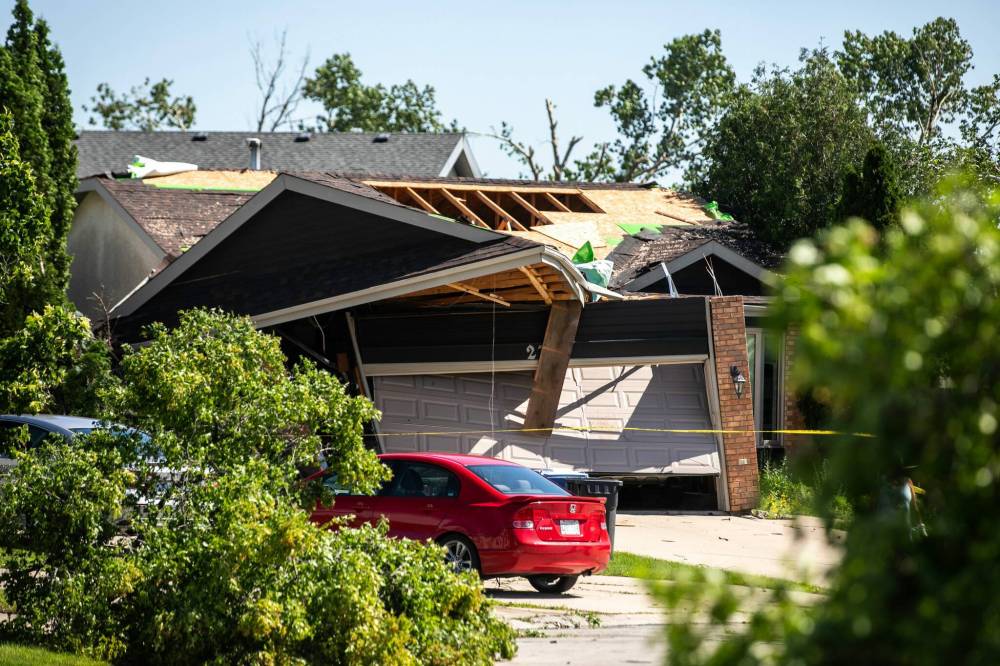
MIKAELA MACKENZIE / FREE PRESS FILES
An EF-1 tornado damaged several homes in Whyte Ridge on Monday night.
Brian and Bernadine Brown’s century-old brick home was destroyed by the tornado in Rossburn. A fundraiser for the Browns and a second family whose home was damaged by the twister had raised $1,900 of its $8,000 goal as of Thursday afternoon.
Hanesiak said federal radar systems need to be improved so residents can be warned when extreme weather is approaching a region.
Residents in southwest Winnipeg did not receive an emergency alert to warn them about the severe weather Monday evening, and Hanesiak said that’s because radar did not detect the system properly.
“(Areas) get scanned every six minutes, and if that scan is ambiguous to a forecaster, they have to wait for another six minutes so that’s 12 minutes … if there is a tornado occurring, the event could be almost over by the time they figure out what’s going on,” he said.
Winnipeg Free Press | Newsletter

In 2016, the federal government spent $180 million to install 33 weather radar systems across the country. It took until 2024 to install them all. Hanesiak said the system’s technology is already outdated.
“With these types of storms, because they’re so fast moving, and there’s such small phenomena, having the better resolution and the radar information is needed for these kinds of proper warnings,” he said.
In a 2024 news release detailing the new radar systems, the federal government said it remains “focused on unlocking the full potential of weather technology.”
“Recognizing social, economic, and environmental priorities, we remain committed to equipping Canadians with higher quality data and improved weather detection,” the news release said.
nicole.buffie@freepress.mb.ca

Nicole Buffie
Multimedia producer
Nicole Buffie is a reporter for the Free Press city desk. Born and bred in Winnipeg, Nicole graduated from Red River College’s Creative Communications program in 2020 and worked as a reporter throughout Manitoba before joining the Free Press newsroom as a multimedia producer in 2023. Read more about Nicole.
Every piece of reporting Nicole produces is reviewed by an editing team before it is posted online or published in print — part of the Free Press‘s tradition, since 1872, of producing reliable independent journalism. Read more about Free Press’s history and mandate, and learn how our newsroom operates.
Our newsroom depends on a growing audience of readers to power our journalism. If you are not a paid reader, please consider becoming a subscriber.
Our newsroom depends on its audience of readers to power our journalism. Thank you for your support.