

Listen to this article
Estimated 5 minutes
The audio version of this article is generated by AI-based technology. Mispronunciations can occur. We are working with our partners to continually review and improve the results.
In a week that saw a number of trades in the National Hockey League, perhaps it makes sense to analyze Thursday’s agreement between the federal government and the province of British Columbia through the lens of what each group secured.
To British Columbia: Billions of dollars for new natural resources projects, a tunnel replacement in Metro Vancouver, guarantees on environmental protections, $630 million for child care and —perhaps most importantly to the government — maintaining the North Coast tanker ban.
To the Alberta government: The understanding that the B.C. government will not put up significant opposition to a proposed pipeline that would terminate around the province’s South Coast and “largely” follow the existing route for the Trans Mountain pipeline — confirmed by B.C. Premier David Eby during a press conference with Prime Minister Mark Carney announcing the Cooperative Prosperity Agreement.
“We recognize our constitutional position and we do not have the authority to stop a new pipeline. We will not be going to court to fight a pipeline project,” Eby said.
To the federal government: A bit of interprovincial peace.
There’s a lot more to it than that, of course. The reaction could change based on the project specifics, or how the money for British Columbia infrastructure projects is distributed.
But some looked at the deal announced by Carney and Eby, who returned from a trade trip to China ahead of schedule, as efficient political calculus, a summary not disputed by sources familiar with the negotiations.
“I think that is certainly the way this is pointing,” said Stewart Prest, a political science lecturer at the University of British Columbia.
“And to be honest, that has seemed like the solution that makes the most sense for some time.”
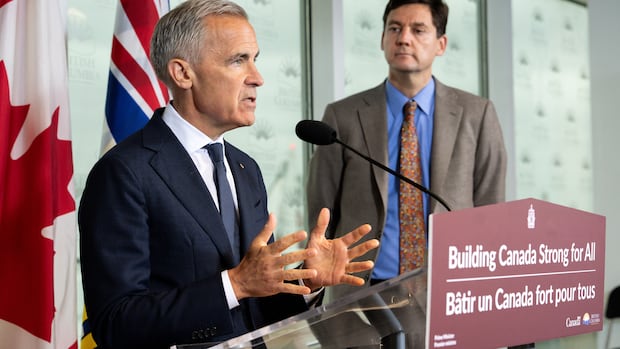
WATCH | B.C. deal with Ottawa keeps North Coast oil tanker ban in place: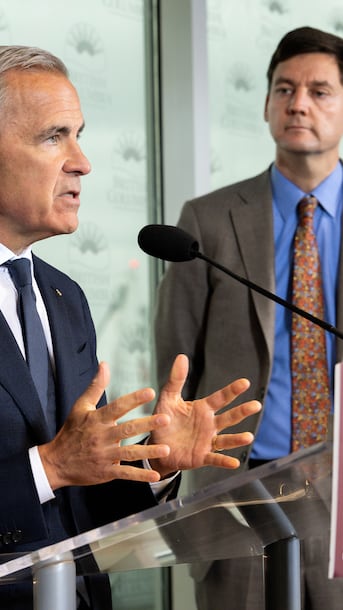
B.C. deal with Ottawa keeps North Coast oil tanker ban in place
Prime Minister Mark Carney and B.C. Premier David Eby announced a multibillion-dollar deal for resource projects and other priorities that includes a commitment from Ottawa to keep the North Coast oil tanker ban in place. The deal comes as Alberta is set to unveil more details on its proposed oil pipeline plan.Tunnel troubles
To understand why British Columbia has agreed to such a partnership after months of expressing concern about any pipeline, it helps to understand local bridge and tunnel politics.
Eby had been steadfast in his opposition to a North Coast pipeline — which he gets to say is mission accomplished as part of this deal — and the federal and provincial governments had been talking about billions of dollars for the Red Chris mine expansion and the North Coast Transmission Line for some time.
But what was substantially new in the agreement between the two governments was Carney committing to contributing to a $10-billion upgrade at Delta’s Roberts Bank Terminal at the southwest tip of Metro Vancouver, and $3 billion for a replacement to the aging Massey Tunnel that connects Delta with much of Metro Vancouver.
The tunnel replacement has been stuck in political paralysis for nearly a decade — twice announced, but now twice put on hold — and the province recently cancelled a deal with the contractor hired to replace it.
“It’s not just about the 100,000 commuters stuck in traffic. The tunnel is part of a national trade corridor bringing goods from across Canada to the largest container port terminal on the West Coast,” said Delta Coun. Dylan Kruger.
“This is an imaginary pipeline that doesn’t exist currently … but what is true is we need trade-enabling infrastructure to get our goods to market.”
Helping to fund the tunnel replacement in conjunction with the port expansion not only facilitates the increased supply of goods and services for any hypothetical future project — it also takes a big political headache away from Eby.
“It solves a significant problem for the B.C. government, or at least holds out the possibility of a solution,” said Prest.
“There’s nothing like federal money to shake things loose, and that’s what they have here suddenly.”
WATCH | David Eby says they will not take legal action against a pipeline project: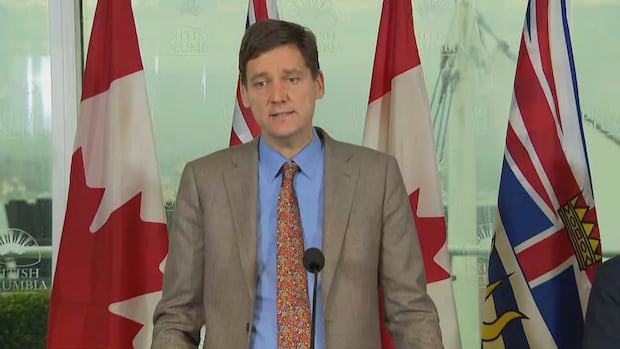
B.C. ‘will not go to court to fight a pipeline project,’ Premier Eby says
Announcing a multibillion-dollar deal alongside Prime Minister Mark Carney that includes a commitment from Ottawa to keep the North Coast oil tanker ban in place, B.C. Premier David Eby said ‘we do not have the authority to stop a new pipeline.’ This comes as Alberta is set to unveil more details on its proposed pipeline to B.C.’s West Coast Thursday.Acceptance from First Nations?
Among the question marks for the viability of the agreement is the reaction from First Nations along the South Coast.
On the North Coast, opposition to a new pipeline through coastal waters had been consistent enough with the majority of key First Nations involved to be a non-starter with the NDP government.
On the South Coast however, one prominent First Nations leader says the landscape is more negotiable.
“They think it’s more viable on the South Coast, largely because they just built a pipeline through the South Coast,” said former Squamish Nation council chairperson Khelsilem, referring to the Trans Mountain Pipeline expansion, adding that the legal battles over that project revealed the limited legal options available to stopping an interprovincial agreement.
“There’s a significantly greater number of First Nations that have to be consulted with the South Coast route … but there’s a greater diversity of opinions and readiness to handle a project like that coming through their territory.”
Khelsilem said he would be watching if First Nations are able to impose conditions on any proposed projects, such as employment or procurement.
Alberta’s proposal may generate controversy, but for now Smith, Eby and Carney seem to be singing from the same song book — if not necessarily every voter in British Columbia.
“I guess that’s the thing: is B.C. in favour of it?” said Khelsilem. “It’s really going to be on the prime minister for this project to move forward.”