
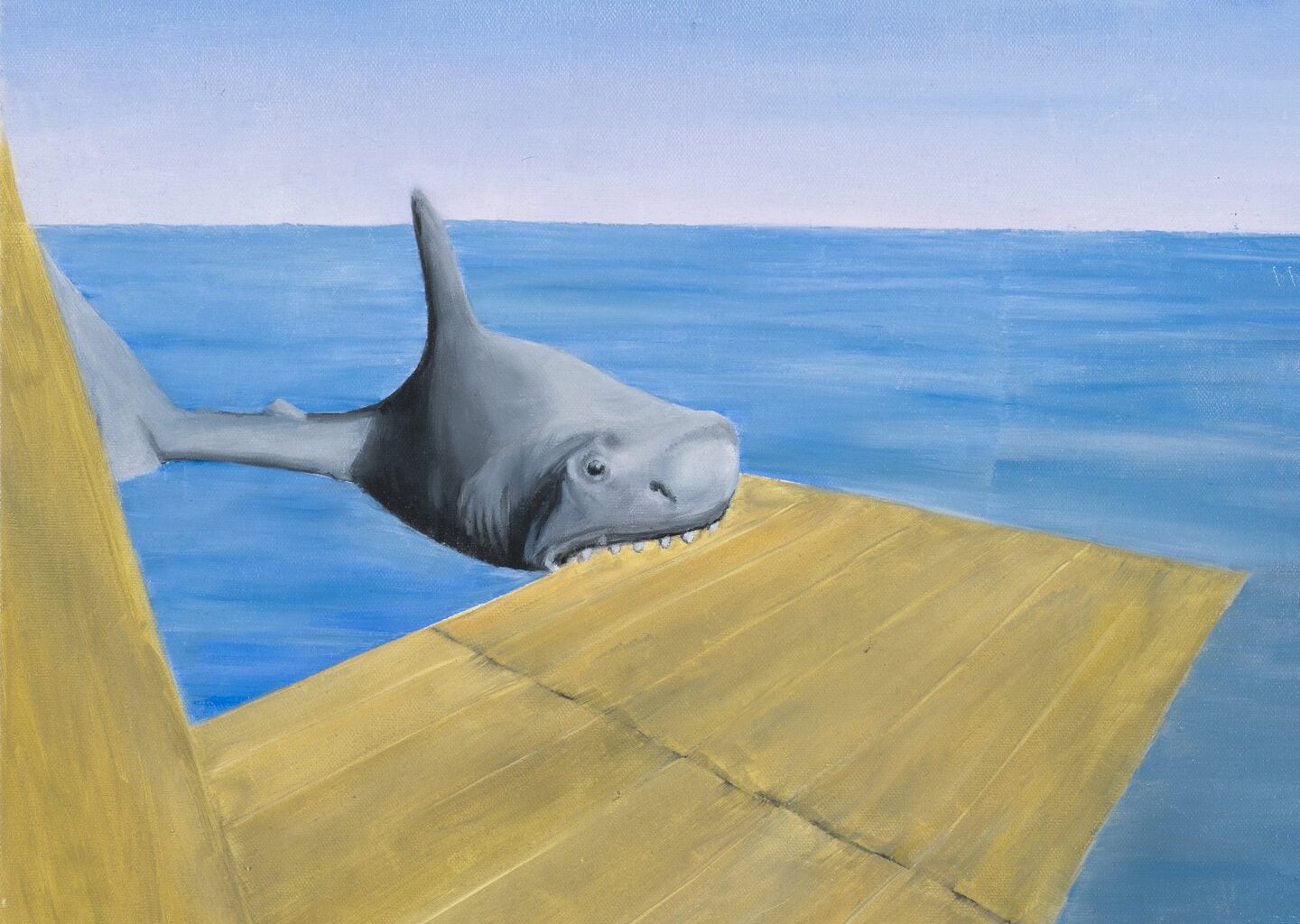
The contemporary airbrush scene is quite fascinating. In the 70s, James Rosenquist’s Marilyn would use stencils and collage aesthetics in a fine art setting, whereas H.R Giger would become a household name through his nightmarish metalscapes, realised through the tool’s potential for realistic textures and burnished gradients. It’s what makes us nostalgic for old-school advertising, if it’s for cigarettes or the iconic movie posters of Drew Struzan. Somewhere along the way, one can notice that this little process of blowing paint onto a page lends itself particularly well for the cartoonish, the fantastical, the unreal – in fact, Georgia-based artist Sasha Yazov was one of the first of the new wave of airbrush painters to approach the unique world of video game aesthetics with the often overlooked practice.
Like many artists, Sasha was obsessed with video games as a kid, drawing scenes and characters from games and cartoons from memory, even in kindergarten. Later on as a teenager, Sasha became enamoured with the styles of Rūté Merk and Alex Colville, the latter of which long predates the aesthetic of low polygon characters and the low-res fuzziness of early 3D video games. “Back then, not many people were using airbrush the way it’s used now in contemporary painting and at some point I realised it was the perfect tool for rendering digital artefacts on a canvas,” says Sasha. Artefacts is a great word for it, because Sasha’s paintings feel like explorations into the long-gone, dead servers of our childhood gaming worlds – these games’ aesthetics are a driving factor in our cultural nostalgia for 2000s computer games. Compared to the vibrant and massively popular worlds of today’s Fortnite, where hundreds of moving images can co-exist at once on-screen, games like The Sims, Morrowind or miscellaneous life simulators feel strangely barren, haunted even.