
Talp has raised a $20 million pre-seed valuation round backed by Formus Capital, Sunshine Lake Ventures, Aito Capital and the a16z Scout Fund.
Its AI personas simulate how customers will react to a product, ad or price before it launches, aiming to replace surveys that often fail to predict what people actually do.
The startup enters a category in which rival Aaru raised at a $1 billion headline valuation months earlier, despite sub-$10 million in revenue.
Surveys and focus groups have run the same way for decades: ask people what they want, then hope they mean it. Talp thinks that the gap between what customers say and what they actually do is worth $20 million.
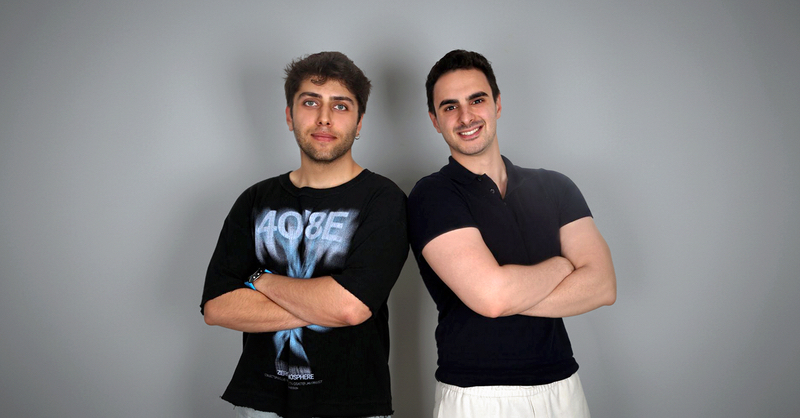
The startup, founded by Baran Ataş and Samet Alan, has closed a pre-seed round at a $20 million valuation. The round was backed by Formus Capital, Sunshine Lake Ventures, Aito Capital, the a16z Scout Fund and several angel investors, and will fund an AI platform that simulates how real customers respond to a product, ad or price before it ever reaches them.
“Every business decision is, at its core, a prediction about human behaviour, one that carries risks no one can foresee. Past data holds only as long as market conditions stay still; in the real world, the dynamics shift by the moment. Talp removes that blind spot with persona simulations,” says Ataş, CEO and co-founder of Talp.
Why simulate customers instead of asking them
Talp’s pitch rests on what researchers call the say-do gap: people don’t always act on what they tell a surveyor, because they tend to answer as who they would like to be rather than who they are.
Instead of collecting responses, Talp’s personas are built with behavioural patterns, decision-making traits, and cognitive tendencies, then set loose on a website, ad, or pricing scenario to generate a prediction of what a customer would actually do, along with the reasoning behind it.
For example, a persona might be run through a checkout flow to flag exactly where price sensitivity causes shoppers to abandon their cart, before a real campaign goes live.
A crowded field with one billion-dollar comparison
Talp is a small entrant in a category that has already attracted far larger checks. Aaru, a synthetic-population startup founded in March 2024, closed a Series A above $50 million led by Redpoint Ventures at a headline valuation of $1 billion late last year, even with annual recurring revenue still under $10 million, according to people familiar with the deal. Aaru also names CulturePulse, Simile, Listen Labs, Keplar and Outset as competitors, alongside legacy research firms Qualtrics and SurveyMonkey.
Talp’s differentiation, per the company, is to combine behavioural predictions with the reasoning behind them, rather than relying on surface-level demographic modelling. That claim, like its 650-campaigns-a-month figure, is presented without third-party verification.
The a16z Scout Fund’s involvement is worth a second look on its own. Rather than a lead investment from Andreessen Horowitz itself, the Scout Fund lets individual founders and operators in the firm’s network write small checks using its capital, a signal-driven move rather than a conviction-sized one.
What’s next, and what’s still unclear
Capital will go toward expanding Talp’s simulation engine and moving into new industries, according to the company, though no specific product roadmap or sector names were disclosed.
The market Talp is chasing sits inside a broader AI agents category that grew from $5.25 billion in 2024 to an estimated $7.84 billion in 2025, with projections reaching $52.62 billion by 2030, according to TFN’s own tracking of the sector.
Synthetic customer research is a narrow slice of that, but one where investor appetite has clearly outpaced revenue, as Aaru’s billion-dollar headline paired with single-digit-million ARR shows.
Whether Talp closes that gap with real campaign volume or joins a growing pile of well-funded synthetic-persona startups chasing the same unproven premise remains an open question. A platform that predicts customer behaviour is only as useful as its accuracy under real-world pressure, and so far, the industry is asking investors and buyers alike to take that accuracy largely on faith.