
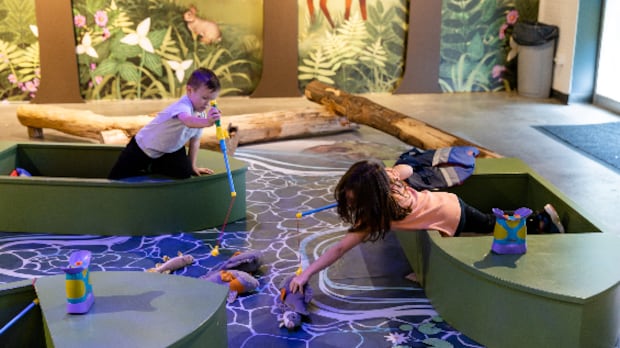
Montreal has the Science Centre, Vancouver has Science World, Winnipeg has the Science Gallery at the Manitoba Museum and Sudbury has Science North. Toronto, however, has very few educational spaces dedicated to young people since the closure of the original Ontario Science Centre.
“We are very behind,” said Naomi Hamer, associate professor and chair of the English department at Toronto Metropolitan University. Her research fields include the place of children within museums.
According to Hamer, Toronto had plenty of children’s spaces from the late 1960s to the 1980s, but today, the city is feeling the repercussions of successive budget cuts enacted since the 1990s.
In addition to temporarily losing the Ontario Science Centre, Toronto has, over the past few decades, lost the Royal Ontario Museum’s McLaughlin Planetarium, which operated between 1968 and 1995, as well as the Children’s Own Museum, which took over the planetarium’s space in 1998 and closed in 2002.
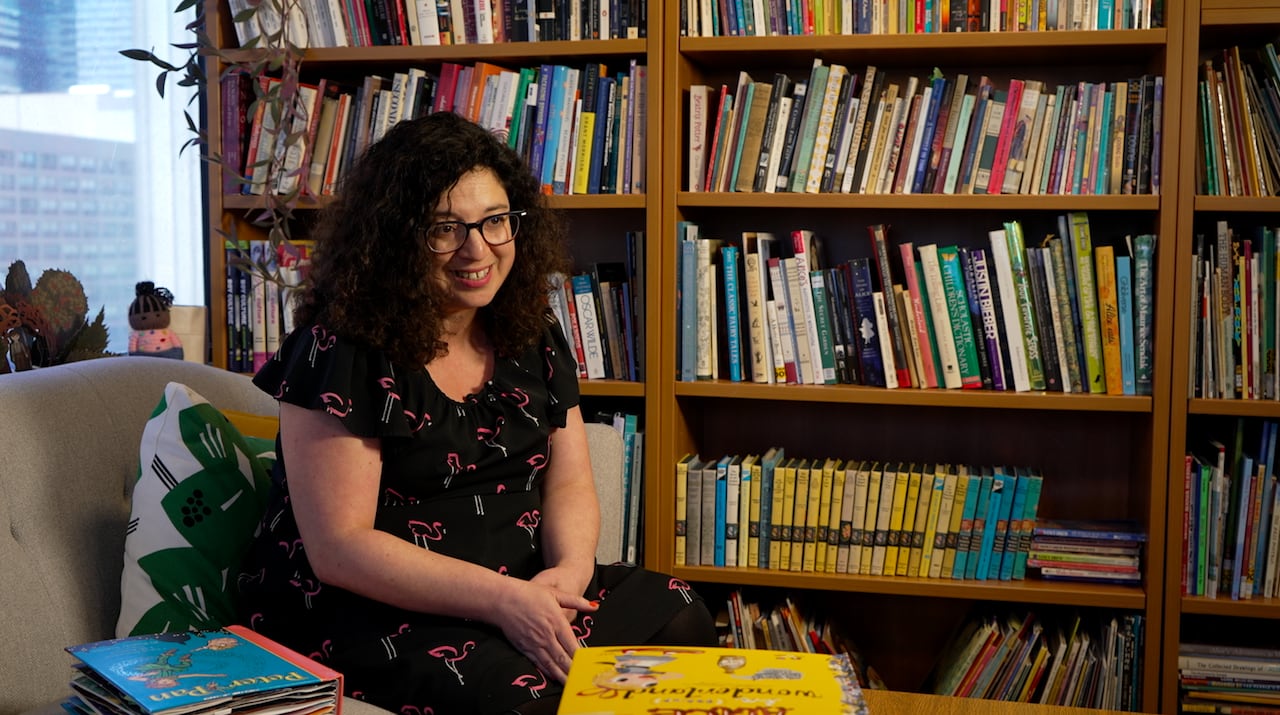 Naomi Hamer, associate professor and chair of the English department at Toronto Metropolitan University, says Toronto is now behind other Canadian cities in terms of dedicated educational spaces for kids. (Sarah Tomlinson/CBC)The centennial momentum
The opening of the Ontario Science Centre in 1969 marked an architectural and educational milestone fuelled by the momentum of the Canadian Confederation Centennial, according to Hamer. Only a year prior, the planetarium opened its doors.
It was a golden age of Canadian culture, with Toronto a leader in the field of children’s museums, Hamer said.
“A lot of innovation emerged during this period, supported by federal funding,” Hamer said.
The ensuing decade or so would see a wealth of Canadian content for children, including books, films and music, as well as figures who achieved success internationally such as children’s singer Raffi and entertainers Sharon, Lois & Bram.
“Along with the San Francisco Exploratorium, which opened the same year, the Science Centre was way ahead of its time in terms of experiential learning for science and environmental education,” Hamer said.
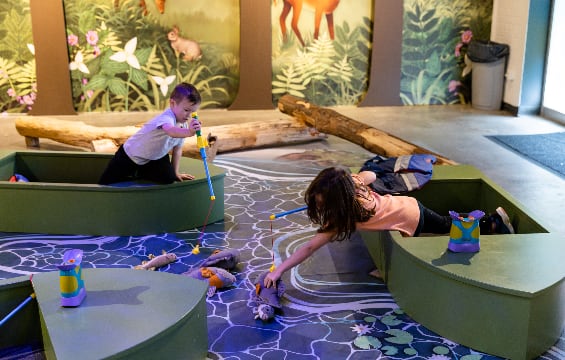 The Ontario Science Centre currently operates out of the Harbourfront Centre, featuring interactive exhibits at KidSpark. (Ontario Science Centre)Limited activities with prices that add up
Today, Toronto has very few major establishments designed specifically for children.
Choices are limited to the Riverdale Farm, the Toronto Zoo, Ripley’s Aquarium, the Little Canada experience, and a handful of activities offered within major cultural institutions like the ROM, the Art Gallery of Ontario (AGO) and the Bata Shoe Museum.
These outings also come with a steep price tag.
For a family of four — consisting of two parents and children aged 7 and 13 — admission to the AGO or the ROM costs a minimum of $60, excluding feature exhibitions (which can bump the bill up to around $100 at the ROM).
If the same group wants to visit Little Canada, it would cost around $150 and nearly $200 for a trip to the zoo. A similar outing to the Science Centre cost $75 in 2024.
While the institution still exists today, it currently operates out of temporary locations, one of which opened Monday at Harbourfront Centre. It features a new space exhibit, an area called Innovation Station, the KidSpark interactive exhibits, and an outdoor space.
The temporary Harbourfront location is about 86,000 square feet — only a fraction of the space children had access to a few years ago given the former Ontario Science Centre building was roughly 568,000 square feet.
WATCH | CBC Museum shuts down: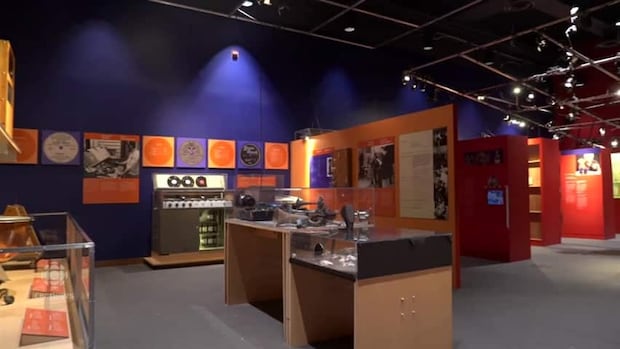
One last look at the CBC Museum in Toronto
The museum shut down Dec. 22 and will be converted into a new studio for kids programming.
Children’s programming is still available at public libraries and community centres, but it simply does not compare to the spaces lost that were built specifically with children in mind, according to Hamer.
For instance, temporary children’s science activities are offered at the Harbourfront Centre. The AGO also offers its Weston Family Learning Centre, “but it remains a separate room segregated from the rest of the museum,” said Hamer.
The ROM, which opened in 1914, offers WonderWorks, a play space for children, but it too is isolated from the main galleries.
Melissa Smith, vice-president of public engagement at the ROM, notes that this initiative is part of a broader approach to make the museum more accessible.
Smith also says that children are at the heart of the museum’s exhibition choices, as illustrated by recent shows dedicated to bees, sharks, or whales.
Cuts to education
Asked about infrastructure aimed at children, a spokesperson for Ontario’s Ministry of Tourism, Culture and Sport pointed to the camp programs offered by the ROM and the AGO, as well as a two-week Youth-for-Youth Innovation Program providing hands-on STEM learning opportunities for youth aged 12 to 14 from Flemingdon Park and Thorncliffe Park.
In an email to Radio-Canada, Ashika Theyyil also highlighted the temporary pop-up Science Centre installations. The province has promised to build a new science centre by 2029 at Ontario Place, which is currently closed to the public.
However, the province did not answer questions regarding the government’s interest in developing new, dedicated permanent infrastructure for children.
Meanwhile, as CBC News has previously reported, provincial funding cuts announced by the Toronto District School Board (TDSB) will result in the closure of various outdoor educational programs, including the Island Natural Science School on the Toronto Islands.
WATCH | TDSB makes more cuts, this time to outdoor education programs: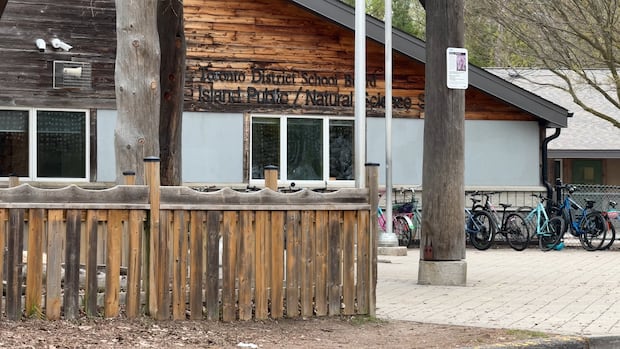
TDSB makes more cuts, this time to outdoor education programs
The Toronto District School Board says it has made the ‘difficult decision’ to close outdoor education programs at five centres. CBC’s Michelle Song spoke to advocates who say cuts will hurt low-income students in particular.
Smith, from the ROM, however, remains hopeful about access to educational spaces in Toronto museums for children.
“I’ve been in the museum sector for 20 years, and for a very long time, the focus was almost entirely on adult engagement,” she said.
Today, she says she feels empowered to put the spotlight back on families and children.