
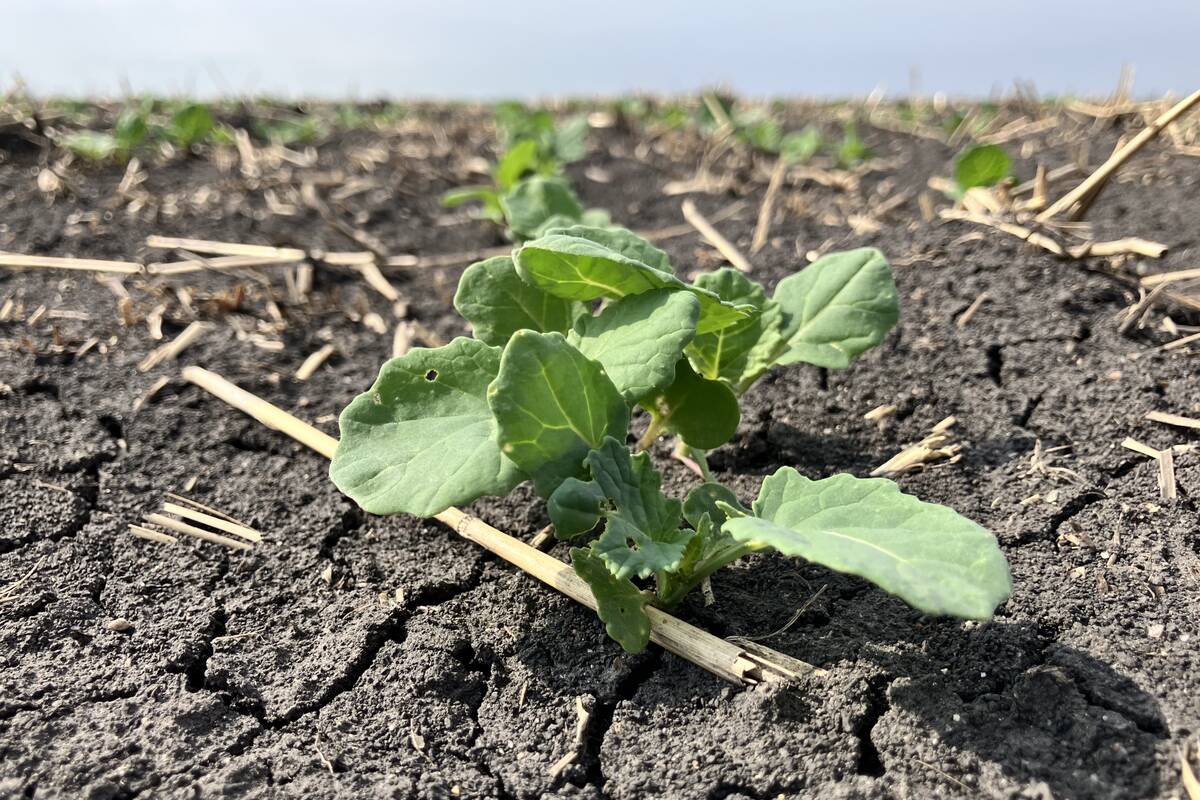
Canadian farmers may have seeded record canola acres, but wet conditions across the Prairies raise the question — how much will actually be harvested?
The percentage of canola that’s harvested is usually very close to the amount that was seeded, said Tony Tryhuk, director of futures trading for RBC Dominion Securities in Winnipeg.
“Normally, you get harvested acres north of 99 per cent of planted acres. I don’t know if you’re going to get that this year,” Tryhuk said.
He suggested the amount could be less than 98 per cent.
On June 30, Statistics Canada released its planted area report, placing those for canola in 2026-27 at a record 23.44 million acres. However, the Prairies have been inundated with frequent rains, some extremely heavy.
Precipitation received over the last several weeks has led to flooding in parts of Alberta, Saskatchewan and Manitoba. Some fields are completely or partially drowned out.
Tryhuk said canola yields could take a hit should the weather remain the same over the coming weeks. However, he said canola yields could be just fine should the Prairie weather turn warmer and drier. A lot depends on what the situation is when canola blooms.
Read Also
Meanwhile, prices for canola are expected to remain within a narrow range.
Tryhuk placed the November canola contract within a range of C$730 to C$750 per tonne. If there’s good growing conditions around the corner, he said prices could drop below C$730. If they slip past C$720, he believes few farmers would be unwilling to sell.
If unfavourable conditions persist, Tryhuk said he thinks canola could remain closer to C$750, at which time farmers will be quite happy to sell.
Canola will continue to be underpinned by its foreign and domestic demand. As Canadian crushers run at near capacity, Tryhuk said he heard rumours of more purchases by China.
“It should be an interesting summer to watch for sure. We should see a decent-sized crop, the demand is going to be there and we’re going to grow enough to satisfy,” Tryhuk said.