
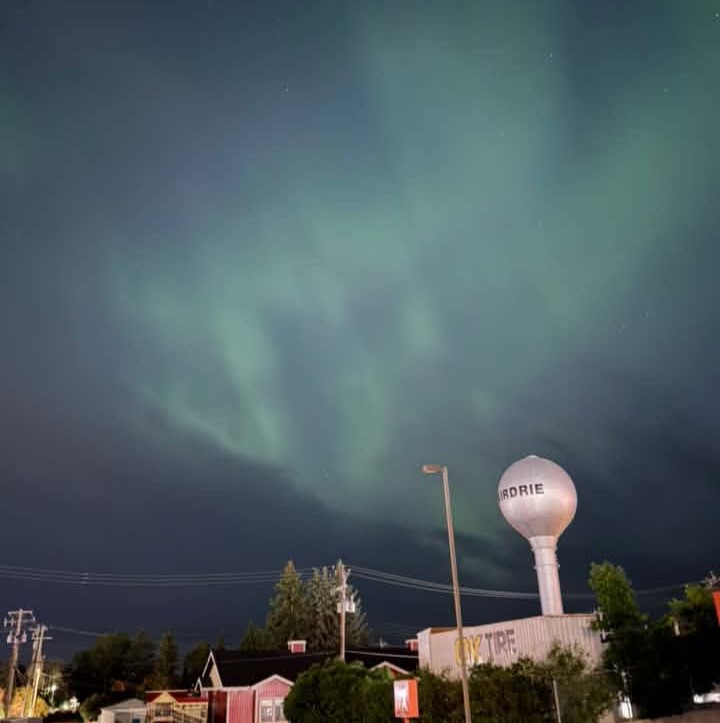
A predicted solar storm delivered a spectacular show over Alberta skies this week, with northern lights visible across Airdrie, Rocky View County and communities throughout the province.
Photos of green, pink and purple auroras quickly filled social media as residents shared images of the sky glowing over fields, neighbourhoods, rural roads and backyards.
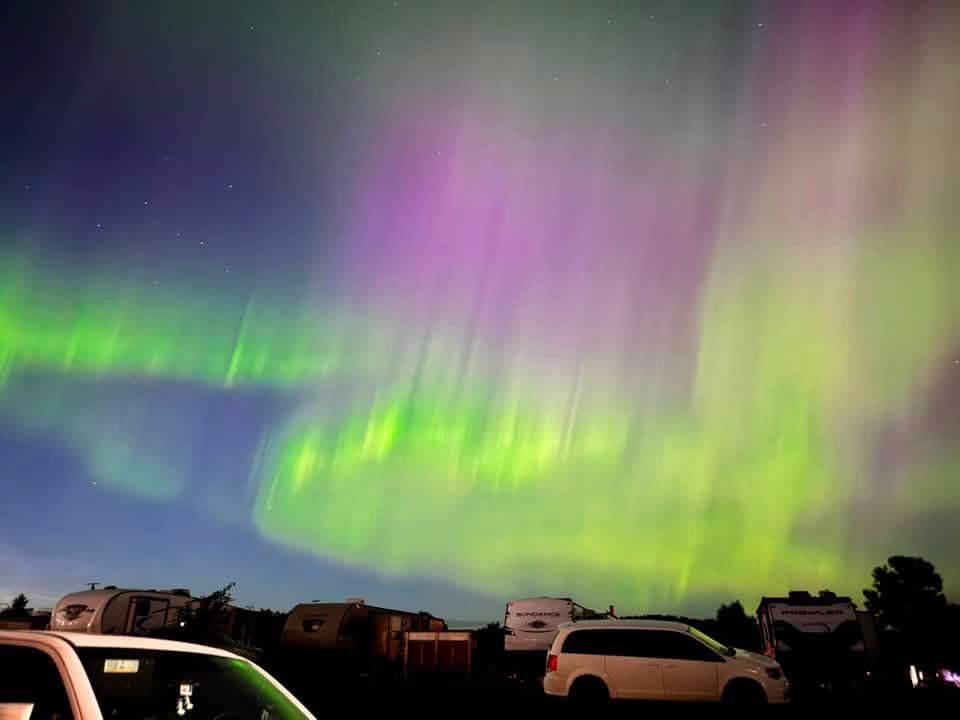
Brilliant bands of the aurora borealis shimmer across the night sky over Aurora during a summer light display. Photo / Jennifer Peddle-Morey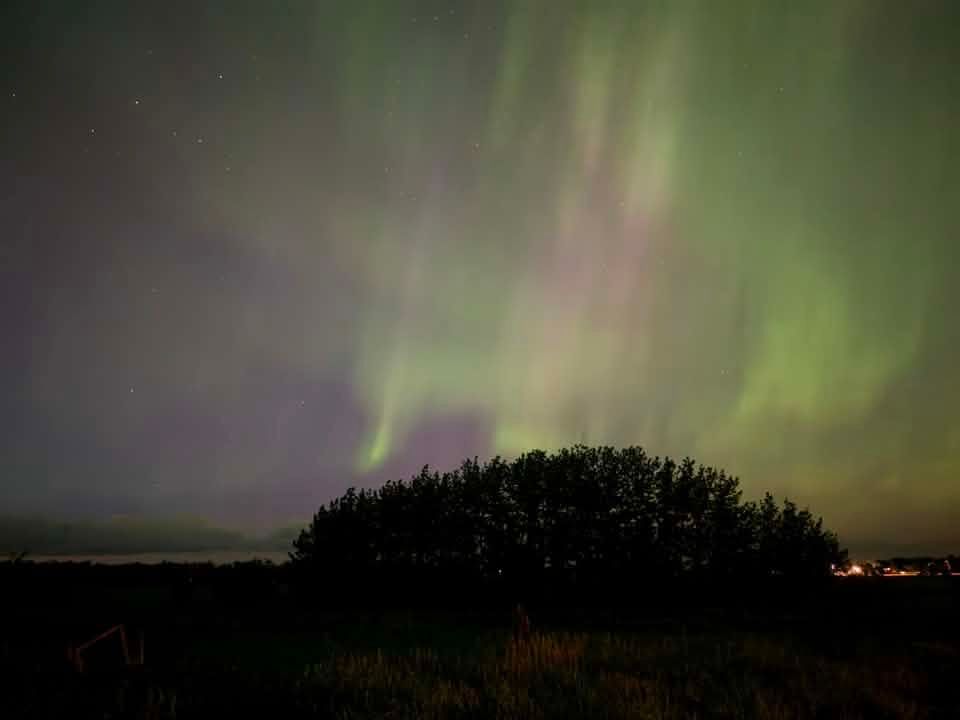 Green ribbons of the aurora borealis ripple above a stand of trees near Carstairs, lighting up the night sky with a soft summer glow. Photo / Chantel L. Mc
The display followed a geomagnetic storm watch issued by the U.S. National Oceanic and Atmospheric Administration’s Space Weather Prediction Center, which had forecast moderate G2 geomagnetic storm conditions after a coronal mass ejection from the sun.
Related Stories:
.png)
A coronal mass ejection, or CME, is an eruption of solar material and magnetic fields. When that material reaches Earth, it can trigger geomagnetic activity and produce auroras.
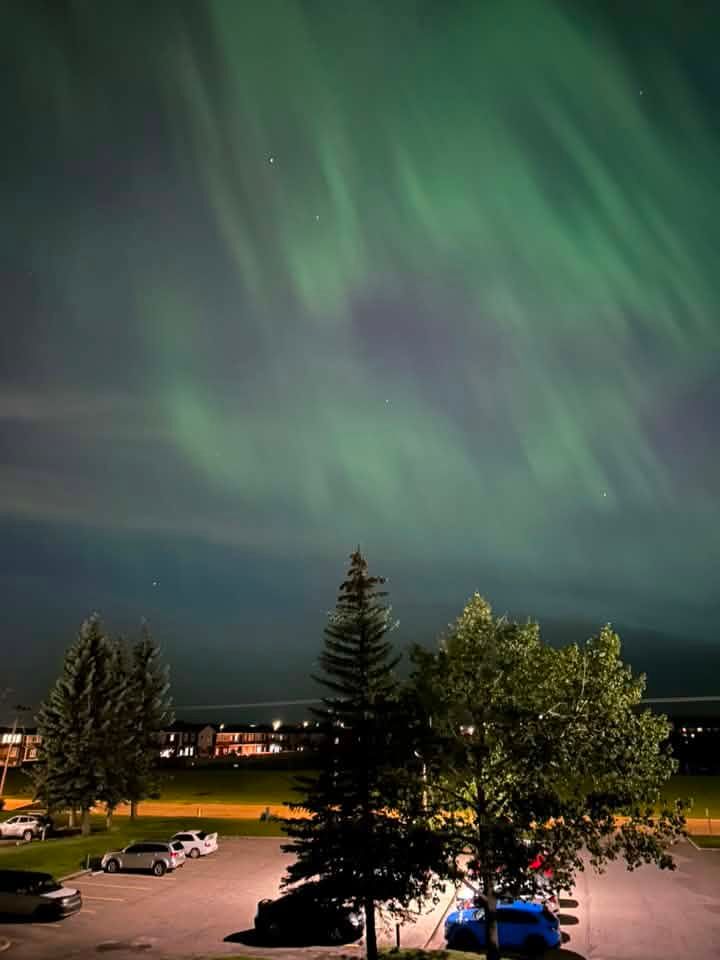 Green curtains of the aurora borealis sweep across the northwestern sky above Tower Lane Drive, creating a dazzling late-night display just before midnight. Photo / Val Monds
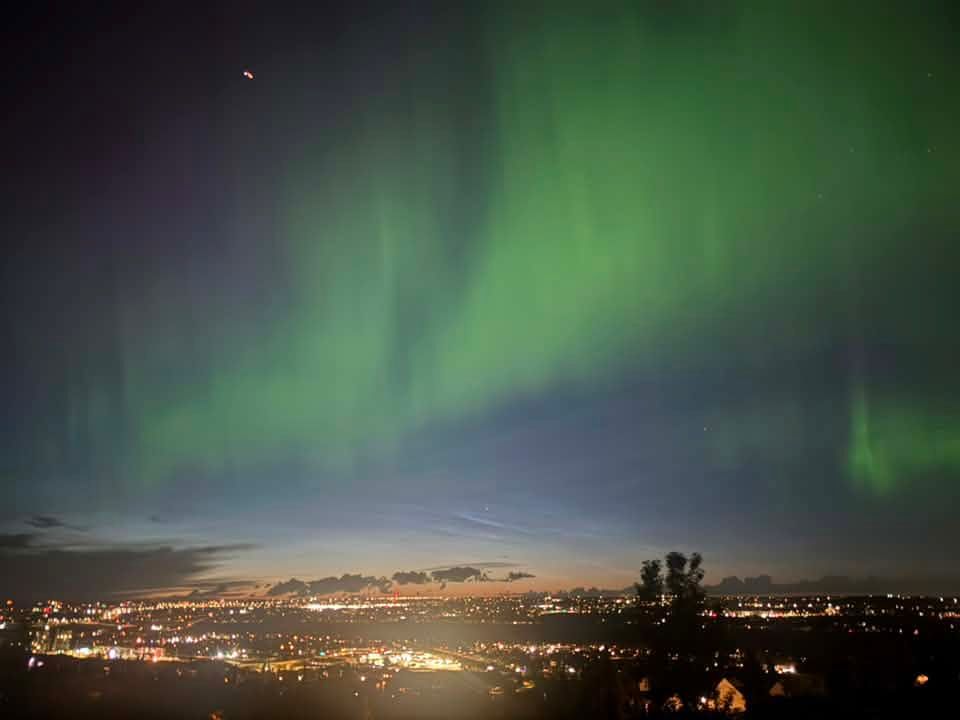 Green waves of the aurora borealis shine above Calgary’s skyline as seen from Banff Coach Road S.W. shortly before midnight on July 3. Photo / Courtney Fry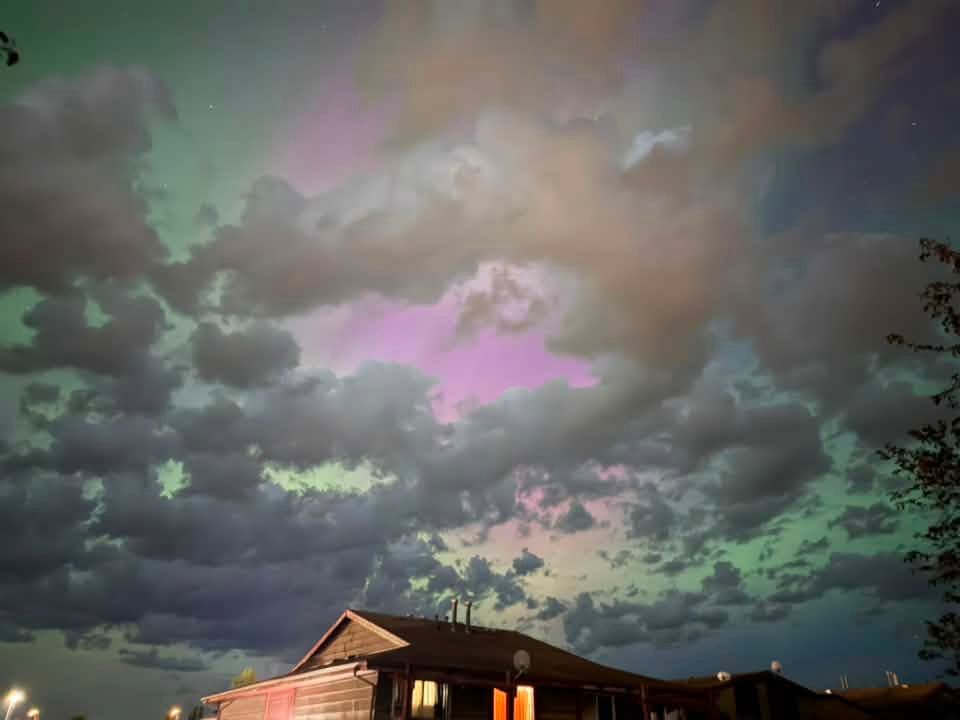
Purple and green hues of the aurora borealis glow through a break in the clouds above a neighbourhood skyline during a dramatic late-night light show. Photo / Bryson Wereschuk
A forecast that delivered
NOAA’s Space Weather Prediction Center said the CME was expected to affect Earth and could lead to moderate storm levels, depending on the orientation of the embedded magnetic field.
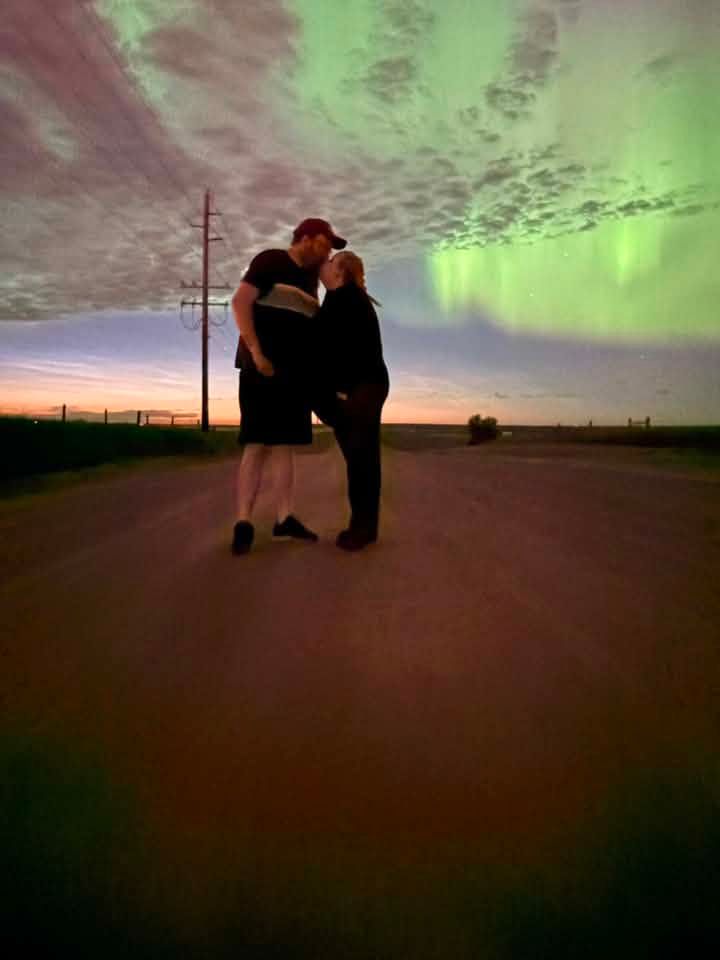 A vivid display of green northern lights illuminates the sky above a rural road near Medicine Hat shortly before midnight on July 3. Photo / Teri-lyn Kniivila
The agency said auroras could become visible over some northern and upper Midwest states, from New York to Idaho.
In Alberta, the forecast also caught the attention of aurora watchers.
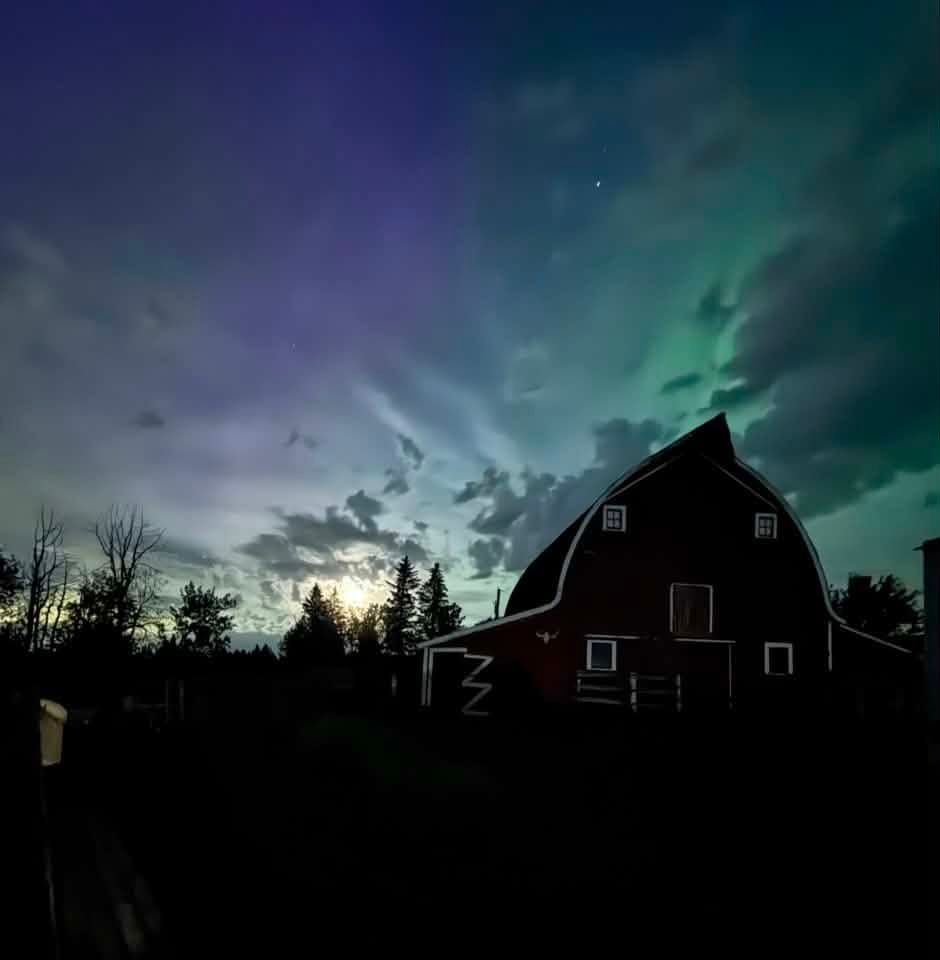 Green and purple hues of the aurora borealis illuminate the sky behind a classic prairie barn, creating a striking rural scene during a summer night light show. Photo / Sarah Lambert
In a July 1 post, local Chris Ratzlaff, founder of the Alberta Aurora Chasers Facebook group, wrote that a “full sky Alberta aurora” was possible around July 2, plus or minus 24 hours.
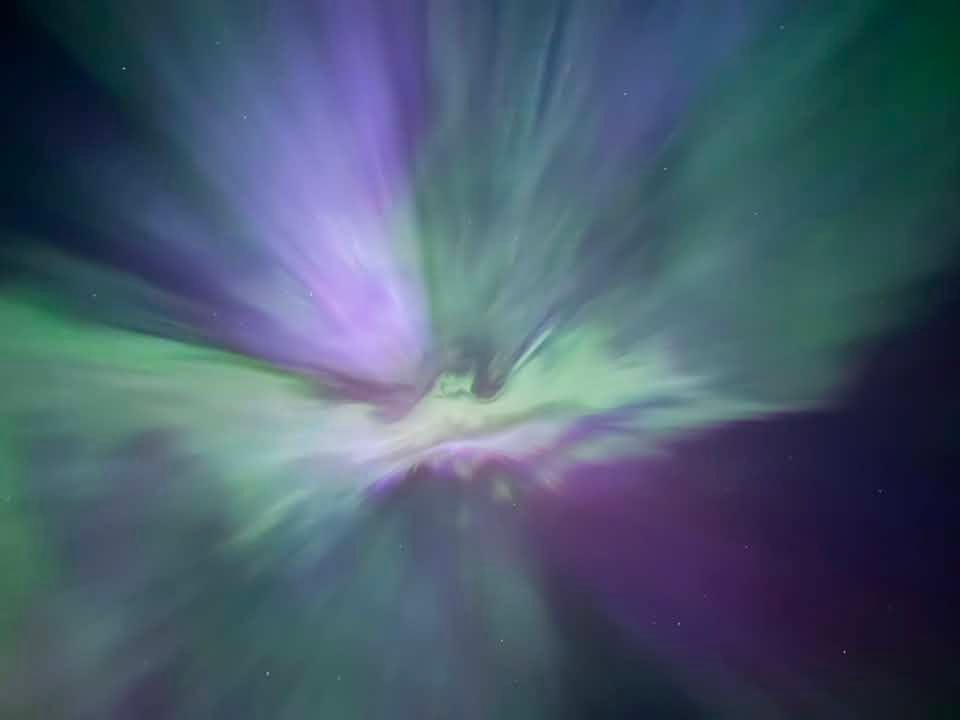 Vibrant streaks of green and purple aurora light converge overhead, creating a spectacular celestial display across the night sky. Photo / Amanda Esligar Keating
His forecast noted the anticipated arrival of a CME from June 30, with G2 geomagnetic storm conditions expected beginning July 3, though timing uncertainty meant activity could arrive earlier.
Ratzlaff wrote that KP6/G2 or greater auroras can be visible overhead and possibly under urban skies in Alberta, while KP7/G3 or greater displays can stretch across the entire sky.
Full Sky Alberta Aurora Possible, July 2 by Chris Ratzlaff
Possibility of Full Sky Alberta Aurora, July 2 +/-24hrs
What causes the northern lights?
According to the Canadian Space Agency, the northern lights, or aurora borealis, are colourful displays of light seen in the night sky in the northern hemisphere.
The southern hemisphere has its own version, known as the southern lights, or aurora australis.
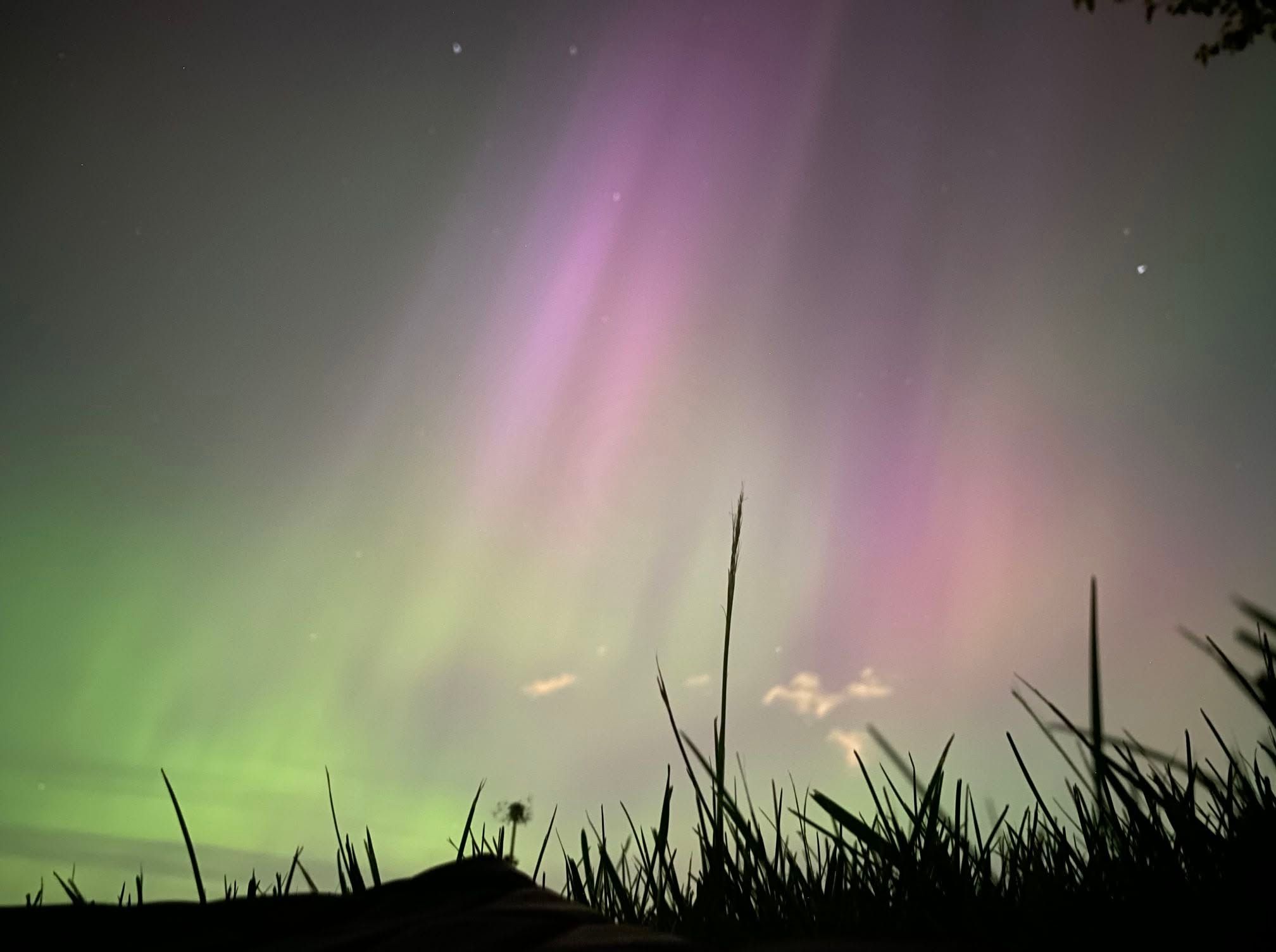 Tall bands of pink and green aurora light rise above silhouetted prairie grass, creating a colourful northern lights display against the night sky. Photo / Kimberley Forrest
Auroras form when the sun sends charged particles, including electrons and protons, into space through the solar wind.
Earth’s magnetic field redirects much of that solar wind around the planet, but magnetic field lines can stretch and snap back, sending charged particles toward Earth’s upper atmosphere.
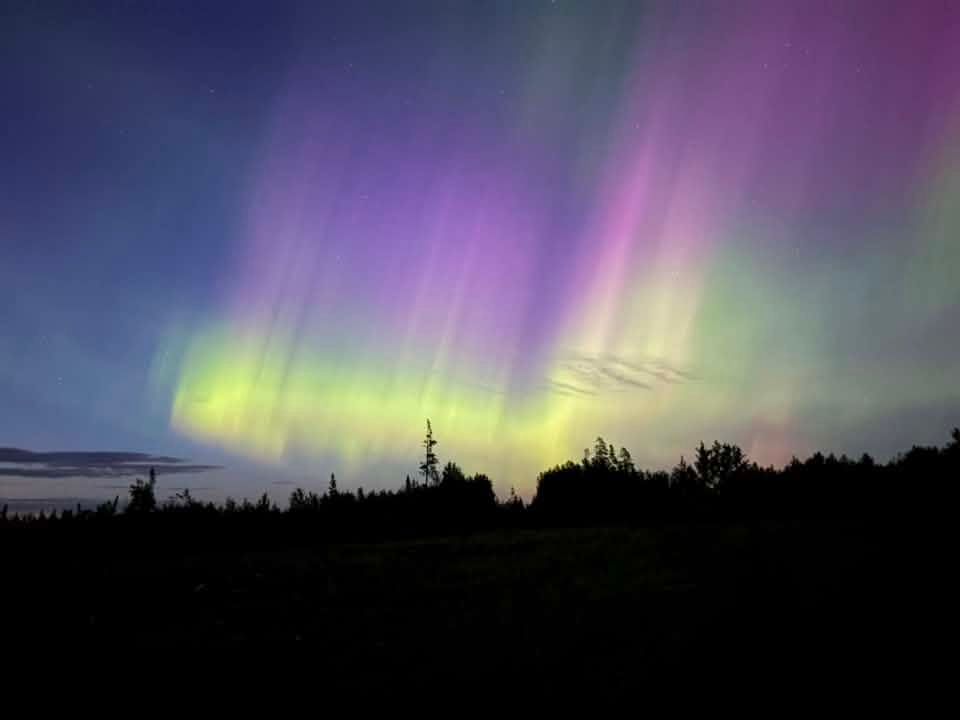
Brilliant waves of green and purple aurora light ripple across the night sky above Rocky Mountain House, creating a spectacular display over the darkened treeline. Photo / Chris Hammonds
When those particles collide with gases high above the surface, they produce tiny flashes of light.
As billions of those flashes occur in sequence, the aurora can appear to ripple, shimmer or dance across the sky.
Why the colours change
The Canadian Space Agency says aurora colours depend on several factors, including the gases in Earth’s atmosphere, the altitude of the aurora, atmospheric density and the energy involved.
Green is the most common colour seen from the ground and is produced when charged particles collide with oxygen molecules at altitudes of about 100 to 300 kilometres.
Pink and dark red can appear along the lower edge of an aurora when electrons strike nitrogen molecules around 100 kilometres above the ground.
Red auroras are produced higher in the atmosphere, around 300 to 400 kilometres, when charged particles collide with oxygen atoms.
Blue and purple auroras can be produced by hydrogen and helium molecules, though those colours can be harder for the human eye to see against the night sky.
Local skies, local photos
Across Airdrie and the surrounding area, residents captured the aurora from back roads, fields, parks and neighbourhoods.
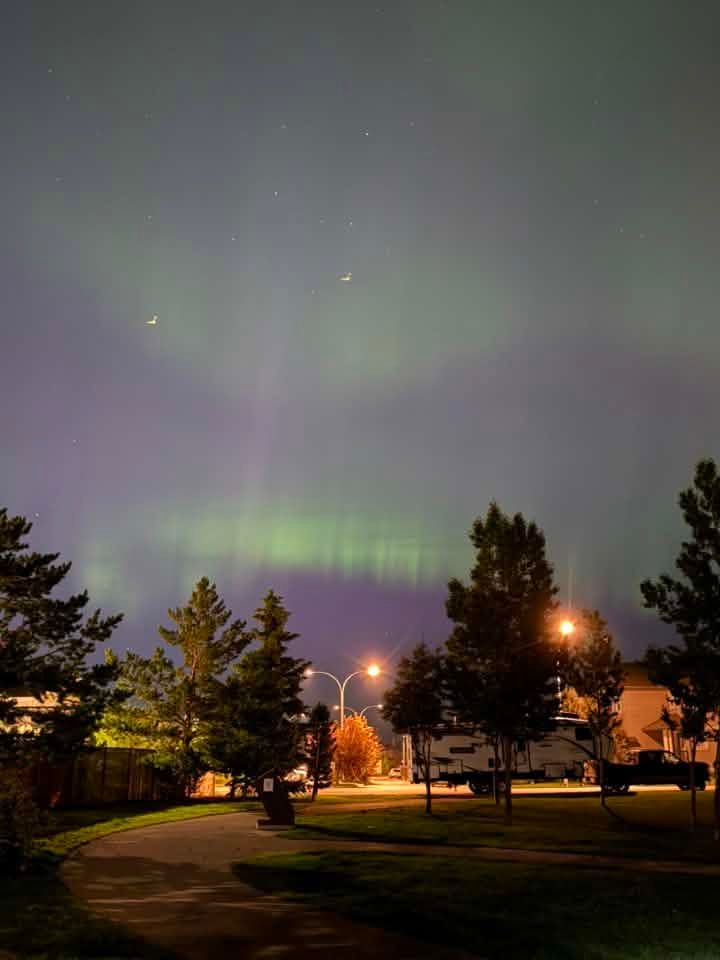
Soft green and purple northern lights glow above Kingsland at midnight, casting colourful bands across the sky over a quiet neighbourhood park. Photo / Megan Weigelt-Hodges
Many photos showed vivid green bands stretching across the horizon, while others captured pink and purple pillars reaching overhead.
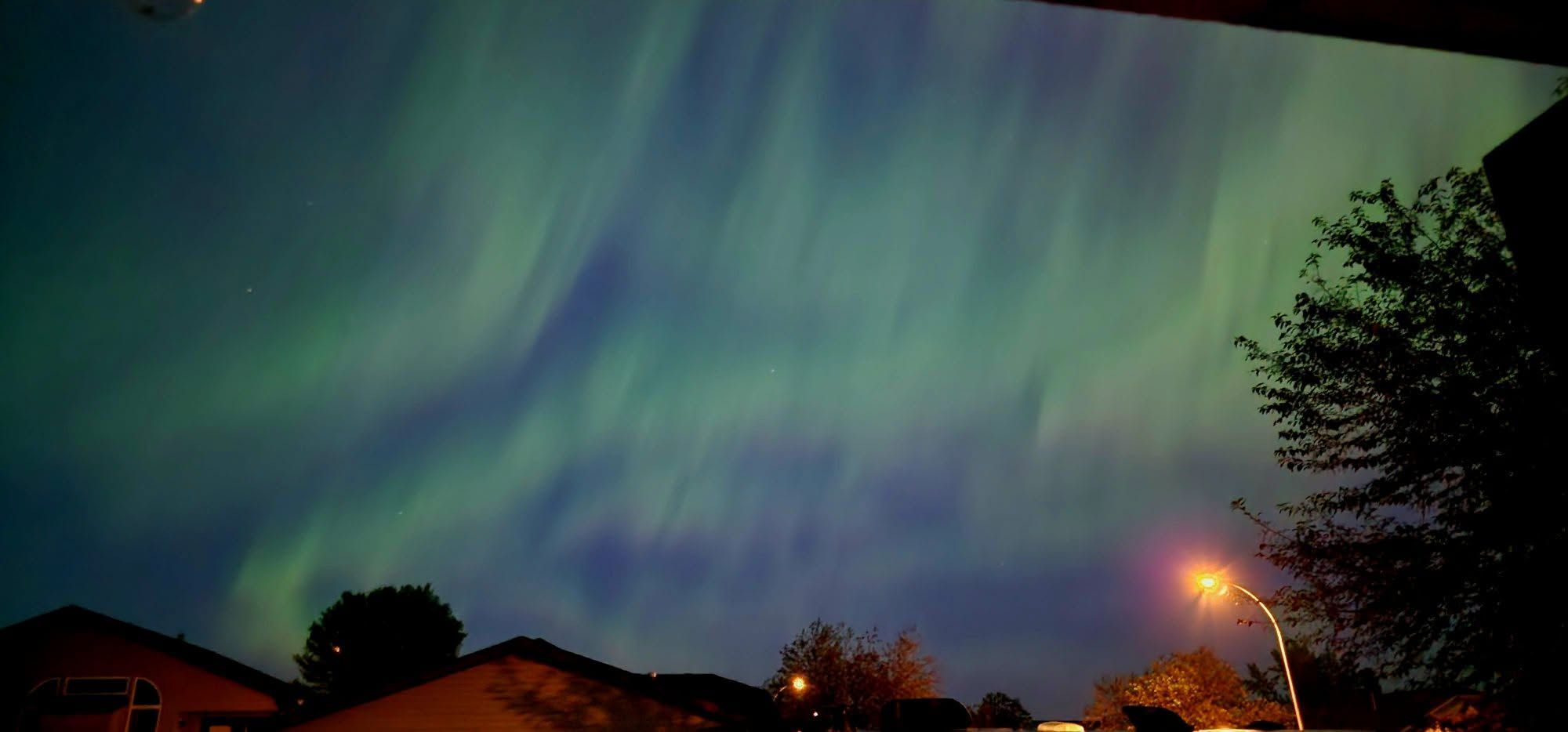 Flowing green ribbons of the aurora borealis sweep across the night sky above a residential neighbourhood, creating a vivid display of northern lights over the rooftops below. Photo / Lisa Marie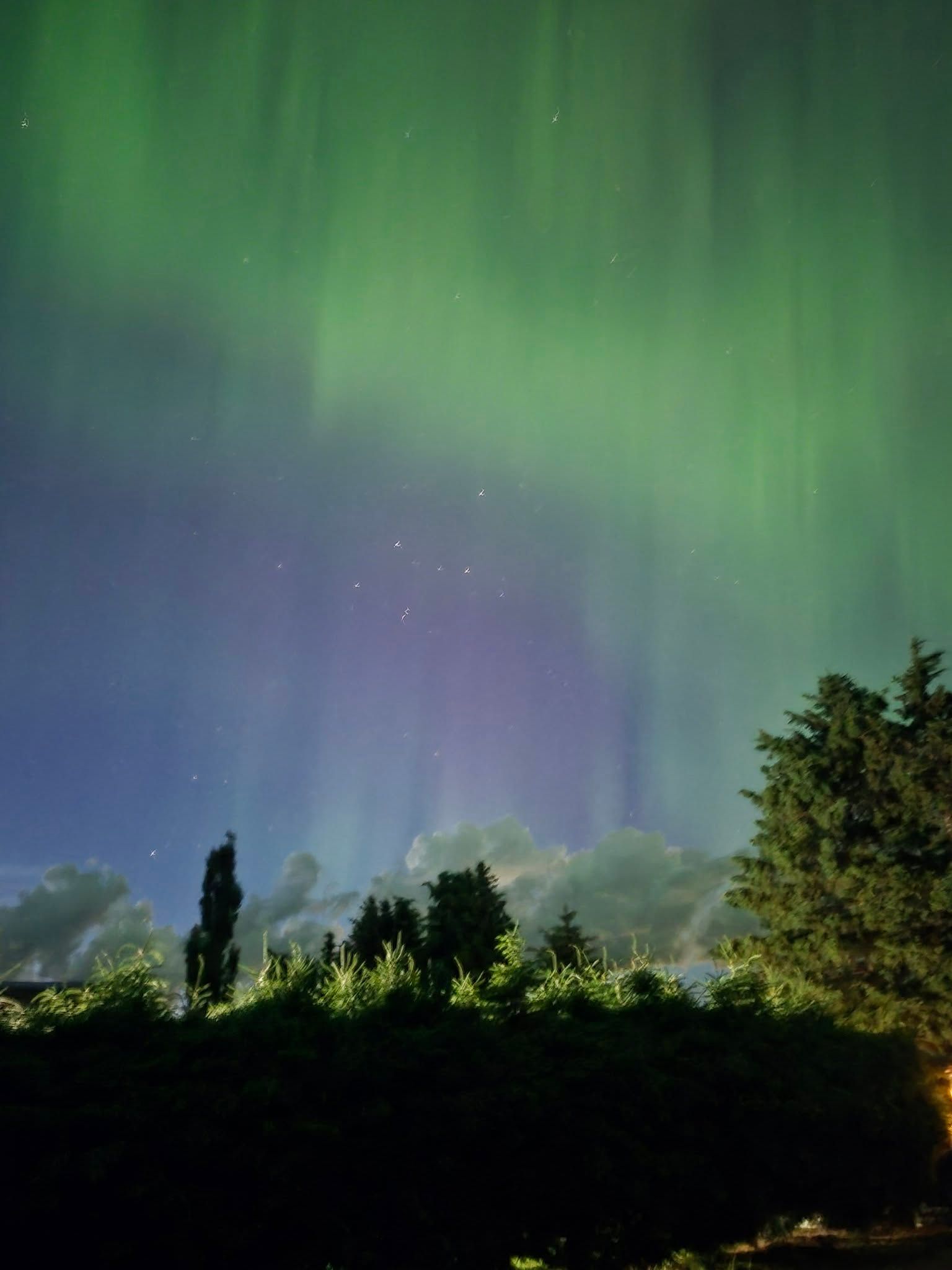
Vivid green and purple curtains of the aurora borealis stream skyward above treetops and drifting clouds, creating a colourful overnight display of northern lights. Photo / Patty Connon
The display also drew widespread attention on social media, where local residents compared viewing locations, camera settings and favourite shots from the night.
How to get the best view
The Canadian Space Agency says auroras are generally easier to see away from light pollution, where city lights do not wash out low-intensity displays.
Clear skies also matter. Clouds, precipitation and bright moonlight can make auroras harder to see.
The agency says auroras often appear a few hours after sunset and tend to become more intense around midnight.
Viewers are also encouraged to look all around the sky, not only north, because auroras can appear in different directions during stronger displays.
Ratzlaff’s aurora-chasing guidance also reminds viewers to drive carefully, park fully off the road, stay off private property and be considerate of others when using headlights near viewing areas.
A shared Alberta sky
For many residents, the event became more than a forecast.
It was a memorable summer night when people across the region stepped outside, looked up and saw the same colours moving above them.
And judging by the flood of photos from Airdrie and area residents, plenty of people were ready when the sky started to dance.
Have a news tip, story idea, photo or video? Send it to news@discoverairdrie.com. You can also follow and message us on Facebook and X at @AIR1061FM.