
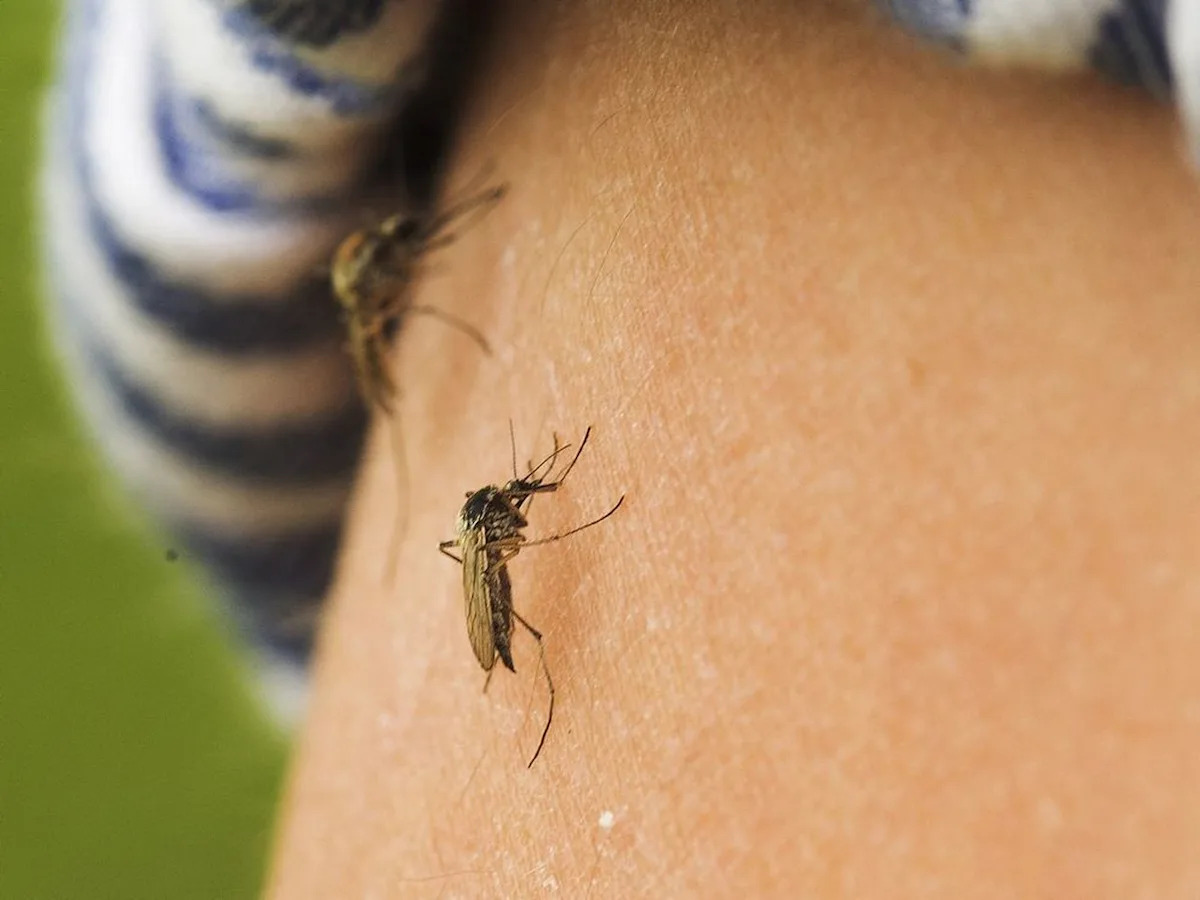
After several years of drought, Edmonton has been thrown a weather boomerang with record-setting rainfall, making this past June the city’s wettest on record. That means lots of standing water and our least favourite bloodsuckers along with it.
Edmontonians have been largely spared from these pests, but this summer, they’re back with a vengeance, at least compared the past few years.
What has changed in the city’s mosquito control program?
Since 2022, the city stopped aerial sprays of outlying wet areas with the larvicide, Bti, by helicopter. The city has also stopped using Dursban, which was officially phased out in 2016, after which another pesticide using the same active ingredient, chlorpyrifos, was used until 2019. Chlorpyrifos has been linked to respiratory problems and disruptions to cognitive development in children. Edmonton was the final municipality in North America to use it.
Two thirds of the city’s mosquito-control funds have been reallocated to ground treatment, and the remainder to support mosquito predators. The city still monitors the areas it used to spray from helicopter. Mosquitoes can travel up to five kilometres if desperate, but most find someone to bite within the area they’re born.
What was the reasoning for the change?
Mayor Andrew Knack said a significant part of the area being sprayed for $507,000 a year was outside city limits. He said other municipalities in the area weren’t willing to foot the bill for the costs of the program. A co-ordinated regional spraying program existed until 1993, when then-premier Ralph Klein cut the funding. Edmonton ratepayers have footed the bill ever since.
“We would use taxpayer dollars to spray for mosquitoes outside our city limits,” Knack said. “I was on the council that said we should stop doing that. I had a real tough time justifying why I’m using City of Edmonton taxpayer dollars to provide a service outside our city limits.
“Other municipalities can also spray for mosquitoes in their spaces.”
Concerns about killing more desirable insects like dragonflies, which also use the same standing water for their larvae, was also factor in the change.
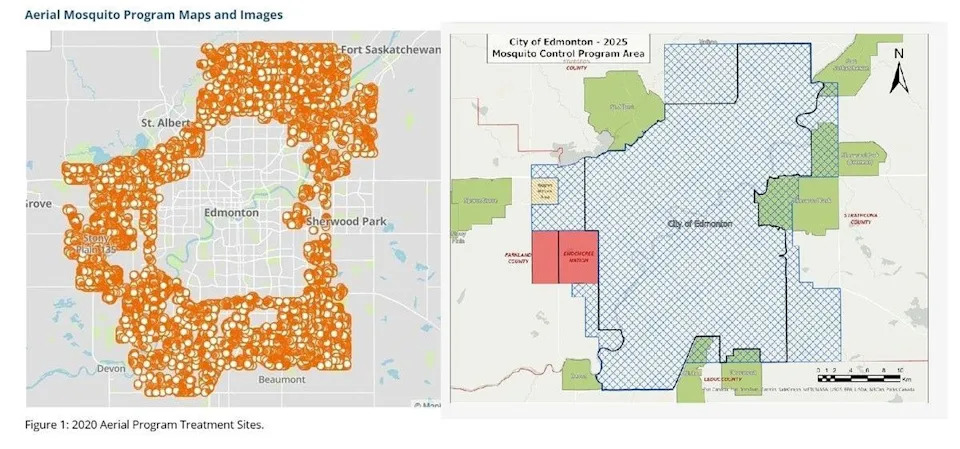
A comparison of where the city used to do aerial spraying for mosquitoes (left) to what is says is its current zone of pest control (right.) Astute readers may notice the two areas are pretty much the same — that’s because the city still monitors the areas it used to spray from the air.
What are the risks of mosquito bites?
West Nile virus has been detected in Alberta — people over the age of 50 are at the biggest risk of complications, though statistically 80 per cent of people infected with it don’t develop symptoms.
What can you do to discourage the mosquito menace?
Carrying a portable fan is a solid defence as they can’t bite you if they can’t land. Clearing eavestroughs and making sure any containers on your property are free of water can reduce their breeding pools, but officials note there’s standing water everywhere, so bites are inevitable.
But don’t worry — winter will be back soon enough.
“It’s only a short period of time,” said Ward Sspomitapi Coun. Jo-Anne Wright. “There’s sprays and other ways you can easily defend yourself.
“I go for a walk with my husband and they all seem to get him.”
Related
Bookmark our website and support our journalism: Don’t miss the news you need to know — add EdmontonJournal.com and EdmontonSun.com to your bookmarks and sign up for our newsletters here.
You can also support our journalism by becoming a digital subscriber. Subscribers gain unlimited access to The Edmonton Journal, Edmonton Sun, National Post and 13 other Canadian news sites. Support us by subscribing today: The Edmonton Journal | The Edmonton Sun.