
A week has passed since the 2026 NHL Draft, giving us time to move beyond the immediate reactions and begin evaluating the broader themes that emerged. The first round generated most of the headlines, but history has repeatedly shown that some of the most important selections occur on Day Two. Every year NHL teams uncover value, identify hidden gems, and reveal aspects of their organizational philosophies through the players they select.
With the dust beginning to settle, here are my biggest takeaways from the 2026 NHL Draft.
Wiggo Sörensson, C/LW — Carolina Hurricanes (61st overall)
Sörensson was one of the biggest mysteries of the 2026 draft. Most of his season was spent in Sweden’s fourth division, making him one of the hardest players in the class to evaluate. However, there was an important reason for that decision. As a type one diabetic, Sörensson wanted to remain close to home while he learned to manage his condition independently, prioritizing his health and development over playing in a more competitive league. Every time he was tested against stronger competition, whether internationally or at the under 18 level, he looked like he belonged.
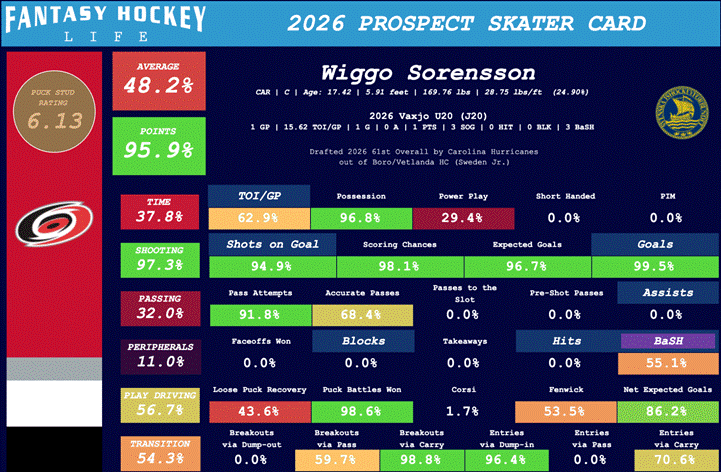
The Hurricanes saw past the level of competition and instead focused on the player. Sörensson combines speed, offensive creativity, hockey sense, and a relentless compete level, all traits Carolina has consistently valued. His Fantasy Hockey Life skater card perfectly illustrates that competitiveness. Despite standing just 5-11, he won 99% of his tracked puck battles, an astonishing number that speaks to his tenacity, positioning, and willingness to compete in difficult areas of the ice. He’s also one of the youngest players in the draft class, not turning 18 until the middle of April, giving him additional developmental runway compared to many of his peers. If he continues progressing now that he can focus on hockey without the same off-ice concerns, Carolina may have landed one of the steals of the second round.
Tomas Chrenko, RW — New York Rangers (81st overall)
Few players selected after the second round possess Chrenko’s offensive ceiling. He entered the season with legitimate first-round buzz, and while an inconsistent draft year cooled some enthusiasm, the underlying talent never disappeared. Chrenko combines elite vision, deception, and puck skill with the confidence to attack defenders one-on-one, making him one of the most creative playmakers in the class. He also proved he could produce against quality competition, holding his own in the Slovak men’s league while starring for Slovakia at the Under 20 World Junior Championship.
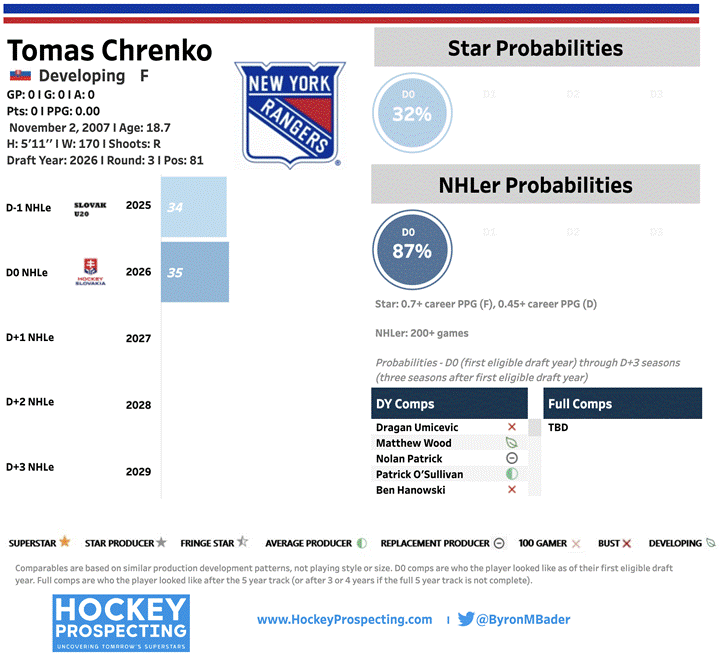
Perhaps most encouraging for dynasty managers, Hockey Prospecting views Chrenko as one of the highest-upside players selected after the second round, giving him 32% star potential if everything clicks. There are still questions about consistency and whether he can put all the pieces together, but betting on elite offensive instincts at 81st overall is exactly the type of swing that can pay enormous dividends a few years down the road.
Axel Elofsson, D — Colorado Avalanche (128th overall)
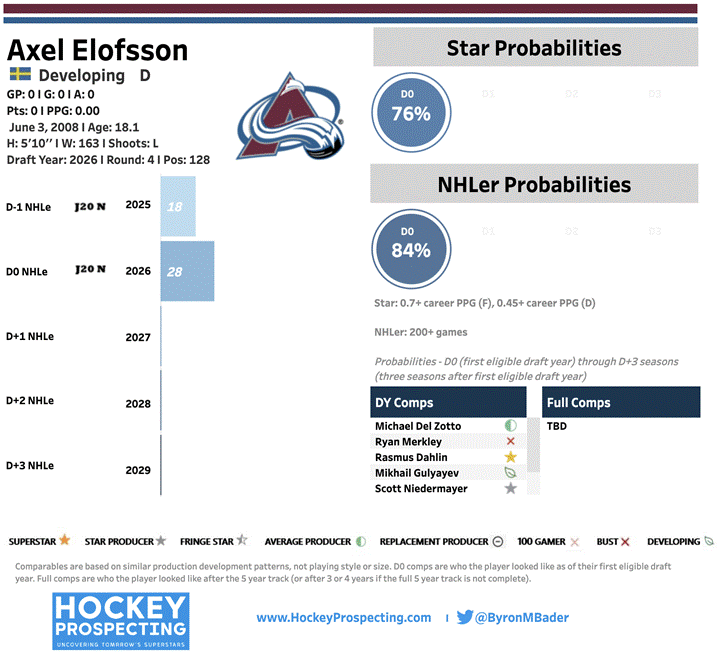
Few Day Two selections intrigued me more than Elofsson. Despite standing just 5-10, the smooth-skating Swedish defenseman boasts one of the highest star probabilities in the Hockey Prospecting model at an astonishing 76%, an indication that his underlying profile may be far stronger than his draft position suggests. His combination of mobility, hockey sense, puck-moving ability, and mature defensive positioning allows him to consistently drive play despite lacking prototypical NHL size.
It’s easy to see why some teams passed on him, but Colorado has built a reputation for identifying intelligent, mobile defensemen who fit their up-tempo style. If Elofsson continues to develop physically without sacrificing the skating and processing that make him special, the Avalanche may look back at the 128th pick as one of the biggest steals of the entire draft.
Carolina Hurricanes
Few teams entered the draft with a clearer strategy than the Carolina Hurricanes. After trading back three separate times, Carolina turned what could have been just three selections into six, repeatedly betting that the depth of this draft would reward quantity without sacrificing quality.
The Hurricanes still walked away with one of my favorite values in Wiggo Sörensson, whose combination of speed, skill, and compete level epitomizes the type of player Carolina has targeted for years. They also selected William Håkansson, an intelligent, mobile defenseman who fits seamlessly into their preference for defenders who can skate and move the puck rather than simply defend.
The rest of the class reinforced that same philosophy. Zach Lansard and Mikey Berchild are both high-motor forwards who play with pace and intelligence, while the selections of Ryder Fetterolf and Zachary Jovanovski demonstrated Carolina’s willingness to use later-round picks on long-term goaltending upside.
What stood out most wasn’t necessarily the individual players, but the process. Carolina trusted its scouting staff enough to trade down multiple times, accumulating additional assets while still landing players who fit their organizational identity. They consistently prioritized hockey sense, skating, competitiveness, and developmental upside over flash.
Xavier Villeneuve — Chicago Blackhawks
Villeneuve couldn’t have asked for a much better organizational fit. Chicago has a clear long-term need for an offensive quarterback behind their young core. Villeneuve’s greatest asset is his ability to drive offense from the blue line, particularly on the power play, and the Blackhawks should give him every opportunity to maximize those strengths rather than asking him to become something he isn’t.
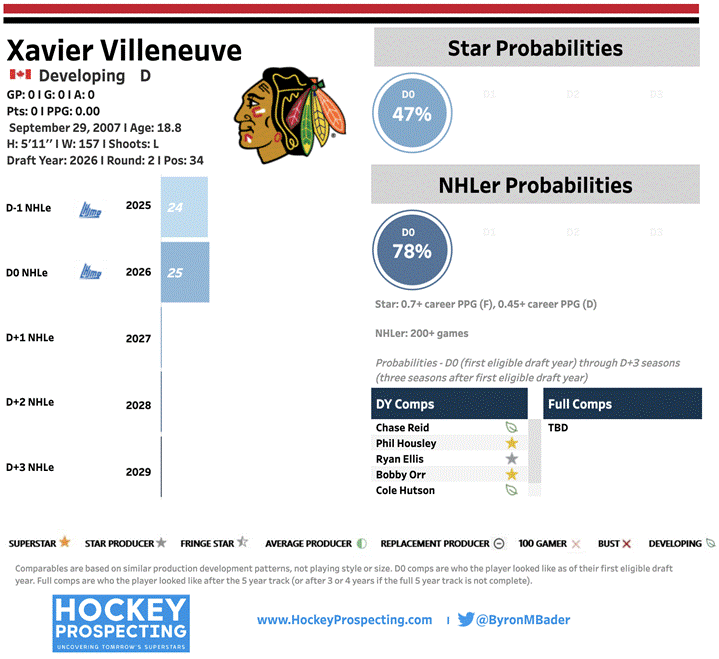
Perhaps most encouraging for dynasty managers, Villeneuve carries one of the highest star probabilities of any defenseman in the draft according to the Hockey Prospecting model at 47%, reinforcing the upside many scouts see in his offensive game. Chicago also has enough defensive depth ahead of him that there will be no pressure to rush his development. Instead, the Blackhawks can afford to let him spend the time necessary rounding out his 200-foot game before entrusting him with a significant NHL role. From a fantasy perspective, that’s an ideal scenario. If Villeneuve reaches his potential as a first-unit power-play quarterback, he has all the tools to become one of the highest-scoring defensemen from the 2026 draft class.
Niklas Aaram-Olsen — Vancouver Canucks
The Canucks are still early in their retool and need impact talent throughout the organization, giving Aaram-Olsen a much clearer path to a top-six opportunity than he would have found with many other franchises. His blend of size, skating, and finishing ability fills an organizational need and aligns well with the direction Vancouver is headed.
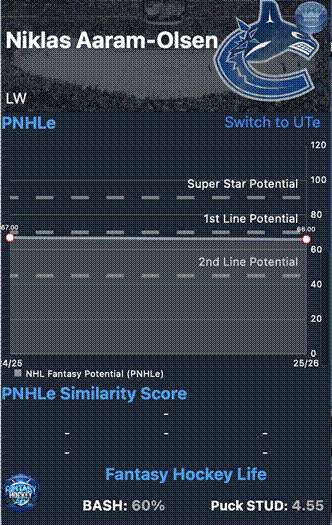
From a fantasy perspective, there is plenty of room for optimism. Aaram-Olsen has a pNHLe of 66, suggesting there is considerable offensive upside remaining despite being selected 41st overall. He won’t need to be rushed, but the combination of his projection and Vancouver’s long-term need for offensive contributors makes this one of the more intriguing fantasy fits from the entire draft.
Tobias Trejbal — Calgary Flames
Goalies are impossible to predict, but situation still matters. Calgary has done an excellent job rebuilding its prospect pipeline, and Trejbal immediately becomes one of the organization’s premier goaltending prospects. Standing 6-4 with outstanding athleticism and excellent lateral movement, he possesses the physical tools teams covet in a modern NHL starter. Better yet, he lands behind Dustin Wolf, allowing Trejbal to develop at his own pace without being rushed.
Interestingly, Trejbal is almost the stylistic opposite of Wolf. While Wolf has thrived despite his smaller stature through elite positioning, anticipation, and efficiency, Trejbal relies on his size, length, and athleticism to erase mistakes and make spectacular saves. That contrast gives Calgary two very different goaltending archetypes in its pipeline. For fantasy managers, the combination of long-term opportunity, a patient development path, and legitimate starter upside makes Trejbal my favorite goalie landing spot from the 2026 draft.
Xavier Villeneuve — Chicago Blackhawks
No player’s fantasy stock received a bigger boost than Villeneuve’s. While slipping into the second round wasn’t ideal from a draft capital perspective, landing in Chicago more than made up for it. The transition play and offensive creativity of Villeneuve fits that blueprint perfectly. He immediately becomes one of the organization’s premier offensive defensive prospects with a legitimate chance to quarterback the top power play down the road. Opportunity is everything for fantasy defensemen, and few organizations offer a clearer path to high-end offensive deployment than Chicago.
Ryan Roobroeck — Chicago Blackhawks
Roobroeck entered the season as a potential top-10 pick before an inconsistent year caused his stock to tumble. Chicago recognized the value and doubled down on upside, selecting him immediately after Villeneuve early in the second round. The Blackhawks have the patience to let Roobroeck develop while their NHL roster continues to mature, giving him time to refine the details of his game without sacrificing the offensive instincts that made him such a highly regarded prospect in the first place. The draft capital alone restored much of the confidence dynasty managers had lost, and the organizational fit only strengthened his outlook.
Joe Iginla — Calgary Flames
Sometimes the biggest boost comes from organizational commitment. Iginla landing in Calgary immediately creates one of the NHL’s best development stories. The Flames know exactly what kind of player they’re getting, and they’ll undoubtedly be invested in giving the son of franchise icon Jarome Iginla every opportunity to succeed. More importantly, Joe earned this selection on his own merits. He brings a well-rounded game, plays with pace, and possesses enough offensive ability to project as an NHL contributor. Adding to the intrigue, Joe is one of the youngest players in the draft with an August birthdate, giving him nearly a full year of additional developmental runway compared to many of his peers. That extra time for physical and offensive development, combined with an organization that understands both the player and the family, only increases the likelihood that he reaches his ceiling.
Mathis Preston — Anaheim Ducks
Mathis Preston remains an exciting offensive prospect, but Anaheim wasn’t the landing spot I was hoping for. The Ducks already possess an impressive collection of young skilled forwards, and I prefer Nikita Klepov to Preston, and Marcus Nordmark provides competition as well. That creates a much more crowded path to premium offensive deployment than Preston would have faced elsewhere. The talent hasn’t changed. The opportunity has. In dynasty leagues, those two things are often just as important as one another.
Tomas Chrenko — New York Rangers
I’ve been a fan of Chrenko throughout this draft cycle, so this isn’t an indictment of the player. It’s more a reflection of the organization. The Rangers simply haven’t inspired much confidence when it comes to developing and maximizing their forward prospects over the past several years. Chrenko has the vision and offensive creativity to outperform his draft position, but he’ll now have to overcome an organizational track record that leaves me less optimistic than I was before the draft.
Ben MacBeath — New York Rangers
Much like Chrenko, MacBeath’s stock falls because of the sweater he put on rather than any change in his projection. I still believe in the player and think he has legitimate NHL upside. However, landing in the same organization forces me to temper expectations. Until the Rangers demonstrate a more consistent ability to develop young offensive talent and create meaningful opportunities for their prospects, it’s difficult to give their draft picks the same dynasty bump I would if they had landed elsewhere.
Joe Iginla — Calgary Flames
Every draft has one pick that isn’t just about what the player is today, but what he might become several years from now. For me, that player is Joe Iginla.
The youngest son of Flames legend Jarome Iginla, Joe had an uneven draft season after splitting time between the Vancouver Giants and Edmonton Oil Kings. He never consistently put everything together, which made him one of the more difficult evaluations in the class. Yet Calgary clearly believes there is much more beneath the surface.
The Flames are betting on several things. Bloodlines are certainly part of the equation. After watching Utah select Tij Iginla sixth overall in 2024, Calgary finally has an opportunity to bring another member of the family into the organization. But this isn’t simply a sentimental pick. Joe is one of the youngest players in the draft, born in mid-August, giving him nearly a full year of additional physical and hockey development compared to many of his peers. That extra runway matters.
The risk is obvious. Joe hasn’t yet demonstrated the consistent offensive production or overall impact that would normally warrant significant draft capital. There is a real possibility that he tops out as organizational depth rather than an NHL regular.
The reward, however, is equally compelling. If the late birthday, continued physical maturation, and elite hockey pedigree all converge, Calgary could look back on this as one of the steals of the draft. No one is expecting another Jarome Iginla, but if Joe develops into even something approaching the player his father was, or follows a developmental curve similar to his brother Tij, the Flames will have made one of the most rewarding upside bets of the 2026 NHL Draft.
One week later, my biggest takeaway isn’t which teams “won” the draft, but how clearly organizations revealed who they are. Some prioritized skill and upside, others leaned into skating, competitiveness, or hockey sense, while a select few trusted their development systems enough to trade back and accumulate talent. For dynasty managers, the draft is only the beginning. Landing spot, organizational philosophy, and player development will shape these prospects just as much as draft position over the coming years. Some of the names highlighted here will undoubtedly exceed expectations, while others will remind us how unpredictable projecting 18-year-olds can be. That’s what makes following their journey so rewarding, and why the real evaluation starts now.
Thanks for reading! See you next week. For more fantasy hockey analysis, or if there’s a prospect, topic, or theme you’d like me to cover, follow and message me on X: https://x.com/VictorNuno12