
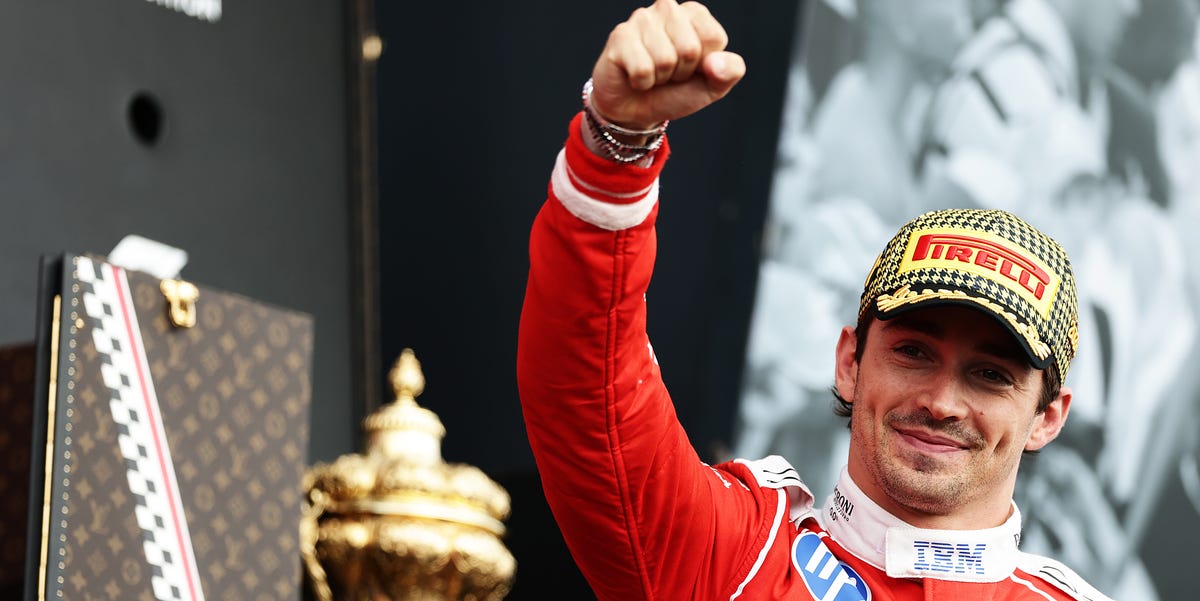
Charles Leclerc claimed his first Formula 1 victory since 2024 at the British Grand Prix as title leader Kimi Antonelli suffered late drama before an anticlimactic finish. Autoweek rounds up the key points from Silverstone.
Leclerc back on top
Charles Leclerc enjoyed a strong start to 2026, but since his podium in Japan, matters went awry, with back-to-back retirements in Monaco and Spain followed by an anonymous display in Austria. Finally, at Silverstone, matters clicked, and a front-row start indicated that Leclerc was back in the groove.
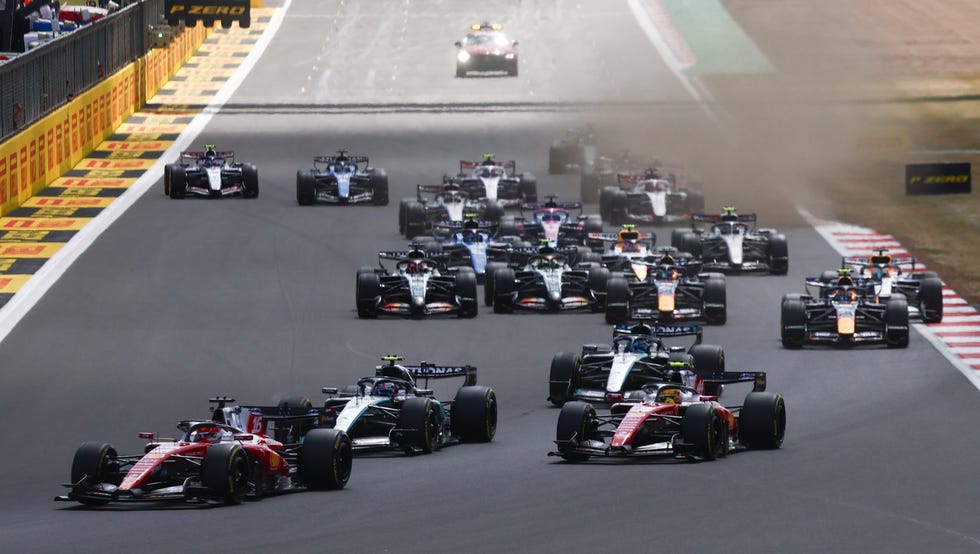
Leclerc overhauled Kimi Antonelli off the line and displayed strong pace throughout, though the offset Mercedes driver was reeling in Leclerc during the second half of the race prior to his issues. The removal of Antonelli from contention eased the pressure from behind on Leclerc, and he duly wrapped up his first victory of the season, hoisting aloft Silverstone’s iconic gold trophy for the first time in his career. It was also the 250th grand prix victory for Ferrari.
 NurPhoto//Getty Images
Charles Leclerc overtoook Kimi Antonelli on the start.
“It means a lot because when things get tough and that’s literally the situation I’ve been in the last few races obviously there’s a lot of negativity around me in general with narratives being created and it’s never a nice environment to work in,” Leclerc said.
“But to keep our heads down and work very hard to get the result today I’m super proud of the whole team that has been pushing me and helping me to find a feeling with the car. It’s only a first step, I’ve got to prove it on multiple track layouts, but on such a track where confidence is key I wouldn’t have been able to do that without the feeling.”
“You go from hero to zero, from zero to hero, in like two days in this sport.”
The win was also Leclerc’s first since the US Grand Prix in 2024, a run of 36 grands prix, and he elaborated on the recent struggles.
“You go from hero to zero, from zero to hero, in like two days in this sport,” Leclerc said. “It can influence the way you see the situation – my job was cancel that noise, not listen to anything, I know I didn’t become a bad driver from one day to the other, it was just a matter of finding that feeing with the car.
“These cars are specific and different to the way we drive since we started racing, it takes a bit more time to get used to it, I was very strong for the first part of the season, then I lost a bit of feeling with the car, we changed a few things with the car, it took more time to get back to the level I wanted, and on top of that I’ve had some issues on Sundays.
“Altogether it wasn’t a nice situation to be in but I’m happy to get out of this situation—however, it is only one race so we mustn’t get carried away, the battle with this car has been a lot recently, I can’t take it for granted that now it’s behind me so now I’ll keep working to get that feeling more often ahead.”
Antonelli’s curb strike proves costly
Kimi Antonelli was on-form at Silverstone, taking pole position, and after a poor getaway swiftly overhauled Lewis Hamilton for second and was hunting after Leclerc—on fresher tires and in a quicker car. Antonelli had slashed the gap from seven to three seconds in rapid-fire time when the youngster ran heavily over the exit curb at Copse, causing a front-left wheel shield failure.
It slowed Antonelli, but Mercedes initially did not see the problem and, after changing his front wing in the pits, had to make another stop to properly remove the debris. The lost time relegated Antonelli to eighth place, but several wide moments while he dealt with the problem meant he triggered multiple track limits transgressions, copping a time penalty that dropped him out of the points. Having looked set to build his title lead even further, Antonelli’s advantage up front has been slashed to 25 points.
“I lost that much downforce the car wouldn’t turn any more, some corners the wheel was in the air,” he said. “The wheel shield broke, we don’t know if something else broke, by the loss it feels like it was more than the wheel shield.”
Rather than be downhearted by the outcome, Antonelli was buoyed by the level of performance.
“We lost points,” Antonelli accepted, “but this weekend we showed the speed, and we showed what the potential can be. It makes the fire grow even more, to go out there at Spa and try and do even better.”
Lucky Russell salvages second
After the redemptive triumph in Austria seven days ago came a comparatively chastening weekend for George Russell—yet he departed his home grand prix with a trophy and a clearer sight of Antonelli in the championship.
David Davies – PA Images//Getty Images
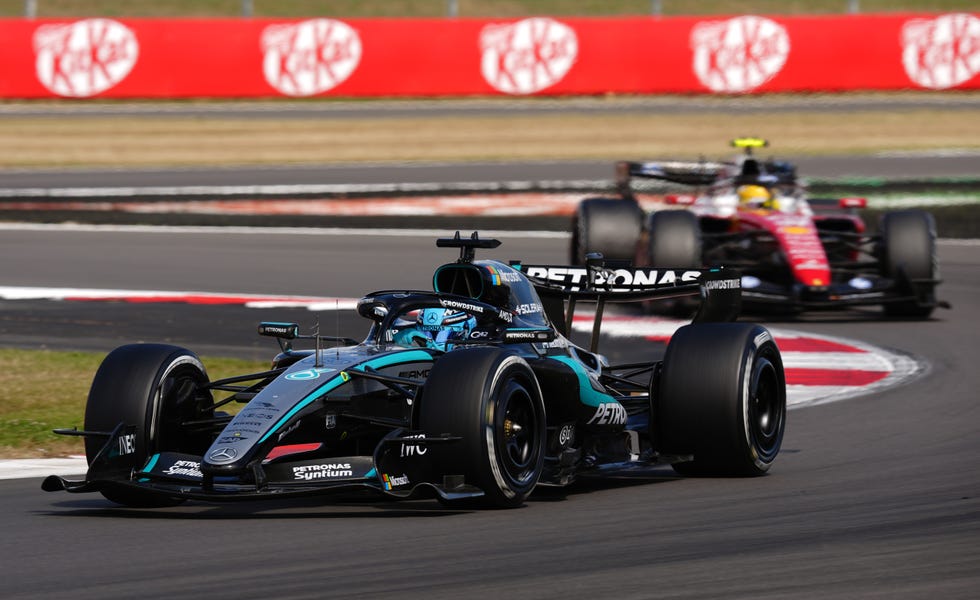
Russell was comprehensively the slower Mercedes driver through the weekend, hinting that he was suffering from a minor but influential top speed deficiency believed to be caused by a mechanical issue rather than any power unit setback. He was only in the hunt for the podium places before a slow puncture—seemingly more bad luck—left him fifth. Yet Kimi Antonelli’s problems, Max Verstappen’s late accident, and then the decision not to pit under the late Safety Car—allowing him to jump Lewis Hamilton, who did—elevated Russell to a surprise second place.
“The feeling was good but the lap times were slow, there were things outside my control that contributed towards that, and things in my control,” Russell said. “I’m still struggling to understand this car. I’m grateful to stand on the podium but I leave less satisfied than probably Canada where I broke down from the lead. If I want to fight for the championship, the performances need to be better, I need to be better, I need to be working better with my team, we need to be maximizing everything we’ve got. It needs to be improved.”
Russell saw positives from the overall points situation but was dismissive of his hopes without matters improving.
“On my own side I left Monaco three races ago 68 behind, I’m 25 behind, so I’ll take it but it won’t continue like that forever unless the performance gets better,” Russell said.
‘**** this car, **** this’
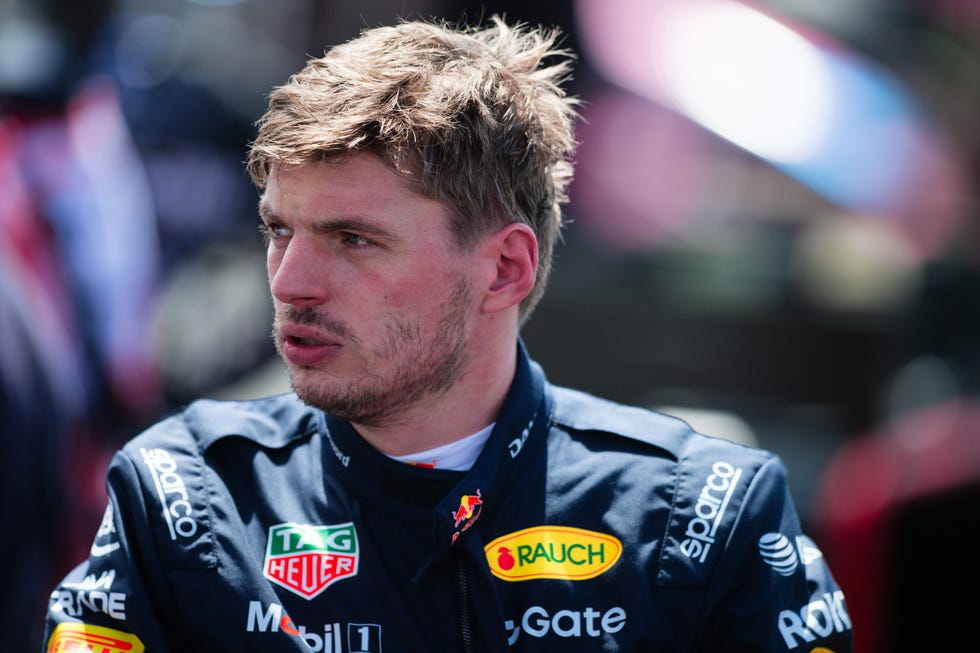
After a strong result in Austria came a frustrating reality check for Max Verstappen and Red Bull. Verstappen quipped that his RB22 had “terrible balance [and] no top speed compared to the other car in the garage,” and he struggled for pace throughout the weekend—so much so that Verstappen wanted to take the car out of parc ferme and start from the pit lane.
Rudy Carezzevoli//Getty Images
Verstappen found himself in third spot, partly elevated by troubles elsewhere, when another rear wing issue spat him into the gravel at Stowe. It prompted an understandably fiery radio message when Verstappen, who was already annoyed through the weekend at how underwhelming Silverstone felt in the current-spec cars, commented “f*** this car, f*** this.”
“It’s like [qualifying in] Austria, but a different fault, let’s say it like that, but the same outcome,” Verstappen said. “While turning into the corner, the rear wing is not fully attaching and you lose a lot of downforce with that, spin off the track.”
Verstappen added that the situation is “super dangerous, because you can really hurt yourself, two times, I was lucky in Austria, I was lucky here, that’s why you get really fed up with it.”
A frustrated Verstappen added that he “needs a few days to reset and try again” but played down suggestions of tension within Red Bull, insisting “everyone is trying their best, it’s painful for everyone this is happening.”
FIA software error leads to perplexing finish
There was an anticlimactic and initially perplexing finish to the British Grand Prix due to the eventual absence of a restart. Max Verstappen’s crash on lap 47 necessitated the deployment of the Safety Car, and several minutes were naturally spent recovering the stricken Red Bull from the gravel trap.
Lapped cars were given permission to unlap themselves, per the rules, and then on lap 51 the message was issued that the Safety Car would be in at the end of the lap—setting up a tantalizing one-lap shootout to the finish. But eight seconds later Race Control re-deployed the Safety Car, and it stayed out, and the last lap was duly completed under neutralized conditions. It was a dispiriting ending to the race, and caused initial confusion, before the FIA clarified the situation.
“The Safety Car period regulation, Article B5.13.5, states that one lap must be completed following the unlapping procedure,” read a statement. “This process was followed by Race Operations. The “Safety Car In This Lap” message was displayed erroneously due to a software error.”
Therefore the rules—unlike at a certain grand prix a few years ago—were this time followed. Perhaps Formula 1 needs a rethink regarding the procedure surrounding lapped cars in order to avoid such a flat ending to a grand prix.

U.K.-based Phillip Horton started covering Grands Prix while still at university and swiftly deemed that writing about Formula 1 and the behind-the-scenes machinations was much more engaging than reading centuries-old novels. Degree gained, he went on to cover the sport full-time from 2014 and is as intrigued and excited by the destinations Formula 1 visits during its lengthy annual world tour as the racing itself. Phillip joined Autoweek in 2021 and while he has just about learned to spell in American English he has yet to find anywhere in America that makes a proper cup of tea.