

Listen to this article
Estimated 2 minutes
The audio version of this article is generated by AI-based technology. Mispronunciations can occur. We are working with our partners to continually review and improve the results.
Residents of the Nass Valley in northwestern B.C. no longer have to travel to Terrace to drop off their recycling.
Instead, they are able to set plastics, tin cans, cardboard and other household recyclables out in blue bins and colour coded bags every week for curbside pick up.
The four Nisg̱a’a village governments — Gitlaxt’aamiks (New Aiyansh), Lax̱g̱alts’ap, Gitwinksihlkw, and Ging̱olx — have been working on the initiative for approximately two years. It was done in partnership with the Indigenous Zero Waste Technical Advisory Group and Recycle B.C.
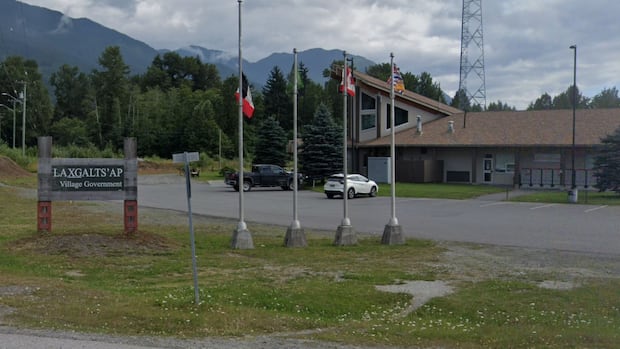
“We are a remote northern community. We don’t have access to amenities such as recycling,” said Bobby Clarke, chief administrative officer with Lax̱g̱alts’ap.
“So for us, to make this service available to residents for curbside pickup is huge. It allows us to make it more accessible, and for our citizens to participate.”
Closest recycling depot previously in Terrace
The program rolled out in Lax̱g̱alts’ap on June 30, and will begin in the other three communities throughout the first week of July.
Prior to this there was no formal recycling program in the Nass Valley, so residents from the four communities would often roll it into their trips to Terrace, said Clarke.
“It’s quite a trek, it’s about an hour and a half, or 150 kilometres. We have to make that trip weekly, bi-weekly, to get things like groceries,” Clarke explained.
In the weeks leading up to first pickup, the village government worked on public education to prepare residents, including meetings and training sessions with elders and children in elementary schools.
At least 94 households in Lax̱g̱alts’ap participated in the first round of recycling pick up, said Clarke, working out to about 47 per cent of households.
The crew collected seven “megabags” of recycling material, said Clarke, adding each bag is about one cubic metre.
As the program continues, Clarke expects the amount of people taking part will only go up.
“It’s incredibly exciting … just for the opportunity to recycle material as opposed to it going into the landfill.”