
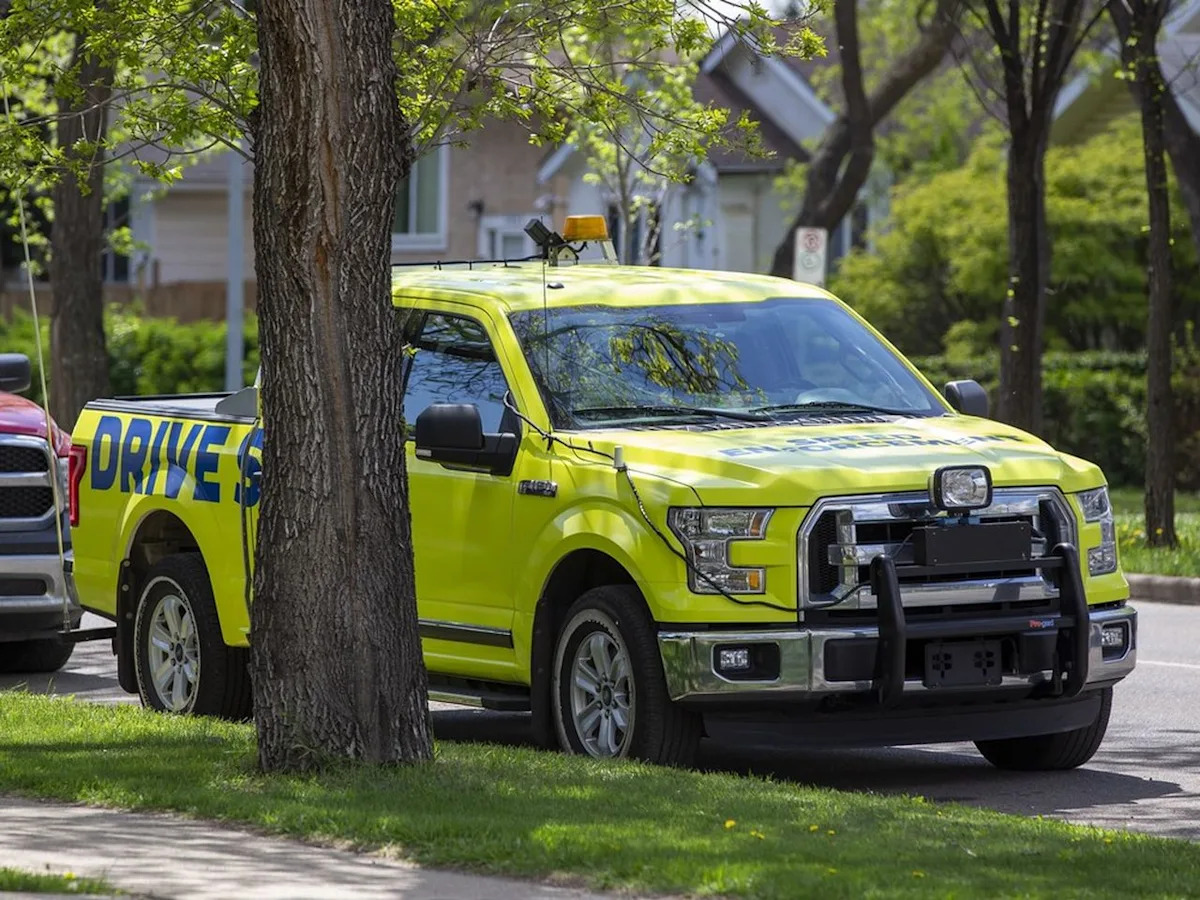
Late spring snowstorms. Torrential rain. Floods. Thunder and lightning. Hail. Wildfire smoke. Construction. An early Oilers playoff exit. Endless secession referendum drama. The worsening crisis in hospital emergency rooms.
It’s not exactly the 10 plagues of Egypt as described in the Book of Exodus, but it does feel a bit like Edmonton is being punished of late.
Mother Nature’s wrath is one thing, but at least a few of the items on that list are things we are doing to ourselves. And, in that vein, I need to add one more calamity that hasn’t received enough attention, even though it is costing us dearly.
I’m talking about the fact that speed and carnage are rising on Edmonton’s roads, which is quite an outcome in a city whose overzealous construction activity has made it seemingly impossible to get anywhere quickly these days.
A recent city report laid out the numbers:
• Over the last year or so, the prevalence of vehicles travelling more than 20 km/h over the limit in Edmonton has increased by 134 per cent.
• In 2025, there was a 38 per cent increase in drivers who received more than one red light ticket, as compared with 2024.
• Though overall collisions are down — in part due to city safety improvements in neighbourhoods — the number of crashes resulting in death or serious injury is up. There were a total of 32 traffic fatalities last year, the highest in a decade. The vast majority occurred where you expect them to occur, on high volume, high-speed arterial roads and at major intersections.
• Pedestrians, cyclists and motorcyclists are more often the victims of these collisions.
And this grim data matches what people are obviously seeing with their own eyes. As traffic safety inquiries to the city’s 311 line have climbed more than 150 per cent in recent years, a survey of local residents on motorist culture similarly confirmed growing concern that Edmonton’s roads have become more dangerous since the pandemic. Alberta’s sky-high insurance costs are another indicator.
Essentially, instead of continuing to make progress toward Edmonton’s Vision Zero goal, which calls for no deaths or serious injuries by 2032, we are now drifting in reverse.
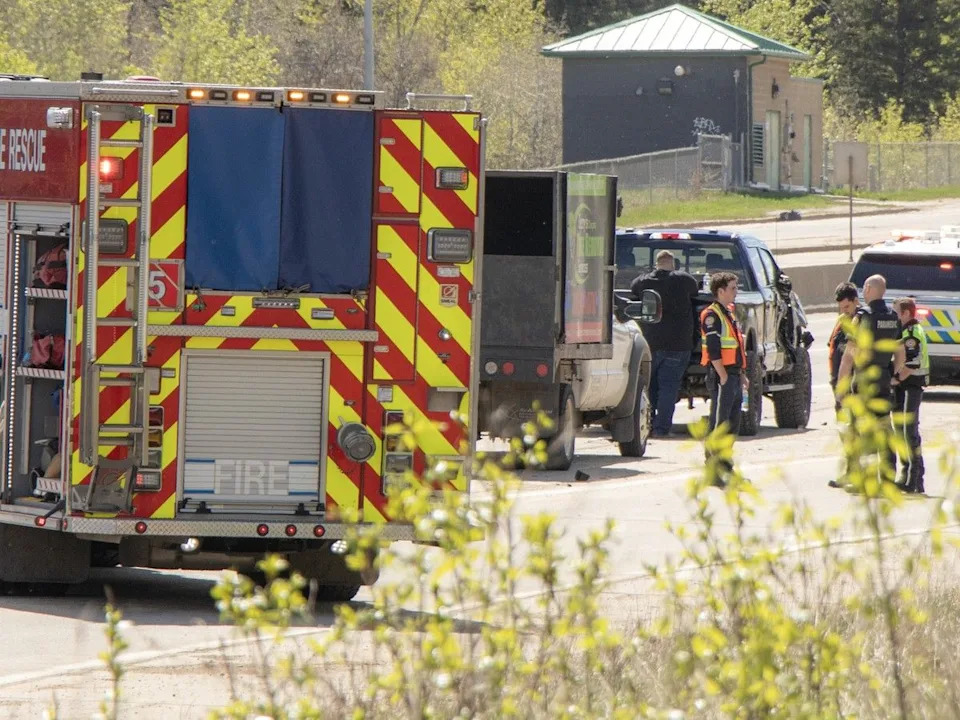
Edmonton police investigate a crash in which a person was killed by a truck on Wayne Gretzky Drive just north of the 106 Avenue off-ramp on May 21, 2026.
What explains the backsliding?
If this was a whodunnit question debated in court, a crafty defence lawyer could point fingers in a variety of directions, from frustration over more cars and construction on the road to increased technology distractions to inadequate snow clearing to a lack of police officers on traffic duty.
And indeed, the aforementioned survey on traffic safety culture confirms that at least some of these factors are in motorists’ minds, though enmeshed with something uglier.
“Focus group participants expressed concern about a growing lack of tolerance in everyday interactions, linking this shift to economic pressures, elevated stress levels, and lingering effects of the pandemic. These challenges appear to influence driver behaviour, contributing to a more aggressive and less patient driving culture,” reads the survey report, conducted by Narrative Research on behalf of the city.
In other words, the breakdown of our social contract with each other — a trend I’ve noted in other arenas — is showing up on the asphalt.
And yet if we prosecute the case properly, there is a far more obvious culprit yet to be mentioned: the disappearance of photo radar from Edmonton’s streets.
We all know that laws, as far as they go, are only as effective as society’s willingness to enforce them, which seems especially important at a time of heightened inclination toward rule-breaking behaviour.
So when the Alberta government decided to severely crack down on the primary method of enforcement against speeding, a rather predictable cause and effect followed.
Common sense tells us this, but so do researchers from the University of Alberta, who worked with the city to better understand why vehicle speeds suddenly went up in Edmonton after a sustained period of coming down.
“Their predictive analysis indicates these increases would not have occurred if automated enforcement had remained in place. In fact, the analysis suggests speeds would likely have continued the downward trend observed over the past several years with consistent enforcement,” the city’s Safe Mobility director, Jessica Lamarre, told a council committee meeting last month.
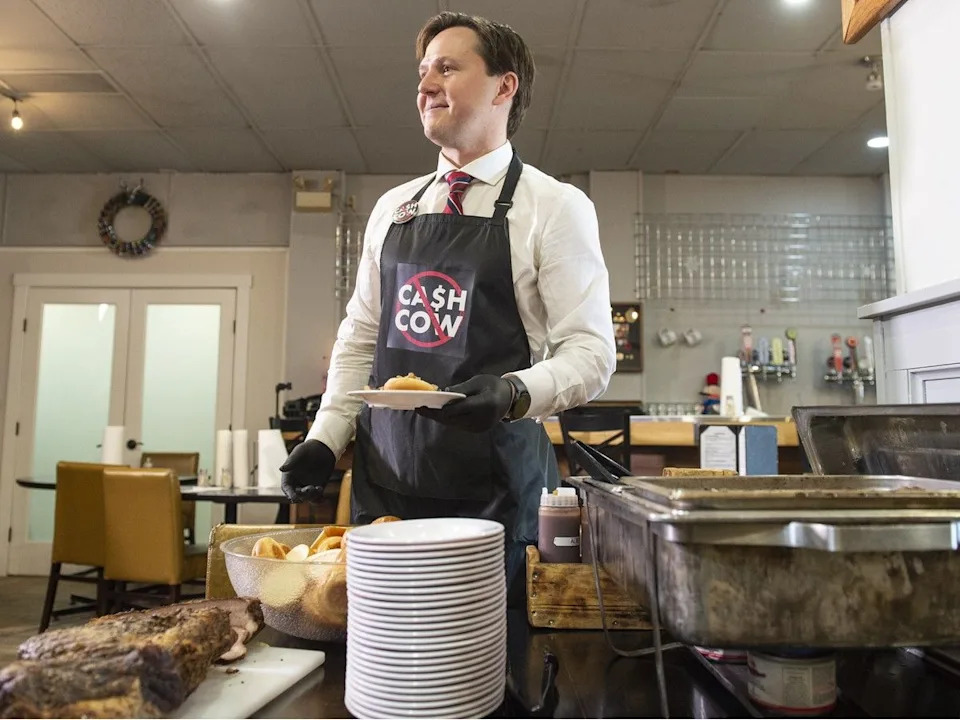
Transportation Minister Devin Dreeshen poses in an anti-cash cow apron while announcing restrictions to photo radar in December 2024.
The politics of safety
The sacrificing of safety — or the selective framing of it — to score cheap political wins is hardly a new phenomenon, but the current UCP government has been a particularly willing enthusiast.
In restricting photo radar over the objections of police, municipal officials and others, the province’s rationale has almost entirely rested on the tired “cash cow” or “fishing hole” narrative that cities too often exploit the technology as an extra tax on drivers.
It’s true that Edmonton was probably guilty of overusing automated enforcement at one point, but that largely hasn’t been the case for a decade or more. Safer streets has been the prime consideration, and any fine revenue Edmonton generated from photo radar — after the province took a big chunk for itself — was put back into specific safety initiatives including police, crosswalks and intersection improvements.
Photo radar’s benefits were apparent while it was still being used, and are even more obvious now with it gone.
And unfortunately there doesn’t seem to be a great alternative for what has been lost.
Many would like to see police get more active in catching speeders — especially since those tickets come with demerits on a driver’s record — but there’s only so much EPS can stretch out of an already busy workforce.
Similarly, the province is allowing municipalities to submit applications to introduce new photo radar locations, but the process appears so onerous and time-consuming that it is of minimal help. The city says it has applications pending for a mere eight intersections, but has been told those won’t be processed until at least September. That’s not exactly an exercise in urgency.
The sane solution here is for the province to acknowledge the evidence, admit it overstepped and again allow municipalities the authority (and accountability) for managing road safety as they and their constituents see fit.
Alas, we know such a political retreat is near unfathomable for this government. As such, if the province won’t do what’s right, and in fact is actively preventing it, it means Edmonton drivers are going to have start making more conscientious choices on their own without facing real deterrents.
It’s either that, or we’re going to see a lot more flashing lights of calamity.
Now is as good a time as any to start. Enjoy your summer Edmonton, and please take care when behind the wheel.
Related
Bookmark our website and support our journalism: Don’t miss the news you need to know — add EdmontonJournal.com and EdmontonSun.com to your bookmarks and sign up for our newsletters here.
You can also support our journalism by becoming a digital subscriber. Subscribers gain unlimited access to The Edmonton Journal, Edmonton Sun, National Post and 13 other Canadian news sites. Support us by subscribing today: The Edmonton Journal | The Edmonton Sun.