
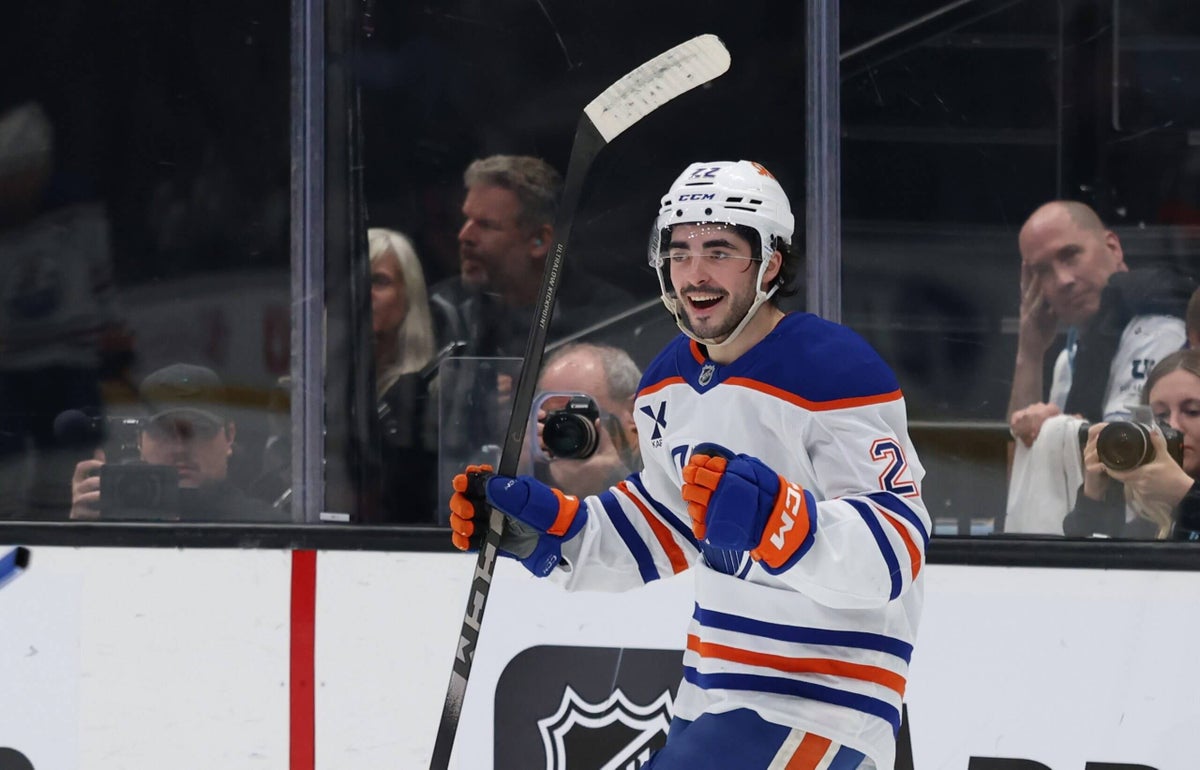
In the long history of the NHL, stretching well over 100 years, the league has experienced dozens of massive shifts in roster strategy and construction. From the forward pass increasing the importance of offensive difference-makers to goalie masks and other safety standards that meant longevity for the best players, the NHL is constantly adapting to change.
The latest change came in an off-ice maneuver by the Philadelphia Flyers. In signing Anaheim Ducks centre Leo Carlsson to a record-breaking offer sheet, Flyers management changed forever the nature of second contracts coming out of entry-level deals. Fans shouldn’t expect earth shattering offer sheets every summer (although San Jose Sharks franchise centre Macklin Celebrini would be eligible for one next season), but the impact of the Carlsson offer sheet will ripple down the canyons of NHL front offices forever.
For Edmonton Oilers fans, the heart of the current roster is veteran in nature. Only one roster player stands to see his cap hit increase because of it, and the increase for Matt Savoie won’t be anything close to what we’re seeing with Carlsson. It would however behoove Oilers general manager Stan Bowman to sign Savoie early; in fact there is time in the weeks before the 2026-27 season to get it done.
One year from now, Savoie will need a contract. If Savoie has a big year, that contract could be significant. Bowman can deliver cost certainty with an aggressive approach. Sign the man.
Savoie’s offensive progress
The Oilers have been notorious over recent seasons for slow-playing young players. It cost the organization dearly (Philip Broberg and Dylan Holloway lost to offer sheets) over recent seasons.
In Savoie’s case, the Oilers brought him along slowly over the first three months of the 2025-26 season. He played 133 minutes at five-on-five in October, scoring zero points. In fact, over the first three months of the season, Savoie played 480 five-on-five minutes on depth lines. He posted a mere 0.75 points per game. Coach Kris Knoblauch played him mostly on the fourth line with plenty of penalty killing.
After Jan. 1, Savoie moved up the depth chart, eventually landing on the top line with Connor McDavid. In 511 minutes after the new year, he delivered 2.23 points per 60 for the Oilers. Overall, his numbers look mid-pack, but when considering the last five years of Oilers rookie forwards getting the “slow-play” treatment, Savoie shines like a diamond.
PlayerYearPoints-60
2025-26
1.51
2021-22
1.29
2022-23
1.2
2025-26
1.06
2021-22
0.5
All numbers five-on-five, via Natural Stat Trick
Signing Savoie to an extension this summer is a good hedge against a breakout season. His second-half numbers are somewhat obscured by the first-half totals, where he was playing with depth linemates.
Oilers overpaid for years by deploying mid-level wingers on McDavid’s line. Coaches were guilty of rewarding role players with McDavid ice time, and general managers were guilty of signing those middle-six wingers to overpriced contracts.
From 2015 to 2021, names like Milan Lucic, Zack Kassian, Evander Kane and others played feature minutes and thrived. Ironically, the best in the group (Patrick Maroon) played his entire Oilers career on a $2 million AAV contract signed when he was a depth player for the Anaheim Ducks. The practice was inefficient and costly.
When Zach Hyman signed the best free-agent deal the Oilers ever landed in 2021, the overpayments for the McDavid line stopped. Ryan Nugent-Hopkins or Leon Draisaitl occupied one wing, and Hyman delivered consistent excellence from the other wing.
Savoie moved up the ladder in the second half of 2026-27, and could he headed for a massive payday next summer. Extrapolating his numbers from the second half over a complete season, Savoie might be able to deliver the kind of season NHL teams have to full price for, even in restricted free agency.
In the final 41 games of the regular season, Savoie scored 6-13-19 at five-on-five. Even though he averaged just one minute per game on the power play in the second half, Savoie scored three goals and added a short-handed goal, too. In the second half of the year, his boxcars were 10-13-23. If he lands at 20 goals and 50 points next season, the ask from his agent is going to reflect the spike in performance. Considering the increased cap number for 2027-28 and the Carlsson offer sheet, there should be some urgency to get Savoie signed long-term.
Savoie’s defensive prowess
Savoie played 64 minutes on the penalty kill last season. That is the highest total for an Oilers rookie winger since Iiro Pakarinen in 2015-16, and Pakarinen was 24 and had several seasons of pro experience in Finland under his belt. For a risk-averse coach like Knoblauch to trust Savoie in his rookie season is a tell. His expected GA-60 (8.48) was third-best among regular Oilers penalty-killing forwards.
Savoie’s move up the depth chart to the top line is another tell. Playing with McDavid means playing against elite competition, and Savoie proved capable of carrying his share of the load even in his first full season. According to Puck IQ, McDavid-Savoie played 105 minutes together at five-on-five. The duo’s Dangerous Fenwick (similar to expected goals) was 57 percent, with a goal share of 64 percent while facing elite competition.
Both of those numbers are better than McDavid’s totals against elites away from Savoie, meaning the rookie winger was more effective than Nugent-Hopkins in the role versus the league’s best. It’s a small sample, and new coach Mike Babcock might place Nugent-Hopkins back at left wing this fall, but that would be contraindicated based on results versus elites.
How much for the next deal?
The NHL is currently figuring out what this means for players coming out of entry-level deals. The Flyers’ offer sheet means a redistribution of cap dollars has arrived. Older players will have less of the pie, but it’s not certain how much a player like Savoie will be impacted.
Before the Carlsson offer sheet, online projections from fans had Savoie coming in at around $4 million times four seasons. After the offer sheet for the Anaheim centre, Mavrik Bourque ($5.5 million times six years, via PuckPedia) is a popular comparable. Others have Logan Stankoven’s deal ($6 million times eight years) as a more likely comparable.
The only math that is certain: Savoie would be less expensive on a long-term deal this summer than next season. If the young winger delivers a 50-point season in 2026-27 and plays his strong two-way game, the price point will rise.
Best for Bowman to get a deal done before September.