
As part of a strategy to build a stronger and more diversified Canadian economy less vulnerable to trade uncertainty, Ottawa is putting billions of dollars behind British Columbia’s role as the nation’s gateway to Pacific Rim markets. This includes C$4.4 billion ($3.1 billion) for a major copper-gold mine expansion in the Golden Triangle and the clean energy infrastructure needed to unlock Northwest B.C.’s mineral and export potential.
Canadian Prime Minister Mark Carney and B.C. Premier David Eby unveiled this Pacific gateway strategy during the July 2 signing of the Canada-British Columbia Cooperative Prosperity Agreement, a federal-provincial pact aimed at accelerating energy projects, trade corridors, and major infrastructure across the province.
“Today’s historic agreement creates the conditions to transform the B.C. and Canadian economies to become more resilient, sustainable, and independent,” Carney said. “Together, we’re turning British Columbia’s enormous economic potential into lasting shared prosperity.”
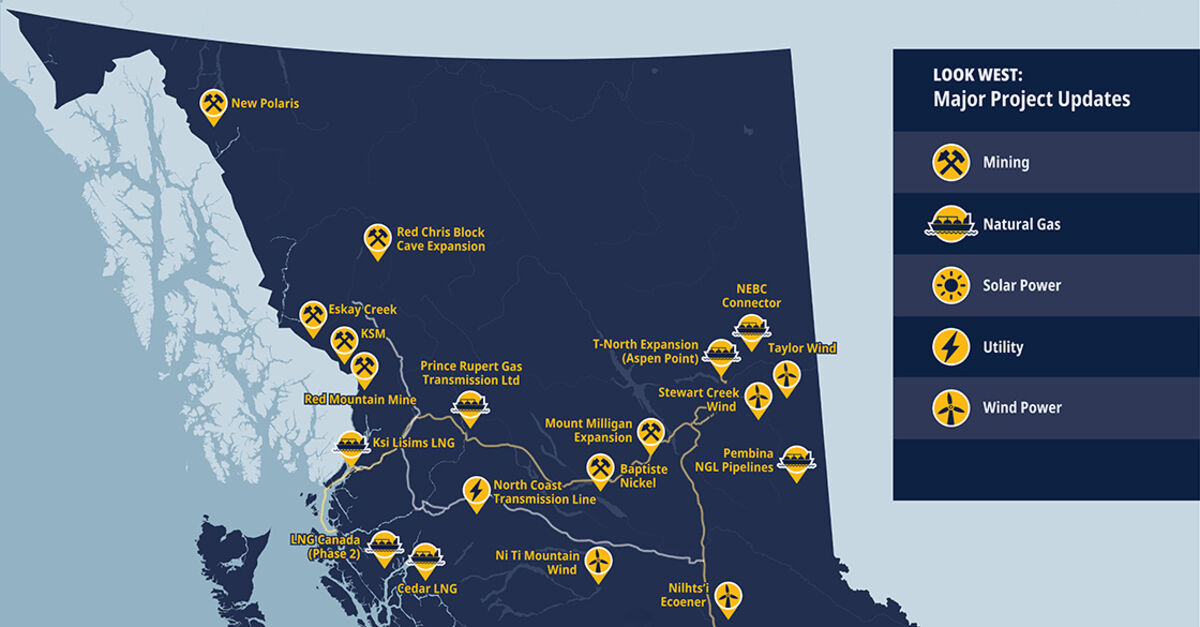
This transformation is centered largely on northwestern B.C., where Ottawa is tying together Red Chris, the North Coast Transmission Line, the Stewart and Prince Rupert ports, First Nations partnerships, and liquefied natural gas exports into a broader strategy to connect Canada’s resource wealth to fast-growing Asian markets.
The B.C. prosperity strategy has two overlapping objectives – to unlock the rich resource potential of the province’s northwestern region and upgrade the power, port, and export infrastructure needed to ship Canadian energy and minerals to Pacific markets.
“This agreement is about building B.C.’s future – not just for this year, but for generations to come,” Eby said.
Newmont Corp.
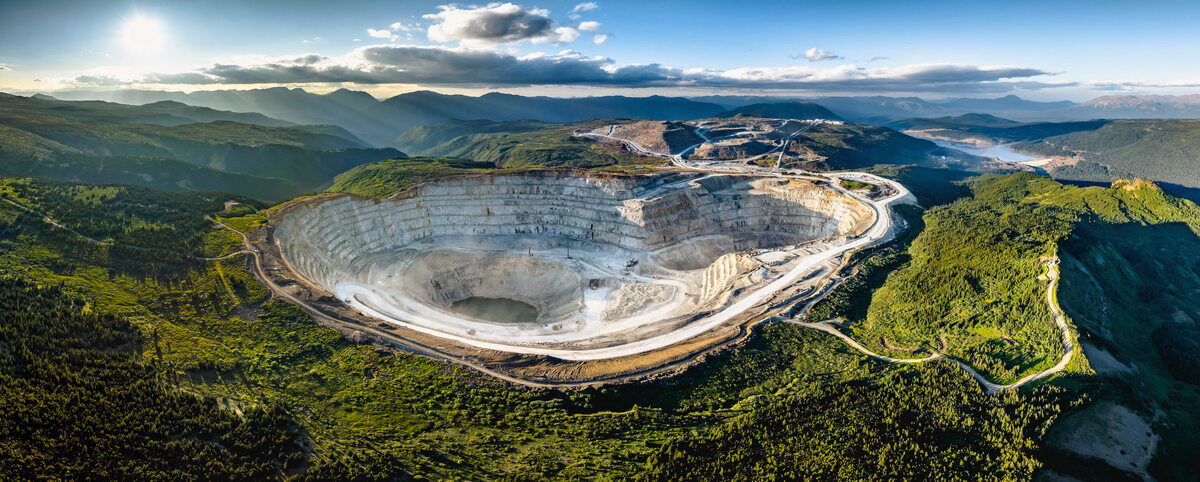
Ottawa is investing C$500 million in the Red Chris Block Cave project, which is expected to increase Canada’s copper production by 15%.
C$500M for Red Chris
To help transition B.C.’s Golden Triangle from a premier mineral exploration district to a long-lived critical and precious metals supply hub on the Pacific Rim, Ottawa is investing C$500 million ($352 million) in the Red Chris Block Cave project.
Red Chris is a Golden Triangle copper-gold mine operated under a 70-30 joint venture between Newmont Corp. and Imperial Metals Corp.
“As we advance through our approval process toward a final investment decision, this commitment strengthens the business case for the development of a world-class copper-gold operation,” Newmont stated.
Newmont is currently completing a definitive feasibility study for the Red Chris Block Cave project and cautions that a final investment decision has not yet been made.
Over the past decade, open-pit mining at Red Chris has produced an average of roughly 75 million pounds of copper and 60,000 ounces of gold annually. Newmont and Imperial are advancing the Red Chris Block Cave project, which is expected to lift Canada’s copper production by more than 15%.
Following the transition to block caving – a highly efficient, bulk-tonnage underground mining method well suited to large, deep ore bodies – Red Chris is forecast to produce more than 176 million lb of copper and 316,000 oz of gold annually over an initial six-year high-grade phase, according to a prefeasibility study completed in 2021.
Over the entire 31 years of operations outlined in the PFS, the block cave operation at Red Chris is expected to average approximately 107 million lb of copper and 158,000 oz of gold per year.
The transition to bulk-tonnage underground mining is also expected to reduce the amount of greenhouse gases emitted per pound of copper produced by more than 70%, making Red Chris a cleaner source of the metal at the center of the energy transition.
Newmont says the Red Chris Block Cave project is expected to create more than 1,800 jobs during construction and sustain roughly 1,500 peak-season operational roles.
“The project is expected to extend the life of the current Red Chris mine by approximately 14 years and sets the foundation for decades of potential additional mining,” according to Newmont.
That multidecade potential provides a cornerstone for the electrical, port, and export infrastructure being advanced under the Canada-British Columbia Cooperative Prosperity Agreement.
Pretium Resources
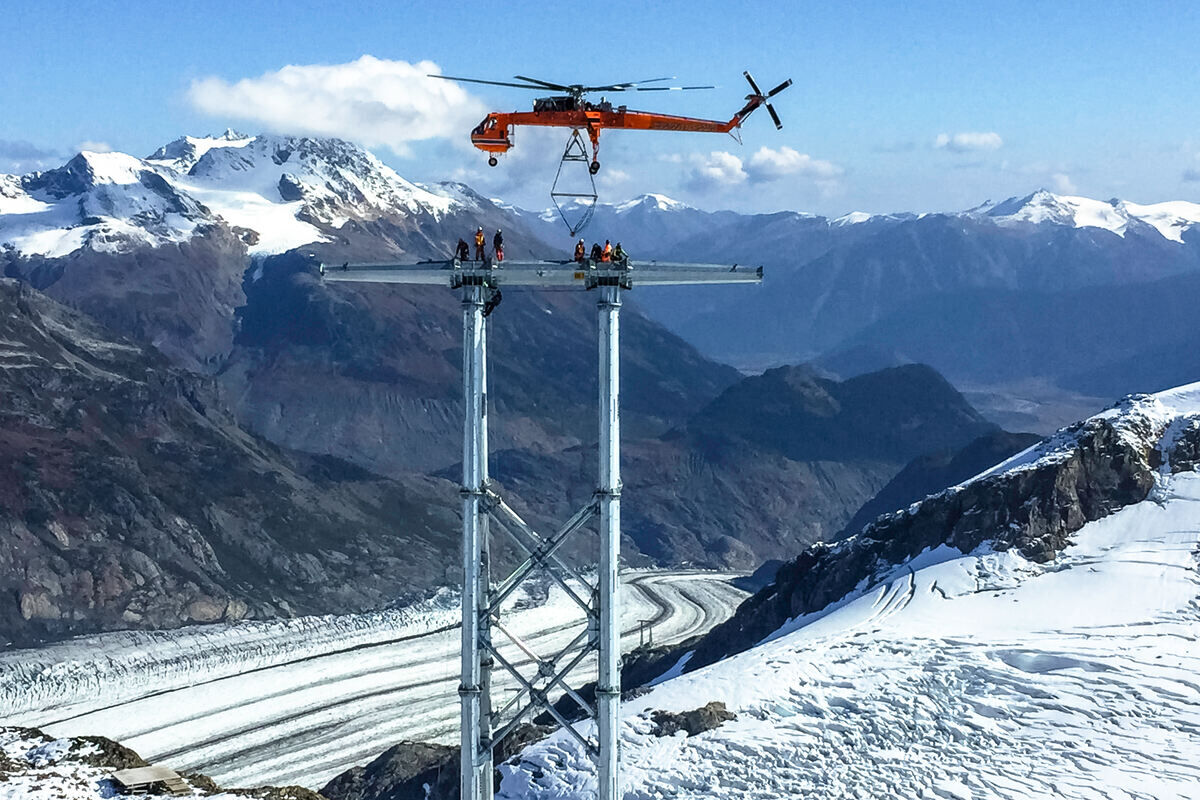
The North Coast Transmission Line is an expansion of the Northwest Transmission Line, currently delivering grid hydropower to the Brucejack and Red Chris mines in northwestern B.C.
C$3.9 billion infrastructure upgrade
Recognizing that delivering an abundance of clean and affordable hydropower is fundamental to the increased mining, industrial, and export capacity it envisions for Northern B.C., Ottawa plans to invest C$3.9 billion ($2.75 billion) in the North Coast Transmission Line.
This powerline will expand the capacity and reach of the Northwest Transmission Line, a 287-kilovolt system built roughly a decade ago to connect Golden Triangle mining projects to B.C.’s electrical grid.
This powerline will expand the capacity and reach of the Northwest Transmission Line, a 287-kilovolt system built roughly a decade ago to connect Golden Triangle mining projects to B.C.’s electrical grid.
The North Coast Transmission Line is envisioned as the backbone of a clean-energy corridor stretching across northwestern B.C., supporting mines, communities, ports, and major energy projects that depend on large volumes of reliable power.
According to Natural Resources Canada, approximately 75% of Canada’s known copper reserves are found in B.C.’s Golden Triangle. In addition, more than 230 million ounces of gold, 650 million oz of silver, 8 billion pounds of zinc, 4.3 billion lb of nickel, 27 million lb of cobalt, and an array of other critical minerals have been outlined in various deposits across Northern B.C.
The delivery of affordable and low-carbon industrial power is expected to help unlock this enormous mineral potential while lowering emissions tied to mines, communities, and export infrastructure.
In addition to lowering costs and the carbon footprint for northwestern B.C. industry and residents, Ottawa envisions this project eventually delivering similar benefits in the Yukon via the Yukon-B.C. Grid Connect Project.
“The $3.9 billion federal commitment to support the North Coast Transmission Line will send more affordable, clean electricity to B.C.’s northwest, while laying the foundation for a clean-energy corridor with the Yukon,” said Rick Smith, president of the Canadian Climate Institute.
Canada’s leading climate change policy research organization also welcomed Ottawa’s investment in the Red Chris mine expansion.
“As global demand surges, securing these key ingredients will support Canada – and the world’s – appetite for a key ingredient in the global energy transition,” Smith added.
SL-Photography at stock.adobe.com
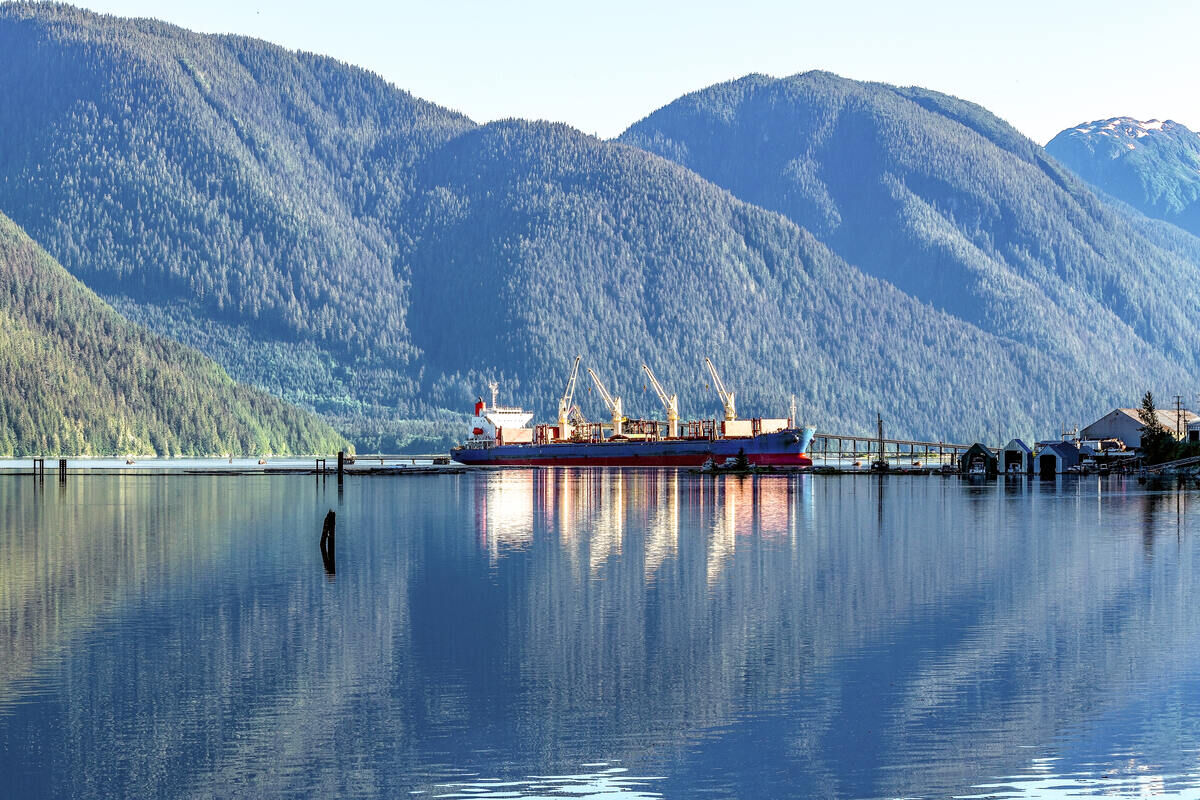
The Port of Stewart Bulk Terminal offers a year-round, deep-sea port for delivering Golden Triangle minerals to global markets.
Supporting NW B.C. ports
The North Coast Transmission Line will also support the development and expansion of Ottawa-backed ports and related infrastructure in northwestern B.C. that could deliver critical minerals, precious metals, natural gas, and other Canadian goods to Pacific Rim markets.
The ports at Stewart and Prince Rupert are already positioned as major export hubs for Northern B.C. resources.
The Nisga’a and Tahltan First Nations – whose traditional territories cover what is now known as the Golden Triangle – are positioned to lock in economic benefits from the export of minerals from Northern B.C. and Yukon mines.
Located at the head of the Portland Canal, the Port of Stewart offers tidewater access for mines and mineral projects across the Golden Triangle. Prince Rupert, meanwhile, provides one of North America’s closest deepwater gateways to Asia.
Under the Canada-British Columbia Cooperative Prosperity Agreement, Ottawa has committed to working with port authorities and First Nations to maximize the potential of both Stewart and Prince Rupert.
The Nisga’a and Tahltan First Nations – whose traditional territories cover much of what is now known as the Golden Triangle – are positioned to lock in economic benefits from the export of minerals from Northern B.C. and Yukon mines.
Last year, the Nisga’a Nation, Tahltan Nation Development Corporation (TNDC), and Arrow Transportation Systems Inc. formed the Portland Canal Holdings Limited Partnership to acquire and operate the Port of Stewart Bulk Terminal.
In alignment with its broader strategy for northwestern B.C., the provincial government contributed C$5 million ($3.6 million) to support the purchase of the Port of Stewart Bulk Terminal.
“The Port in Stewart is an important hub that will support the dramatic expansion in critical minerals and metals production, coming from our work with First Nations and major mining companies in the Northwest,” said Eby.
Newmont is supporting the port’s new owners with commercial certainty.
“Our commitment to the Port of Stewart goes way beyond exporting minerals; it involves empowering our First Nation partners in owning the infrastructure that will define the region,” said Abdul Rahman Amoadu, managing director of Newmont’s Africa and Canada Business Unit.
By linking mine development, Indigenous ownership, clean power, and tidewater access, the Stewart and Prince Rupert port strategies fit squarely within Ottawa’s broader plan to transform B.C. into a stronger Pacific trade gateway.
Government of British Columbia
Gateway to LNG exports
Ottawa has also committed to working with First Nations, communities, and proponents to accelerate the permitting, financing, and construction of four liquefied natural gas export projects in B.C.
This includes Ksi Lisims LNG, a proposed C$10 billion ($7.4 billion) floating liquefied natural gas export facility about 120 kilometers (75 miles) south of the Port of Stewart.
The Nisga’a Nation is advancing Ksi Lisims in partnership with U.S. and Canadian natural gas companies.
The project is expected to support the roughly C$10 billion Prince Rupert Gas Transmission project, a roughly 900-kilometer (560 miles) pipeline that would deliver natural gas to the Pacific coast export facility.
Ksi Lisims is also expected to be an anchor customer for the North Coast Transmission Line, tying the LNG project to the same clean-power corridor envisioned to support mines, ports, communities, and future industrial growth across northwestern B.C. and the Yukon.
The B.C. government estimates that Ksi Lisims LNG, and the infrastructure attached to it, will attract nearly C$30 billion ($21 billion) in investment, create thousands of jobs, and strengthen Canada’s position as a global LNG exporter.
“These projects will attract billions in investment and ensure First Nations are full partners in building a sustainable, competitive economy,” B.C. Minister of Energy and Climate Solutions Adrian Dix said in January.
While mining is a major pillar of the Canada-British Columbia Cooperative Prosperity Agreement, the pact’s larger ambition is to connect the province’s mineral wealth, clean power, LNG potential, ports, and First Nations partnerships into a Pacific-facing economic corridor.
By leveraging the Golden Triangle’s vast resource potential, strategic Pacific Rim location, and First Nations alliances, Carney envisions B.C. as a cornerstone of Canada’s effort to diversify exports and strengthen its position in global markets.
“We’re building British Columbia strong to build Canada strong for all,” Canada’s Prime Minister said.
Author Bio
Shane Lasley, Publisher

Over his more than 18 years of covering mining and mineral exploration, Shane has become renowned for his ability to report on the sector in a way that is technically sound enough to inform industry insiders while being easy to understand by a wider audience.