
Image credit: aogvision
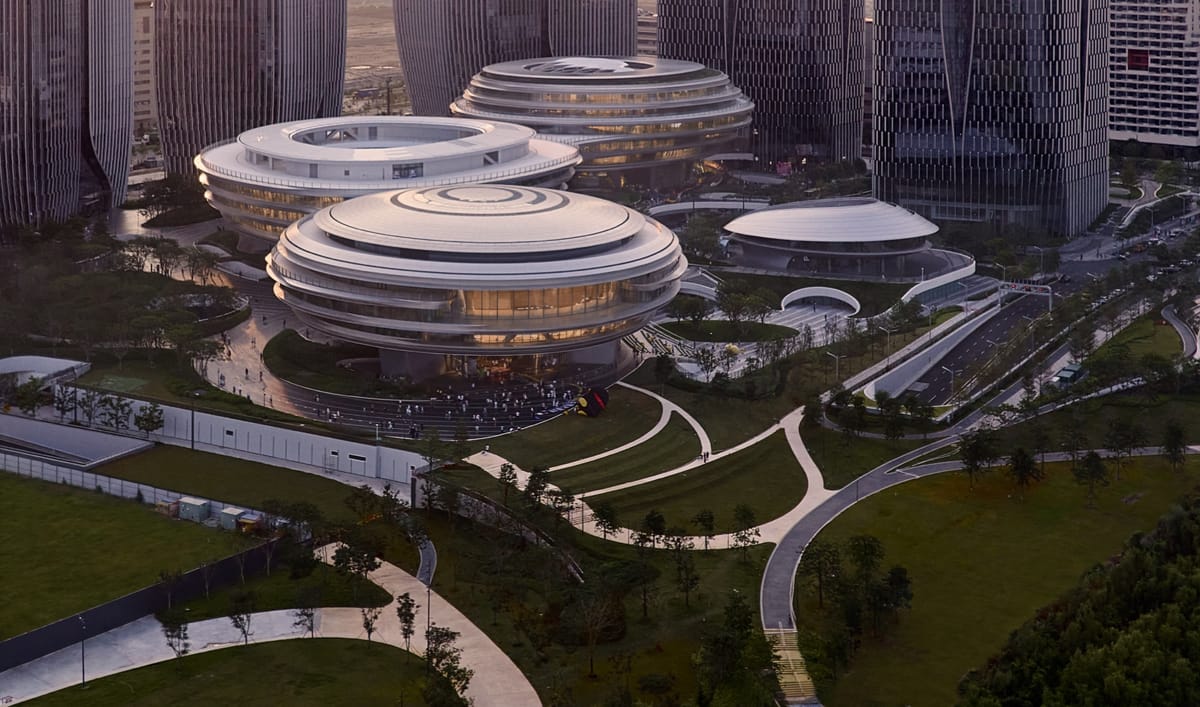
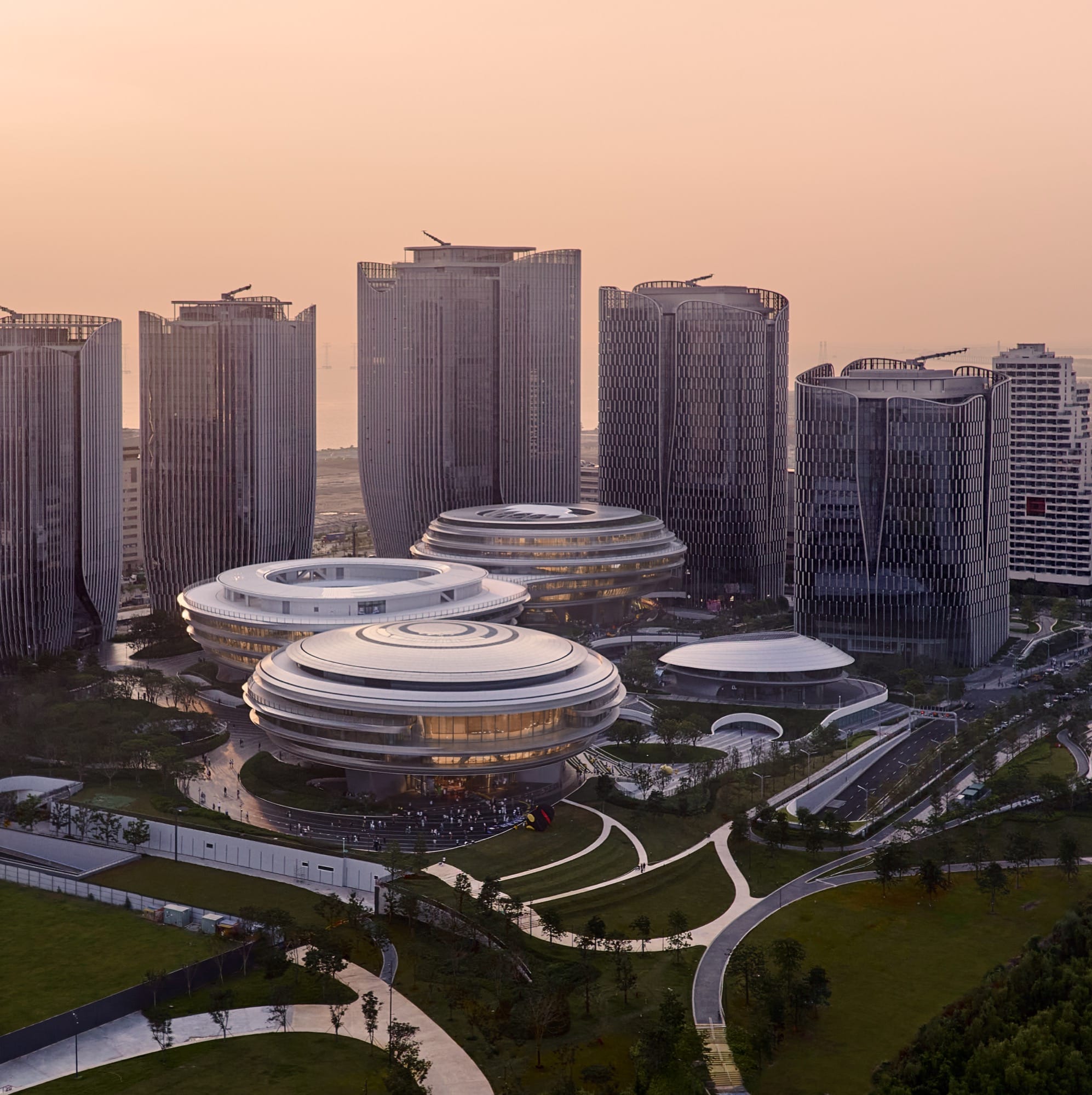
MAD has completed Tengyun Center (Tencent Cloudrise), a new headquarters complex for Tencent in Shenzhen, China. As we previously reported, the 775,000-square-foot “cloud” building comprises five blocks, seeking to rethink the conventional corporate campus with more public offerings.

Image credit: Zhang Chao Image credit: aogvision
Rather than occupying the site at ground level, the approximately 4 million-square-foot development is elevated 28 feet above the landscape on ten structural cores. The design lifts three interconnected building volumes, creating an open public realm beneath that accommodates pedestrian routes, landscaped gardens, gathering spaces, and views toward the waterfront.
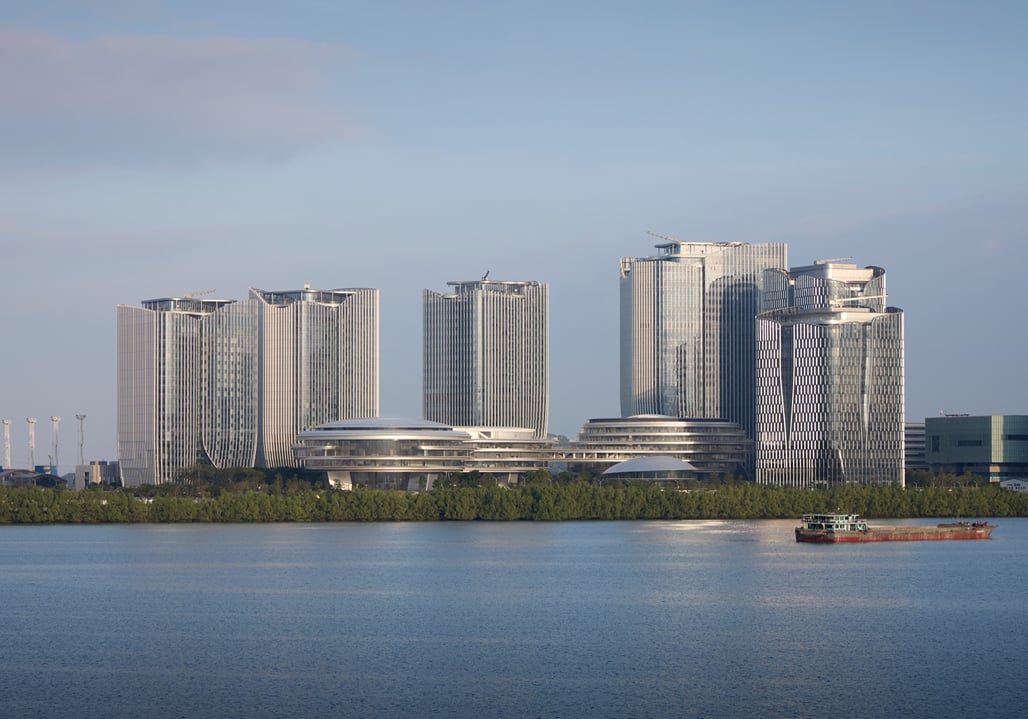
Image credit: aogvision Image credit: Zhang Chao
The headquarters is organized as three cloud-like volumes arranged along a north-south axis and connected by elevated steel-truss bridges. The bridges provide circulation between the buildings while also functioning as communal spaces overlooking the surrounding coastline. Externally, the scheme’s architectural character is also defined by large-span structural systems, curved facades, frameless glazing, and integrated horizontal shading.

Image credit: Sun Haiyong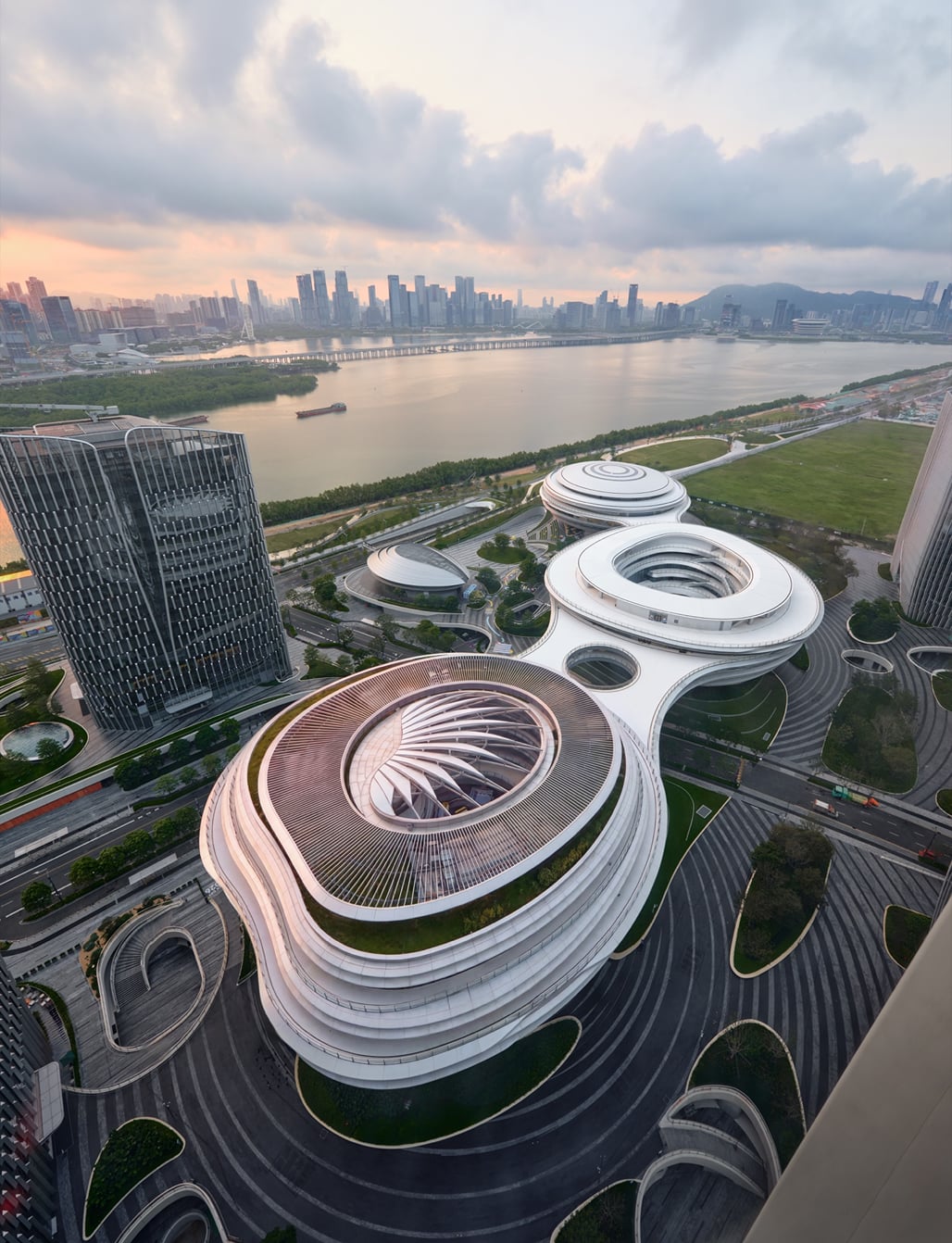 Image credit: aogvision
The southern building contains exhibition and multipurpose event facilities, including a publicly accessible second-floor venue facing the bay, while the central and northern buildings accommodate office space organized around open atriums. A semi-open ETFE skylight introduces daylight into the northern building while reducing direct solar gain.

Image credit: Zhang Chao Image credit: aogvision
The office layout prioritizes access to the waterfront, with approximately 80 percent of workstations oriented toward sea views. Shared circulation areas and communal amenities are similarly positioned to maintain visual connections with the coastline throughout the campus.

Image credit: Zhu Yumeng Image credit: Zhu Yumeng
The project’s design also integrates the site’s coastal ecology. Existing mangrove habitats, tidal ecosystems, and bird migration routes have been retained as part of a broader government-led shoreline restoration initiative, while the campus landscape is designed to connect public space with natural environments.
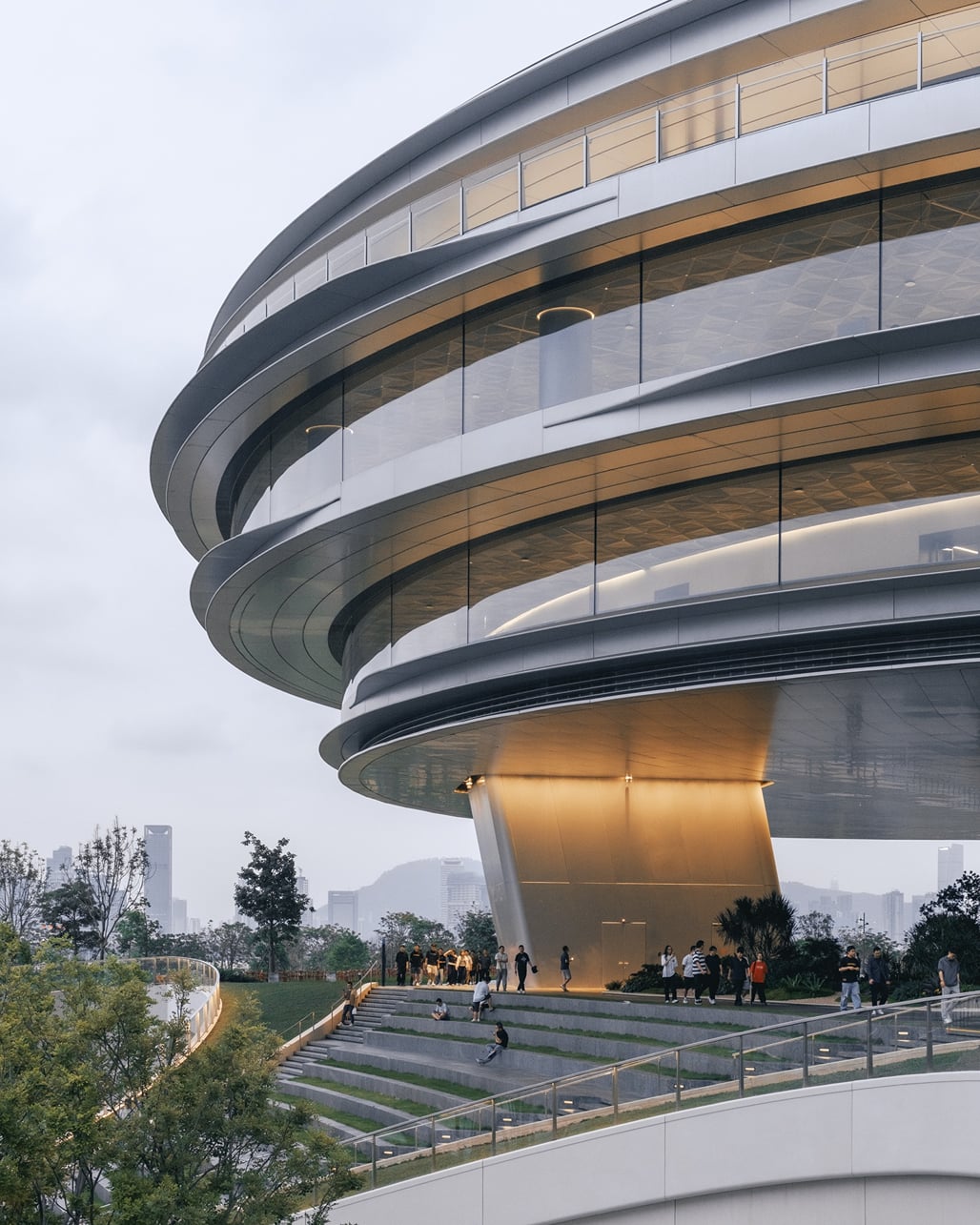
Image credit: Zhu Yumeng Image credit: Zhu Yumeng
“Floating is not a visual effect; it’s a spatial idea,” MAD founder Ma Yansong said about the scheme. By lifting the headquarters, we give the ground back to the “city. It’s not about making a closed-off corporate icon, but about letting the building become part of everyday urban life. In this sense, ‘floating’ is simply a way to make public space more open and accessible.”
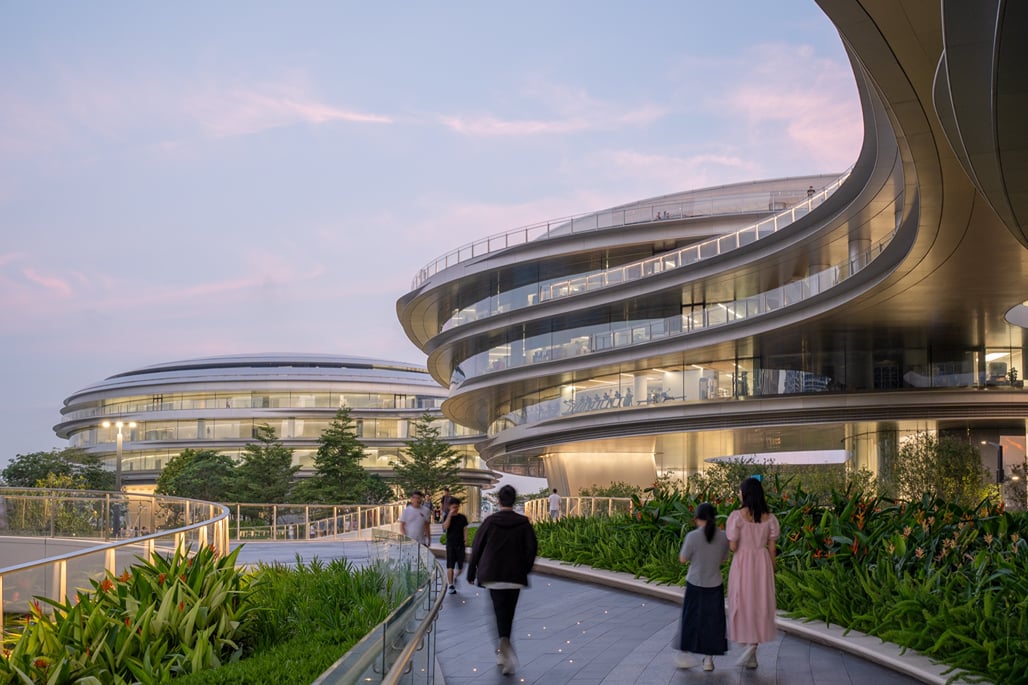
Image credit: Zhang Chao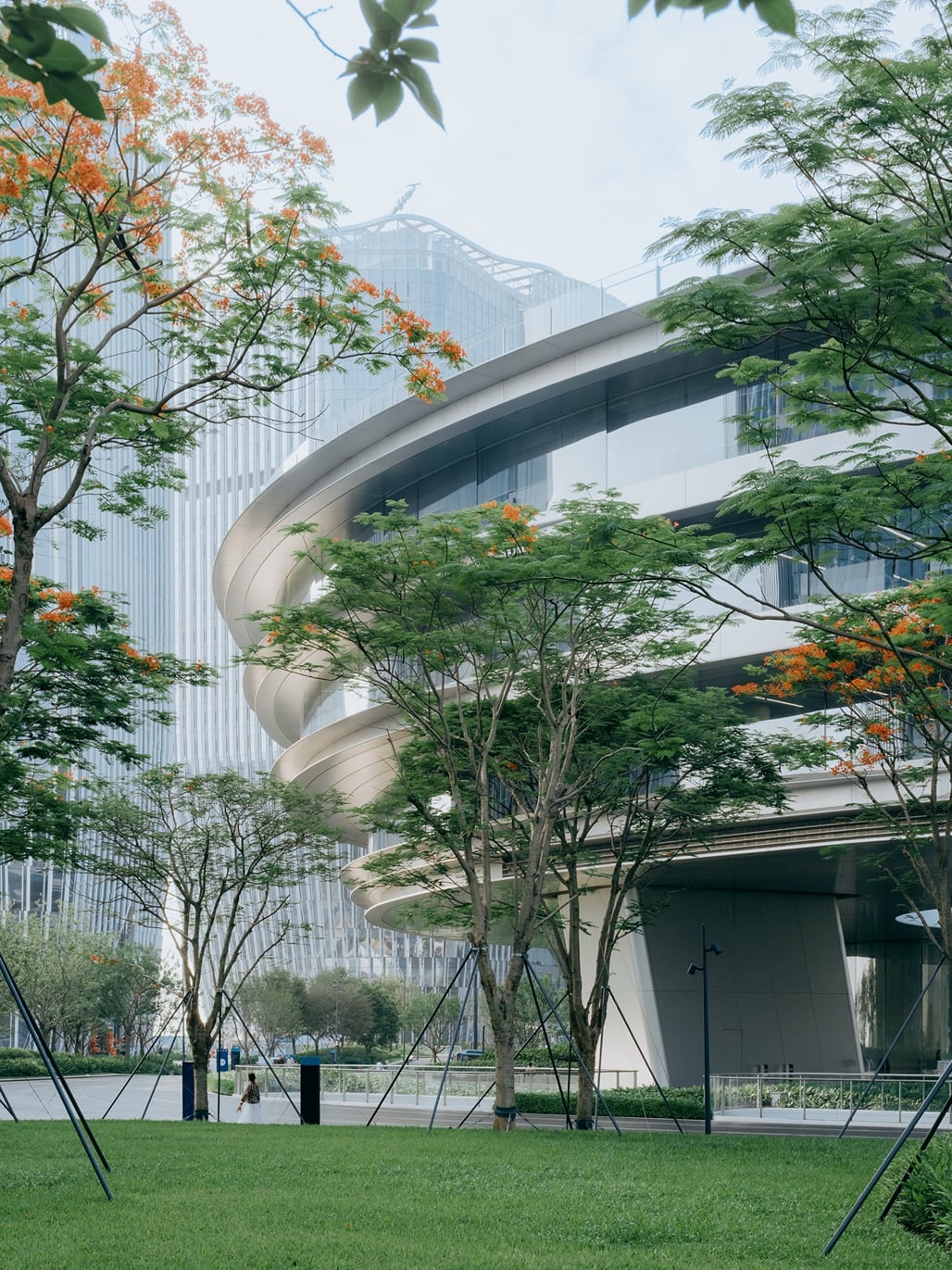 Image credit: Zhu Yumeng
Similar articles on Archinect that may interest you…